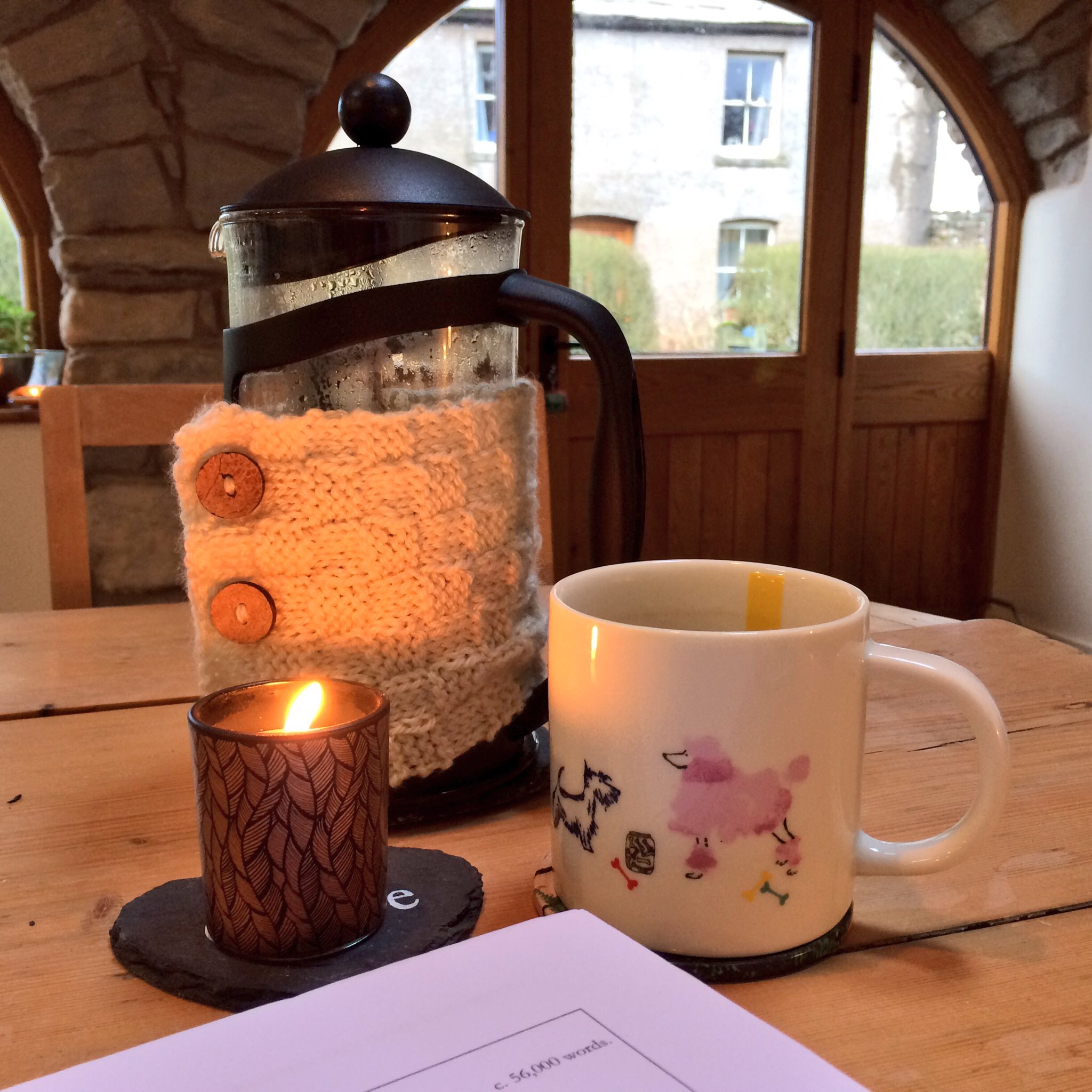
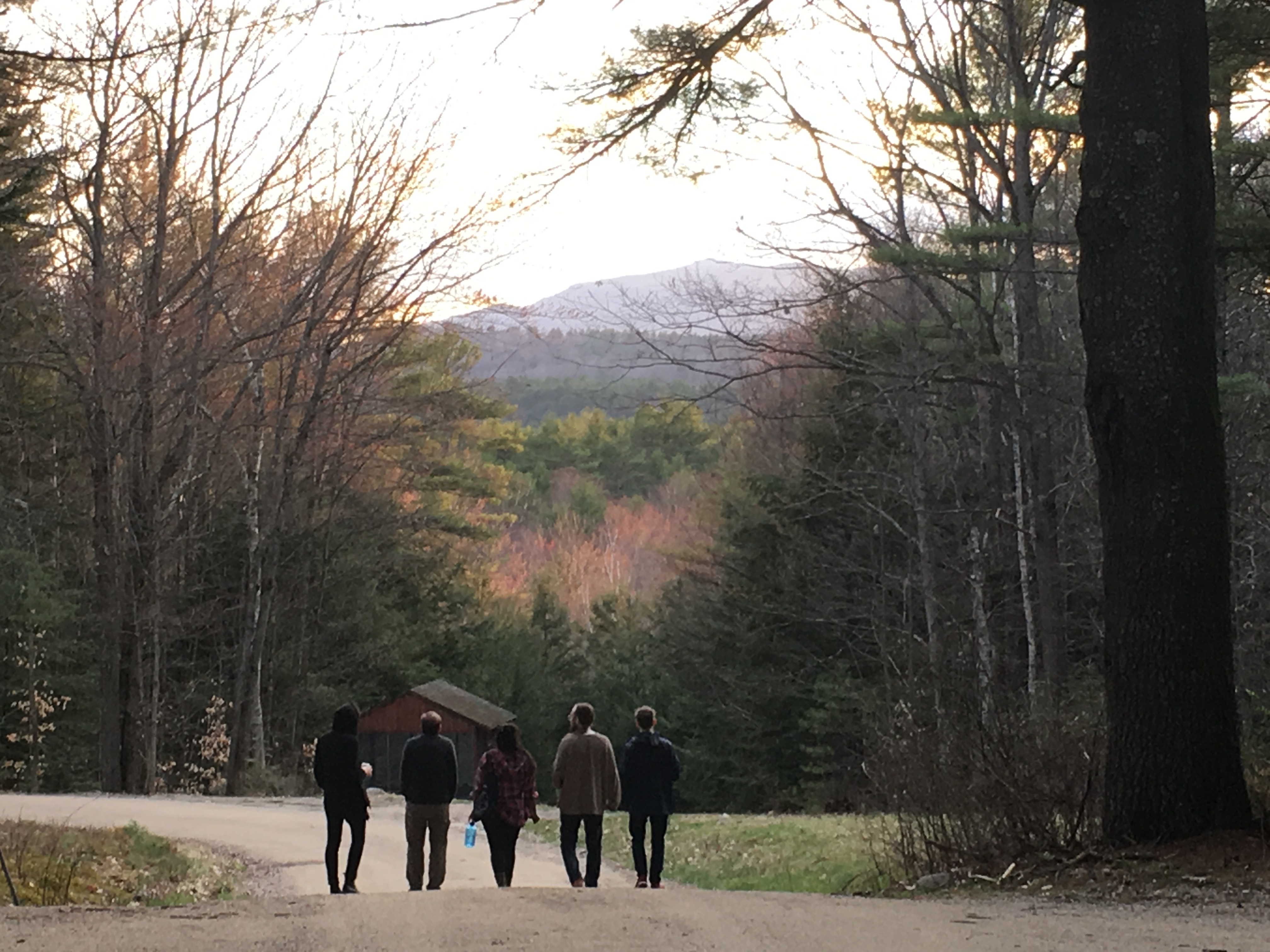
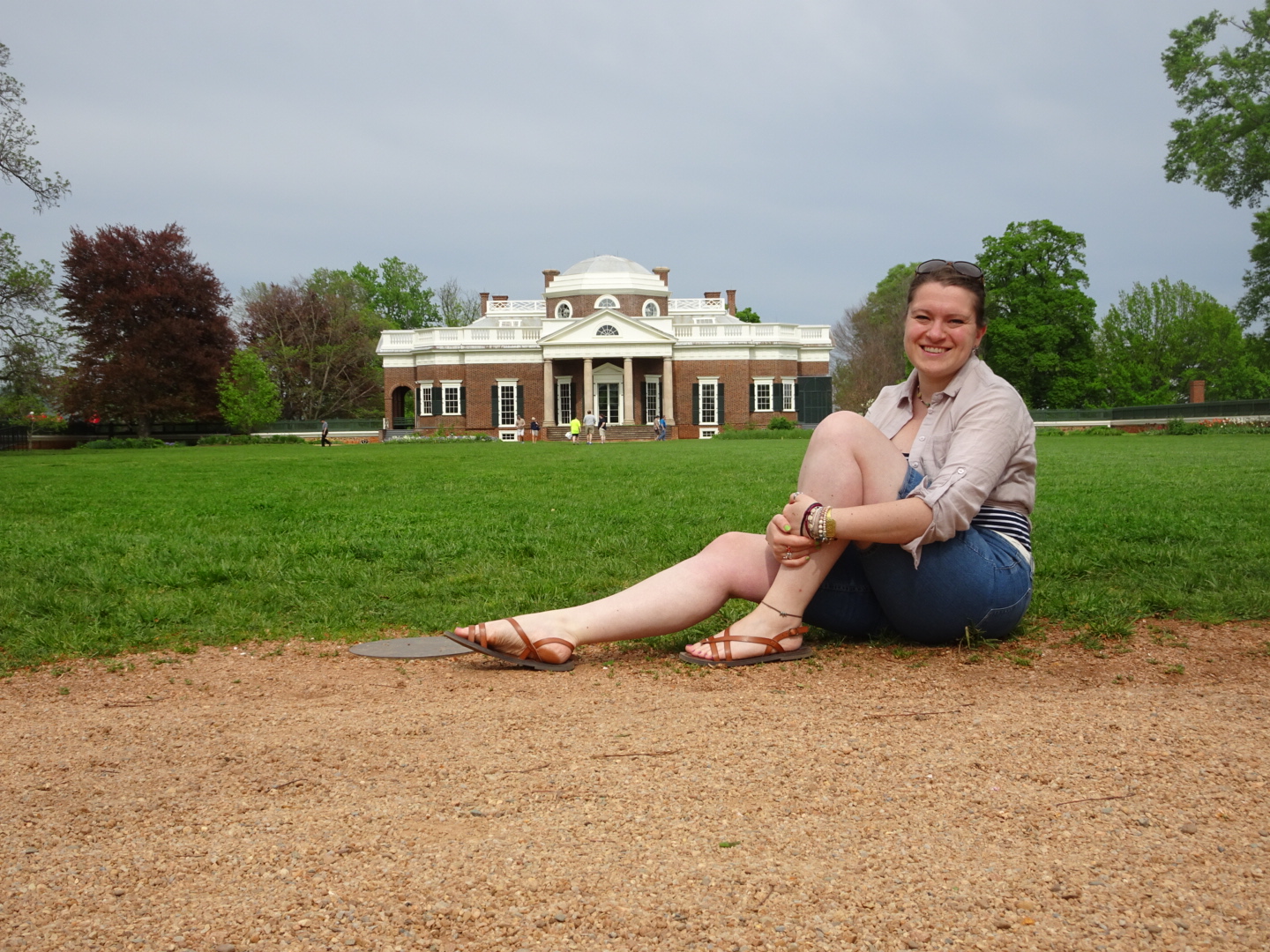
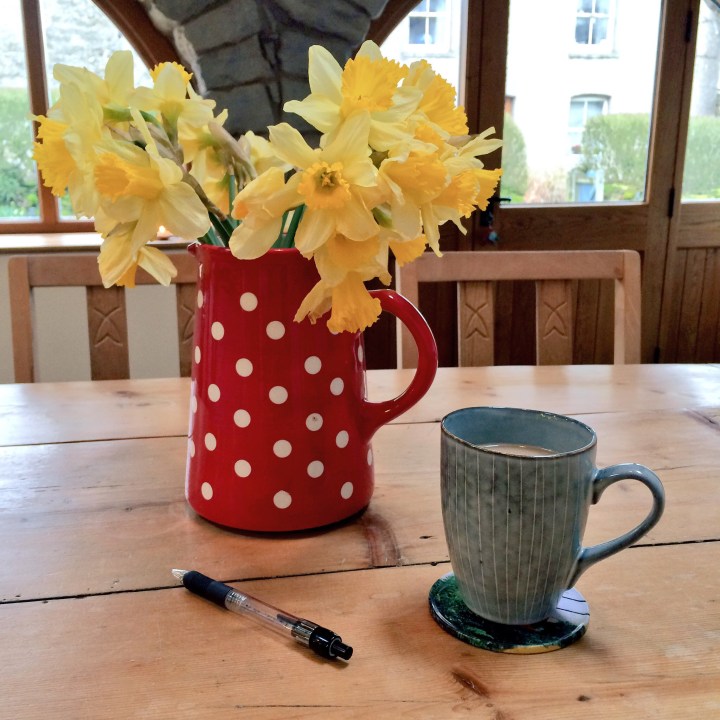
Ever fancied penning your novel in a medieval castle? Or pouring over poems in a cabin in the woods? Working on your script in a little apartment by the sea? Maybe what you’re looking for is a writing residency. But what exactly is a writing residency? And how do they work?

What is a writing residency?

First things first: not all residencies are created equal. Some offer more than others. Some last as much as a year, some only last a week or so. Some offer individual accommodation, some offer shared. Some pay, some don’t. Some even expect the writer to pay to attend, but that’s not the sort of residency I’m going to be focusing on in this post (more on those further down).

So what is a residency? Generally speaking, it’s a combination of accommodation & time to write. You get somewhere to sleep and somewhere to work. Sometimes, you also get meals, and / or a stipend, and / or travel expenses.

Sometimes, the residencies ask you to run a writing workshop, or to give a talk or something, in return. Sometimes you have absolutely no commitments other than working on your own writing.

I went on 3 residencies in 2019, and I’ve got another 4 lined up for this year. Here’s a quick run-down of what they offer(ed):

  • The Wordsworth Trust Poet in Residence, Cumbria, England: a month; a private study-bedroom in a shared house opposite Dove Cottage; payment; required to give a reading & run 4 workshops.
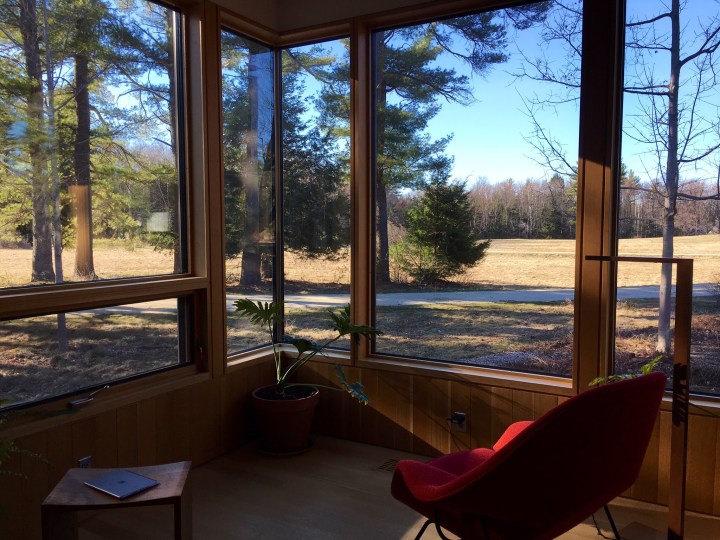
  • MacDowell Colony, New Hampshire, USA: 3 weeks; private bedroom in a shared house; a separate studio cabin in the woods; meals; travel expenses; no requirements other than writing.
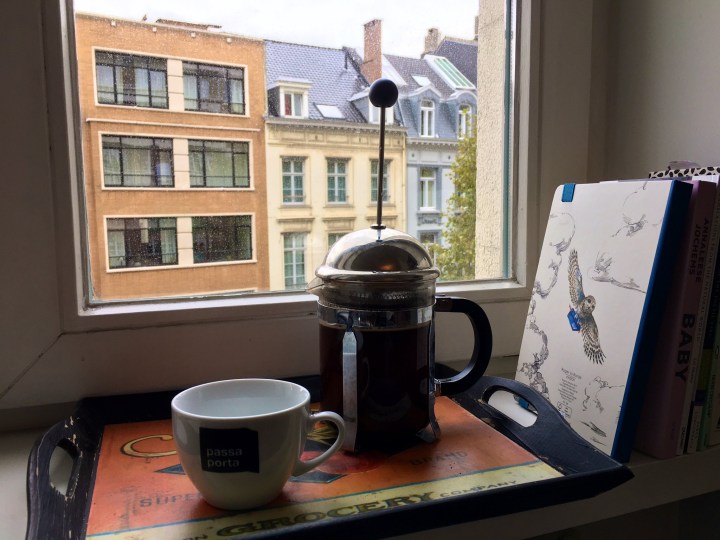
  • Passa Porta, Brussels, Belgium: 4 weeks; private apartment in the centre of the city; travel expenses; stipend; participated in 2 translation workshops & wrote a blog post.
  • Hawthornden Castle, Scotland: 4 weeks; private room in shared medieval castle; meals; no requirements other than writing.
  • KSP Writers’ Centre, Perth, Australia: 3 weeks; private cabin; stipend; required to run a workshop, attend a literary dinner & give a library talk.
  • Gladstone’s Library, Wales: a month; private bedroom in residential library; travel expenses & stipend; meals; required to run a masterclass & give a talk.
  • Heinrich Boell Cottage, Achill Island, Ireland: 2 weeks; private cottage by the sea; no requirements other than own writing.

Residency Round-Up: The Wordsworth Trust

Residency Round-Up: MacDowell Colony

What’s so good about residencies?

Residencies give you time to write, away from the pressures of everyday life. Whenever I’m on a residency, I switch on my Out Of Office, (mostly) prepare and queue up my blog posts ready to go, and ignore my admin. (Ok, I’ll be honest – I do sometimes check my emails, just in case. But I restrict my email-checking to the occasional evening, and even then I only reply to the absolutely urgent ones. At some residencies, such as Hawthornden, there isn’t any wifi anyway.)

It’s amazing how much extra time there is in a day when you don’t have to fill half of it with answering emails and trudging through invoicing & expenses & admin. Particularly if someone else is making all your meals for you, as is the case with some residencies.

My 6 most productive weeks of 2019 were the 3 weeks of my MacDowell residency, and the first 3 weeks of my Passa Porta residency. I wrote way more than I’d normally have written during that time, and when I looked back on what I’d produced afterwards, some of it was quite different to what I think I’d have written at home. For me, these residencies pushed me qualitatively, as well as quantitively.

But residencies can also be time to read, and a chance to experiment with your craft. In contrast to MacDowell & Passa Porta, I wrote comparatively little during my Wordsworth Trust residency (though still probably more than I’d have written during the same period at home). What I did do, though, was oodles & oodles of reading – reading both poems, and books about writing poetry. I spent a lot of time thinking about the craft of poetry, and experimenting with my own style of writing – something which I’m sure contributed to my huge productivity at MacDowell a month later.

This is the sort of craft development that can easily get pushed to the side in everyday life, particularly when you’re having to write for commissions & deadlines etc, and so every poem has to be ‘good’; it can become difficult to make time to explore & experiment. Residencies can provide that time.

They can also be a way of meeting other writers – though this depends on the residency. For those residencies where there are a number of writers all there together (such as Hawthornden), it can be an excellent bonding experience, where everyone is working so intensively on their own manuscripts during the day, then coming together to eat and talk during the evenings.

For those residencies that are multi-disciplinary (such as MacDowell), it can also be a good way of meeting artists working in other forms, and of finding inspiration in conversations with non-writers.

I’ll be honest, a large part of my initial motivation to apply for residencies was the opportunity to travel. Anyone who knows me will tell you that I love to travel, and residencies can provide a cheap way of doing that. If you can get a residency that provides travel expenses & accommodation, then you’ve essentially got a free trip to wherever it is that the residency is based.

Of course, residencies aren’t meant for sightseeing; they’re meant for working. But if you’re there for a reasonable length of time, then you’re going to need the odd day off anyway (trust me: residencies can be intense, and it’s good to break the cabin fever once in a while).

Another good way of exploring an area where you’re in residence can be to extend your trip. If your residency pays travel expenses, then there’s no reason you can find your own accommodation for a few days before or after your residency, and stick around to see the sights then.

Of course, beyond the tourism, travel & change of environment can be excellent for the work as well. Stuck on a manuscript, or just getting too easily distracted at home? A change of workspace could be exactly what the doctor ordered. And honestly, it doesn’t even have to be a beautiful cabin in the woods, or a medieval castle. I’ve had some of my most productive poetic breakthroughs in Travelodges.

But let’s look at the financial side of things for a moment, too.

Some residencies pay a stipend – which is sometimes a token amount to help you buy pasta & notebooks, and is sometimes akin to an actual wage. This means that you can actually earn money by staying somewhere gorgeous and working on your manuscript. Depending on what you have in the way of expenses back home, it’s even possible to save some of this stipend money to fund even more writing time back at home. In 2019, residencies formed a not insignificant part of my income.

Even for those residences that don’t pay anything, they can still make financial sense. For example: I live alone, in an old house that’s kind of pricey to heat, which means that my bills can be huge. By planning residencies during the winter, I can go whole months without having to heat my house. I might not be being paid to attend the residency (though fingers crossed I’d eventually get an advance on the manuscript I was working on during it), but I’m also minimising my outgoings enormously.

5 Things About: Writing on the Move
What’s not so good about residencies?

Maybe by now you’re thinking it all sounds too good to be true. Obviously, nothing is perfect. For me, the positives of residencies have always outweighed any negatives. But I like to be honest on this blog, so here are some of the downsides to residencies:

When you’re in a place for a concentrated period of time, there can be a huge pressure to produce work. After all, you have this precious gift of time, and if you don’t use it to create something incredible, then doesn’t that mean that you’ve wasted it?

This negative aspect is largely self-inflicted. After all, it’s extremely rare that a residency will ask you for a quantative breakdown of what you’ve produced during your stay. Which means that the strategy for dealing with this pressure has to come from you as well. After all, you know your ways of working better than anyone. But just remember that you don’t have to write 17 novels and 53 essays during your residency. It’s just as vital to work on your practice in other ways, by thinking, by reading, and by exploring the way that you work.

Although, speaking of productivity, it is also possible for a residency to go the other way: that you’re so overwhelmed by the residency’s other requirements of you (running workshops / giving talks etc) that you end up with very little time or headspace left for actual writing.

This is largely down to the residency, to make sure that they don’t overload you. But you should also make the effort to be aware of what’s required of you before you start, and to raise any concerns you have about workload with the residency coordinator ahead of time. This obviously doesn’t mean you can be a diva about it – the occasional commitment is fine, particularly if the residency is paying you a fee or stipend on top of the accommodation. But if the commitments outweigh the writing time, or if they keep being piled on beyond what you originally agreed to, then maybe it’s time to say something.
The other issue I want to talk about is loneliness.

Writing residencies can be intense, and they can also be lonely. Even when there are multiple writers / artists on the same residency, you can end up spending a lot of time inside your own head. And when it’s just you in an apartment, writing all day and reading every evening, then that loneliness can be hugely amplified.

Think of it like this: you’ve gone to a new town or city, where you don’t know anybody. You’re willingly spending hours (if not days) at a time shut up in your room or house or apartment. You don’t speak to anyone, much, except maybe the person on the checkout in the supermarket. You may not even speak the local language.

Now imagine this for four weeks. It probably isn’t long enough to make solid friends, the way you would if you were moving to a new city for good. But it is a long time to spend away from your normal social groups.

Of course, everyone reacts to isolation differently. There’ll be some people reading this, for whom even the thought of a few days without talking to anyone sounds horrific. There’ll be some of you who think a few weeks’ isolation sounds idyllic. At the end of the day, we all know our own limits – or at least we suspect them.

Take me, for example. I think I’m a fairly independent person. I’m an only child, so we never really had a houseful growing up. I live alone. I also live rurally. I work freelance, so I don’t have colleagues who I interact with on a daily basis. I’m generally faily happy in my own company, and I like knowing that I have my own space if I need to get away from it all.

But, during part of my residency in Brussels last year, I felt very, very lonely.

I was fine for the first two weeks, after negotiating the first couple of days of settling in – difficult whenever you go anywhere new. By week 3, I was starting to miss friends & family, but was still managing to put that aside to focus on work. I’d also starting going for days and afternoons out to explore a bit more, and to force myself out of the apartment. But by week 4, I was honestly a bit of a mess. I missed conversations with people. I missed the sort of interaction that comes from knowing someone really well – or from getting to know someone through shared intense experience.

Don’t get me wrong: the residency was amazing, the staff at Passa Porta were utterly lovely, and Brussels is a stunning city. I just realised that 3 weeks is pretty much my limit for that kind of isolated residency.

Which is fine. I learned something about myself during the course of the residency. I now know that I can discount any residencies longer than 3 weeks, if there aren’t other artists or writers in residence at the same time. I discovered the limits of my loneliness.
How to survive a writing residency:

That all said: what’s my advice for anyone going on a residency?

Do your research before you go. Because residencies can be so varied in terms of what they offer, and who they cater to, it’s worth knowing exactly what you’re getting yourself in for beforehand. This means there shouldn’t be any nasty surprises when you get there, and also that you can prepare for any talks & workshops before you go, so they don’t cut too much into your precious writing time.

Go with a project in mind. Remember that pressure to produce that we were talking about earlier? This can be exacerbated if you’re the sort of writer who works on more than one project at once. If you’ve only got the one residency, what do you start with? Your novel? Your poetry collection? Your short stories? Your epic fantasy saga spanning seven volumes? Do you try to dedicate a little bit of time to each? Knowing what you want to achieve from the outset can help you avoid wasting time on indecisiveness, and allow you to hit the ground running when you arrive at the residency.

Speak to people. A good way to combat the possibility of loneliness is to actually speak to people. This is obviously easier if it’s the kind of residency where there are multiple people there at once. But even if you’re on your own, make an effort to find people to talk to. Fellow writers. That person in the cafe. Even just a brief exchange with the person behind the counter in the shop can help with the feelings of isolation.

Take breaks. Yes, you’re there to work, and it can feel a bit like every day needs to be a 12-hour writing marathon, stopping only for toilet breaks and coffee. But that isn’t a sustainable way of working, and slowly concentration will begin to wane. Take breaks to read a book, to go for a walk, to sit in a cafe and drink coffee you haven’t reheated 3 times in the microwave. It’s a way of rejuvenating your energy – and it’s amazing how many Eureka moments can come when you actually step away from the writing desk.

Get out and about. By which I mean: don’t just take breaks in the immediate vicinity of your residency, but get even further away from the writing desk from time to time. During my MacDowell residency, a group of us took a whole day off to drive to a nearby town and try our hands at an Escape Room. It was completely unrelated to anything any of us were working on, but was also the best thing we could have done, to break that feeling of cabin fever we hadn’t even realised was beginning to set in.

Don’t beat yourself up if you’re not hitting your word counts. Yes, you’ve come with a specific project in mind, and you probably have goals you want to achieve while you’re in residence. But, while I absolutely believe that half the battle is just showing up to write, I also know that it isn’t a certain thing either. Sometimes, however hard you smack your head against your notebook or stare down that blank Word document, the words just won’t come. And that’s fine, too. You can have blank spells during a residency just as much as you can at any other time. The beauty of the residency is that you still have all that free time for creativity – so you can use it to read, or to freewrite, or to go for a walk and just think through your creative project. You can still be working, even when you’re not actually writing out words.

Pack snacks – and maybe a bottle of wine or two. This is a personal one, but I’m a big one for snacking, and I find it really hard to work if I’m hungry. So if I know I’m going somewhere that might not have easy access to a grocery shop, I always find it’s a good idea to stick a bag of biscuits in my bag – just in case. Even if I don’t end up eating them, I just like to know they’re there on the offchance I might need them. Plus, they’re a great way of breaking the ice. And the wine? Again: wine is nearly always a good way of making friends!

What to watch out for:

I said at the start of this post that not all residencies are created equal. The truth is that some offer much, much more than others. It isn’t always the case that the most respected residencies offer the most – but it is often the case that the less respected (and often less conducive to creativity) can actually take the most from the writer. The best way to avoid any upleasant surprises is to always read all the information available before you apply – just so you know what’s what.

A few things I’ve come across, which aren’t always bad, but which need to be noted, are:

Shared accommodation:

It’s quite common for residencies to offer writers a private bedroom / study-bedroom in a communal house, which may have shared bathrooms and communal workspaces – though you’re generally free to work in your room if you prefer privacy.

But I have also seen some residencies that only offer shared bedrooms (shared with another resident / residents, who you won’t meet till you arrive). I’ve even heard report of a residency that expected the writers to share a bed! Personally, I don’t think asking strangers to share a bed is ever appropriate, but I suppose the shared bedrooms thing is a matter of individual preference. If it’s something you’d be fine with, then go for it. Personally, I need my own space to work in.

Application fees:

A number of residencies charge a fee for you to apply. Usually, this is to offset the cost of processing the applications. After all, an individual residency might receive hundreds of applications, and somebody needs to process all of those, to check eligibility and ultimately to make a decision. That person probably needs paying, hence the application fee. Sometimes it can also go towards funding the residencies slightly, in the same way that the prize pot for a writing competition might be funded by the entry fees. This isn’t necessarily a bad thing – some highly respected residencies charge a fee to apply. It’s just something to be aware of before you decide whether apply, so that you can budget it into your decision.

Fee-paying residencies:

I mentioned this at the start of the post, and I want to talk about it here, because some residencies not only charge a fee to apply, but also charge a fee to attend. Sometimes this is nominal – just enough to cover a cleaner’s fee, or maybe put something towards electricity bills. But sometimes the cost can be as much as (or even more than) the cost of a hotel.

Again, there’s nothing wrong with paying for a room / apartment / cottage to go and write in, but I would argue that this is something different from a writing residency. I would argue that this is more like a self-guided retreat – like the kind offered by Arvon & by Gladstone’s Library. You pay your money, and in return you get to stay in a peaceful & supportive environment, and work on your manuscript.

But the thing about retreats like these is that they’re not selective. By which I mean: anyone can book and go on one, in the same way that anyone can book a room in a hotel. Again, that’s absolutely fine. There are hundreds of great reasons why these models work, and why you might want to pay to isolate yourself and focus on your manuscript – many of them th same as the ones above in this blog post.

However, if there’s a selective application process involved, and then you have to pay the full cost of the residency in order to attend, then I always wonder: why not just book into a hotel instead? Why bother with the whole hassle of writing & submitting an application, then waiting to see if you’ve been successful, when you can just book a retreat at Arvon or Gladstone’s in minutes – and know what you’re getting as well?

I’ve even seen so-called residencies that charge writers a fee to apply, and then also charge an astronomical amount for the writer to actually attend the residency. That’s like paying £20 to be in with the chance of booking an apartment on Airbnb, then having to wait 6 months to find out if you got it or not. Why would you do that?

Fortunately, there are plenty of residency opportunities that don’t try to make lots of extra money from the writer, and that aren’t commercial retreats masquerading as exclusive residency opportunities. So as long as you do your research, there should always be a residency that will suit the needs of each individual.

Ok, so where can I go?

There are residencies all over the world, and far too many to list here, even if I did know them all. I’ll start with the ones already mentioned in this post:

But of course, there are hundreds of other places to look for residencies. Good places to start your search might be:

  • ResArtis is an online database of residencies. It allows you to search for residencies with current application opportunities, as well as to filter by artform, accommodation type, and geographical location. Be aware that this website also features residencies where the writer has to pay to attend, so be sure to read all the details before you decide whether to apply.
  • Simliar to ResArtis, the other one to check is TransArtists. This online resource also allows filtered searches, and also features fee-paying residencies alongside ones where the writer doesn’t pay.
  • Arts Council England runs two mailing lists: ArtsJobs and ArtsNews. These sometimes advertise residencies, so it’s worth signing up to them. It’s also worth signing up to the relevant equivalent mailing lists if you’re based in Scotland, Wales or Northern Ireland, too.
  • Sign up to the mailing list of your regional writing organisation. For me, this is New Writing North, who are based in Newcastle. They also share residency opportunities, as well as lots of other useful info.
  • If you want to travel, then periodic checks of the opportunities page on the British Council website aren’t a bad idea, either, as sometimes these include residencies & travel opportunities for individual writers.
  • Another option? Sit down one evening with a couple of hours to spare, and a big glass of wine, and google variations on ‘writing residencies’ or ‘writer in residence opportunities’. Keep a list of anything that comes up, whcih you think might interest you.

If you’re applying for a residency, or you’re off to participate in one, then the best of luck! And in the meantime, here’s my favourite list of ‘residencies’ for you, from the New Yorker:
The New Yorker: Little-Known Writing Residencies

Some years just rattle over from one to the next, with very little sense of change or progression between them. Then again, some years are like fireworks, bursting into a glorious array of sound and light, leaving you dazed and slightly dizzy in their wake. 2019 has been one of those years – summarised as best as I possibly can here, in a mix of words and pictures.

Publications:

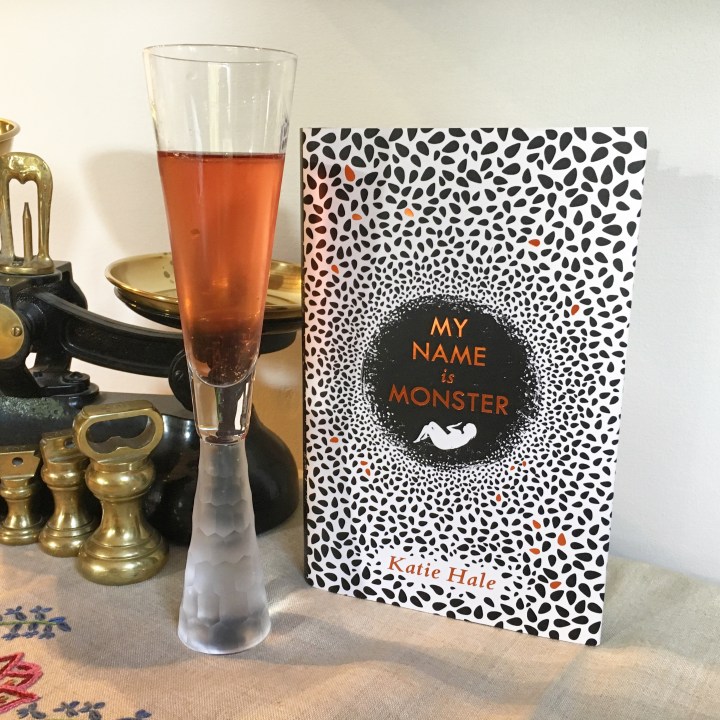
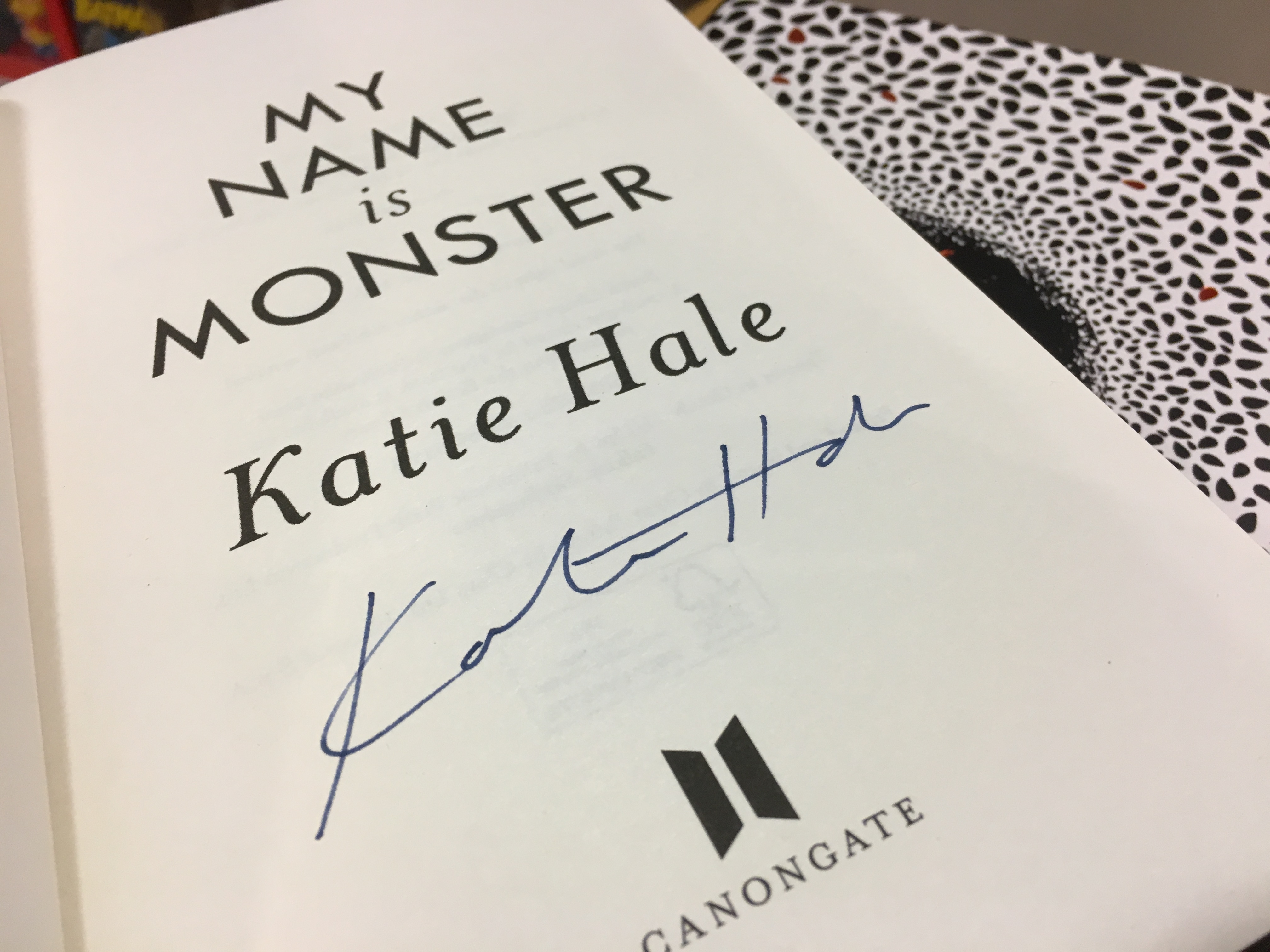
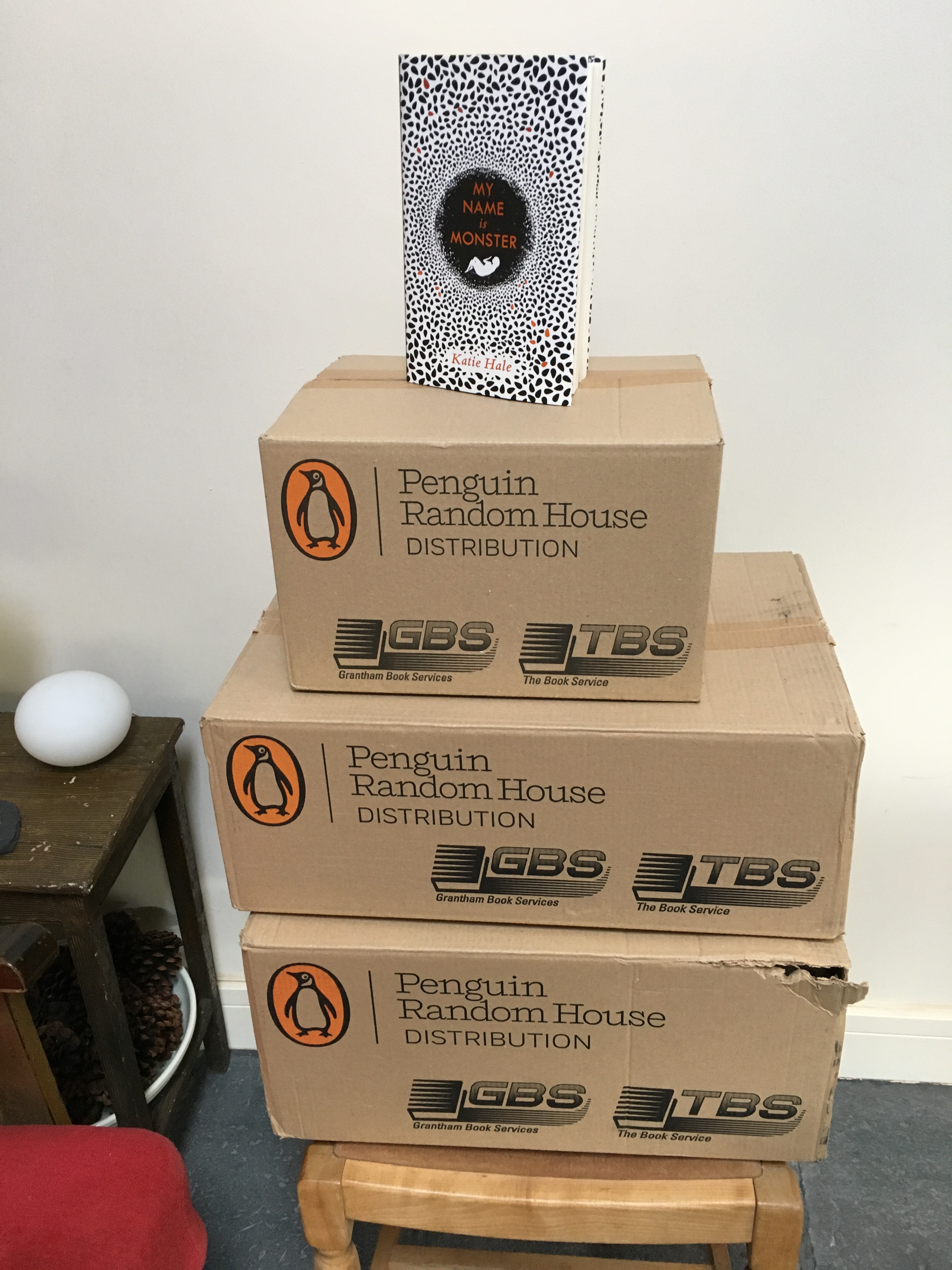
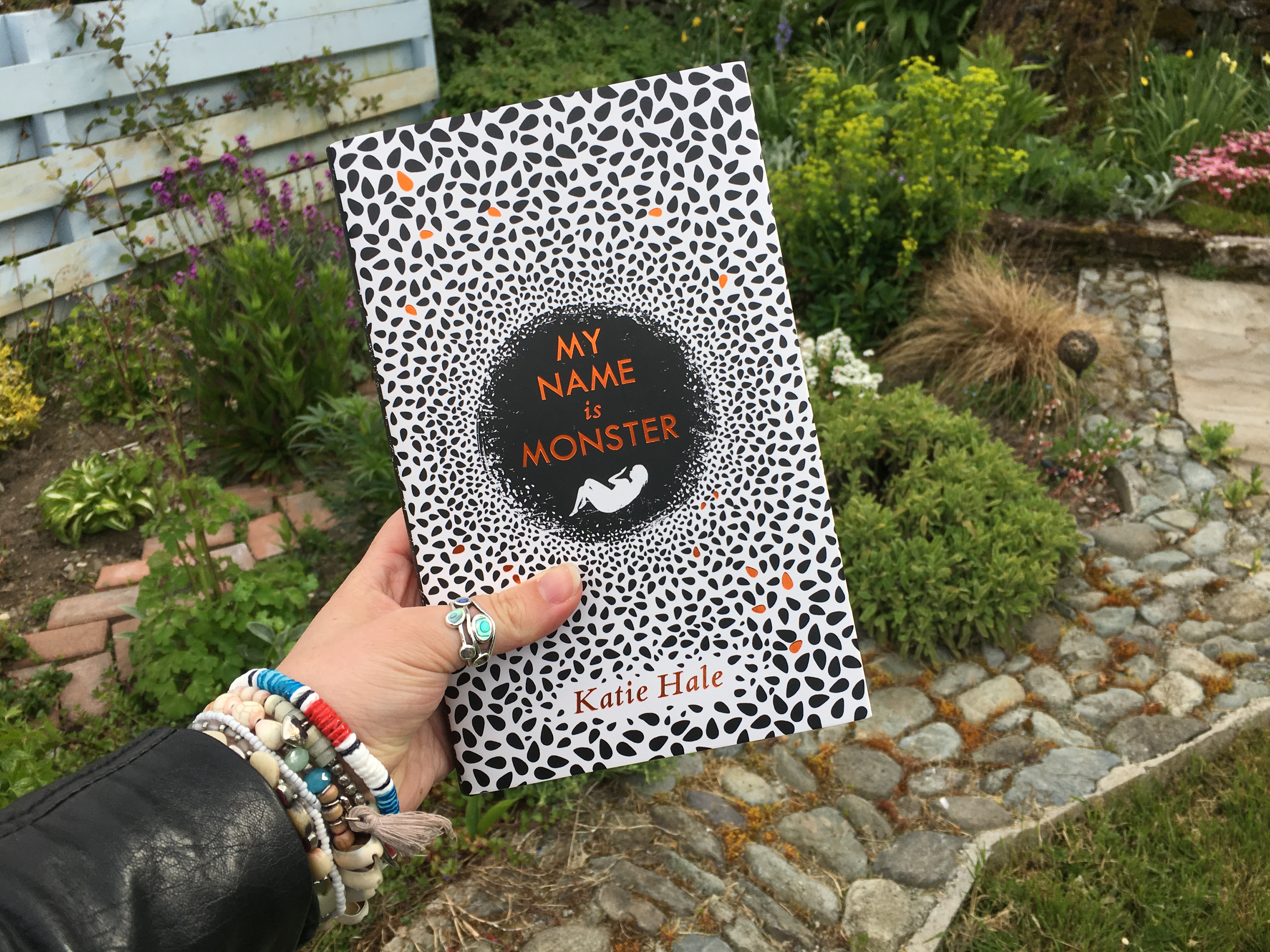
Let’s start with the big one, which I’m sure everyone reading this is already well aware of, as I’ve barely shut up about it for the past 12 months: my debut novel, My Name is Monster, which was published by Canongate in June.

From the moment I first saw the proposed cover design for the book, I fell in love with it. Since then, it’s been a rollercoaster of proofreading, launches, and two (yes, two!) dedicated bookshop windows! I did a series of events in some of the amazing bookshops and libraries around Cumbria, and appeared at a bunch of festivals, including Cheltenham, Edinburgh Book Fest, Port Eliot & Borderlines.

Seeing the book in print, and even more seeing it on the shelves in bookshops, has been a phenomenal experience. It still feels strange to know that something that started off as a vague idea somewhere in the recesses of my brain, has been made into an actual physical object, that people can pick up and buy and read and take their own thoughts from. It’s like some strange form of alchemy.

My Name is Monster: available from all good bookshops!

*

In the poetry department, 2019 also saw the publication of my second pamphlet, Assembly Instructions.

Assembly Instructions was published in March by Southword, after winning the Munster Fool for Poetry Chapbook Competition. And, because Southword are based in Cork, I got to travel to Cork Poetry Festival to launch it, and to read from the book at Cork Library.

Read the opening poem from Assembly Instructions here.

Residencies:

This year, I’ve learned that residencies are like buses. You spend years applying for them, and then suddenly all the successful applications come through at once.

My first residency was for the month of February, with an organisation I know well, having run numerous schools workshops for them over the past 5 or 6 years: The Wordsworth Trust, in Grasmere.

While I did, of course, write poetry during the residency, what proved most valuable was the time to read, and the time to experiment with poetic practice. These are the things that so often get pushed to the side, in favour of admin and deadlines, so it was hugely important to have that time to focus on the poetic craft, without the pressure of having to ‘produce’ something.

Residency Round-Up: The Wordsworth Trust

I’m certain this time was instrumental in setting me up for the amount of work I produced during my second residency of the year: MacDowell.

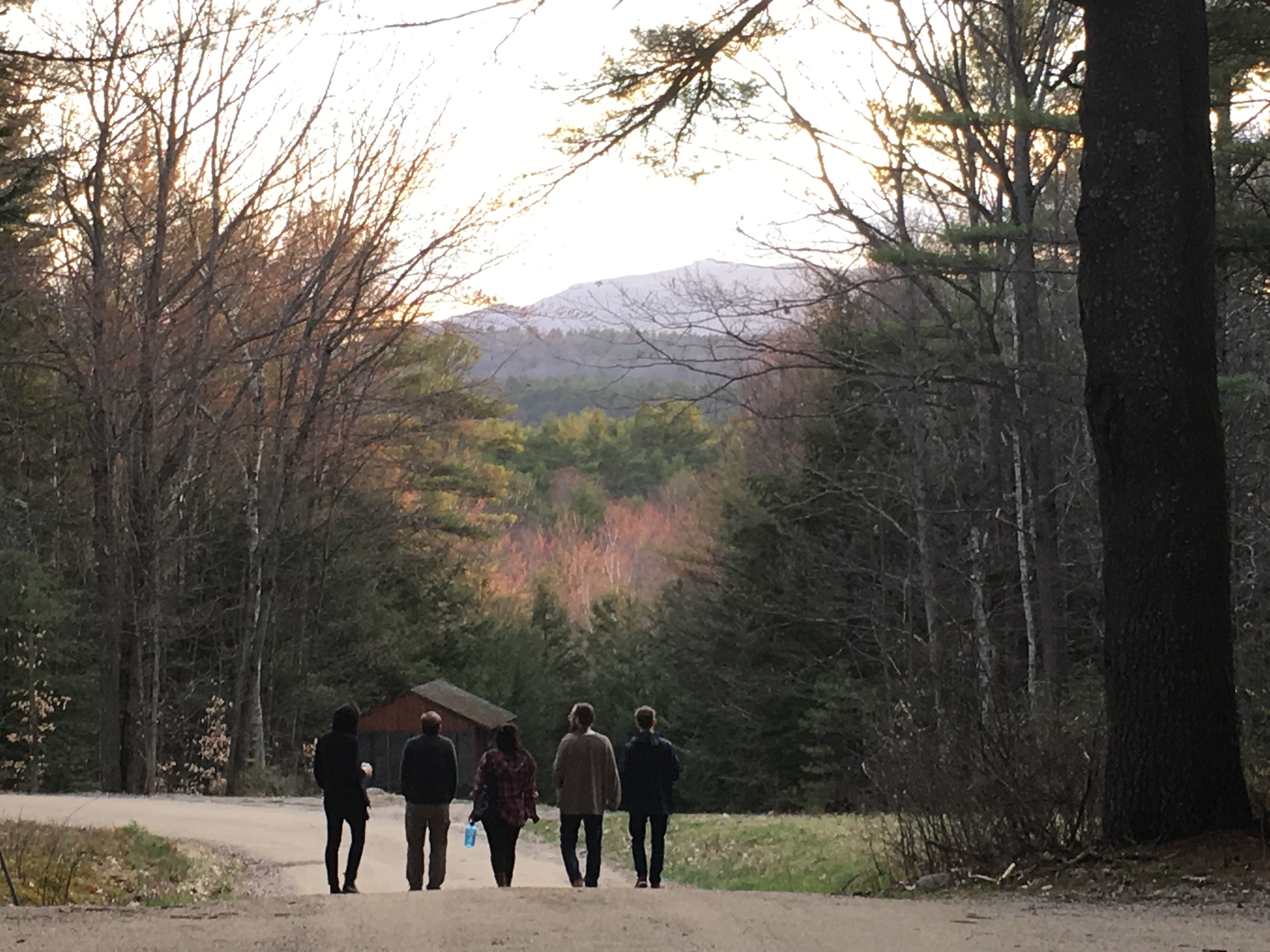
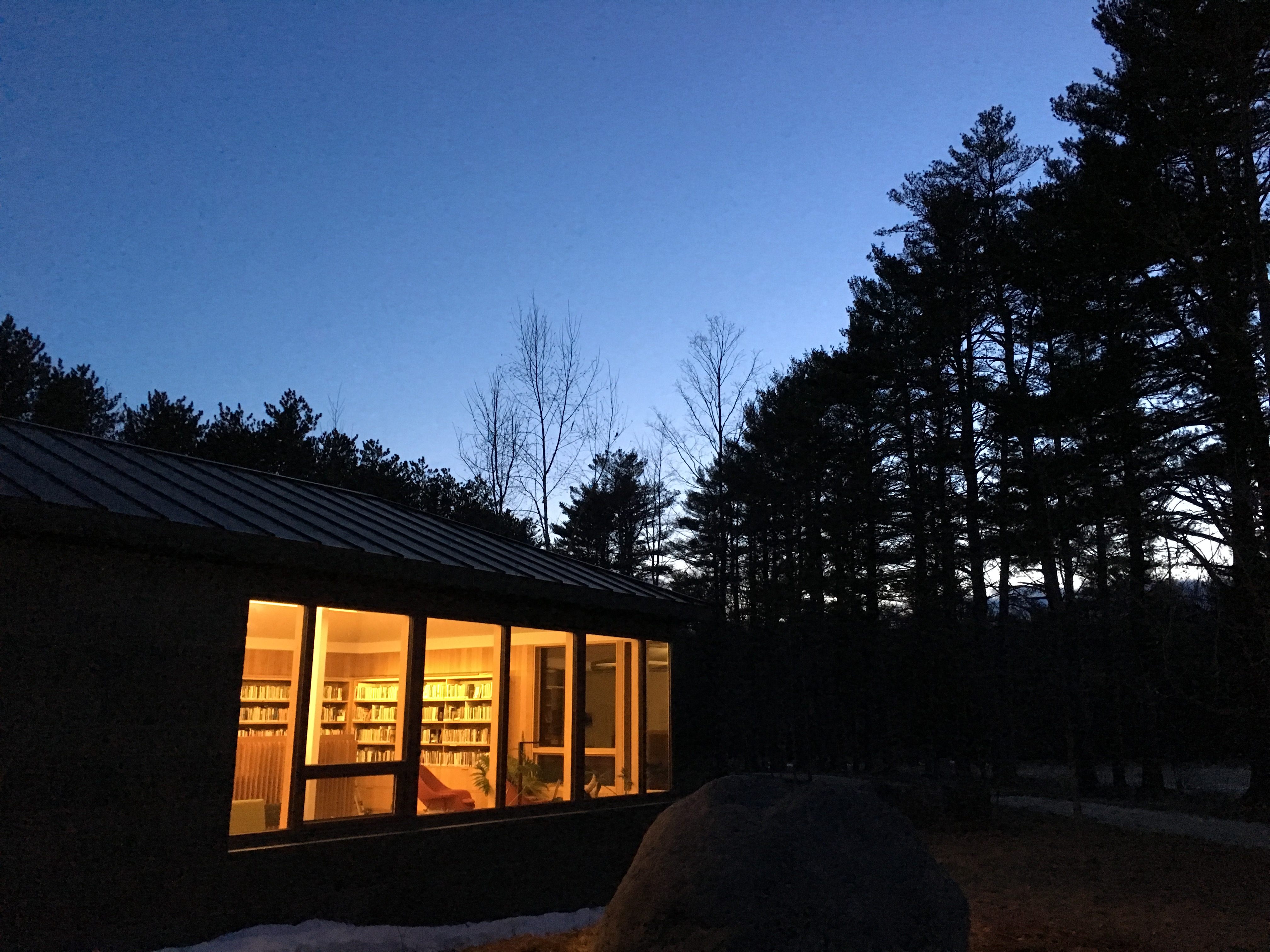
MacDowell Colony is a multi-disciplinary residency, set across an area of woodland in New Hampshire, USA. Each resident gets their own studio, which takes the form of a little house or cabin in the woods, and gets their lunch delivered to them in a little picnic basket. Breakfast & dinner are communal meals in the big house.

Residency Round-Up: MacDowell Colony

The main thing I noticed at MacDowell was how much time there was in each day. Having someone else cooking my meals for me freed up way more time than I’d anticipated, and I had possibly the most productive 3 weeks I’ve had all year – rivalled only by my first 3 weeks at Passa Porta.

Passa Porta was my third residency of the year, in Brussels. It was a month-long stay in an apartment in the centre of Brussels, through a partnership between Passa Porta, the National Centre for Writing and the Flemish Literature Fund. It gave me the chance to finish a first (very rough) draft of my poetry collection – and, of course, to eat a lot of waffles!

Each of these 3 residencies had a very different feel, and I learned a lot about myself and about my ways of working by doing them. (I think I may write a blog post about it sometime in the new year. Watch this space!) But in the meantime, I’m just celebrating the opportunity to live and work in such beautiful places, and to meet so many interesting people.

And speaking of beautiful places…

Arts Council Funding:

At the end of 2018, I was lucky enough to be awarded a DYCP (Developing Your Creative Practice) Grant from Arts Council England.

As well as buying me time to write this year, the grant also paid for me to go to the US to research my collection. This was split between 10 days in New York, using the collections at New York Public Library, and around 10 days driving between Virginia, West Virginia and Kentucky, following the historic route that my ancestors took towards Missouri, and eventually to Kansas.

The opportunity to research the collection in the actual places where so many of the poems are set was incredible. I met some hugely interesting people along the way (and had some conversations that still leave me reeling – some of which have made it into poems), and got to drive through some utterly stunning landscapes. Honestly, I think I’m still processing the trip, and working bits of it into the poems. I’ll probably still be processing it long after the collection is finished.

(Side note: if you’re considering applying for a DYCP grant, go for it! it’s a [relatively] straightforward application, and it’s proved to be invaluable for me.)

Radio:

This year, I’ve also slipped, almost accidentally, into the world of national radio. Specifically: Radio 4.

This started at the end of last year, when I was asked to write & present the Cumbria episode of Tongue & Talk: The Dialect Poets, for independent production company Made in Manchester. The programme was one in a series, exploring dialect poetry in regions across the country, and its continuing impact today. I was given the Cumbria episode, which I used to explore the intersection between dialect poetry, place and identity – particularly looking at what it means to be an ‘offcomer’ in Cumbria. The programme aired at the start of June, just before My Name is Monster was published.

Then, since My Name is Monster came out, I’ve also been on Radio 4 a couple of times to talk about that. The first was on Open Book, from the Edinburgh Book Festival in August, talking about the book in the context of millennial writers / readers. The second was just a couple of weeks ago, on Front Row, which was based around the 300th anniversary of the publication of Robinson Crusoe, and why we’re still drawn to survival stories. An interesting one to talk about the day after the general election…

And the rest:

2019 has also been not a bad year for prizes – though mostly in the ‘almost, but not quite’ category. Still, given the calibre of some of the competitions, and the high quality & quantity of entries, I’m over the moon to be shortlisted, or even longlisted! This is something I’m a firm believer in: there’s so much poetry & fiction out there, that any positive recognition of a piece of work is something to be hugely proud of, whether it wins the big first prize or not.

This year, those successes have included: being shortlisted for the Manchester Poetry Prize, the Mslexia Poetry Prize, and the Bridport Poetry Prize; coming 3rd in both the Magma Editors’ Prize and the Plough Short Poem Prize; and being longlisted for the University of Canberra Vice Chancellor’s Poetry Competition. I’ve also had individual poems published in Magma magazine, Under the Radar, and in Mslexia – which I’ve been tryingt to get a poem into for the past decade!

To add to the other poetry, this year I was commissioned by Théâtre Volière to write a series of poems exploring the history of women in and around Gretna. The poems ranged from the more well-known stories of elopements, to the women who worked at the nearby ‘Devil’s Porridge’ munitions factory during the First World War, to those who worked the land and fished in the Solway. The poems were performed at Ye Olde Mitre pub in London in March, along with music from Scottish fiddle-player Lori Watson. They were then performed again in October, at the RADA studio in London, as part of an event launching the anthology of commissioned work.

I also wrote a couple more commissioned poems for the National Trust this year, as part of their Tables Turned project: a three year participation project, which is all about bringing together community groups, young people, historians, curators and artists in projects that deepen understanding, build new partnerships and inspire creativity.

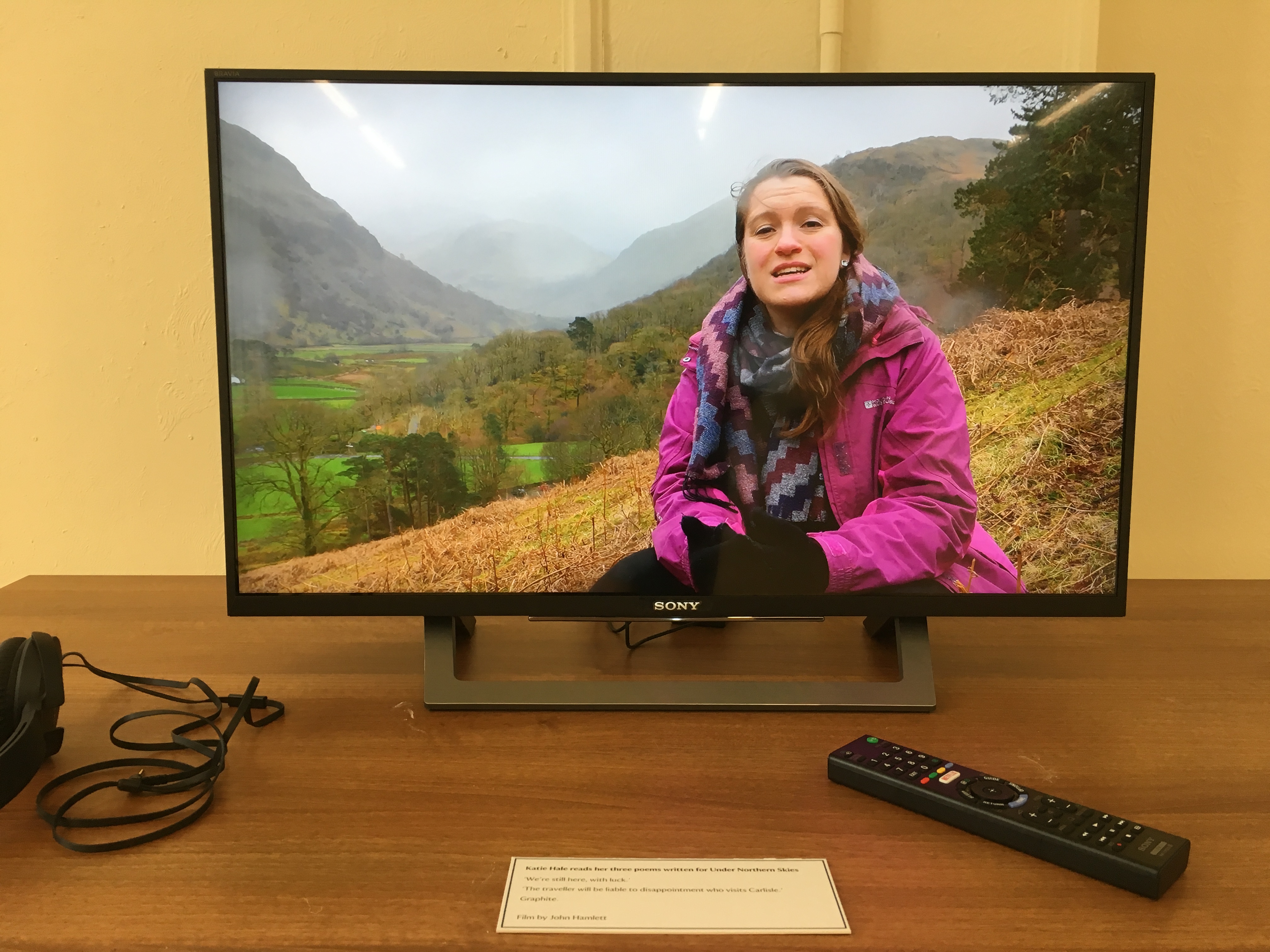
Having written a poem in response to meeting the miners and listening to them recount their experiences of working in the mines on Cumbria’s West Coast, I was then commissioned to write two more poems, inspired by the work the National Trust had done with other groups: pupils from Keswick School, and members of Glenmore art group and Glenmore creative writing group. These poems were a mix of original work, and words collaged from the work and conversation of participants. The result? Three poems, each then filmed by John Hamlett, which were played as part of the Under Northern Skies exhibition alongside artwork from the groups, at Carlisle Old Fire Station.

So what next?

2020 is already shaping up to be as busy as 2019.

I’ve already got 4 residencies lined up for next year, to continue working on my poetry collection, and to (hopefully) make a start on drafting my second novel: a month at Hawthornden Castle in Scotland; 3 weeks at the Kathrine Susannah Prichard Writers’ Centre in Perth, Australia; another month at Gladstone’s Library just over the border into Wales; and 2 weeks at Heinrich Boell Cottage, on Achill Island in Ireland.

To tie in with the Australia residency, I’m also planning an epic trip in the first part of next year (think multiple countries & continents!), during which I’ll turn 30! It doesn’t seem like 5 minutes ago since I was making my ’32 things before 30′ list, so it’ll be good to look back and see which ones I’ve managed to achieve.

And when I get back? There’s always Kendal Poetry Festival to look forward to (I’ll be orchestrating a guerrilla poetry project for that again in 2020), and a bunch of workshops that are already booked into my diary.

Oh, and as if that wasn’t enough – next year will not only see the release of the paperback of My Name is Monster (with a new & equally beautiful cover that I can’t wait to share!), but will also see the book published in German, as Mein Name ist Monster! World domination here we come…

In the meantime, I guess I’ll just continue working on my poetry and my fiction, and sharing the occasional blog post.

*

Hope you’ve had a wonderful 2019 – and all the best for the new year. Happy writing!

One of my big poetry achievements this year has been to finally have a poem published in Mslexia – something I’ve been trying to do for around a decade. And, as it happened, I ended up with poems in two consecutive isues! Funny how these things work out.

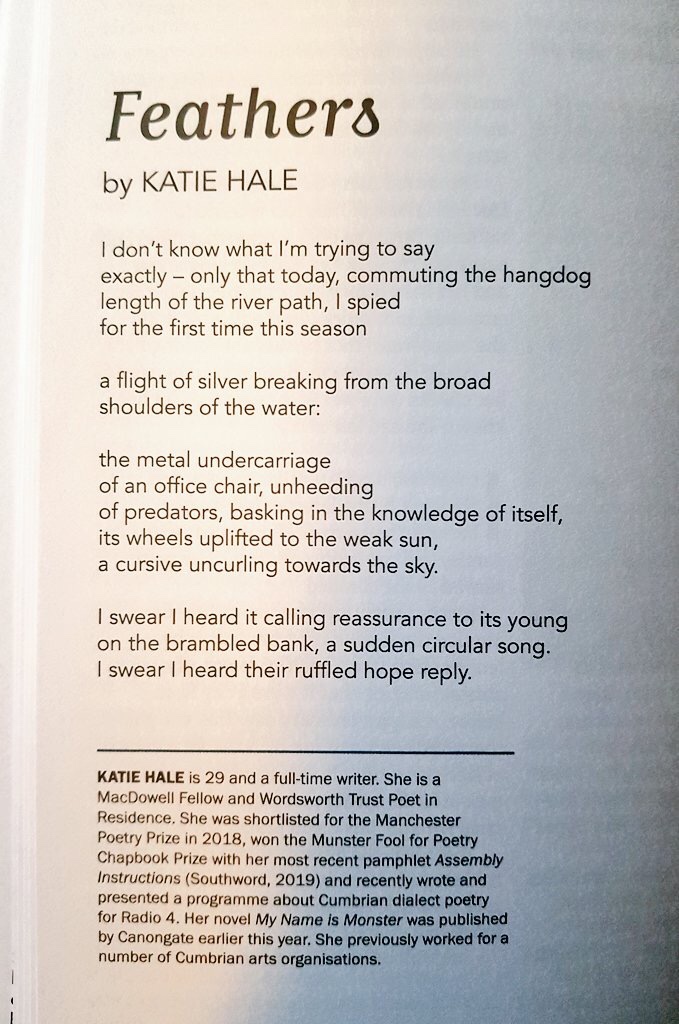
Here’s my poem, ‘Feathers’, which was submitted for the open callout on the theme of ‘journeys’.

Feathers

I don’t know what I’m trying to say
exactly – only that today, commuting the hangdog
length of the river path, I spied
for the first time this season

a flight of silver breaking from the broad
shoulders of the water:

the metal undercarriage
of an office chair, unheeding
of predators, basking in the knowledge of itself,
its wheels uplifted to the weak sun,
a cursive uncurling towards the sky.

I swear I heard it calling reassurance to its young
on the brambled bank, a sudden circular song.
I swear I heard their ruffled hope reply.

*

‘Feathers’ was first published in Mslexia, Issue 83: Sept/Oct/Nov 2019

First things first: this isn’t just a post about social media. I’ve been to enough author events on ‘building your profile as a writer’, which basically consist of some variation on ‘this is how you send a tweet’. And sure, twitter can be useful – but it isn’t the be-all-and-end-all.

Secondly, everything in this post is optional. That’s the joy of being your own boss: you get to decide what’s going to work for you. If you’re super introverted and never want to talk to another human being, well, it’s going to be harder for you, but pick what plays to your strengths. Very few publishers contractually oblige their authors to use social media, for example. After all, you can always tell when someone is only tweeting because they have to, and we all know that it doesn’t work.

(Sorry – I promised this post wasn’t going to be all about social media, didn’t I?)

Anyway, the point is: there’s no single ‘correct’ way to be a writer. Every writer is different – both in their writing and as a person. And so every writer will be able to build their profile in the way that suits them best.

Ok. Caveats aside: one thing you want probably want as a writer is for people to read your work. For this to happen, people have to know about you and your work. In other words, you have to build up a profile – and here are a few ways you can do that:

Write:

Writing will always come first. Sure, we can all talk about writing till we’re blue in the face, and still never actually write a word. After all, while I’m writing this blog post, I’m not working on my second novel, am I? (Shh – don’t tell my agent.)

There’s no point building an audience if there’s nothing for them to read.

The Writer’s Apprenticeship 1: Learning to Write

So write, and get your writing out there – but only when it’s ready. If you send out work before it’s ready, you might as well not send out anything at all. If it’s less than your absolute best, then it isn’t ready. From my own experience: when you first think a piece of work is ready, it rarely is. Stick it in a drawer for a while. Give yourself some distance before coming back to edit it. Show it to trusted readers – a writing group maybe, or a friend who’s also a writer, or at least a good reader of your work. Edit it. Edit it again.

Then, when you’re certain it’s as ready as it can possibly be – then, send it out. Submit work to magazines and journals. Enter competitions. Query editors and / or agents, if you like. Build up your writer’s CV. Start to get your name known – just make sure it’s known for the right reasons!

The Writer’s Apprenticeship 2: Learning the Industry Ropes

But it isn’t just about wordcounts. What you write is also important. It’s part of your identity as a writer. Some people say you should only write what you know. Others say you should write whatever you want to write, or you should write whatever is hardest for you. What do I think? I think you should write about what obsesses you. Whatever it is that keeps nagging at your brain, that won’t leave you alone. There might be more than one thing. It might change over time. In fact, it probably will. But whatever it is that won’t leave you alone – that’s a thing to write about.

This doesn’t mean you’ll only ever write about one thing. If what obsesses you is, for example, ‘marriage’, or ‘travel’, or ‘desire’, there are a million different ways to write about each of those. But whatever obsesses you, whatever you write about, is part of your brand as a writer.

Build Your Brand:

I know, that’s a horrible, corporate-sounding word. But it’s useful for us to think about.

Often, when we think about branding in corporate terms, we think about a company’s logo. And for car manufacturers and tech companies etc, this is important – after all, most of us could name a lot of the world’s best-known companies from their logos.

But branding is about so much more than just having a single recognisable image. Companies with strong branding won’t just have a consistent logo. They’ll use a consistent font or fonts, which will be the same across packaging and printed publicity and websites. They’ll always write the date in the same format. When they talk about a product, they’ll always spell it and capitalise it and refer to it in the same way. They’ll use consistent colours or colour schemes.

Think about hotel chains, or chain coffee shops, or banks. There’s a decor that’s consistent across each of their branches, so that if you’re in an unfamiliar city or even a different country, if someone dropped you in, say, a Starbucks, you’d know that was where you were.

But still, branding is about more than that. It’s an ethos. It overlaps with company policy: how does this company treat its customers; what do they do in response to complaints; how do they treat their staff; what’s their environmental policy?

So how does this apply to you as a writer?

There are a number of ways you can build your own brand. As with companies, some of these are small, aesthetic choices, and some are larger decisions about your professional ethos. All of them should help you to appear more professional.

  • Choose an image. This isn’t exactly a logo, but when people ask for an author photo, don’t use a different picture every time. Personally, I have two photos that I regularly send out when an organisation wants an author photo: a headshot, and a full-body shot. In both of them, I have the same hairstyle, so I’m recognisably the same person. These are also the images I use across all of my professional social media, too. (The flipside to this is that you need to remember to update your author photo if/when your appearance changes drastically, so that your author photo is still recognisably you. For instance, if you chop all your hair off, or get a massive face tattoo, or just get older.)
  • Pre-prepare different versions of your bio. As with author photos, organisations are going to start asking for your bio. Each organisation will have its own stipulations for this – particularly in relation to length. Most will want it to be in the third person, and professional-sounding (occasionally you may get asked for a ‘fun’ or ‘informal’ bio, or one in the first person, but this is quite rare). Of course, what you say in your bio might well vary depending on what it’s for – for instance, I focus on different things depending on whether the bio is fiction- or poetry-related – and it’s definitely going to change as you gain more experience and add more achievements. But it’s worth writing a few different versions of your bio all the same: let’s say, a long version, a medium version, and a short version. This way, when someone asks you for one, you at least have something you can use and modify, which fits who you are as a writer.
  • Choose a font & style. Whenever I write, I use the same font and page layout. I do this because I know the style I’ve chosen looks professional, and it saves me from having to constantly make decisions about aesthetic style. Instead, like a newspaper or a magazine, I have a house style. It makes my life easier, and it makes my work look more professional. It’s recognisably mine – which is useful if I’m sorting through a bunch of post-workshop pages and am looking for my own. This style, like my biographies and my author photos, are part of my writing brand. Oh, and in case you’re wondering, the style is: Garamond; font size 12; justified; title in size 14 (left-aligned for a poem, centred & underlined for prose); standard margins; poetry 1.15 line spacing; prose 2 point line spacing; prose paragraphs indented; header right-hand-aligned, containing name, title & page number. Obviously that isn’t the only option – it’s just my personal preference. As long as your work looks professional (no weird fonts, and definitely no Comic Sans), then that’s what’s important.
  • Choose an outfit style, if you like. If you want to take this aesthetic choice thing further, choose the sort of outfit you’d want to wear to an author event. Then create a number of variations thereon, always in the same style. This has 3 advantages: it becomes part of your ‘look’ as a writer; it makes you recognisable to readers; it saves you from getting anxious about what to wear every time you do an event. I know someone who always wears the same (quite plain) outfit for readings, but with a different vibrant scarf each time, to add variety. You don’t necessarily have to go that far, but it can be useful to have a ‘look’ – at least for professional purposes. If you turn up to one event in a cocktail dress and killer heels, and to the next in a hoodie, jeans & UGG boots, you’re giving off a different impression each time. And I know, this sounds shallow. I know, we shouldn’t judge people on appearances. But we do make aesthetic connections – and if you want to stick in people’s minds, then sending mixed stylistic signals might not make that any easier.
  • Know your own obsessions. This one is less about style, and more about content. You know what we said earlier, about having your obsessions as a writer, and writing about them? Try making a list of them. Write them down. Then, once you’ve identified them, find out more. Get involved with other people who have similar obsessions – not necessarily writers. For example, if your obsession is travel, speak to adventurers and gap year students; speak to pilots and people who work on ships; follow expeditions on twitter. This will help you in your writing – it’s always good to get a more in-depth knowledge of whatever obsessions you’re writing about. But it will also help you to connect with readers who aren’t writers, who aren’t in the book world. You’re building your brand, and building a potential audience at the same time.
  • What’s your ethos? What do you believe? Not necessarily your private beliefs, but your public ones. The ones you’d be happy to talk about in an interview, or a blog post, or on social media. What do you stand for? As a member of society, but particularly as a writer. I can think of writers, and individuals within the publishing industry, who stand strongly for: transparency of wages in publishing; fair payment of writers; the promotion of working class writers; the accessability of nature writing; the non-violent treatment of women in thrillers & crime fiction. For each of those issues, there’s a single name that comes to mind for me, of writers for whom this is part of their brand. This isn’t a false thing. It isn’t a case of saying ‘what can I stand for that will fit with my brand’ – like a company that uses meat pastured on deforested rainforest, but preaching about saving the environment. It’s about knowing what you stand for anyway, and doing it consciously. For example, I believe that the writing community needs to support one another, and that helping other writers is a good thing to do, because by helping other writers, I’m helping the institution of writing as a whole. It isn’t some twee thing to make me sound nice; I believe it with all my soul – that we, as writers, are colleagues, not competitors. So, I put this into practice by sharing my own experiences, and by sharing opportunities I come across with other writers – sometimes individually, often on twitter. This is part of who I am as a writer. If you like, it’s part of my brand.

Talk To Other Writers:

We all know that social media is a great way to connect with people, but there are the more old-fashioned ways as well. Such as, you know, in person.

One of your greatest resources as a writer (other than books, and maybe coffee) is other writers. You’d expect engineers to talk to other engineers, for accountants to meet with other accountants, for teachers to talk about how to deal with a challenging pupil with other teachers. So why do some of us think that writers should be stuck in a garret somewhere, eating crusty bread and not speaking to other writers?

Other writers can be great first readers of your work. They can be people to share experiences with over wine, and people to help you with your professional problems. I have writer friends who I send my first drafts to, who’ll tell me honestly what is and isn’t working. I have writers I share reading lists with, who give me book recommendations that are always reliably excellent. I have writers who I message when I’ve got a deadline looming that I don’t know how to meet, or when I’m struggling with a plot point, or when I can’t work out what to put as expenses on my tax return. I have writers who’ll celebrate good news with me, and who’ll comiserate with me when something doesn’t go so well. I have writers who’ll spend the day at my kitchen table with me, both of us just working on our own writing, because it makes a nice change from being on our own.

In short: other writers are my colleagues, and I couldn’t do without them.

So how do you meet other writers?

  • Writing groups: Joining a writing group is a great way to meet other writers – particularly if it’s the right sort of group for you. Try to find a group of people at a similar experience- or commitment-level to yourself, who have a similar creative ethos. If a writing group really isn’t working out for you – if you find it’s having a negative effect on your writing – then feel free to leave it. A good writing group should challenge you, but it shouldn’t leave you weeping in the gutter because nobody understands your work. (The flip side of this is: if you try numerous writing groups, and not a single person at any of them understands your work, then maybe this is the time to think about what the common denominator might be…)
  • Writing courses: There are hundreds of different options for writing courses, from university-level courses, to week-long residential courses such as Arvon and Ty Newydd, to online courses such as those run by The Poetry School, to locally run evening classes, to one-off workshops and masterclasses at festivals, or run by arts organisations or local libraries. These can be a great way of meeting fellow writers (feel free to try the post-workshop announcement of ‘I’m going to the pub afterwards if anyone fancies joining me?’) – not to mention improving your writing at the same time. And the best bit? If you’re registered self-employed as a writer, then this is technically professional development, so you can claim it as expenses on your tax return. (At least, you can claim the course fee. Not so sure about those post-workshop drinks at the pub.)
  • Book events: Attending book events can be an inspiring way of hearing from professional writers, and getting to know a bit about whoever’s giving the event and their work. But the chances are, you’re not the only writer in the audience, either. If you feel up to it, get chatting to some of the other audience members. Talk about what you think of the speaker, or what you thought of the event. Whether or not that person turns out to be a writer, they’re probably at least interested in the same sorts of books as you. And if you attend a literary festival, then there are even more opportunities for these kinds of conversations. (Pub!)
  • Networking events: If you don’t like the idea of just going up to someone and starting a conversation out of nowhere (I’m terrible at it, unless it involves some sort of ultra-British complaint about the weather), then maybe you could try a networking event, where the conversation isn’t out of nowhere, because it’s expected. Sometimes, writing organisations (such as the Society of Authors and Mslexia) will run events that specifically allow writers to network with one another. Often, these events will also feature talks by professional writers, which will of course be incredibly useful as well – but don’t skimp on the networking bit. And the good bit about networking as a writer? You basically just get to have lovely conversations about books, usually with other introverts.
  • Social media.

Yes, OK – Use Social Media:

I suppose I can’t go through a whole post about creating a profile as a writer, and not talk about social media. The problem, I think, is that too many people see social media as the be-all-and-end-all of creating a profile as a writer, and as far as I’m concerned, it isn’t. It’s just a way of implementing all the things we’ve already talked about.

For instance: building your brand as a writer? You can do that through social media – through the profile picture you set, through what you choose to talk about, who you follow, what topics you engage with, what you retweet, the language you use, how you conduct yourself.

Networking with other writers? Social media can be great for that – particularly if you’re not in the position of being able to regularly access physical get-togethers with other writers.

Engaging with your obsessions? Following non-writers who are interested in the things that obsess you? Twitter!

Talking about books? Hearing about books? Finding out about opportunities that might be available for you as a writer? Social media is good for that, too!

The important thing to remember about social media is that it isn’t necessary. If it works for you, then great. If it doesn’t, then that’s fine too; you just need to find your alternative.

You also don’t need to be on all social media platforms. You don’t need a professional Snapchat, Tumblr, Facebook, Instagram, Twitter, Soundcloud, YouTube, Vimeo, Bebo (does that even still exist?), whatever. You don’t need to blog and vlog and post your word count every hour to Instastories. Do what works for you.

Oh, and one last thing…

Debunking The Myth:

I once read a blog post about building up your profile as a writer, which was essentially a long list of things you needed to do before you wrote your novel, or whatever. These included things like: creating a successful book review blog; gaining a lot of followers on twitter; getting articles into lots of journals; post short stories to your blog, preferably so that one of them goes viral; get a lot of followers on GoodReads; build up a social media profile so that you have an audience waiting for you when the time comes; get your professional headshot taken; practise your autograph; invent delicious calorie-free chocolate.

Ok, I made the last one up. But you do see posts like this doing the rounds. And while all of these things are fine to do once you’ve written the book (and if you do succeed with that last one, be sure to drop me a line), they’re all secondary to the actual writing. The most important thing is to just write the book.

I’ll say that one more time, for effect: JUST. WRITE. THE. BOOK.

But when the writing is done, or well underway? Well, then it doesn’t hurt to spread your wings a little.

*

Good luck! And happy writing.


If you want a sell-out event at a literary festival, call it something like ‘How To Get Published’. I’ve been to numerous of these types of talk and panel discussion over the years, and they’re always well attended.

In my experience, there are four main types of people who attend these events:

  1. Those who’ve spent years honing their craft and writing their manuscript, who want to start querying to agents, but find the publishing industry a bit tricky to understand, and want to get to grips with how it all works.
  2. Those who don’t have anything publishable at the moment, but also want to understand the industry they’re aiming to be a part of, and also to meet other writers / network with industry professionals.
  3. Those who are starting out (or have started fairly recently) and want to get a sense of what’s involved in seeing this whole writing thing through.
  4. And, inevitably, those who just want a quick fix to make them a published writer.

If you’re the fourth kind of person, then sorry, but the road to publication is long and hard, and there are so many steps before you even get that far. If you’re one of the first three, then you’re probably already aware of this, and will therefore probably get a lot more out of this kind of event.

But I’ve also been to events where an audience member has asked ‘how do you get a book published’ and the panellist has, slightly sniffily, said that you need to write the book first – as if everyone who might be interested in how to get published is Person 4, not Person 1-3. Sure, Person 4 exists (and I’m sure we’ve all met one or two of them in our time), but they’re not the only type of unpublished writer out there.

Thankfully, not all panel events are like this. The other week, I went to a refreshingly honest event at the Bronte Festival of Women’s Writing, with hugely useful advice and experience sharing from all sectors of the book industry – from writers all the way through to booksellers. If you can find events like this, they’re a great way of learning how the industry operates.

Because let’s be honest, the publishing industry can be incredibly confusing.

Like any industry, publishing comes toting its own bag of jargon: advance, acquisitions, UKCW, ARCs, earning out… And even if you sit down with some sort of bilingual publishing/standard English dictionary, the process can still seem somewhat mysterious. After all, what does an editor actually do? How does a commissioning editor differ from an editorial assistant, or a proofreader, for that matter? How does it all work?

There’s no quick answer to all of this. Partly because, like any industry, publishing has far too many layers to unpick in a single blog post, and partly because every publishing house operates slightly differently.

Usually, it operates a bit like a flow chart: the author writes the book (or pitches it if you’re writing non-fiction), and then submits to agents; once accepted by the agent (‘representation’), the writer will usually work with the agent on the manuscript, before the agent then tries to sell the rights to publishers; once a publisher has agreed to publish the book (‘acquisitions’), the writer then works directly with the editor at the publishing house towards a final version of the book, which is then published.

Of course, there are many more steps within that – and even these steps are subject to variation. For instance, some publishing houses don’t require you to have an agent, and if you’re writing non-fiction, you’ll often pitch the book to agencies and publishers before you’ve finished writing it. There is no single path to getting published.

I repeat: THERE IS NO SINGLE PATH TO GETTING PUBLISHED.

So if there is no single path through the publishing process, how do you go about figuring out what any of those paths look like, and how do you know which one might be right for you?

the writing desk

Author Events:

I’ve already mentioned this, but it’s worth mentioning again. A lot of literary festivals will have events specifically geared towards people who are looking to publish a book. Often this will take the form of a panel discussion, featuring a writer or two, and a couple of people who work in publishing (maybe an editor and an agent). They tend to being with each person describing something about their role in the publishing process, and then open up to a Q&A. Of course, there are other formats, too, but this one is fairly common.

These events can be incredibly useful for helping writers to get a grip on how the whole thing works, but also for making the whole thing seem more human. After all, although from afar the publishing industry might seem like a great big faceless machine, it’s really all about individual people, who all have individual tastes.

They’re also a good way of networking with other writers who are probably in a similar position to you, and at a similar stage of their development as writers. After all, you’re all trying to figure out how it works together, right?

However: while these events can be incredibly useful, be aware that they come in all shapes and sizes – and at all kinds of cost. The biggest, most expensive event isn’t always the best. In fact, it’s often the smaller, more personal event that can be the most useful for something like this.

Also beware of blanket statements. As I said, there’s no single path through the publishing industry, so what is true for one person (even if they’re a commissioning editor at a massive publishing house) might not be true for another. I’m obviously not saying to ignore professional advice, because if you’re going to do that, then there’s no point going to these things in the first place – but just take things with a pinch of salt. Ask yourself if it rings true to your own experience. For instance, I’ve heard of events where writers have been told things like ‘nobody’s publishing young adult fiction any more’ and ‘you can’t be a writer if you live somewhere rural’. If there’s anything like this which strikes you as untrue, don’t be afraid to get a second opinion.

Google:

And where to get that second opinion? If the in-person events don’t help, or if you’ve got points that need clarifying, then don’t be afraid to google it.

I know that sounds obvious, but you’d be surprised how often I speak to people who don’t understand how the publishing industry works, and have never even thought of using the internet to help them find out. Granted, it isn’t the be-all-and-end-all, and like anything online, you have to take it with a pinch of salt. But it’s a free way of getting your head around how it all works – ideally with a glass of wine or two.

And if you’re not sure where to start with your googling, here are a few online resources to set you off on your search:

WAY:

I’ve already mentioned Writers & Artists above, but as well as having a plethora of online resources, they also publish the annual Writers & Artists Yearbook. This is a hugely useful resource for anyone who’s on the brink of looking at publication, with listings of agents and publishers, what sort of thing they’re look for, and details on how to submit to them.

If you’ve done all your writing bits, and your editing bits, etc etc, and you’re looking at securing an agent, or publication through a house that accepts unsolicited submissions, then sit down with a copy of the Writers & Artists Yearbook. I’d also recommend using it in conjunction with agencies’ own websites, and combining book research with online research. (If you don’t want to buy a copy of the Writers’ & Artists Yearbook, then check your local library to see if they have it in stock.)

Acknowledgements:

If you’re looking for representation or publication, then try making a pile of books that have something in common with yours. Are there books written in a similar style and genre, which you think would complement your own? Books that deal with similar themes? Books aimed at a similar audience?

Agencies and publishing imprints tend to have specialities. So, if there’s a book that you think might sit well alongside your own, do some digging on it. See who it’s published by. See who the writers’ agent is. (This is something you can google, or just look in the acknowledgements at the back of the book. If an agent is any good, the writer should have thanked them there.)

I’m not saying that this agent will therefore definitely want to represent your book as well. For a start off, most agents probably won’t want writers on their list who are too similar, as they’ll end up in competition with one another. But it’s a good guess that your book might well be their sort of thing. It’s a place to start.

Mentoring Programmes:

I’ve already said that there’s no single path towards getting published. One alternative to traditional methods (or working alongside traditional methods) can be mentoring.

Mentoring programmes for writers seem to be on the rise, which can only be a good thing. They vary massively in terms of what they offer – from a promise of publication at the end of them, to financial assistance, to developmental support, to editorial guidane. They also have varying criteria for applicants.

I’ve benefited from a couple of mentoring programmes over my career so far. One of these (through the Wordsworth Trust) helped me get my first poetry pamphlet ready to submit to publishers. The second (WriteNow, run by Penguin Random House) helped me to write my first novel, and to get an agent.

From Idea to Book: My Journey to Publication

When you’re trying to get your foot through the publishing door, it can be helpful to have somebody pulling it open from the other side.

*

Next week: The Writer’s Apprenticeship 3: Building a Profile


If you want to be a writer, you have to learn to write. Obvious, right? Right. I mean, if you wanted to be a concert pianist you’d expect to have to learn to play the piano first.

But there’s this weird thing that happens with writing, where some people think that, because they can write words down (a shopping list? An email? A letter to a friend?) they can write a story or a poem or a play, or whatever it may be. After all, they use words every day – surely it’s just a matter of choosing the right ones?

If you’re reading this, then you’re probably already well aware that it doesn’t work like this. You have to understand the craft of your writing – to learn about narrative arc, voice, dialogue, sentence structure, point of view, figurative language, rhythm and meter, pacing, imagery…

Sure, you can write without understanding any of this, and if you’re writing solely for the pleasure of it and it isn’t about writing well, then fine. Just because we enjoy something doesn’t mean we have to monetise it – whatever capitalism has to say about it. After all, I’m a far cry from selling out a solo gig at the Royal Albert Hall, but I take huge enjoyment from singing in the shower now and again.

But if you want your writing to be good, as judged by industry expectations, then you’re going to have to learn it, just like any other craft.

So how do you learn to write?

Books at Allan Bank, Grasmere (National Trust)
Allan Bank, Grasmere (National Trust)

Read.

Before you even pick up a pen, you need to read as widely and as deeply as you can. You don’t have to be a particularly fast reader, but you have to read well. By that, I mean you have to read with a critical eye. You’re not just reading for the story any more, to find out what happens. Instead, approach each book as a training exercise.

  • How is this author creating suspense?
  • How do they make you like their protagonist?
  • If the book feels a bit slow or you lose interest at some point, why is that?
  • How could you avoid making the same mistakes?

If you don’t like to read (and, believe it or not, I have actually met people who write, who say that they hate books), then you need to question whether you really do want to be a writer. If it’s just because you like the sound of your own voice, then record yourself reading the phone book or something instead. Writers need to read, the same way that painters need to look at other paintings.

I’ve also met people who say they don’t read because it’ll influence what they write.

Good.

Let yourself be influenced by others. That doesn’t mean you have to copy their ideas or steal their characters (in fact, there are laws against that sort of thing). But if a writer has a particularly engaging way of writing dialogue, so that you can actually hear the characters coming off the page, then absolutely study their technique and let it influence yours. If you’re an aviation engineer, you need to study the concept of how an aeroplane wing works or the plane will fall out of the sky. If you’re a writer, you need to study how to string a sentence together, or construct a plot, or develop a character, or your book will never get off the ground.

writing prompt - Katie Hale

Read widely.

Reading in your own genre is great. If you write crime fiction then sure, read crime fiction. Figure out what other crime writers are doing, what they have done in the past. Where do you fit within the genre? How can you do something different?

But read other stuff as well. Let yourself be influenced by writers of all kinds. Read thrillers and romance. Read literary fiction. Read poetry and play scripts. Read classics. Read YA. Read non-fiction. Heck, read a picture book. As long as you read critically, you’re growing your craft. And the variety of your influences may just give you your distinctive voice.

As well as reading other types of fiction, and poetry, and scripts, and creative non-fiction, try reading books about writing. Study what other writers do, and study what other writers are telling you to do.

There are literally hundreds of ‘how to’ books out there. (Ok, probably there are thousands, but obviously I haven’t counted. I’m too busy reading and writing.) So how do you choose which ones are worth your time?

Honestly, it’s probably going to be trial and error. Recommendations are great, but what works for your friend might leave you high and dry, whereas something another writer has found completely useless might be like gold dust for you. We’re all different writers and, crucially, we’re all at different stages of development in our writing. So we’re all going to be looking for something different. If you want to try a few without a big price tag, see what you can get from your local library. You can then dip into a number of options, and if you find one you like, potentially buy a copy afterwards.

In the meantime, here are a few books on writing that I would recommend:

  • Julia Cameron’s The Artist’s Way
  • Louise Doughty’s A Novel in a Year
  • Renni Browne & Dave King’s Self-Editing for Fiction Writers
  • Will Storr’s The Science of Storytelling
  • Peter Sansom’s Writing Poems
  • Glyn Maxwell’s On Poetry

new year writing resolutions: Katie Hale

Write.

Reading is all very well, but of course you also need to write. Just as a concert pianist learns to play sonatas by practising scales, so you can learn to write by writing. You can write exercises, or you can write that epic novel that you’ve had in the back of your brain for ages. It doesn’t really matter, so long as you’re writing, and you’re working out at all times how you can improve.

Try different voices. Try different forms. Try using techniques you’ve observed in your reading – how do they work for you?

Practice makes perfect – and although I’m not entirely sure I believe in ‘the perfect novel’, at least practising can help to get you closer.

Social media addiction - Katie Hale, Cumbrian poet, writer and artist

Join a writing group.

Once you’re on the way with your writing, you’re going to realise what a solitary process it can be, if you haven’t already. I guess it’s a bit like parenting – sometimes you just need to talk to other people who are going through the same thing.

Writing groups can take any form. They can be workshopping groups, where you get together to comment on each others’ works in progress. They can be support groups, where you share opportunities and talk about the problems you may be facing. They can be physical groups (at someone’s house, in the pub, in a specially booked room somewhere), or they can be online groups. They can be mixed ability, or grouped so that everyone has similar levels of experience.

I’m in a number of writing groups, each with its own focus:

  • A poetry group that meets once a month, where we each bring in a poem to workshop as a group.
  • A group that focuses more on fiction (and scripts), which also meets once a month, and for a full day. In the mornings, we do a number of writing exercises, usually with a specific theme or focus, and in the afternoons we workshop bits of our works in progress, which we circulate about a month in advance.
  • A WhatsApp group of other debut writers, which we use as a support group for sharing experiences / successes / difficulties etc, rather than for sharing actual work.
  • I also have a number of friends who are writers, who I often share things with individually.

I’ve also been in a number of other groups over the years, as I’ve moved around geographically, and as my focuses have changed. For me, the groups that seem to work best are the ones where everyone is at a similar level – if not of experience or knowledge, then at least of commitment. As with many things, it helps if everyone is coming from a place of similar understanding.

If you’re looking for a writing group in your local area, and you’re not sure where to start, try by googling, or by asking at your local library, arts organisation or community centre. Talk to other writers in your area – particularly ones who write something similar to what you write. If you’re not sure who these might be, try asking at any local bookshops.

Still can’t find anything? Start one yourself!

script writing for theatre - Katie Hale

Look at writing courses.

This one isn’t essential. You can absolutely become a good writer without ever going on a writing course. After all, most of the hard work is done between you and the notebook, and it takes time. It isn’t something someone can teach you in a week, a month, or even a year.

That isn’t to say that writing can’t be taught. Writing is a craft, and any craft is teachable, as long as the student has the willingness, passion and skill to learn. But it takes time. You might learn to play the odd tune on the piano in a year, but you won’t yet be a concert pianist.

But, with that caveat made, there are still a number of really good reasons to explore courses as a means of improving your writing.

  • You can learn from experienced tutors.
  • They’re often a good way of meeting other writers, who’ll have similar writing interests to yourself – and whom you may also be able to learn from.
  • If you’re stuck in a rut with your writing, a course can help you to see things from a new perspective.
  • A course can give you confidence as a writer, and goodness knows we all need that from time to time.
  • Particularly with residential courses, or longer courses such as an MA, they can be a good way of forcing yourself to carve out writing time from your daily life.
  • They’re also incredibly fun!

As with writing groups, there are all kinds of different courses available, depending on the needs, experience level and budget of the writer.

  • Arvon and Ty Newydd are well-known as centres for tutored residential courses, usually over a weekend or a week.
  • Online courses such as the Poetry School.
  • One-day workshops, as well as longer evening / afternoon courses run by adult education providers.
  • One-off workshops through libraries, arts organisations, bookshops and book festivals.
  • I’ve also heard great things about Sophie Hannah’s Dream Author coaching programme for writers.

If you want to go down the university route, there are undergraduate courses (usually 3 years full-time or 6 years part-time), or Masters level courses (1-2 years full-time and 2-3 years part-time). Beyond that there are PhDs, if you’re more advanced.

These courses vary hugely in terms of cost, and of course we know that even well-established writers are rarely rolling in it, let alone writers who are just starting out. But many of them will offer bursary schemes for writers on low incomes, so they’re still worth exploring, even if your budget isn’t huge.

*

And there are my thoughts on learning to write!

Next week: The Writer’s Apprenticeship 2: Learning the Ropes of the Industry


Autumn is very definitely here. I’m getting used to waking up in the dark again, and to lighting the fire in the evenings. I always like autumn – I like the chance to unearth all my warm woolly jumpers and rug up against the long nights. And I like the fact that the early dark means cosying up with book to read – or to write.

That said, I haven’t actually written that much this month. I’ve drafted the odd poem, but really, October has been a month of sorting things out, in between a writing-filled September, and my residency in Brussels next month.

Sometimes, I think it can be good to take time away from the rigorous writing – partly for the sake of giving yourself some breathing space (I’ve written a bit about this here), but also because sometimes you just need to do a lot of life admin. And I’ve got a hectic six months coming up, with very little time for taking stock and getting organised within that time. Want proof of how much I’ve had to get organised this month? I’ve already started planning workshops for 2020, because this was my only opportunity. Hence easing up on the writing a bit.

The flip side of this, of course, is that I’m currently chomping at the bit, and desperate to get some more words on the paper. Bring on Brussels!

A Few Good Things:

Borderlines Festival

Borderlines is Carlisle’s book festival, and has fast become a key event in Cumbria’s literary calendar. This year, I took part in a number of ways: from performing at a poetry evening, to talking about My Name is Monster, to running a workshop & leading an open mic at the University of Cumbria.

And, like so many festivals, it was also a great way to catch up with friends and get to see some other great writers talking about and reading from their work.

Cheltenham Festival

And speaking of festivals…

Earlier this month, I was invited to Cheltenham Festival, to talk about My Name is Monster, alongside Sara Collins, whose excellent novel, The Confessions of Frannie Langton, is as gripping and tense as it is beautiful and heart-wrenching.

The festival was of course excellent (and the green room was outstanding!) but what really topped off the trip for me was the hotel. Huge shoutout to my publicist Anna for booking it – it was a beautiful Art Deco room in a stunning building. And what’s more, there was a free G&T on arrival, and complimentary sloe gin on the bedside table. I’m not ashamed to say that I deliberately woke up two hours earlier than necessary, so that I could lounge around in the fancy bath robe and drink the posh teas and write poetry in my room.

Workshops

I’ve also done a few schools workshops this month – including working with around 160 children & young people over the course of 2 days! Fortunately, all of them were lovely and keen, and wrote some absolutely jaw-dropping poetry.

The Month in Books:

This month has been a bit of a mix, books-wise. Some things that have been on my to-read list for a while. Some completely new books. And some that I’ve been dipping in and out of for months and have finally finished. And (for once) a nice mix of prose and poetry:

  • The Confessions of Frannie Langton, by Sara Collins
  • Typhoid August, by Sarah Fletcher
  • Writing Poems, by Peter Sansom
  • The Complete Middle School Study Guide: American History, by Philip Bigler
  • The Testaments, by Margaret Atwood
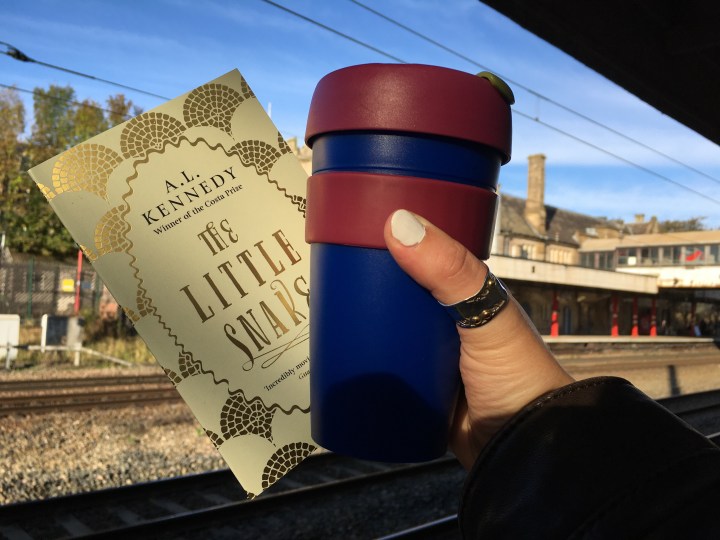
  • The Little Snake, by A L Kennedy
  • Joy, by Sasha Dugdale
  • Mrs Sartoris, by Elke Schmitter

The Month in Pictures:

There are a number of questions I get asked about being a writer. Inevitably, these include: Have you written anything I’ve heard of? Are you going to be the next J.K.Rowling?

And, sometimes, What do you do all day?

I can’t really answer the first two questions, but I can definitely have a crack at the last one. This question usually comes from people of a generation where working from home is still a largely recent possibility (though not always), and is often asked with a look of concern that I don’t have a ‘proper job’. It’s also quite frequently followed by: But how do you earn a living?

The other way I get asked about my daily routine is more along the lines of, How do you stay motivated? If you don’t have a boss telling you to be at your work station at a certain time, then how do you make yourself get out of bed and do the work?

These are both huge topics in their own right: what constitues the job of being a writer, and how writers can earn a living. I can’t tackle the here; they both deserve their own blog posts.

(I’ve talked a bit about motivation & celebrating success as a writer here, and about a writers’ income here.)

But for now, let’s focus on our initial question: what on earth do I do all day?

the writing desk

Morning:

I like to start the day with the most important bits of being a writer: the writing. (Actually, I like to start the day with coffee, but maybe that is the most important bit of being a writer? Then once the coffee’s made and is slowly waking up my brain, I can move onto the actual writerly bits.)

I’m sure many of us have seen that inspirational message that does the rounds on social media from time to time, about how we should fill our time with the important things first and foremost, rather than cluttering it up with the little things that don’t matter. Just in case you haven’t, I’ll paraphrase:

If you take a glass jar and fill it with ping pong balls, the jar will appear full. But then if you take a handful of beads you’ll find that you can still fit them in the jar, because they’ll filter down the gaps. Once the beads are added, the jar will appear full again. But you can still add sand to the jar, as this will trickle between the beads and fill up all the really tiny gaps. But if you’d started with the sand, and then added the beads, you’d find that you wouldn’t have enough room for all the ping pong balls. The message is this: that we should make room for the big things first – in life as well as in jars.

Ok, so I admit it’s fairly corny, but it’s also true. Make room for the important things, and all the little bits and bobs will fill up around them. But if you fill up your time with all the little things, you’ll soon find you run out of time for the important stuff.

Which is why I reserve the mornings for reading, writing and editing. Sometimes I’ll do some of each ot these in a morning, and sometimes I’ll stick to just one. It depends where I am in a project.

What’s really important is that I leave all the admin bits to the…

Afternoon:

The afternoon is sort of a free-for-all. Sometimes I’ll carry on with whatever I’ve been doing in the morning. Sometimes I’ll switch to all the other stuff that makes the one-woman writing business tick (and if you’re doing it professionally, then it is a business).

What does this include? Everything from emails (don’t we all have to do these?) to submissions to competitions and magazines, to residency or funding applications. Sometimes, I try to get outside to go for a walk or something during the afternoons, to get some fresh air and get my sedentary self moving – but I’ll be honest, this happens far less than I’d like it to.

(Residencies are another matter – when I’m lucky enough to be on a residency, I can step away from all the admin bits, which means the freedom to spend some time thinking / walking / exploring my new surroundings.)

And in the evenings?

My evenings are technically non-work time, where I can read or watch Netflix or whatever, but this rarely actually happens. Often the emails and/or the admin bits drag over, and I find myself switching off my laptop much later than I’d like. This is less than ideal for a number of reasons, but especially because it means that, when I go to bed, my brain is still whirring with everything on my to-do list, and so I don’t sleep as well. So, when I have to get up and write the next day, it isn’t from quite as good a place as I would necessarily like it to be.

One of my new year’s resolutions for 2019 was to keep my evenings work-free. Like most resolutions, I did pretty well in January. But of course, it started to slip. I guess it’s one I need to reinstate.


Caveat: like most day-in-the-life pieces, this is an idealised version of my writing day, and is often discarded in favour of an all-day workshop and / or a frantic rush to meet deadlines. But this is the template I try to fit my other days around, and sometimes – just sometimes – I manage to make it happen.


Imagine. Your best friend has just published their eighth novel. It’s nominated for the Man Booker Prize, which they’ve won before. They’re also an award-winning poet with two Forward Prize-winning poems, and a T S Eliot Prize-winning collection. They get flown all over the world and put up in 5* hotels so they can speak their great wisdom at international literary festivals. Their events sell out within minutes, and their signing queue stretches for a mile and a half. Every time you walk past a bookshop, their covers wink at you from the windows. They’re also the nicest person in the world, and have just been nominated as most beautiful writer of all time. They’ve just been nominated for a Nobel Prize. The village book club thinks your books are kind of interesting, but nobody writes quite like your best friend.

Don’t worry, I’m not having an emotional crisis. This best friend is fictional.

But we all know what it’s like to see other people having more success than ourselves. Even the most famous writers know what this is like. It can just be a bit difficult to remember that when you’re wallowing in the depths of your own rejections.

So how do you keep your spirits up, when it feels like everyone around you is way more successful than you are?

the writing desk - February 2018

Redefine your idea of success.

We’re so used to talking about success as the opposite of rejection. Did your poem get rejected from that magazine, or was it successful? I know – I do this as well. In all honesty, I’m going to keep doing it here.

But let’s start reshaping our idea of what ‘rejection’ means. I’ve talked a bit about this before, but rejection doesn’t have to be a negative thing. After all, with every ‘thanks but no thanks’ that comes back, you free up your poem / story / whatever to send it out to a different journal or competition. In some ways, every rejection increases your chance of acceptance somewhere else.

But rejection can also help you grow as a writer. It can sometimes take months for that rejection to come through – months in which you’ve been reading, writing, honing your craft. So when the poem comes back with a ‘no thanks’ letter, it’s a chance to take another look at it, and see whether you could improve it. After all, your poetic eye could easily be sharper than it was a couple of months ago.

Even if you look at your original submission and decide it doesn’t need another edit, it can be useful to make some sort of ritual out of receiving a rejection. For instance, I have a spreadsheet where I document all my submissions. When I get a response, I get to colour in the corresponding box in the spreadsheet. It’s a small thing, but it carries the same sense of satisfaction as crossing something off a list.

writing prompt - Katie Hale

Watch what you submit to.

Quite often we talk about submissions in terms of numbers. I know; I’ve done this as well. Last year, I aimed to submit to 100 things over the course of the year. I didn’t quite make it, but that wasn’t really the point; the point was to force myself to put my work out there, and to submit to things I might not otherwise go for. And it worked – last year was hugely successful in terms of my writing career.

But as an approach, it doesn’t work for everyone. If you find you’re getting down about the number of rejections you’re receiving, or if you’re short on time to submit to things, then absolutely narrow your focus. Submit to fewer things, but make them the ones that really fit your work. Make each submission as good as it can possibly be. Submit to things where you have a higher chance of success (so if you’ve only been writing a couple of months, maybe go for the local poetry competition rather than the National Poetry Prize).

I’m not saying you won’t still get rejections if you do this, but it might decrease the ratio slightly. After all, we’re all human. We all need a confidence boost from time to time.

And speaking of confidence boosts…

Celebrate the little things.

This is particularly important for novelists, but it also applies to other kinds of writers as well.

As a novelist, you tend not to get to submit your novel to people till pretty late on in the game. As in, you’ll usually have written a full first draft, and then edited it as much as you can, maybe have workshopped bits of it with your writing group, and then edited it some more. All this before you start querying it with agents, or sending to presses that accept unsolicited submissions, or whatever route you decide to go down.

This can take years. That’s a long time without a confidence boost. Find smaller milestones.

I recently went to the Bronte Festival of Women’s Writing in Haworth, and the excellent Claire Malcolm from New Writing North was there, talking about identifying creative milestones.

I knew what mine was. ‘To finish my second novel,’ I thought smugly.

Reader, I haven’t even started writing my second novel yet. It took me a moment before I realised what a stupidly big milestone that is. It’s like learning to read, and your first milestone being to read Ulysses. It’s too big. There are way too many other steps to get through first.

So I’ve come up with new milestones. They may change along the way, but for now they’re:

  • Start drafting. (I spend a lot of time in the planning & note-making stages of writing, so the day I actually sit down to start drafting the book is an important milestone.)
  • 10,000 words of a rough draft.
  • 20,000 words of a rough draft.
  • 30,000 words of a rough draft.
  • 40,000 words of a rough draft.
  • 50,000 words of a rough draft.
  • Finishing a rough first draft, and writing ‘THE END’ in big smug letters on the last page.
  • Completing a workable second draft.
  • Sending off the manuscript to my agent.

Instead of one big goal, these are the smaller milestones I’m going to celebrate along the way.

Writing poetry in a cafe in Grasmere

No really. Actually celebrate.

It’s all very well knowing what your personal goals are, and feeling that small sense of satisfaction when you achieve them, but why not actively celebrate them?

One technique I’ve seen a few writers sharing on twitter is the gift-to-self technique. This involves buying yourself a bunch of treats before you start writing, and wrapping them up with labels on the front, telling you when you get to open them.

For example: at 10k words you get a bar of chocolate. At 40k you might get a new pen. When you finish the first draft it could be a bottle of bubbly.

It’s up to you what these gifts are – whatever you think is going to motivate you. It doesn’t even have to be a physical gift. Maybe you’re going to go for a walk somewhere you love after you’ve reached 30k. Or you’ll booked a spa day for the day after you submit to your agent. (Or send it off for querying – whatever stage you’re at.)

I’m planning to be away for most of my milestones, at writing residencies, so I’m going to have to be a bit creative with my rewards. I might not even plan them in advance – just promise myself that I’ll physically celebrate each milestone when it comes around, in whatever way feels right for wherever I am at the time.

Share your successes.

When you celebrate, you don’t have to celebrate alone. I live on my own. I don’t have someone to announce my news to when they get home from work, and to share a glass of bubbly with. If I want to tell people, sometimes it has to be on social media. Sometimes telling someone else about something is the only way to make it feel real. Being proud of your achievements is not the same as boasting.

I repeat: being proud of your achievements is not the same as boasting.

One of my constant sayings, that sums up a lot of my creative ethos, is that as writers, we’re colleagues, not competitors. We should be proud of one another’s achievements. Congratulate other writers on their successes. Give them the opportunity to congratulate you on yours.

If you want to tweet about it, tweet about it. If you want to share it on facebook, or instagram, or snapchat, do. If you want to put it in big fancy letters on your website, go for it. By all means include it in your bio.

Even aside from wanting to celebrate (which is enough of a reason for sharing on its own), sharing your good news gets you onto the radar of other people in the writing community / book industry / arts world etc. And who knows? It may even lead to future opportunities.

writing prompt - Katie Hale

Celebrate the down times too.

For a long time, I didn’t like talking about success on social media. I thought it made me sound big-headed. ‘Oh, look at me, I’ve had a poem accepted into a magazine, aren’t I clever?’ And sure, there’s definitely a way that constantly talking about your own successes can get on people’s nerves. If all anyone ever hears from you is how well you’ve done, then soon you’re going to feel like that fictional best friend at the start of this post.

But social media (and life in general) is multi-faceted and complex. If we only talk about one thing, it gets boring. So we also use it to share opportunities for other writers, to talk about books we like, to engage with politics.

And we can use it to be honest about our rejections.

(Side note: there are ways of talking about rejection without tweeting ‘X magazine rejected my poem and now I feel bitter about it’, and essentially encouraging all your friends in a pile-on against said magazine. A good start is not to name the publication / organisation / whatever that rejected to. After all, they’ll have their reasons, and naming in this context can often sound a bit like shaming, even if that isn’t the way it’s intended.)

Talking publicly about rejection might feel counter-intuitive. After all, isn’t this just another way of announcing to the world that someone somewhere thought your work wasn’t good enough? But honestly, everyone gets rejections. The most famous writers in the world get rejections. Talking about it is just a way to share the truth about what it’s like to be a writer.

If I see a writer I admire talking about their experiences of being rejected, or struggling to meet a deadline, or finding a scene particularly difficult to write, I actually find it heartening. Not in some cruel schadenfreude way, but in the sense of solidarity. Writing can be incredibly solitary, and it can be good to be reminded that I’m not the only one finding it hard.

This beautiful tricksy obsessive mess called creativity? We’re in it together. Let’s celebrate that.

Writing can be a solitary business. As writers, we spend a lot of time inside our own heads, working. But if we’re stuck in our garrets all day long, scribbling away at our latest manuscript, how do we find out what’s going on?

Last week, I created a twitter thread of resources for writers. Most of these are organisations and resources that I wish I’d known about when I started out writing – though some are things we may already know about, but perhaps just need a bit of a reminder.

I thought it might be useful to share those resources as a blog post.

Made yourself a cuppa? Cut yourself that slice of cake? Ok then. Here we go:

  • The Society of Authors is a must-join for all writers. They’re your union, and as such they are great at advocating for writers’ rights. With your membership comes access to a whole bunch of PDF guides (such as a guide for going into schools, or a guide to royaties). If you want specific advice, such as for them to check over your contract with your agent for you, then they can do that. They also offer public liability insurance at a reduced rate for members, and the opportunity to apply for grants to help you complete work in progress.They also run a series of annual awards.
  • For similar reasons, check out The Writers’ Guild of Great Britain.
  • The Arts Council is England’s national funding body (there are equivalents in Scotland, Wales & Northern Ireland), and they give out grants. The main options for writers are the Developing Your Creative Practice grant (DYCP) and Project Grants.
  • Run by Arts Council England, Arts Jobs & Arts News are free e-newsletters for anyone in the arts. They’re sent out every Sunday, and are a great way to find out what’s going on in the arts world, and what opportunities are out there.
  • Similarly, Arts Professional covers this sort of content from a position external to the Arts Council, which means they’re not bound by anything to be complimentary about the Arts Council, if necessary. They also have a weekly mailing list, including job opportunities.
  • Have you looked at your regional writing organisation? For me this is New Writing North, who offer support and opportunities for writers all across the north of England – including funding through the Northern Writers’ Awards. (Elsewhere in the country, check out Writing West Midlands, Writing East Midlands, Commonword, Literature Works, New Writing South, Spread the Word & the National Writers’ Centre.) It’s also worth following organisations for regions other than your own. For instance, the National Writers’ Centre in Norwich sometimes has opportunities that are open to writers from anywhere within the UK.
  • If you’re based in Scotland, make sure you’re aware of the Scottish Book Trust, for support for both readers and writers.
  • The Writers’ & Artists’ Yearbook is released annually, and is a highly useful resource, particularly if you’re at a stage in your career where you’ve developed your craft and are querying a manuscript with agents / editors. I’d recommend using it in conjunction with the internet, and the publishers’ / agencies’ own websites. And if you don’t want to buy a copy, then you can often get hold of a copy through your local library.
  • NAWE (or, the National Association of Writers in Education) is another membership scheme, for – you guessed it – writers in education. They offer advice as well as free public liability insurance if you’re a member. But it’s also useful to check out even if you aren’t involved in education in any sort of way, as they often post opportunities and information about funding on their website.
  • If you write (or illustrate) children’s books or YA, then it’s worth getting to know about the Society of Children’s Book Writers and Illustrators (SCBWI), who support writers of work for younger readers.
  • If you’re looking to sharpen your creative craft, then check out Arvon. Arvon courses run for a week (or sometimes a long weekend), and are led by professional writers. They can be a great way to engage with some incredible tutors, and to meet new writers among your peers on the course. Arvon sometimes have bursary places, either means tested or for young people (or both). Other places that offer short-term writing courses are Ty Newydd in Wales, and Moniack Mhor in Scotland.
  • For poets, check out the Poetry Foundation, for their online collection of poems and articles about poetry. They also have a newsletter you can sign up to.
  • Poets should also check out The Poetry School, for blog posts, courses & tutorials.
  • And writers of all kinds can find coaching courses, and help with beating procrastination, on Prolifiko.
  • On a local level, seek out local writing groups that you can join to workshop your writing, and hunt for open mic nights where you can share your work. Library noticeboards & regional writing organisations are good places to find these. And if there isn’t one already, start one!
  • If you’re a young poet (or even if you’re a not-so-young poet), sign up to the Young Poets’ Network mailing list. They run opportunities for young writers, and publish poems and articles that are worth reading whatever your age.
  • I highly recommend that anyone who’s even remotely interested in writing follows Joanne Harris (@Joannechocolat) on twitter. As well as being an excellent voice for authors’ rights, her #TenTweets threads are always good advice for writers.
  • One mainly (although not solely) for female writers: Mslexia publishes and supports writing by women, as well as running annual competitions for female writers in various genres. They also share advice on writing, which is applicable to writers of any gender.
  • If you write musical theatre, then you ought to be aware of Mercury Musical Development and Musical Theatre Network, for support of new writing – including pitching opportunities & resource sharing.
  • Another one for poets: check out the National Poetry Library – in person if you can get to London, or even just the competitions and journals listings pages of their website, if you can’t make it there geographically.
  • Speaking of libraries, don’t neglect your public library. I repeat: DON’T NEGLECT YOUR PUBLIC LIBRARY. Whether for author events, or workshops, or access to the internet, or a warm place to work away from the distractions of being at home, or just, you know, for the old-fashioned resource of BOOKS – don’t forget what you can access with a simple library card.
  • And did you know you can get a Reader Pass for the British Library? Here’s how. And the Library also offers free Discovery & one-to-one sessions. All highly useful if you need to do some research for your creative project.
  • You don’t always have to go to a physical library to use their collections. New York Public Library, for example, has digital collections that can be accessed from anywhere on the planet. Useful for research, or just for general inspiration. (Their image archive is particularly good.)
  • Every writer loves free money. If your work is published, then make sure you’re registered for ALCS and PLR payments, when your work is copied or broadcast, or borrowed from a library.
  • If you want feedback on a work-in-progress, then The Literary Consultancy offers a well-respected manuscript assessment service. (There are a lot of organisations that offer this service, but it can be difficult to judge the standard of them. TLC is respected across the industry.) They also offer Free Reads for writers from low income backgrounds, and for LGBTQ+ writers.
  • If you’re looking to do a residency somewhere, then ResArtis isn’t a bad place to start searching. The database is massive, and caters for all artforms, so it takes some time to trawl through. The residencies listed are also pretty varied in terms of what they offer – from those that offer full board + travel + stipend, to those where the writer is expected to pay (which feel a bit more like a glorified hotel). Make yourself a big pot of coffee and give yourself a couple of hours to search through for the ones that might suit you.
  • Or, if you’re looking for funding, Jerwood Arts funding opportunities are highly competitive, but potentially life-changing if you can get them.
  • For opportunities abroad, keep an eye on the British Council. We live in an increasingly global world, and if you’re interested in sharing cultural ideas & creative practice across national borders, then there could be opportunities here for you. Sometimes these are aimed at organisations, sometimes at individuals.
  • Check out Angela T. Carr’s blog: adreamingskin.com. She publishes the most comprehensive monthly list of poetry opportunities I’ve ever come across. It’s always worth perusing to see which journals and competitions have open submission windows during that month.
  • There are also numerous writers with great blogs, sharing poems and prose, and talking about various aspects of life as a writer. As well as this one (obviously – but if you’re reading this they you’re already here), I’d recommend Stella Duffy’s and Kim Moore’s.

I hope you found this list useful. There will, of course, be things I’ve left off, and I can only apologise for that. Just goes to show how many resources for writers there are out there!

And lastly, as I said on the twitter thread: if you’ve found this list at all helpful, please do consider showing your thanks by voting for me in the Edinburgh First Book Awards. It’d mean a lot to me, and it’s so simple that you can do it while you’re waiting for the kettle to boil.

Thank you!

Eleven years since I left school, and September still feels like back-to-school month. I feel as though I should be out buying new pens and novelty rubbers and things. I guess I did start a new notebook this month, so maybe that counts?

After festival-season in August, September has been a month of quiet work. I quite like months like this from time to time: a chance to get back on top of the admin, and quietly work away at the writing. Not too many events. The odd workshop. A chance to think.

That said, this month hasn’t been entirely without festivals. Last week I went to the Bronte Festival of Women’s Writing in Haworth, with three other Cumbrian writers. It was a lovely festival: big enough that there was a really interesting range of speakers, but small enough that it was possible to go to everything. It also felt incredibly honest, with writers, editors, agents and booksellers sharing their experiences in a way that felt generous and encouraging.

One thing I took away from the weekend (other than a horrid cold – I guess that’s what happens when you visit the 19th century?) was to remember all the things I used to know. When you’re starting out as a writer, people will often tell you that you need to practise self-care, that you need to spend time focusing on craft and not to rush, that you need to celebrate smaller milestones along the way. But I’d forgotten a lot of that. My next milestone was ‘finish writing the second novel’. (Side-note: I haven’t even started writing the second novel yet.) That’s too much. A novel’s big; if I don’t get to celebrate success until I’ve finished the thing, then that’s a long time to wait. A person can get pretty down in that time. My decision? To set myself some markers in the interim. When I get to 10k words, for example, I’ll take a moment to be proud of that achievement. It’s about motivation. I may write a blog post about this in the future.

And speaking of successes, I haven’t been taking enough time to celebrate them lately, so here are a few that have happened over the past couple of months:

KSP residency: The Katharine Susannah Prichard Writers’ Centre is in Perth. Perth Australia, that is. And I’ve been invited to be their Emerging Writer in Residency in April 2020. Going to pack my strappy tops and flip flops! (Sorry, singlets & thongs.)

Gladstone’s Library Writer in Residence: Next May, I’m heading over the border into Wales, to spend a month writing at Gladstone’s Library. This is something I’m particularly excited about – partly because I’ve looked at pictures of the library, and it looks like the dream place to sit and draft a novel. But also because I’ve heard glowing recommendations, both for the library itself, and for their scones! Expect me to be significantly larger by next summer…

University of Canberra Poetry Prize longlisting: Another one with an Australian theme – I recently learned that I’ve been longlisted for the University of Canberra Vice Chancellor’s Poetry Prize, which is announced at the end of October. Last year I managed to make the shortlist, so keeping my fingers crossed for this year. Either way, though, it’s a huge prize, so just to make the longlist is a fantastic affirmation.

Mslexia: And finally, this month I achieved a decade-long ambition, and got a poem into the most recent issue of Mslexia. It’s always lovely when a publication likes your work enough to print it, but there’s something particularly special about it when it’s a publication you’ve been aiming towards ever since you start to write poetry.

In the interest of balance, I should also say that I’ve received 17 rejections so far this year, out of 22 things I’ve heard back from. It isn’t all cause for celebration – which of course makes it doubly important to celebrate the good news when it does come along.

And, last but not least, the next couple of weeks are your last chance to vote for My Name is Monster in the Edinburgh First Book Award. It’s run on public vote, and voting only takes a moment, so please do click through and support!

The Month in Books:

It’s been a slightly slower reading month than last month. I sometimes find it works like that, at least for me: that reading, like writing, comes in waves. Perhaps that means that next month I’ll read absolutely loads? Still, if you’re only going to read four books in a month, these are a pretty good four to choose:

  • Walt Whitman Poems (Everyman’s Library Pocket Poets)
  • The Amber Spyglass, by Philip Pullman
  • The Island Child, by Molly Aitken
  • Black Car Burning, by Helen Mort

The Month in Pictures:

Following on from last week’s post aimed at teachers, this week I want to look at it from the writer’s perspective.

Going into schools is something a lot of writers do, whether to give talks or to facilitate workshops. If your writing is aimed specifically at young people, it can be a great way to connect with your readership. Even if you write predominantly for adults, working in schools can still be hugely rewarding. But if you just go in without thinking it through properly, then it won’t be any good for anyone.

Arts Award Discover, Shap Primary School

The first thing you need to ask yourself is: why do you want to go into schools?

Usually, we talk about what the workshop participants (i.e. the children / young people) are getting from the workshop. But I think it’s just as important to think about what you’re getting out of it as a writer. Because whatever reason you have for doing the workshop, this will impact what the children get out of it, too.

MONEY:

School visits can be lucrative. The Society of Authors publishes suggested rates for school visits (though be aware that these tend to be lower outside London, and a lot of arts organisations will have standard daily / half-day rates for delivery, which tend to be lower than this) – and as we know, when you’re a writer, money isn’t something to be sniffed at. So if part of the reason you’re doing a school workshop is because you need to pay your electricity bill, then that’s fair enough. After all, you need to fund your writing time somehow. But if money is the only reason for working in schools – if you don’t actually enjoy working with children, or you feel that it’s a bit of a grind having to get through the lesson – then you probably need to reconsider. After all, you can always pay your electricity bill by working in your local pub instead.

PROMOTING YOUR NEW BOOK:

This applies mostly to children’s / YA writers, because if you’re going into a primary school to promote your new erotic novel, then you need to think long and hard about your target audience. But school visits can be a valid way to promote your work. If you’re published by a traditional publisher, they may well be able to liaise with you on this (or may even organise these visits for you). If you’re self-published, you’re going to have to organise these visits yourself. Either way, remember that children tend not to bring enough money to buy books into school on a daily basis. If you want these visits to encourage sales, then you might want to liaise with teachers ahead of time, so that schools can organise for any children who want the book to ask parents and then bring the money with them. At the very least, send a follow-up letter home after the workshop, telling parents where they can buy the book.

GIVING SOMETHING BACK:

We’ve all had formative people or moments or experiences on our journeys to becoming writers. We’ve all had people who’ve inspired us. So it follows that a number of us will want to go on and inspire others on their own creative journeys. Obviously this doesn’t mean that everyone you teach will end up becoming full-time writers – but I think it’s important that that kind of creativity is given a place in schools.

BECAUSE IT HELPS YOU WRITE:

Sometimes, I get home from a school workshop and I’m dead on my feet. The last thing I want to do is to pick up a pen and write anything of my own. This makes sense – after all, I put a lot of effort and energy into leading workshops. But sometimes, I leave a school and I’m buzzing with ideas of my own. Often, children have much more ready access to their imaginations than adults do. Particularly primary school children, who still play regularly. And being surrounded by this kind of imaginative fire can be great for refreshing your own creativity.

Arts Award Discover workshops

So. What do you need to know going into a school?

  • Agree everything in advance. I talked a bit about this in last week’s post, but it’s worth saying here as well. Make sure you know before you arrive exactly what’s expected of you. How long will each session be? How many children will you be working with? How much are you being paid?
  • Set out your terms for teachers / organisers. This includes expectations such as there always being a member of school staff (teacher / TA / librarian) present during the workshop, and your window for getting paid. Setting this stuff out doesn’t have to be unpleasant or demanding – you can absolutely do it politely, and the payment info can go on your invoice – but it’s worth making sure everyone is on the same page before the day of the workshop.
  • Related to this: know your terms. It’s up to you what your terms are, but you probably want to know them before you set about planning the school visit (though of course, they may well be flexible once you start talking to the school). For instance, my general terms are:
    • Another member of staff must be present at all times during the workshop. (This is a safeguarding issue, but it also makes the workshop more productive, as there’s extra teacher support for the children.)
    • Maximum number of children in a workshop (usually around 30, ideally lower).
    • I charge travel expenses to the school: either a fixed amount or HMRC rates of 45p per mile, depending where the school is.
    • Payment should be within 30 days of invoice (unless otherwise agreed). I also make it clear on my invoice that statutory interest will be charged on overdue payments.
    • Cancellation policy: this isn’t something I usually set out explicitly, but it’s probably something I ought to do. For instance, what happens if I have to cancel, or if the school has to cancel, or if extreme weather makes the workshop impossible etc.
  • Check about photo permissions. The school may want photos of you interacting with their pupils, to use on the school website, so be aware of that going in, and if you have a particular problem with it, make sure you mention it. On the other side of the coin, if you want to take photos of the childen to use in your own publicity, make sure that the school has photo permissions for all the children involved, and check that this extends to you taking / displaying the photos as well. (If this is particularly important to you, you may want to flag it up in an email ahead of time – as some schools will have to get extra permissions in order to let you use the photos.)
  • Do you need a DBS? The general rule is that if you’re working with a group of children regularly, then you need one. But if you’re just conducting a one-off visit, where another member of staff will be present the whole time, then you don’t. The Society of Authors has some great clarification on this. Be aware that sometimes the school will ask for a DBS when you arrive, even for a one-off visit. If you have one anyway, then feel free to show it to them. If you don’t, then it’s good to know for certain that you don’t need one, and that you can direct the school to the Society of Authors, or the Department for Education guidelines.
  • And finally: enjoy it!

*

If you have any more advice on going into schools as a writer, please do leave a comment below. In the meantime, check out this excellent resource from the Society of Authors.

We’re well into September, now. The new school year is underway, and with the initial rush over, some schools will be starting to think about getting writers in. And some writers & arts organisations will be starting to think about going into classrooms.

I’ve been going into schools to run writing workshops professionally for the past 6 years. I worked with schools, children and older young people on a voluntary basis for 4 years before that. I’ve seen teachers struggling under the weight of what’s expected of them. I’ve seen teachers who are hugely engaged and passionate about their job. (These two categories are, obviously, not mutually exclusive.)

I’ve run workshops that have been a joy to facilitate. I’ve had workshops where it’s been a struggle to get the children (and the teachers) to engage. I’ve run one workshop where I wanted to scream in frustration. (I may write more about these specific incidents in a future post.)

All of this has added up to a lot of thoughts on the relationship between a teacher and a visiting writer, both in the classroom, and before and after the workshop.

So I decided to write a couple of blog posts setting out some of those thoughts. Next week, I’ll give some advice about what writers ought to think about when going into schools. But for now, it’s the turn of the teachers:

Arts Award Discover workshops

Writers in Schools: A Few Notes for Teachers:

There are joys and pitfalls to teaching. Of course there are – and you certainly don’t need me to tell you that. On the one hand, that moment when a child finally gets something they’ve been struggling over? That’s the moment that can make your heart soar. But the pressure and the paperwork and the marking? I’m not surprised if that gets you down from time to time.

So here are a couple of notes on working with writers, that might make life easier for everyone:

1 – It’s supposed to be fun.

Whenever a visitor comes in, it’s exciting for the children. New faces always are. But it should be fun for you as well. This is a chance for you to learn something new as well. It’s an opportunity for you to think about writing & creativity in a way that doesn’t have to be goal-focused. It’s also a chance for you to see the children in your class engaging with work in a different way. It’s a chance for you to work more closely with some of the children, while somebody else is leading the session.

But all of this relies on you being present and engaged. Some of the best things I’ve experienced from teachers in workshops:

  • Helping the pupils to link what they’re learning about in the writing workshop with other things they’ve covered in class – particularly if something connects to a special topic. (For example, I was once running a winter-themed workshop based around Edward Thomas’s poem ‘Snow’, which the teacher helped them link to their project on World War I & remembrance day.)
  • Building a larger topic around the workshop & the themes it raises.
  • Displaying the work created in the workshop – either on the wall or creating a booklet of the work which goes in the school library.
  • Sharing the work produced at a special assembly – particularly if the rest of the school is there to hear it and / or the parents/carers are invited.
  • Sharing experience of the workshop with other teachers in the school.

And some of teachers’ most unhelpful behaviour has been:

  • Spending the workshop catching up on marking. (This is not PPA time.)
  • Talking to individual children (either about the workshop or, even more commonly, about a completely unrelated piece of work) while the visiting writer is trying to explain something to the group.
  • Leaving the classroom entirely to put up a display in the adjoining corridor.
  • Telling the writer (in front of the children) that poetry is pointless as they don’t have to write it in the exam.

Creative writing workshop in school for Beneath The Boughs poetry exhibition

2 – It should be enjoyable for the writer, too.

If a writer doesn’t enjoy working in schools, then they’re not the right person to be running the workshop. But just because a writer enjoys working in schools in general, it doesn’t mean they’re going to enjoy every single workshop. I’ve certainly had workshops that I didn’t enjoy – usually for the reasons listed in the point above.

Because 99% of the time, an unenjoyable workshop is not the fault of the children, but of the teacher. I’m aware that soudns accusatory, but the flip side is that, as a teacher, it’s almost totally within your power to make the workshop enjoyable for the writer – by making them feel welcome (talking to the writer in the staff room helps – I can’t count the number of times I’ve sat in a staff room and been completely ignored for an entire lunch hour), helping the children to get excited about the visit, and making sure the writer’s job isn’t made more difficult than necessary. (Again, see above.)

3 – Treat the writer professionally.

There’s this weird myth that writers write solely because they enjoy it, and therefore don’t need to be paid. Ok, so the first part is generally true, but the second part definitely isn’t. Writing is a job like any other, and writers (just like everyone else) have bills to pay.

When you’re booking the workshop, you should agree the fee with the writer. Often, the writer will have a standard rate for a school workshop. (This could include travel costs, or they may charge extra for these. Similarly, they may charge extra for additional requests, such as incorporating a special topic, or doing a reading in an assembly.)

Most professional writers will charge a fee for a school workshop.

I repeat: most professional writers will charge a fee for a school workshop.

There are a few exceptions – such as when an author is promoting a book that they’re planning to sell to the pupils, or when the writer’s fee is being covered by a third party, such as a library or an arts organisation. But mostly, you should expect to pay. You’re paying for the writer’s professional skill and experience, after all.

Consequently, there should be a contract between the school and the writer – or at the very least, a written agreement of what the writer will be offering, and what the school will offer in return. (If the workshop is booked through a third party, such as an arts organisation, then they will have this agreement with the writer, and your agreement will be with the arts organisation.) It should be understood what will happen if, for example, the workshop has to be cancelled – either by the school or by the writer.

Unlike most teachers and school staff, the writer is almost certain to be working freelance – so it’s doubly important that, when the writer submits their invoice, it gets paid on time. It’s all about recognising the writer as a professional, and not leaving them unable to buy groceries that month.

Arts Award Discover, Shap Primary School

4 – If you want something specific from a writer, don’t be afraid to ask.

Sometimes, it’s hard to find space for things like a writing workshop within the limits of the curriculum. Writers understand this – and although most of the time we don’t agree with it, we recognise that this directive comes from the government and not from the individual schools. We know that teachers, like most of us, never have enough time in the day.

But there are ways to incorporate a writing workshop into the regular learning day. The most obvious, perhaps, is to link it with literacy. I’ve run workshops within literacy sessions, incorporating a recap on similes / metaphors / kennings…

But I’ve also run workshops to tie in with special topics. You’re doing a class topic on the jungle? Or on Greek myths? Or on the Anglo Saxons? Or the Victorians? Or the arctic? I can run a workshop to tie in with this. (And yes, all of these are examples of topics I’ve run workshops on in the past, at the request of the teacher.)

Unless a writer is promoting a specific book (in which case, you’ll probably have a slightly different arrangement with the writer anyway), they may well be able to adjust a workshop to fit a theme. At the very least, you can ask. The worst that can happen is that the writer says it isn’t possible.

Of course, if you’re going to request something like this, make sure you do it when you’re initially booking the writer. In some circumstances, the writer may need to charge an extra fee in order to do this, as it might mean planning a whole new workshop, or working in a different way, so it’s good for them to know straight away so they can factor that into their quote to you. At the very least, you need to make sure you’ve made this request before the writer’s already gone and planned / prepared the workshop. And certainly don’t leave it till the writer rocks up on the day. (I’ve had this before. Needless to say, the teacher was greeted with a firm ‘sorry, but no.’)

5 – The children should be present in the sessions.

If you want a class to engage with a visiting writer, they have to be in the classroom (or the library, or wherever the workshop’s being held). Obvious, right? But the number of times I’ve got to a school to run a workshop, and half the class haven’t been present for a chunk of it, is staggering.

A common scenario is this: I get to a school to run a 1.5hr workshop over an afternoon. There are 30 children in the class. Once the register has been taken, about 5 minutes into the workshop, 10 of the children disappear. ‘They have IT on a Tuesday afternoon,’ says the teacher, ‘In groups.’ The 10 children are out for about half an hour. By the time they come back, the bulk of the introductory exercises are done, and we’re starting on writing our poems, leaving the 10 children struggling to catch up, and me having to rush them through the first part of the workshop in hushed voices so as not to disturb the rest of the class. Meanwhile, the next 10 children (who have just started getting into what they’re writing) are whisked away for their own half hour of IT. This happens with each of the three groups – with the result that none of them engaged with the full workshop.

I know this is common practice in schools – for different groups of children to be doing different things at the same time, and for children to be in and out of class for things like reading practice or extra maths or music lessons. I know that full-time teachers work like this all the time – and believe me, I have huge admiration for anyone who’s able to work like that.

But if you invite a writer into the classroom to run a session, they need to be able to run the whole session to the full group. As much as anything else, it just comes across as rude, and suggests the school places no value on what the visiting writer has to offer.

But it’s more than that. The workshop is an experience for the children. It isn’t like English, where there’ll be another English lesson next week. It’s a one-off. And sure, some of the children might just see it as a doss lesson – a chance to not worry about how a piece of work is going to be marked. But that playful imagination is important, and something we’re in danger of losing with the current curriculum.

And for some of the children, this could be a workshop they remember for decades to come, and which inspires them well into their adult career. I know this, because I was one of them.

*

Next post: Writing in Schools: A Few Tips for Writers

Summer’s pretty much over, and the nights are drawing in.

I always find this time of year vaguely comforting. Maybe it’s something to do with getting to light the fire now and again in the evenings, or digging the warm jumpers out of the bottom of the drawer, but I often feel very content on the cusp of autumn. And often very productive, too – possibly because I still associate it with beginnings and the start of a new school year, or because it’s a time when I end up harvesting a lot of vegetables from the garden. Or maybe just because the hectic summer is over and September tends to be a slightly quieter month: one for getting back into a routine before the year rushes too quickly towards its end.

Whatever the reason, I love it.

A Few Good Things:

Edinburgh Book Festival:

Following on from the epic library / bookshop tour of My Name is Monster straight after it came out, I’m now into a more leisurely spattering of book festivals, averaging at around one a month for the rest of the year. I said ‘average’, because this month there were two.

The first was Edinburgh Book Festival: a wonderful festival, which, in its own words, ‘welcomes around 900 authors from over 60 countries in more than 800 events for adults and children each year’. This year, two of those events were mine – or at least, partially mine.

The first was a discussion of My Name is Monster, chaired by novelist Angela Meyer, and followed by a book signing. The second was a special recording of Open Book with Mariella Frostrup, which aired on Radio 4 the following Sunday, and which you can listen to here. The programme was a discussion of what young people are reading and writing – and covered both YA fiction and millennial writers & readers. With such a broad topic, I felt like we barely even scratched the surface – and I don’t think I was the only one on the panel who felt we could have gone on discussing it for hours! (And a couple of us did just that afterwards on the benches in the authors’ area. So you know, if anyone fancies commissioning me to write an opinion piece on it…)

As well as the events, the festival also runs the First Book Award, which is awarded to a debut novel whose author appears at that year’s festival, and which is decided by public vote.

Vote for My Name is Monster here!

Tidelines

August’s other festival was a much smaller affair: Tidelines Festival, in Grange-over-Sands.

A new festival this year, Tidelines is a two-day festival run by Thornleigh Hotel in Grange. I was invited to give a talk about My Name is Monster in the evening, followed by a signing. But I also spent a good chunk of the day there, listening to the other talks and soaking up the atmosphere.

Also at the festival were some of the Dove Cottage Young Poets, running an open mic and busking with typewriter poetry: poetry written quickly on request to anyone willing to make a donation. Matt Sowerby also debuted his incredible one-man poetry show, about young people in politics, climate change, and mental health, which had the entire audience utterly rapt. If you see him performing anywhere near you, go and see it!

Writing

I’ve actually got back to writing this month. After a much-needed post-book tour break, I’ve started writing poetry again. Honestly, I couldn’t not. I know it’s a cliche, but it’s true: I felt that itch to write, and I couldn’t ignore it.

Occasionally, I go through phases where I wonder what my life would be like if I weren’t writing – if I just chanelled those energies into something else instead. Blogging, for example, or travelling, or orchestrating arts projects to facilitate other people’s creativity. These are all things I do anyway, but things that I try and force to take second place in my life to writing. For a while, though, I let them come out on top. After all, you can’t write all the time.

A Few Thoughts On: The Writers’ Productivity

In doing this, I got my answer: if I stopped writing altogether, I’d only start again. Either that or be totally unsatisfied all of the time.

What is it that makes me constantly yearn to record things, to interpret them, to think my way through the world by putting pen to paper? I don’t really know – but whatever it is, it’s definitely there. And finally, this month, I gave in to it. And I wrote.

The Month in Books:

I’ve read a lot more this month than I did in July. Partly because I’ve had a lot of free evenings, which I’ve been using to curl up on the sofa and read. I’ve also been snatching those rare sunny moments to sit with a book in the garden – not to mention the train journey up to Edinburgh and back (including a packed out train where the only available seat was on the floor, but never mind).

Surprisingly (at least, to me), I’ve been reading a lot of Young Adult fiction this month. I wanted to read books by Patrice Lawrence & William Sutcliffe before appearing on Open Book with them, so that explains three of the YA novels, but I’ve also been rereading Anthony Horowitz (for pure escapism that doesn’t involve a screen) and Philip Pullman (in advance of The Secret Commonwealth coming out soon, not to mention the BBC adaptation of His Dark Materials). I love reading YA, because I love the way it can be well written and ‘literary’ without sacrificing story or character, and because of the way it doesn’t pull its punches where you might expect it to. Honestly, it isn’t something I read often enough.

  • Skeleton Key, by Anthony Horowitz
  • Never Say Die, by Anthony Horowitz
  • The Testament of Mary, by Colm Toibin
  • Primers: Volume 4, by Lewis Buxton, Amelia Loulli & Victoria Richards
  • The Gifted, the Talented and Me, by William Sutcliffe
  • Rose, Interrupted, by Patrice Lawrence
  • Dark Matter, by Michelle Paver
  • Until the Flood, by Dael Orlandersmith
  • Orangeboy, by Patrice Lawrence
  • Northern Lights, by Philip Pullman
  • The Subtle Knife, by Philip Pullman
  • Don’t Call Us Dead, by Danez Smith

The Month in Pictures:

Quite often when I go into schools to run writing workshops, I get the children writing about objects. This is useful because it’s something that can be done at any level of confidence or ability in writing, but also because there’s something about having the subject of your poem physically in front of you that makes matters easier; if you get stuck, you can just look a bit more closely at your object.

Of course, I don’t just give the children an object and then let them get on with it. That would be incredibly uninspiring. Instead, I give them prompts – ways of examining their object that they might not have thought of before. Usually, we spend quite a while just getting ideas down on paper before we actually think about the ‘poemness’ of our writing.

NB: While I usually do this as a poetry exercise in schools, it can just as easily be a prose exercise, helping you to practise your description, or to give particular weight to an object within a story.

Choosing an object:

Ok, so what sort of object can you write about?

The simple answer is, of course: anything. When I go into schools, I have a bag of objects that I take in with me, most of which are mundane artefacts you’d find in pretty much any household. These include:

  • a candle
  • a fork
  • a ladle
  • a glove
  • a scarf
  • a top hat
  • a claw hair clip
  • a clothes peg
  • a shell

There’s nothing dramatic or special about any of these objects. The only meaning they have is the meaning that the poet chooses to give them. In many ways, this makes them the perfect subjects for poetry, as they’re essentially blank canvases.

Then again, you could choose something that isn’t a blank canvas at all: an object that has particular emotional or historic significance for you. A wedding ring. Your grandmother’s spoons. A ticket stub from the concert where you had your first kiss. Choosing an object like this, that already has its own story lurking inside it, could also really work, giving the writing added depth, and a sense of an entier life behind it.

Why not try the exercise twice, once with a significant object, and once with something random you’ve picked up from around the house.

5 ways to write about your object:

*

1 – Physicality

This is perhaps the most obvious way of looking at your object, but this means it’s a good palce to start. Begin by putting your object on the table in front of you, and looking at it. Set a timer, and look at it for a whole minute. Try to notice every detail, as though at the end of the minute, someone is going to take the object away and you’re going to have to conjur it entirely from memory. Think about what colour(s) it is. Does it look hard or soft? Big or small? Comfortable to hold or not? Heavy or light? Think about what shapes make it up. What is it made of? Something natural or man-made, delicate or industrial-looking? Does it look shiny or dull?

Once you’ve looked at it for a good long while, pick it up.

Think about what it feels like, how it sits in your hand. Does it make a sound of its own accord? What about when you tap it against a surface? If it’s safe to do so, see how it smells & even tastes. I’m forever telling children to use all of their senses, but it’s worth remembering that as an adult as well.

This is how your object physically occupies space within the world.

*

2 – Uses & Changes

Once you’ve examined its physical properties, exploring it as an artefact in its own right, you can start to think about it in a social context, and within the context of time.

Think about what the object is used for. Does it have a purpose, or is it merely decorative? If it does have a purpose, does it have just one? Maybe it has a primary and secondary use. Maybe it’s an all-purpose gadget. If it’s an ornament with no particular use, then how does it work decoratively? What makes it a piece of decoration?

Then think about how the object might change. For example, a candle can burn, and it can melt (either from being burned, or from being left in the sun). What causes it to change? How does it look / feel / sound / smell / taste in its new form? Is the change reversible? Is it a desired end (such as with the candle), or a problem (such as a fork that might tarnish / bend out of shape, for instance).

From merely being a physical object existing in the world, the object now has context.

*

3 – What is it?

This is a great poetry game (nicked from Liz Berry) to get children thinking metaphorically, without using offputting grammar words, like ‘simile’ or ‘metaphor’. It’s called: it’s not this, it’s that.

Essentially, you’re trying to get back to your inner child, and to use your imagination. We’re not interested in what the object actually is – we’re interested in what it could be.

So, a candle might be a rocket, or a unicorn’s horn, or a wax crayon, or a skyscraper, or a rolling pin. A top hat might be a steering wheel, or a boat, or a drum.

Don’t be afraid to play with the object. Turn it upside down, or back-to-front. Put it on your head. Look through it. Make it move in some way.

It’s not a scarf, it’s a road leading over the horizon.

It’s not a glove, it’s a spider scuttling across a bedroom floor.

And of course, the richer you can make these metaphors, the better.

*

4 – History

From thinking about the object as a general version of its kind (for instance, a fork like any other fork, or a candle like any other candle), now you’re going to think of it as specific.

Every object has a history. Even a brand new one has been bought from somewhere, or given to you as a gift. It has a life before the present moment. Whether it was on the shelf in a supermarket two days ago, or it’s been passed down through the family for generations, think about where this object has been. What journey has it been on? Whose hands has it passed through? Has it changed at all in that process?

Depending on the object, this could be something deeply personal. If you’re writing about your great grandmother’s wedding ring, for instance, then there’s going to be a lot of family stuff going on there. If you’re writing about that friendship necklace you traded with someone when you were seven, who you haven’t seen since you were twelve, then maybe you’ll end up exploring your childhood through the object.

This is the point where your poem opens out, from thinking about the object itself, to thinking about the world beyond – whether through the lens of your own life or otherwise. It’s often (but not necessarily) the point where the poem gains meaning.

And if you’re struggling to think of a historical journey for your object, think about what it’s made from. What’s the history of those materials? Where did they come from? Are they natural or man-made? What was their existence like before they were turned into this object here in front of you? Go as far back as you want. After all, every wooden spoon started out as a seed.

*

5 – Who Am I?

One last little prompt, to take you in a slightly different direction: give your object consciousness.

You don’t have to give it agency, like the toys in Toy Story – but imagine it’s aware of the world around it. What does it see? What does it remember? (This is another way to approach the ‘history’ prompt.) Specifically as this object, does it feel to be held? To be used for whatever purpose it’s used for? What does your object want?

Try writing about the object in first person. What you may find, is that the poem becomes a kind of self-portrait, from the perspective of an everyday household object. If that’s the case, roll with it. If not, treat it as a useful exercise in exploring perspective within a poem.

And good luck!

*

If you’re looking some ways to expand on these prompts, using the language generated here to create something more, with a rich sound-world, check out Five Poetry Prompts: Generating Material for a Poem.

I have some exciting news! And also a (very small, very simple) request.

Next Sunday, I’ll be in Edinburgh, reading from and talking about My Name is Monster at Edinburgh International Book Festival. And, as if this weren’t exciting enough, I’m also up for the festival’s First Book Award!

The Award is decided based on a popular vote, so what I’m asking is very simple: please vote for My Name is Monster to win the award!

It’s really straightforward – there’s an option to leave a short review, but you don’t have to. You just have to register your name & email address, and then click the big button marked ‘VOTE’. What could be simpler?

VOTE HERE

And if you’re still undecided, why not read the first page of My Name is Monster, to help you make up your mind:

*

Extract from My Name is Monster:

When the world is burning, it’s easy to forget about ice.

Easy for most people, that is. I knew nothing but freeze for over a year. I lived with the ice, on the ice, inside it – locked on the island as the rest of the world grew desperate with rage and disease. As the missiles fell and cities were blasted by a thousand-degree heat, I struggled to keep warm.

Frostbite and a chill so keen it cuts right through the heart: that’s the price of survival.

Then what?

After everyone else was dead, I sat by a window for three days watching the glacier creak and break. When I took off my trousers, my skin flaked away and my legs itched. I scratched at the dead skin until I was pink and sore, then I got dressed again.

I thought about the scientists who had vanished into a crevasse twenty years earlier and were never found, how their little bodies would one day tumble out of the glacier’s mouth like babies being born, frozen solid and perfectly preserved in their brightly coloured thermals.

People used to think that ice is white, but it isn’t. There is all kinds of history inside it, waiting to be brought out.

… want to carry on reading? Click here to buy the book.

After the post-publication whirlwind of June, July has slowed down a pace – which I’m hugely grateful for. It’s quite fitting that my only blog post July blog post was about writers’ productivity, and the need to take a break. True, I have been doing the odd bit of writing, but most of that has been in-situ descriptions of Cornish beaches, or jotting down thoughts, or just playing around with forms and ideas. The sort of stuff that will probably never be anything finished, but is just a sort of practice. I think of it like practising scales for a musical instrument: not a finished piece, but necessary for honing skill.

So if I haven’t been writing anything fixed, what have I been doing? What does the writing life involve when there’s no fixed writing project?

Port Eliot Festival

Although my crazy 3 weeks of post-publication book events finished at the end of June, I’m still promoting My Name is Monster, at an average of roughly one festival a month. July’s festival was the wonderful Port Eliot, in Cornwall.

As well as my own event (talking alongside Yara Rodrigues Fowler, author of Stubborn Archivist), I got to enjoy the whole weekend of fantastic literary, music & comedy events. Not to mention the most amazing mussels & chips from a stall by the river. Highlights included: Robin Ince’s impression of Brian Cox as Alan Bennett; Antosh Wojcik’s incredibly moving poetry/drum show, How To Keep Time; fellow WriteNow mentee Elizabeth Jane-Burnett talking about The Grassling; Charlotte Church’s Late Night Pop Dungeon; and hearing Patrick Gale talk about his writing process.

And then, as if that weren’t enough, I decided to stay in Cornwall for a few extra days. The idea was to soak up the sunshine and spend some time sitting on the beach reading books. In reality, there was a violent storm the first night and it poured it down the entire next day – which meant I got soaked on my walk into town, and spent most of the day eating Cornish pasties & looking round the shops & museum instead. Neither of which were bad ways to spend the day, obviously.

The second day was a bit more what I’d had in mind: a 5-mile walk along the coast, past Polridmouth Beach (the inspiration for the beach in Daphne du Maurier’s Rebecca) and along the cliff-tops; followed by an afternoon on Polkerris Beach (snoozing and people-watching as much as reading, really); and a bracing dip in the sea.

Tidelines workshops: ‘the moon’

Speaking of festivals – I’m appearing at Tidelines festival in Grange-over-Sands on 17th August, and in the run-up to this, I ran poetry workshops in two local primary schools: Grange and Cartmel. Tying in the Usborne poetry competition about the moon, and with the 50th anniversary of Apollo 11, these workshops were moon-themed. As always when I run workshops, I was bowled over by some of the things that the children came up with.

One of the exercises I gave them was to create similes & metaphors for their poems (we did this through games, and through imaginative play). Some of my stand-out favourites were:

  • ‘the moon cold as a frog’s skin’
  • ‘earth spinning like a lazy Susan’
  • Neil Armstrong’s footprint as ‘a maths lesson of parallel lines’

Some of the children will be reading their poems at Tidelines on the morning of the 17th – and I can’t wait to hear them again.

Actively not working

Last but not least, I’ve been actively not working. This goes back to what I was talking about in my previous post, about the need to take a break. Sometimes, the brain just needs a rest. The body, too – particularly after a period of non-stop busy-ness. And let’s be honest, the last time I actually stopped and spent long periods just sitting, and being, and doing very little, was probably sometime before Christmas.

And now?

August is still less hectic than previous months have been, but I’m shifting firmly back into productivity mode. For a start, I’ve got a whole heap of admin to get on top of. Not to mention a dangerously tall pile of books on my bedside table, waiting to be read. Then, of course, I could do with getting back into writing mode – even if it is just doing fragments / little bits of observation that never go anywhere.

And I’m appearing at two festivals in August.

The first I’ve already mentioned, which is Tidelines at Grange-over-Sands on 17th August, where I’ll be talking about My Name is Monster and doing a Q&A.

The second is Edinburgh Book Festival, where I’m doing two events:

AFTER THE APOCALYPSE: an author event, talking about My Name is Monster, on Sunday 18th August, and

OPEN BOOK WITH MARIELLA FROSTRUP: a special edition of BBC Radio 4’s Open Book, alongside Michelle Paver, William Sutcliffe & Patrice Lawrence.

You can also VOTE FOR ME for the Book Festival First Book Award!

The month in books:

As I’ve already mentioned, July has been a slow month in a number of ways – and this has included in terms of books. Only 5 of them this month: four (very) contemporary novels, alongside more of a classic from the 60s – Mary McCarthy’s The Group, which was recommended to me by Julia Armfield and which I thoroughly recommened in turn!

  • Remembered, by Yvonne Battle-Felton
  • Starve Acre, by Andrew Michael Hurley
  • Tentacle, by Rita Indiana
  • Stubborn Archivist, by Yara Rodrigues Fowler
  • The Group, by Mary McCarthy

Here’s to a more productive reading month in August.

The month in pictures:

I haven’t posted anything on here for a couple of weeks – so I thought now might be a good opportunity to talk about writers’ productivity, and the importance of taking a break.

We live in a capitalist society. It’s a society that’s largely focussed on production: on making things (physical or digital) that can have a monetary value. It’s a system that’s been coming under a lot of scrutiny recently, for environmental reasons.
But this isn’t a post about that. It’s about how it translates to creativity – although maybe the two aren’t all that disconnected.


Writing poetry in a cafe in Grasmere

WRITING: THE NEED TO BE PRODUCTIVE:

As anyone who’s written a book can tell you: you need to be productive. There are far more people with ideas for books, than there are people who’ve actually written them. Like anything, it’s about putting the work in. You need to sit down and produce the words – otherwise you’re just daydreaming, and the book will never materialise.

WHAT IS WRITERS’ BLOCK (AND HOW DO I CURE IT)?

And let’s be honest, most books contain a lot of words. Whether you treat it as a 9-5 job, or cram the writing in to any spare moment between other parts of life, the need for productivity remains.

Think of it like farming a field. If you don’t get up early to plow and sow and reap, then the field is going to remain barren. (Actually, it’s probably going to become a wild meadow, which is great in terms of the environment, but in terms of the book analogy, doesn’t really work, because it’s all jumbled up and uncurated. It’s the equivalent of those packs of fridge magnets with words on them.)

WRITING: THE NEED TO BE UNPRODUCTIVE:

But if you’re farming a field, then you need to think about all kinds of other factors – things like weather and seasons and soil quality.

(Is this metaphor breaking down yet?)

If you keep planting the same field year on year, then you’re going to diminish the soil quality. The crop will gradually leach the nutrients from the ground, and what you’ll be left with will be an inferior ground from which to grow your crop.

In agricultural terms, I guess we’d call this soil depletion. In writing terms, we’d call it creative burnout.

In other words, if you never take a break, you run the risk of draining your creative resources and exhausting those parts of your brain, till what you produce is either thin and straggly and unnourishing, or just non-existent.

BUT A CHANGE IS AS GOOD AS A REST?

Sometimes, though, we can bypass resting altogether. I write both fiction and poetry. Sometimes, when I need a break from one, I find it helpful to switch to the other.

In my slightly crumbly metaphor, this is the same as crop rotation: switching up the fields so they’re producing different crops each year, and therefore have different demands on their soil. But even with crop rotation, there’s a fallow year sooner or later. The need to take a break is written into the land.

SO WHAT DOES TAKING A BREAK LOOK LIKE?

This can be different for each writer, and different at different stages of writing. A literal holiday is, of course, a tried and tested method. Going somewhere sunny for a couple of weeks and drinking daiquiris. But there’s also something to be said for replenishing the nutrients in the soil. Taking some time to read (and read for pleasure, not just for work); to go on walks; to do research that may or may not lead to anything; to think.

For me, at the moment, taking a break looks a lot like this. A bit of reading. A bit of soaking up the sun in the garden (whenever the sporadic summer allows). And a bit (but only a little bit) of writing.

If May felt like the eye of the storm, then June has been full-on hurricane. But, unlike most busy months, it’s mostly been busy with just one thing: the novel.

On Thursday 6th June, my debut novel, My Name is Monster, was officially released. If you weren’t aware of that, then either you’re new to this blog (in which case: welcome!) or you simply haven’t been paying attention. I’ve been talking about it a lot.

Understandably, the rest of the month has been pretty solidly dominated by that. I’ve just finished a run of talks and readings in libraries and bookshops – mostly around Cumbria, but also straying as far as Lancaster, and even to ‘that London’.

(Side note: when publishers put you up in a hotel that’s right next to a heap of excellent independent bookshops, it can be a dangerous thing…)

But the month hasn’t all been novel-related.

Tongue & Talk: The Dialect Poets

This month I also made my Radio 4 debut, with an episode of Tongue & Talk: The Dialect Poets. The programme aired on 2nd June, during the Sunday afternoon poetry slot. And, for some reason I’m still not entirely sure about – maybe becaue my parents couldn’t get the house radio working properly? – we ended up parked in my driveway and listening to it in the car.

Poet and novelist Katie Hale explores the legacy of early dialect poets in her native county of Cumbria, to discover if dialect poetry is a way of expressing local identity.

Cumbria has a long history of dialect poetry, beginning with poets like Josiah Relph, Susanna Blamire and Robert Anderson, and continuing right up to the present day. Katie finds out more about some of these historic poets and their contemporary counterparts. She also speaks to Cedric Robinson – the Queen’s Guide to the Sands of Morecambe Bay – and to farmer and writer James Rebanks, trying to understand the connection between dialect, identity and the land itself. How does the place we live in shape who we are and how we choose to express ourselves?

From a ‘writing life’ point of view, this programme is a perfect example of how one project can lead to another. In 2017, I was commissioned to write a poem for National Poetry Day, in conjunction with BBC local radio. The poem had to be about a Cumbrian dialect word: ‘twining’ (moaning / complaining). As a result, the word ‘twining’ then made it into the Oxford English Dictionary, and BBC Radio Cumbria made a video of the poem.

Because the poem was part of a national project (with 12 poets around the country writing dialect-inspired poems), it was well shared and had pretty good SEO. Which meant that when the production company, Made in Manchester, were googling ‘Cumbria dialect poetry’, my name came up.

At the other end, following the programme’s broadcast on Radio 4, the Lakeleand Dialect Society (who I interviewed as part of the programme) was celebrating its 80th birthday. And so, Radio Cumbria had a few of us on to talk about the importance of dialect – and to give the Radio 4 programme a bit of an extra push. One thing leading to another, leading to another. It often surprises me how much of my career ends up working like that. (Maybe I’ll dedicate a full post to it at some point in the future.)

You can listen to the Cumbria episode of Tongue & Talk: The Dialect Poets here, till Monday 8th July.

*

Under Northern Skies

Back in summer 2018, I worked with a group of former miners from Whitehaven on an oral history project, as part of Tables Turned, a three year participation project run by the National Trust and partners, which is all about bringing together community groups, young people, historians, curators and artists in projects that deepen understanding, build new partnerships and inspire creativity.

After meeting the miners and listening to them recount their experiences of working in the mines on Cumbria’s West Coast, I was commissioned by the National Trust to write a poem in response.

Earlier this year, I was commissioned to write two more poems, inspired by the work the National Trust had done with other groups: pupils from Keswick School, and members of Glenmore art group and Glenmore creative writing group. These poems were a mix of original work, and words collaged from the work and conversation of participants.

The result: three poems, each then filmed by John Hamlett, which were played as part of an exhibition alongside artwork from the groups, at Carlisle Old Fire Station.

The month in books:

This month has been a bit slower than last month in the reading department. Blame it on all that dashing about between book events! It’s also been largely fiction-based, rather than my usual attempt at balancing fiction with poetry (and a smattering of non-fiction thrown in). Still, that’s ok. I’m on a bit of a fiction bender at the moment, and I’m sure in a month or so that will flip and I’ll be devouring nothing but poetry.

  • The Last, by Hanna Jameson
  • A Roll of the Dice, by Mona Dash
  • Crudo, by Olivia Laing
  • Ghost Wall, by Sarah Moss
  • Being Haunted, by Jennifer Copley
  • Fen, by Daisy Johnson

The month in pictures:

With all the novel-related talk, it’s been a while since I shared a poem. Not since Easter, in fact. So, with summer (finally) here, I thought I’d share a swimming poem.

Over the past few years, I’ve spent quite a bit of time revisiting places I used to go as a child – including several local swimming pools. On this occasion, I decided to spend about an hour swimming, determined to take a break from the desk life and get some exercise. Instead, I got the idea for the poem about fifteen minutes in, then spent the rest of the time holed up in a changing room cubicle, scribbling away. Oh well. I tried.

The poem is from Assembly Instructions (Southword, 2019).

1999

In the communal changing rooms where old women’s bodies
flapped and scattered droplets like pieces of crystal,
we contorted ourselves behind the bright flags of towels, wished
together for the other pool – the one with lockers and locked doors,

where the air was jungle-thick and cubicles close with damp –
where once I saw your chest raised like a ripple of water.
You whispered look, showed me the first kindling of hair,
and I had to ask does it hurt? so you said feel it – see? soft – like a bird – 

Though you meant only one bird, the sparrow in the old byre,
battering itself bloody against the glass, till your dad
caught it, said girls, said don’t be afraid, and kept it
quaking between his hands for us to stroke.

In the pool, my stomach is too bare, and a man
with ribs like a shelf of dusty Reader’s Digests watches me swim.


If you’ve glanced at this blog any time over the past few months, or if you follow me even vaguely on any social media platform, you’ll likely have noticed that my debut novel came out just over a week ago. ‘What’s that?’ you yell in mock surprise, a sarcastic hand flying to your cheek, ‘A novel? Well why didn’t you say something?’

Alright, I get the point. My Name is Monster came out ten days ago, and (with the exception of a photo of a giant bee) I haven’t really talked about much else since.

(Not really relevant to the post, but it was enormous!)

What actually happens when you launch a book?

In some ways, not a lot. One day your book isn’t available to buy in shops; the next day it is. This doesn’t always happen on the day you expect it to, either. Unless your book is embargoed till a specific date (think: queuing up at midnight for Harry Potter and the Deathly Hallows), bookshops tend to just put the copies on the shelves the moment they arrive in stock. This could be a few days before the book’s official release date, so that rather than some momentous arrival, they sort of trickle into the public. I didn’t realise this until it was actually happening, so it was a bit of a surprise when people started sending me pictures of the book out and about in the wild, before its official release date.

Books are a bit like elections, in that they almost always come out on a Thursday. Presumably this is due to some social study about us being more receptive to culture, or more likely to spend money, or just in a better mood in general, towards the end of the week. Who knows? My secondary school concerts were always on a Thursday too.

This means that some writers will wait to have their official launch celebration till the Friday, or the Saturday. Some will have it on the launch day itself. I’m not sure it matters really – I think it’s about what’s most convenient for the writer and the venue.

Usually, a launch will consist of a reading, usually in a bookshop or a library, followed by a signing and maybe some wine. This is what I did on the Thursday that my book came out, at Cakes & Ale: the cafe run by the wonderful independent Carlisle bookshop, Bookends. It was a lovely evening, filled with lovely people, and a nice long signing queue! This, I suppose, was my informal formal bookshop launch, and it was a lovely way to begin the process of sending Monster out into the world.

But I remember reading an article once, a long time ago, where someone said: You can do anything to launch a book. 

So of course, I also channeled my inner royalty, and had a garden party.

Obviously, since this is Cumbria, I planned for the rain, and borrowed a couple of party tents from Morland Choristers’ Camp, as well as a bell tent from touring Shakespeare company, The Three Inch Fools. (Who says being well-connected in the arts doesn’t pay off?) It was lucky I did, as well, because although the morning’s torrential downpour had eased off slightly by the time the party got underway, it was still a bit drizzly throughout the afternoon – not to mention cold!

But, weather aside, it was a joyful event: totally informal (although I did do a couple of readings from the book during the course of the party, and I signed a lot of copies). It was an opportunity to celebrate and to drink plenty of Pimms with plenty of friends. I highly recommend it as a way of launching a debut novel!

So what now?

Although the official launch events are over, I’ve still got plenty of opportunities lined up for talking about the book. Most of these are in Cumbria, but there are also a few a little further afield.

This is what I suppose most people would call a book tour – though I always find that term a bit misleading, because when you talk about being ‘on tour’, I think a lot of people imagine you’re away for long periods of time, staying in hotels every night as you travel from place to place. Whereas for me, I’m spending most nights in my own bed and just driving to each event the same way I’d drive to anywhere I was working on a project.

(Thanks to Will Smith from Sam Read Bookseller in Grasmere for this infographic!)

The exception to this is the London bit of the tour, where of course I will be staying overnight:

19 June:
The Feminist Book Society presents: Motherhood – the last feminist taboo // Waterstones, Tottenham Court Road, London, 6.30pm

20 June:
Writers’ Night: Katie Hale & Hanna Jameson // Foyles, Charing Cross Road, London, 7pm

So how do you organise a book tour?

Like everything else when it comes to publishing a book, it has to be done in advance. You can’t just decide a week before the book comes out that you’d like to do some events. I started talking to Bookends about my launch night back in November, and to Cumbria Library Service in about January. This advanced planning was particularly important for me, because I knew I would be out of the country for about 7 weeks in the lead-up to the book coming out, so I had to be on my toes from the start. (When in doubt, I always make lists – and I made a lot of lists in the months leading up to the launch.)

This is also where those contacts I was talking about earlier can come in handy. I already had a relationship with Bookends: apart from being my local bookshop (or one of them), they supported me with a guest slot at an open mic when my first poetry pamphlet came out, and are jointly responsible for Borderlines Book Festival (along with Cumbria the Library Service & Tullie House Museum & Art Gallery), where I ran a poetry workshop last year. Similarly, I had a contact at the Library Service, through a network we both used to sit on when I was working as a project officer for a literary project a few years ago. These sorts of connections aren’t essential, but it always helps if people know who you are before you ask them for a favour!

As for the other bits of the tour, they just sort of fell into place by themselves. The London events, and the Kendal & Lancaster Waterstones events, were organised for me by my publisher, Canongate. And the event at Sam Read Bookseller also came about through a personal connection: the lovely Will Smith & Polly Atkin, who fed me lots of pasta and jacket potatoes (not at the same time), while I was their neighbour as Poet in Residence at the Wordsworth Trust back in February.

How’s it all going so far?

Busy.

I don’t think I realised quite how much of an emotional and physical toll the stress / pressure / need to always be alert and sound intelligent would take on me. And that’s on top of all the worrying about whether people are going to actually like this book you’ve written.

Luckily, I’m starting from a good place. Not only do I have a healthy smattering of events lined up, but the book itself looks beautiful. The cover design is the work of Canongate artist Gill Heeley, and I think that goes a long way towards how the book has been received at a bookseller level. For instance, most places I’ve seen it, the cover has been face out (so that the front of the book is visible, rather than just the spine), and in some cases it’s even been on freestanding displays or on tables. All of these things increase the prominence of the book in the shop, and push towards it (hopefully) selling more copies. So I’m keeping my fingers crossed that it all continues to go well.

And in the meantime, I have this weekend to catch up on sleep, hoover my kitchen and curl up by the fire with a book – which means that next week, I’ll be raring and ready to try to sound intelligent in book events once again.

10 pieces of advice for launching a book:

  1. Do your preparation in advance. This goes from physical preparation like organising book events, to getting in touch with local press contacts, to writing blog posts etc that will go live on the day. Part of this is about creating some sort of hype around the book, getting people excited, and part is just reducing work for yourself. You want to make things as easy as possible for yourself when the launch day finally comes around. Also bear in mind, you’re going to have to talk about your book a lot, so make sure you know in advance what you’re going to say about it. I worked out my elevator pitch with my publicist back around Christmastime, and I’ve been practising things to say about the book ever since – usually in the car when nobody can hear me!
  2. Take lots of pretty pictures of your book. You’re going to be posting about the book a lot on social media. Whether you’re talking about receptions it’s had, or trying to promote book events, these things always look better if there’s an eyecatching picture to go with them. So make sure you have a stock of these (and maybe keep them in a separate album on your phone / computer for ease), because you don’t want to keep using the same picture every time.
  3. Plan your outfits. This sounds shallow, but deciding what to wear is hard enough even when you’re not stressing about the fact that your book has just been released to the world at large. If you have a selection of outfits that you know you can wear to book events, which you’ve chosen in advance, then it takes the pressure off. Also, these outfits can become part of your ‘look’ as a writer – which I suppose is a way of branding yourself. Maybe I’ll do another post sometime about branding yourself as a writer, as there’s too much to fit into one little corner of this post.
  4. Don’t try to go on a diet in the weeks directly before or after the launch. I know, I know. Even looking at this now it sounds like a stupid idea. Why give myself extra pressure? Besides, when you’re bombing around the county / country doing book events, sometimes you just need to stop on the way back home for late-night chips & gravy.
  5. Don’t try to squeeze writing funding bids in between a full week of book events. Or any particularly stressful work, for that matter. Save your time and energy for promoting your book. And if there are funding applications with deadlines around the same time as your book launch, try to find out about them in advance, so you don’t give yourself a frantic few days of multitasking. That said, don’t forget about the rest of your work life either. Emails don’t just go away just because you have a book out – if anything, they increase. Remember to factor in admin time.
  6. If you have to work on something, make it a creative project. Almost certainly, you write because it’s something you enjoy, because it’s a drive that comes from deep within you and you can’t ignore it, because it’s some sort of unhealthy addiction and there’s a peace to be found in giving in to the urge to write. This might actually be the exact antidote to all that pressure of the book being launched. While you’re writing, you can forget the stress and the hype and the pressure of the book you’ve just launched doing well, and focus instead on the craft of a new project. Lose yourself in something new.
  7. Eat well. Late-night chips & gravy notwithstanding, it’s important to eat well. Don’t skip breakfast. Don’t try to subsist on leftover chocolate cake from launch event number one. Don’t spend every evening valiantly trying to get through the leftover open bottles of wine and prosecco. Honestly.
  8. Get plenty of sleep. Promoting a book is tiring. The physical toll of doing numerous events on consecutive nights is bad enough, but the emotional toll of the stress of it, the worry over how the book will be received, and the mental toll of having to think of intelligent-sounding things to say all the time – all of these add up. Make sure to factor in days off when you can have early nights and lie-ins.
  9. Take time to enjoy it. I’ve talked a lot about the stress and the pressure of launching a book, but obviously it’s also a pretty exciting time. After all, this is something you’ve been working towards for years. For as long as you’ve wanted to be a writer. For a long time, this was your end-goal. Your I’ve-made-it moment. Enjoy it, because it’s going to go quickly, and you don’t want to back on it and realise that you were too stressed to actually savour your own achievement. You’ve produced a book and should be proud of yourself. Take moments to appreciate that.
  10. Give yourself something to look forward to when it’s over. As I said, most likely this was your end-goal for a long time. You’ll be hectically busy, but you’ll also be on an emotional high. But, as every parent-of-a-toddler knows, emotional highs are nearly always followed by an emotional crash. The likelihood is, once your manic couple of weeks are done, you’ll be feeling pretty flat. So give yourself something to look forward to. It could be a holiday. It could be meeting up with friends. It could just be sitting by the fire with a pile of books and an unlimited supply of pizza. Whatever floats your boat.

A Book Launch Week in Pictures:


‘When the world is burning, it’s easy to forget about ice…’

It’s here! Two and a half years after I sat down by the fire and wrote that opening sentence, not really sure whether it would ever amount to anything other than ‘that night I decided not to watch Netflix’, My Name is Monster is a real live book, for sale in regular (and irregular) bookshops.

It’s a slightly odd feeling, knowing that the book is out there in the public. It feels a little bit like going to the supermarket in your underwear – not that I’ve ever done that. It’s the knowledge that people will be reading it (hopefully) and judging it (hopefully not too harshly) and that it’s now completely beyond my control.

In a way, of course, it’s also very liberating – just as I assume it must be walking through the fruit & veg aisle in your knickers.

BUY MY NAME IS MONSTER ONLINE

What other people have said about the book:

*

‘A terrific piece of writing; tough and tender and insightful. I loved it.’
– Joanne Harris, author of Chocolat

*

‘A complex, accomplished debut. The prose dazzles while the themes of feminism, power and fertility sneak in for a gut-punch. It kept me gripped from the first page, and the characters continue to live and breathe in my imagination.’
– Kirsty Logan, author of The Gracekeepers

*

‘Katie Hale has written two fascinating, flawed and compelling characters and, with only two people and an empty world, has created a novel that is gripping, insightful and unique.’
– Claire Fuller, author of Our Endless Numbered Days

*

‘A riveting and disturbing novel, part twisted fairy tale and part dystopian nightmare, in which the primal human need to find meaning and love shines through the darkness of a ruined world.’
– Mick Kitson, author of Sal

Events:

Over the coming weeks, I’ve got a number of events lined up to help promote the book, both close to home around Cumbria, and further afield – specifically London and Cornwall. If you’re near any of these, it would be lovely to see you there:

  • 6 June: My Name is Monster book launch // Cakes & Ale Cafe, Carlisle, 7.30pm
  • 10 June: My Name is Monster talk & book signing // Waterstones, King Street, Lancaster, 6.30pm
  • 11 June: My Name is Monster book talk // Cumbria Library Services // Ambleside Library, Cumbria, 3pm
  • 13 June: My Name is Monster book talk // Cumbria Library Services // Roose Library, Cumbria, 2.30pm
  • 13 June: My Name is Monster book talk // Cumbria Library Services // Ulverston Library, Cumbria, 7pm
  • 18 June: My Name is Monster book talk // Sam Read Books // Emma’s Dell, Grasmere, Cumbria, 7.30pm
  • 19 June: The Feminist Book Society presents: Motherhood – the last feminist taboo // Waterstones, Tottenham Court Road, London, 6.30pm
  • 20 June: Writers’ Night: Katie Hale & Hanna Jameson // Foyles, Charing Cross Road, London, 7pm
  • 25 June: My Name is Monster book talk // Cumbria Library Services // Penrith Library, Cumbria, 2pm
  • 25 June: My Name is Monster book talk // Cumbria Library Services // The Old Courthouse, Shap, Cumbria, 7.30pm
  • 27 June: My Name is Monster talk & book signing // Waterstones, Kendal, Cumbria, 6.30pm
  • 28 June: My Name is Monster book talk // Cumbria Library Services // Dalton in Furness Library, Cumbria, 10.30am
  • 28 June: My Name is Monster book talk // Cumbria Library Services // Grange over Sands Library, Cumbria, 2.30pm
  • 27 July: My Name is Monster book event // Port Eliot Festival // Walled Garden, 11am

Or, in case you prefer things in a visual format, here’s a handy infographic of my Cumbria events (plus one in Lancaster), created by the lovely Sam Read bookshop:

Related posts:

My Name is Monster: the books that opened the door

From Idea to Book: My Journey to Publication

Almost from the moment my flight landed back from the US, I started gearing up towards the next big event of my writing year. If you’re a regular reader of this blog, you’ve probably already clocked that that big event is the release of my debut novel, My Name is Monster, which officially comes out on Thursday 6th June. The finished copies of the book were actually waiting for me when I got home, looking beautiful and shiny through the jetlagged haze.

Since then, it’s been largely a case of getting ready for them to be released into the world. I went up to Edinburgh and signed 135 copies of the book to be sent to independent bookshops. I’ve been writing blog posts. I’ve been talking to local press about the release, and trying to work out what I’m going to say at the launch, and which section(s) of the book I’m going to read. I’ve been talking about it a lot on social media.

Between that and catching up on 6 weeks’ worth of admin, the actual writing time has been a bit thin on the ground. That’s ok. For one thing, I managed to get a lot of writing done while I was in the States, and for another, being a writer isn’t just about writing.

A few good things:

1 – Open The Door Festival

A couple of weeks ago I attended part of the excellent Open The Door festival at Glasgow Women’s Library. What initially drew me to the festival was that my friend and all-round wonderful woman Jess Orr was involved in organising it, and was going to be interviewing Ali Smith during the event on the Saturday evening. But when I looked into it a bit more deeply, and actually googled the programme for the day, I quickly realised that enjoyment of this festival was going to go way beyond personal connection.

Unlike most festivals, which have an audience sitting and listening to what a writer / speaker has to say, then applauding politely and making their way to the bar, Open The Door operated a bit more like a conference, with a choice of interactive breakout sessions, meaning that the attendees were as much a part of the discussion and development of ideas as the writers and facilitators.

This approach led to a much friendlier sort of festival, and made it much easier for interesting conversations to spring up during the breaks.

2 – Theatre by the Lake

This month, the new trailer for the Theatre by the Lake was released, with words by yours truly. This was something I was commissioned to write several months ago, so by the time it came out it had slipped off my radar slightly. So it was a lovely surprise when the finished video popped up on facebook.


3 – Normal Life

One thing that has really been great this month has been getting back into my normal life after so many weeks away, and particularly getting back into attending my normal writing groups.

There’s something about writing groups – the combination of regular structured creative input and the support of trusted peers – that helps feed the creative process. Going back to my regular poetry group and my regular fiction group felt as much like a homecoming as it did landing at Heathrow airport. And of course, it was great to see all those familiar faces again.

Going to America was incredible, and such a boost for my writing and for the particular project I was researching. But returning to my own writing community was equally wonderful.

The month in books:

As with the writing, the reading has been slightly less this month. And, as with the writing, that’s kind of ok. The trick, I think (I hope), is not letting the lack of reading / writing become a habit. Which, given how much I’m itching to get back to both, I don’t think it will.

It’s been prose-heavy this month – something that often happens when I’m limited for time, as reading becomes more escapism at the end of a long day, rather than a habit of immersing myself in poetry first thing in the morning.

I’ve also read four books by friends this month, which always alters the feel of a month’s reading. Two of these came from the WriteNow scheme: Emma Smith-Barton’s The Million Pieces of Neena Gill, and Nels Abbey’s Think Like a White Man. The others were The Accusation, by Zosia Wand, and salt slow, by Julia Armfield. I can heartily recommend all four of these books. Each occupies a different genre (YA fiction; satirical self-help book; thriller; and literary short stories), and each is an example of blooming good writing in that genre.

salt slow is probably the best book I’ve read so far this year (although Lanny is nudging at it from a very close, and debatable, second place), so I think it’s fair to say that May has been a hugely enjoyable month when it comes to books.

  • The Accusation, by Zosia Wand
  • Why I’m No Longer Talking to White People about Race, by Reni Eddo-Lodge
  • The Million Pieces of Neena Gill, by Emma Smith-Barton
  • Scepticism Inc., by Bo Fowler
  • Lanny, by Max Porter
  • Anatomy of a Soldier, by Harry Parker
  • Natural Mechanical, by J O Morgan
  • Think Like a White Man, by Dr Boule Whytelaw III / Nels Abbey
  • salt slow, by Julia Armfield

The month in pictures:

Last weekend, I went to the Open the Door festival at Glasgow Women’s Library, where I heard (among other people) Ali Smith talking about the books and writers who had opened the door for her. It got me thinking about the writers that did that for me – both for poetry and for prose.

In poetry, I think this is slightly more complex, as a lot of the poets who have opened the poetry door for me have done it not just through their own writing, but also as individual people I’ve worked with. But what about fiction?

I’ve talked before about how Penguin Random House’s WriteNow scheme gave me the confidence to think of myself as a fiction writer in general – but what about the specific novel? What were the books that opened the door to My Name is Monster?

Bookcase bookshop, Carlisle

1 – Robinson Crusoe, by Daniel Defoe

Robinson Crusoe is probably one of the more obvious influences on the book, as in many ways My Name is Monster is a reversioning of Robinson Crusoe. It’s the story of a woman who believes she’s the last person left alive on earth – and then she finds a girl. The book echoes Crusoe’s solitude on the desert island, his quest for survival, and his subsequent finding (and enslaving) of Friday.

I’ve always had quite a complicated relationship with Robinson Crusoe, ever since I had to read it during my first year of university. On one hand, it’s a story that occupies such a prominent place in our culture. It’s amazing how many people know the story (or at least the basic elements of it), without having read the book itself.

It’s also amazing how many of those people think they’ve read the book, even when they actually haven’t. And understandably – on both counts. There are numerous retellings of the Crusoe survival story, from The Martian to Castaway to Bear Grylls, so it makes sense that we think we know it. But the book itself is actually pretty heavy going. There are a lot of pages before Friday even appears (and before the famous ‘footprint in the sand’ moment), largely narrating Crusoe’s religious transformations, or going into very great detail on the mechanics of building a shelter. Despite being a story so many of us think we know, it isn’t exactly a page-turner. At least, not until the pirates show up.

And of course, there’s also the problematic colonial aspect to the book: its positioning of Friday as the enslaved native who Crusoe proceeds to ‘civilise’; Crusoe’s ability to lay claim to the island solely by virtue of his having been washed up there; the problem of his naming of things.

These were all aspects of the book that drew me in, and that made me want to answer it in some way. My Name is Monster is in many ways a reversioning of Robinson Crusoe, but it’s also a response to some of its themes.

bookshelf - Katie Hale

2 – Frankenstein, by Mary Shelley

As well as being a retelling of Robinson Crusoe, My Name is Monster is also very heavily influenced by Frankenstein.

Unlike Crusoe, I’ve loved Frankenstein ever since I read it – again during my first year of university. In some ways, the themes of the two classics are quite similar: both deal with one human’s desire to create and control another, and ways of coping with enforced isolation. Both ask who has the power to name a person or a thing.

But whereas Crusoe puts Friday in a position of subservience, Frankenstein presents two individuals with a much more complex creator / created relationship. They are really equal protagonists, and the questions this allows the book to ask are much more complex – questions that have shaped the genre of science fiction ever since, such as to what extent can a created being be considered human?

The question of how much we can truly create another conscious being is one that feeds directly into My Name is Monster – as, of course, does the name ‘Monster’.

Sliding ladders in Topping's Bookshop, St Andrews
Sliding ladders in Topping’s Bookshop, St Andrews

3 – The Road, by Cormac McCarthy

Given that My Name is Monster is set in an empty world, it’s perhaps unsurprising that there’s a post-apocalyptic novel on this list. I first read The Road when I was at secondary school, and it made a huge impression on me.

What I loved about the post-apocalyptic element to the book, was that that wasn’t the story. The story was the man and the boy, and the relationship between them. The post-apocalyptic setting was just the circumstances needed to tell that relationship story. This is something that interests me: the way something huge can have happened / can be happening in the world of the book, but we remain focussed on the central characters, and on the relationship between them.

Of course, The Road is also just a beautiful written book. The prose is so precise that it feels incredibly simple. But, like most things that appear simple, it’s a demonstration of huge writing skill, and an ability to cut away all the details that don’t really matter – something that’s much harder than it sounds in something the size of a novel!

writing prompt - Katie Hale

4 – The Shepherd’s Life, by James Rebanks

The most recent book on this list, The Shepherd’s Life, is only a few years old. It’s a non-fiction book about sheep farming on the Cumbrian fells. It’s a sort of love letter to the landscape I’ve grown up in, and to its agriculture.

When I first moved back to Cumbria after university, I was feeling a bit of resentment. It wasn’t that I didn’t love Cumbria (it’s beautiful, for one thing, and there’s a sense of individuals mattering here in a way that sometimes gets lost in cities) – but it was more that I felt like I ought to have gone somewhere else; this was where I started, and being back here felt like I hadn’t moved forward at all. Like a lot of people who move home / near home, I was worried I would revert to the person I was when I last lived here, aged 18.

Reading The Shepherd’s Life helped me fall in love with Cumbria again. Rebanks’ experiences of Cumbria are very different to mine; although I grew up surrounded by farms and fields and sheep, I’m not from a farming family, so I don’t have the same inter-generational relationship with the land. But the book is so connected to the physicality of the landscape that it helped me to feel connected to Cumbria again. I felt I understood the landscape in a way I’d only ever guessed at before – and that fed into the characters’ lifestyles in My Name is Monster.

My Name is Monster by Katie Hale - proof copy

5 – Oranges Are Not The Only Fruit, by Jeanette Winterson

Probably like a lot of queer people, Oranges Are Not the Only Fruit opened so many doors for me, not just in terms of fiction, but in life as well. Like The Road, I read it while I was at secondary school, and it shaped my understand of who and what could belong in a novel.

But it also influenced my understanding of character – the bold details that can make a character leap off the page, till you feel as though they’re somebody you’ve met – and of the unreliable narrator: something that was compounded when I read Winterson’s Why Be Happy When You Could Be Normal several years later.

The nods to history and fairytale and mythology in much of Winterson’s work is something that I often think about – something that also captures me in Ali Smith’s writing. I’m interested in the way in which all of this provides intertextuality, and gives the novel breadth, so that it seems to breathe beyond the confines of it’s 200-ish pages. Like in The Road, the focus remains on the character(s) at the centre of the story, but there’s so much more happening in our peripheral vision.

*

My Name is Monster is due from Canongate on 6th June 2019, and is available for pre-order from all good bookshops.

My debut novel, My Name is Monster, hits the shelves in just two and a half weeks, and it’s got me thinking about how there’s something magical – something almost metaphysical – about the creation of a book. How something can go from being the tiniest flicker of an idea, to being a fully fledged novel, a physical thing you can hold in your hands.

Even when it’s your own book, it can still feel like something of a mysterious process.

Did you know you can pre-order My Name is Monster from a lovely independent bookshop?

Every book’s path to publication is different. It can depend on so many factors: the genre of book, the stage of the writer’s career, the agency or particular publisher, the availability of funding or mentoring schemes, how much of a platform the writer has to begin with.

Since The Bookseller announced the acquisition of My Name is Monster by Canongate back in 2018, a few people have asked my advice on various aspects of the publishing process. As a debut novelist, I’m still working some of this stuff out for myself, but it always surprises me to look back and see just how much I’ve learned since all this started. How does it all work? How do you get an agent? How long does it take to get published? What does the writer get offered in a typical contract?

I can’t speak for every book, but I can share my own experiences. How did My Name is Monster go from being nothing more than a thought, to being on the verge of publication in a couple of weeks?

My Name is Monster - editing, by Katie Hale

Let’s start at the very beginning…

Like every story, My Name is Monster started with an idea. Unlike J K Rowling (who famously gave an account of having the idea for Harry Potter while on a train journey), I don’t remember exactly what that first spark of a story was. I do remember that it started with Frankenstein, and the extent to which we can create another human, and that this initial idea was a long long way from the eventual narrative of the book. I’m also pretty sure that it came to me during a service in St Patrick’s Cathedral in Melbourne, where I used to sing in the choir on Sundays. This dates it to the early part of 2011, probably a few weeks after the National Theatre had broadcast their double productions of Frankenstein starring Benedict Cumberbatch & Johnny Lee Miller.

But if that was the birth of the novel, it wasn’t really it’s beginning in any concrete sense. Sure, I played with the idea now and again, when I was feeling carsick or bored on the bus, but it was just fantasy really. (Then again, aren’t all stories?) It was just a story I told myself from time to time – albeit one that developed in my head with each retelling.

Back then, I didn’t think of myself as a novelist at all. I was a poet, and I had this feeling that if I wanted to remain a poet, I ought not to focus on anything else. I’d put myself in my little poetry box, and I think as much as anything, I was afraid to come out.

My Writing Life: February - Katie Hale, Cumbrian writer
WriteNow insight day with Penguin Random House

WriteNow:

Fast-forward to August 2016. I was in Oregon, having just finished an epic West Coast road trip with two friends. In about a week’s time, I would be making my way home, pretty certain that I didn’t have a job to come back to.

Up until the end of 2015, I’d been working two part-time jobs while trying to build my freelance writing work – adding up to around 8 days a week and requiring unsustainable energy levels. Towards the end of 2015, my freelance work was increasing, and it became clear that one of the part-time jobs had to go. Arts funding being what it is, by the time I left for the US, the other one looked on the verge of drying up as well.

In other words, I was panicking slightly and applying for everything.

That was when WriteNow landed in my inbox, flagged up by my editor at Flipped Eye, Jacob Sam-La Rose. WriteNow is a mentoring scheme run by Penguin Random House, for emerging writers from demographics facing barriers to traditional publishing. The first round offered 150 writers a place on one of 3 insight days, with author/agent/publisher panels, and a chance to have a section of your manuscript critiqued by a Penguin Random House editor. The second round offered a year’s mentoring.

The opportunity seemed to good to pass up. There was only one problem: they didn’t accept poetry.

So, two days before the application was due, I sat down and wrote the opening section of the novel. The following day, on the train down to my grandma’s, I wrote the rest of the application. I wasn’t sure whether or not it was any good. Could I write fiction? Who knew? I made a pact with myself: if I got a place on one of the insight days, I would write the rest of the novel.

I never even dreamed that I would make it all the way to the final group – but wonderfully, incredibly, that’s what happened.

I worked on the manuscript with Heinemann editor Tom Avery, whose guidance was invaluable in helping me to navigate the nuts and bolts of the story I was telling – and in giving me the confidence to start thinking of myself as a novelist as well as a poet. During the course of the year, I completed the first draft of the novel, and then another six subsequent drafts. It was also during this year that I signed with my agent: Lucy Luck, and Conville & Walsh.

writing life

Getting an Agent:

For a lot of people, this is the first barrier they face to getting their work published. So few publishers will accept unsolicited manuscripts (manuscripts not sent by an agent), that it’s quite rare for writers of fiction and non-fiction not to have an agent – though of course there are exceptions to every rule.

I was lucky. The WriteNow scheme meant that Tom put me in touch with a number of fantastic agents – one of whom was Lucy. She read my manuscript, liked my work, and agreed to take me on. From my end, it really was that simple – though of course I know that for many people it’s much more difficult than that. Like anything, it helps to be recommended by someone.

I may write a more detailed post at some point in the future about what an agent does for a writer, and why I’ve already found it hugely beneficial, but for now I’ll just say: signing with Lucy was the next step towards My Name is Monster becoming a real live book.

Proof pages of My Name is Monster, by Katie Hale

Acquisitions:

Again, I may go into this in more detail in a future post, but put simply, ‘acquisitions’ is when a publisher buys (or acquires) the right to publish your manuscript.

Because of WriteNow, Penguin Random House had first refusal on whether or not they wanted to publish. Eventually, after a lot of conversations, they decided against it, and so Lucy sent the manuscript out to other editors at other publishers.

After an agonising period of waiting, two publishers came back positive. I had conversations with both editors, and Lucy negotiated with both publishing houses on the offers made, until we had something we were happy with. I chose to sign with Canongate.

There are many reasons I went with Canongate in the end. One of these was financial (like any job, you have to think about the bottom line, and the advance from Canongate would buy me more time to work on a future novel). But it wasn’t the only reason. I really got on with Jo Dingley, my editor – another northerner, who I found I had a lot in common with. I liked the fact that Canongate were based in Edinburgh (much closer and easier to get to than London). I liked the fact that they were a smaller publisher, and independent, but still had enough presence in the publishing world. I liked the books they published – not only in terms of content, but also in terms of design. I liked the care they put into creating books that were also beautiful objects. On a slightly more frivolous note, I liked that they had an office dog.

My Name is Monster by Katie Hale - proof copy

Working with the publisher:

Understandably, a lot of people tend to think that, once a book has been acquired, that’s it. It’s been given the seal of approval and will be available in shops soon after. But that isn’t quite the case.

For me, the turnaround was relatively quick. The book comes out roughly a year after I signed with Canongate. Because of all the editing work through WriteNow, the manuscript was in pretty good shape at the point of signing. I think I only did one edit through with Jo (alright, maybe one and a half), followed by a number of proofreads.

And by ‘a number of proofreads’, I mean ‘absolutely loads of proofreads’. Proofs once the novel has been edited. Then more proofs following typsetting. Then more proofs once the ARC (Advance Reading Copy) is published. And then one final sweep after that.

Somewhere in amongst all that comes the beautiful moment when you see the first designs for the cover. Somewhere else in amongst all that come the terrifying first quotes from other writers, about what they thought of your book.

Most of this excitement came in fits and starts throughout the year. Gradually, though, it all starts to build towards…

Publication day

What happens on publication day? Well, this is the day that the book finally goes on sale in shops – although it is available to pre-order before then.

For me, I’m officially launching the book during the evening on publication day, at my local independent bookshop: Bookends in Carlisle.

My Name is Monster: Book Launch

Cakes and Ale Cafe, Carlisle
Thursday 6th June, 7.30pm
Tickets: £3 (includes £3 off the book)
Cumbrian author Katie Hale will join us in Cakes and Ale Cafe to launch her debut novel My Name Is Monster. She will discuss the story and her writing before taking questions and signing copies.
ORDER TICKETS HERE

And what happens after that? Well, I guess we’ll just have to wait and see.

‘A woman must have money and a room of her own if she is to write fiction.’
– Virginia Woolf

I’ve recently come home from seven weeks away from my own regular writing room (read: my kitchen table). During that time, away from my normal routine and my habitual space, I’ve been thinking a lot about what I need in order to write. What are the circumstances that help me, the magical ingredients that go into the mix for creating inspiration?

During my 7 weeks away, about 2.5 of those weeks were spent actively on the road, never in one place for more than a couple of nights. Three of those weeks were spent on a residency at MacDowell Colony, and the rest was spent researching in New York Public Library. The writing circumstances across these weeks were about as varied as I could have asked for over the course of a single trip. And most of the time, I still managed to write.

Ok, so the amount that I wrote varied drastically. As you’d expect, I wrote far more during my three week residency than I did the rest of the trip – but I’m not sure this was entirely about having a room of my own (although my little cabin in the woods was undoubtedly wonderful). I think it was more to do with having the dedicated time for writing, and (that magical ingredient) headspace.

(Let me just make a caveat here: all of the time I was away was technically ‘poetry time’. Even when I wasn’t at MacDowell, I was either at a poetry festival, or in London for a poetry event, or actively dedicating research time to my current poetry project.)

So, building on all of that, what are five things I’ve come to realise about writing on the move?

1 – Writing on the move is just like writing at home

Every writer is different. Consequently, every writer’s process is also different, which means that every writer will require something different in order to feel at their most creative – whether this is nothing more than a stub of pencil and the back of an envelope, or a chaise longue and fourteen daiquiris mixed by a six-foot albino wearing a penguin suit and stilettos. (That isn’t my rider, I promise. Maybe it should be?)

The trick, I found, was to create the same circumstances for writing while I was away that I would normally create at home. For me, this is a quiet space (with plenty of natural light if possible), a notebook and a pen. It’s also about finding a time when I know I’m not going to be interrupted by anything or by anyone.

At home, I need to consciously carve out these occasions from the rest of my life. It’s all too easy to let admin and emails swamp the entire working day, then to get to the end of the week and realise I haven’t done any writing whatsoever. In order to make sure that doesn’t happen, I have to put in the effort. I have to set aside time for the writing.

On the road, it’s no different. I just have to decide that I’m going to get up an hour earlier, so I can write with a morning coffee. Or decide not to browse Twitter for the river crossing on the car ferry, but instead to use that fifteen minutes as dedicated free writing time. Or I have to set aside an hour for a coffee break, during which I work on a poem. The dedication needed is exactly the same.

2 – Writing on the move is absolutely nothing like writing at home

When I was a student, I used to write whenever I could grab a spare moment. Now, I like to lean a bit more into a routine. Ok, so maybe ‘routine’ is the wrong word, as that can vary at a moment’s notice. But I do understand the ways of putting my day together, so that I can choose the optimum time for writing.

When I’m on the moving, all that changes. I found myself aiming to write in the evenings, between dinner and bed time. Normally, this could be quite a productive time slot for me, but what I learned is that this doesn’t work if it follows on from six hours of driving, for example. This might sound obvious, but it quickly became something to factor into my planning. Instead, I ended up stopping en route for coffee towards the start of the day, so that I could write before my brain become too befuddled by all that travelling.

Instead of writing in the privacy of my own motel room, I ended up writing more in public spaces: coffee shops during the latter part of my trip, and, during the first part of the trip, New York Public Library.

Which brings me onto…

3 – Space

Unsurprisingly, the spaces I was writing in changed while I was away. In some ways this is obvious: I couldn’t write at my kitchen table because my kitchen (and the table) was a six hour flight away. So I had to think practically about what sort of space I need in order to write.

While I was at MacDowell, this obviously wasn’t a problem. In fact, it was an idyllic situation, as every day I could walk to my dedicated little cabin in the woods and write to my heart’s content, and where the only disruption to my day was when I had to get up to go outside and see if my picnic basket had been delivered yet for lunch.

But on the road, writing space needed more consideration.

What I found was that I can write in public spaces almost as easily as I can write in private spaces, given the odd caveat – such as nobody reading over my shoulder. I’m also not great with places that play music, particularly if that music has lyrics. I find myself listening to the words or the music instead of listening to myself thinking. Some sort of table (at table-height, rather than a sofa with a coffee table). Coffee helps, but is not essential. Ideally, nobody else there that I know – there’s something about anonymity in a space that helps with writing.

And that’s pretty much it. It turns out that I’m not nearly as picky about writing space as I thought I was. And it took travelling to the other side of the world for me to learn that.

(Of course, now that I’m back at home, I do still love working at my kitchen table. One of the downsides of writing in a coffee shop or a library is that you can’t really read your words aloud to yourself without getting funny looks…)

4 – Inspiration

So far, I’ve talked a bit about the limitations of writing on the move, and how I needed to adapt my writing style to the travelling lifestyle. But of course there are positive sides to it as well. The whole reason I went to the US in the first place was one of these positive sides: to research a poetry collection in the places where parts of it are set.

But travelling can also allow for unexpected inspiration. For me, that’s one of the best aspects of travelling. I’ve written multiple poems that I know would never have existed if it weren’t for travel. Which makes sense: life filters into art, and when we travel we’re more alert to life going on around us. We’re in a place, and often a culture, that we’re not entirely used to, and this makes us pay attention. And, of course, paying attention is exactly what provides quality material for writing.

I often find myself making notes while I’m travelling, so that I have something to look back on. Sometimes this takes the form of a diary. Sometimes it’s literally just a text note on my phone, with phrases and images jotted down in a long list. It sort of doesn’t matter, as long as I have something to look back on.

I rarely write complete poems when I’m travelling – although because of the specific poetry focus of this trip, I did end up writing a few complete drafts of poems while I was away this time. But more often, the travels will filter into the poems once I’m back: my experience percolating through my brain till they drip quite naturally into whatever poem is waiting to receive them.

Either way, writing or thinking about writing while on the move is a great way to inject some variety and freshness into the work.

5 – Managing your expectations

Last, but not least, I learned to be aware of my own limitations. This is probably something I need to think about in my life at home as well, but especially on the road – it’s so easy to create a plan for everything you want to write or to work on, and forget that, when you’re away, things take longer. I mean, getting from place to place always takes longer than the satnav says it will, because it doesn’t factor in stopping, or your slightly slower opposite-side-of-the-road driving pace, or getting lost. Getting fuel takes longer. Doing laundry takes longer.

As well as taking loner, all of these things take more energy, because you’re having to think about them a bit harder. Example: I went to buy shampoo, and whereas at home I would walk into the shop, pick my regular shampoo off the shelf and pay (all in the space of about three minutes), in America, I had to first work out which shop to go to, and then look at all the different brands and prices, and then work out the tax, and all the rest of it. Everything just takes that little bit more time and energy to figure out.

All of this is good in some ways, of course, as it feeds into Point 4, and that added alertness we have when we’re out of familiar territory. But what it does mean is that I had to manage my expectations as to how much I was going to write in a day. With the exception of the MacDowell residency, where I wrote way more than I expected, I generally wrote less while I was away than I would have done at home. But that’s ok. After all, it isn’t all about quantity – and the research and additional stimulation enabled by being abroad was, without a doubt, priceless.

April is by far from being the cruellest month. Sorry, T S Eliot, but this past month has been an absolute dream for me. From the tail-end of a research week at New York Public Library, to a three-week MacDowell Fellowship in New Hampshire, to just over a week travelling around Virginia & Kentucky to research a poetry collection – it’s been one heck of a month.

I’m writing this sitting in the airport, waiting for my flight back to the UK. In other words, my flight back to reality. Or, to put it another way, my flight back to the present.

My trip to America has mostly been about the past. I came over here courtesy of a ‘Developing Your Creative Practice’ grant from Arts Council England, with the remit of conducting historical research to assist me with the writing of my first full-length poetry collection. Some of that writing has happened during the research time (both at New York Public Library, and on the road in Virginia & Kentucky), and of course some has happened during my residency at MacDowell.

I’ll probably write a whole other post about the Developing Your Creative Practice grant at some point – I think it deserves its own post. But for now, I just want to highlight a few of my favourite research moments:

A few good things:

Monticello: There are a number of different tours you can do at Monticello, the historic home of Thomas Jefferson. The main tour takes you around the house and talks a bit about Jefferson’s life and achievements. This sounded interesting enough, but it wasn’t what I was there for. Instead, I took the Hemings Family Tour, which explores the life of Jefferson’s primary slave family – including Sally Hemings, with whom he had a number of children. The tour is part small-group tour, part seminar, and encourages discussion among participants – about the historical context of slavery in Virginia and across the US, and about its legacy today. For me and for my work, it opened up new ways of thinking about slavery, and about slave ownership. If you’re going to Monticello and are interested in a more in-depth and complex exploration of the site, then I highly recommend doing this tour.

Mammoth Caves National Park: A very different site, but no less intriguing, was Mammoth Caves National Park. I went because I was interested in exploring the idea of heritage as rooted in place, and caves are a physical manifestation of that idea. They’re literally history carved out through rock. What I didn’t quite expect was for the time I spent there to be this little natural oasis in the midst of all the history and driving. The scale of it, somehow, put everything in some kind of perspective. I did the Historic Tour (which involved walking about two miles underground, and A LOT of steps). I’m still working through all the ideas I bumped up against during that part of the trip (and during the trip as a whole), but even just as an experience it was definitely one of the highlights.

Genealogy research at New York Public Library: The genealogy division at New York Public Library are fantastic. Honestly, I can’t sing their praises enough for all the assistance they provided. Not to mention that the Milstein Division is just such a beautiful space to sit and work in. Again, I’m still wading through some of my findings, but the information I came across formed the backbone of some of the work I’ve been doing during my MacDowell residency.

How will all of this research filter into the poetry? Well, some of it has already, of course – I spent three weeks at MacDowell using a lot of the research I did at New York Public Library. And as for the Virginia / Kentucky research? I think I’m going to be working that into the poetry for a long time to come!

The month in books:

For once, it’s been a good month for reading. Like a lot of people, I suppose, I don’t seem to build enough reading time into my days. But this month has been different. I guess that’s what happens when you have three weeks dedicated to nothing but creativity. You make time for the things that help fuel that creative drive.

  • Vertigo & Ghost, by Fiona Benson
  • Deaf Republic, by Ilya Kaminsky
  • A Love Story for Bewildered Girls, by Emma Morgan
  • The Quick, by Jessica Traynor
  • We Should All Be Feminists, by Chimamanda Ngozi Adichie
  • The House on Marshland, by Louise Glück
  • A Poetry Handbook, by Mary Oliver
  • Mythos, by Stephen Fry
  • Pulse Points, by Jennifer Down
  • What Happens on Earth, by Alfredo Aguilar
  • For One More Day, by Mitch Albom
  • Sailing Alone Around the Room, by Billy Collins

The month in pictures:


A stone cabin in the woods. Outside, the snow is falling in big wet flakes. This is probably the last snow of the season, although it’s impossible to tell for sure. It settles on the bare open ground between the edge of the cabin and the beginning of the trees, and on the dirt road that leads back to the main house. The trees are still and unusually silent.

Inside, the cabin is cosy and warm. On the red brick floor, spilling from underneath the enormous plush rug, are the blackened patches marking where the cabin burned down in the 70s, and the floor was the only thing able to be saved. The wooden table you have been using as your desk is a wide stretch of possibility, covered with books and page markers and bits of leaf you’ve brought in from the outside to try to describe. Your poems are laid out in neat rows on the rug behind you. You twiddle your pen between your thumb and forefinger. You listen to the clicks and taps as the heating reasserts itself. You begin to write.


For three weeks, I was an artist in residence at MacDowell Colony in New Hampshire. Every morning after breakfast, I would walk from my room in the shared house, along the dirt road through the woods, to my studio to write. While there, I was writing poetry, working (very very gradually) towards a full collection. I would sit in my studio, in the most peaceful surroundings, writing or reading or collecting ideas, until my lunch was brought to me in a little picnic basket. At which point I would stop, eat lunch, then carry on in the afternoon. Sometimes I would stop to go for a woodland wander and some fresh air. Sometimes I would try to figure out chords on the studio’s Steinway, for no other reason than that I enjoy using my brain in that logical, pattern-based way now and again. In the evenings, I would go to Colony Hall with the other artists in residence – up to 24 of us in total. Afterwards we would listen to someone present work, or I would read in the library, or we would watch a film. This was my life for three incredible weeks.
The days themselves were hugely productive. Even on the days I didn’t actually write very much, I did so much reading and thinking and pulling together ideas for the collection. It’s amazing how much extra time there is in a week when you don’t have to worry about cooking / buying groceries / ploughing through admin.  MacDowell Colony’s motto is ‘Freedom to create’, and it definitely lives up to its name.

What MacDowell provides: 

  • Accommodation, either in a bedroom in a shared house, or in a live-in studio
  • A studio (aka a cabin in the woods)
  • 3 meals a day, including cooked breakfast, lunch delivered to your studio in a picnic basket, and communal dinner
  • Access to the collections in the James Baldwin Library – one of the most beautiful libraries I’ve ever worked in
  • An optional lift into town twice a week
  • Coffee (or tea) available all the time – such an essential for writing!

You can also apply for a stipend to help fund your time away from regular life, and for a travel grant.

What I liked most about the residency: my top 3:

  • My cabin in the woods: let’s be honest, what writer out there hasn’t daydreamed about getting to work in their own little studio surrounded by beautiful trees?
  • Meeting other artists: MacDowell accepts residents in all art forms, so the range of interests and practices at MacDowell was such a treat to immerse myself in – and wonderful to hear the other artists sharing their work.
  • Time: I’ve already said this, I know, but I can’t emphasise enough how important it was to have that time to write, with absolutely no other commitments. Such a luxury, that meant I was able to eat, sleep and breathe the project I’m working on.

Special mention also has to go to Frisky (the director’s gorgeous dog, who popped into breakfast every morning for a scratch behind the ears, and to check if we’d dropped any bacon on the floor) – and to the cat we nicknamed Baldwin (after the James Baldwin library). Baldwin eventually turned out to be a missing cat from a house down the road, but in the time it took to figure that out, she’d already become a firm friend, and followed me around the campus.

The only problem? Three weeks definitely didn’t feel like long enough. I could have spent so long there, revelling in the opportunity to be creative with no distractions from the outside world!


So many times, at book talks and author events, I’ve heard people ask a writer: ‘Where do you get your ideas?’ I’ve been asked it myself – often by children in school writing workshops. And it makes sense as a question; we’re so often fascinated by the workings of other people’s minds, and by the creation of something out of nothing.

But the thing is, it’s kind of a difficult question to answer. A lot of the time, our ideas seem to appear to us from nowhere, from the mysterious depths of the unconscious. Call it inspiration. Call it a synaptic glitch. Call it the creative brain working overtime while all you appear to be doing is washing the dishes. However you see it, it’s certainly difficult to pin down, and many writers don’t really have a clue where that initial spark of an idea actually comes from.

Which is great if you’re a writer and enjoy maintaining an air of mystery – but rubbish if you’re stuck for story ideas and just want somewhere reliable to find one.

Writers’ block and what to do about it

Well here are five prompts for seeking out an idea. Unlike some of my previous prompts, these ones are actually sequential – so they lead on from one another. The idea being that, at the end, you’ll have enough of an idea to get you writing a new story. It may work for you. It may not. Either way, practice makes perfect!

image


1 – Go somewhere you’ve never been before

‘Once a year, go somewhere you’ve never been before.’ – Dalai Lama

Most of the time, when you see this quotation online, it’s superimposed against a backdrop of palm trees or world maps or aeroplanes. But going somewhere new doesn’t have to mean travelling to another continent. It can be just as interesting (and certainly much cheaper) to explore somewhere new within your own back yard.

It might be a neighbourhood you’ve never visited. A walk you’ve never gone on. A café or pub you’ve wandered past but never actually been inside. Make it somewhere where you can comfortably sit and write for an hour or so, without getting thrown out, or so cold that your fingers no longer work. Then visit it.

As soon as you’re there, start looking around you. Notice everything: the smells, the overriding colour of the place, the feeling of the atmosphere, the sounds – whether they’re in harmony with one another, or whether there’s one particular sound that stands out. Notice how you feel when you’re in this space – not just emotionally, but what is it like to physically occupy a body in this particular space on this particular occasion? Write all of this down. As much as you possibly can. Build a complete picture of your place.

*

2 – Who’s There?

This post isn’t just about creating a believable setting. If you’ve spent time on the first prompt, you’ll already have done that. After all, reality exists in the details. Instead, it’s about using place to generate story. So, next, we need to think about character.

Create a character who inhabits your space. If you’re in a café, then maybe your character is the person making the coffees. Maybe it’s the old woman who goes there every afternoon for a cup of tea. Maybe it’s the man who brings his toddler on a Monday afternoon. Maybe it’s the cyclist passing through.

Whoever you choose (and you can base them on an observed person or on somebody totally fictional), make them detailed. Figure out who they are.

If you want, you can start by using some of the more generic character prompts.

5 Fiction Prompts: Getting To Know Your Character

They, once you already have a bit of a sense of who this person is, you can make it specific to this particular setting. What are they doing in the space? Are they familiar with it, or is it their first time there as well? Are they comfortable in this space?

The relationship between the person and the place that you’re describing is going to be key, so don’t be afraid to make it a large part of their character formation. For instance, the old woman who goes there every afternoon might have her eye on the young barista. The cyclist passing through might be suddenly hit with a desire to visit his estranged brother, because the taste of a particular chocolate cake reminds him of a childhood birthday party.

*

3 – Look Deeper

You have an idea of who your character is, and how they occupy this space. But what do they want? What’s going to happen?

These two questions are intrinsically linked. Nearly always, what happens in a story is governed by what a character wants, and the barriers that are in place to prevent them getting it. So let’s look at how place can help us with that.

Now you’ve created your written portrait of this place, think about what it represents. For instance, if you’re on a walk that runs next to a train track, there are all sorts of themes that could be sparked by that – themes like industry, progress, moving on, being on the edge of things, forced direction… Then again, if you’re in a bustling café in the centre of town, there’s a very different set of themes in play: socialising, food, consumerism, communication… Or, if you’re at a swimming pool: water (and all the many things that can represent, such as depth and memory and life and purification), being out of your element, children, health and exercise…

This is the hidden level to your place, the aspect of it that speaks to the subconscious, to our story-building brains. And we can use it to help tell story, or even to help prompt it.

First, list as many themes as you can that are connected to your place. Write them down so you can see them. Then, once you have the list, choose the one that most interests you.

Let’s say my place is a café, and I’ve chosen the theme of ‘communication’. And perhaps the character I’ve chosen is that cyclist passing through, who tries the chocolate cake and is reminded of his brother.

For this exercise, what my character wants has to be connected in some way to the theme. So the chocolate cake might spark a desire to communicate with his brother. Maybe their problem has always been an inability to communicate.

(If you want to add another theme, and you feel you can do that without muddying the waters, then go ahead. For instance, their inability to communicate might be based on their different appetites – not necessarily literal, but emotional; their different approaches to consumerism.)

image

4 – Through Their Eyes

Now that you know your place, and you’ve gotten to know your character and what they want as well, we’re going to combine the two.

Write another description of the place, but from your character’s point of view.

Remember to keep in mind who your character is, and what they want. What do they notice about the place that you didn’t? Maybe they’ll notice particular people, or the stains on the waitress’s apron, or the way the sunlight sparkles off the teacups. My cyclist with the estranged brother will probably notice families conversing, or the moments of failed communication between others – such as when the waitress gets somebody’s order wrong. Maybe he’ll also notice something symbolic, like the frayed wire on the telephone cord. If he likes the café, then he might also be noticing all the things his brother would dislike about it.

The character’s state of mind, what they want, and how they feel in the place will all govern how they see it.

It might be easier to write this in first person. If it is, then go for it.

*

5 – Now What?

Now you have a more complex understanding of your place. You’ve observed it closely. You’ve created a character to inhabit it. You’ve seen it through their eyes.

This is all great, and hugely important work for the scene / story / whatever it is you’re about to write. But so far, nothing’s happened.

So we come back to what our character wants, and what obstacles are in their way to getting it. List them, if you like. Then try putting them in order: what’s the biggest barrier to them getting what they want? What’s the one that they’re going to find hardest to overcome?

This might be connected to the place, or it might be completely separate. For instance, with my cyclist, it could be that he can’t renew communication with his brother because they fought over their mother’s will, and his pride is at stake – or maybe he still thinks his brother is wrong. Then again, it might be a physical barrier connected with the café: he came into the café to get out of the storm, and now so much snow has fallen that it’s impossible to leave.

Of course, you could be really clever and do both: a physical barrier that becomes a metaphor for the psychological barrier underneath.

Once you have your barrier, the only thing remaining is to figure out how your character is going to overcome it – and the extent to which they’ll be successful. This is your plot. Your ‘what happens’.

And so the final task? Write it!

‘I guess I should be writing but I can’t think what to write about…’

Sound familiar?

Sometimes, it’s true, our brains are overflowing with ideas, and the only problem is how to get them all down on paper fast enough. But as most people will know, that isn’t always the case.

A few weeks ago, I posted 5 poetry prompts designed to generate poetic material by making language work to produce itself. Which is all very well and good if the ideas are already there, but sometimes it can just be useful to have someone to give you a nudge. So in this post, instead of suggesting an idea for a poem, I’m going to do even better than that: I’m going to suggest five.

*

1 – Abstract Object

This one requires you to find an object – preferably one you find interesting in some way. It may be particularly tactile. It may be intricate and beautiful. It might be old and falling apart. It doesn’t really matter what it is, so long as it’s something you think you can use to write about. Go outside and rootle around your garden, or wander through the park till something catches your eye. If it’s raining / you don’t have a garden / it’s the weekend and the park is full of children, then find something inside your house. Pick a couple of objects, if you like, then you can decide which one to write about later.

Of course, you could just imagine the object. After all, I’m an entire internet away, and I’ll never know whether the object is actually there in front of you or not – but you’ll probably find this exercise easier if it is.

Once you have your object, spend a good few minutes exploring it. Look at the object from every angle. Think about what it feels like. Does it have a smell? Can you see the object’s history in its physical appearance at all? Does it tell a story? How do you hold it – if you hold it at all? Try to notice something about it that you wouldn’t notice at first glance. It might be useful to set yourself a timer (2 minutes? 3 minutes? 5? Whatever you feel comfortable with) and allow yourself to do nothing but focus on your object until the buzzer goes.

Now you’ve got to know your object, you can begin writing. The exercise is this:

Choose an abstract noun, and describe it as the object.

The easiest way to do this is to choose an emotion as your abstract noun. And the best way to think of the poem is in terms of metaphor. So, you might want to start your poem by saying your abstract noun is your object. E.g.

Love is a sheep skull.

Sorrow is a standard lamp.

Hatred is an acorn.

Loyalty is my grandmother’s wedding dress.

Desperation is a new biro.

Joy is a chipped plate.

Try to be as specific and physical as possible in your descriptions. Not everything will work with the abstract noun, but that’s ok – you can edit later. For now, you’re just writing. And the more physical description there is, the more rooted & grounded your poem will feel.

image

2 – Praise

Our second exercise is to write an ode: a poem in praise of something.

This might sound fairly ordinary – but there’s a twist. After all, it’s easy to write a poem praising sunshine, or payday, or a person you love. (And let’s face it, those poems can also get kind of sacharine.)

Instead, write a poem praising something that’s normally looked down on. Something normally seen as inferior, or best kept out of society’s gaze. Something most people might not even notice – or if they did notice, wouldn’t give much thought to.

If you’re stuck, try writing a poem in praise of one of these:

  • the shopping trolley in the canal
  • chewing gum on pavements
  • ugly babies
  • tumble dryer lint
  • the draught
  • empty beer bottles
  • stretch marks
  • peeling wallpaper
  • rising damp

We’re doing a number of things here. We’re treading new ground, speaking about an ordinary object in an unexpected way. We’re elevating the ordinary to the realm of the extraordinary. We’re forcing ourselves to think about something in a way that surprises us as well as the reader – a bit like the first exercise, we’re getting to know something well.

This could also be a good opportunity to practise writing in a different register, or tone. You may just want to write a descriptive poem about your subject, describing it in a positive way. But you may decide to write your poem addressing the subject, which may lead to you writing in a heightened register. Think: ‘O shopping trolley’.

*

3 – Excavating the Cliché

This is another prompt that involves looking at things unexpectedly. It’s an exercise I use in workshops quite a lot, because it can be done at any level or in a number of different styles. It’s easy to adapt to a way in which you feel comfortable writing, while also challenging you to think outside the box.

For the prompt to work, you need to start with a cliché. I know, I know. Normally we’re told to avoid them like the plague. They’re ‘dead language’ – which means that we’re so familiar with them, we’ve stopped truly seeing the images inherent within them.

Example: I cried a river. 

We’re all familiar with this expression. It’s overused, to the extent that now we usually just see it as over-dramatic. What we no longer see is the inherent image of the tears flowing, so many it’s like a literal river. We know that’s what it means, but we don’t see the river in our mind’s eye. Instead we just see a person crying, potentially into a glass of wine.

So for this exercise, I would excavate that image. Mine it to its full depths, and write a poem about it. You cried a river? Ok. What kind of river? Was it a brook tinkling down the mountainside? Were there cataracts, and sheep drinking from its banks? Or was it the Ganges? Was it a slow brown ooze? Was it filled with people washing and praying? Were people cremated on the river of your tears? The richer you can be with this exercise, the better.

Looking for some clichés to get you started?

  • My love is deeper than the ocean.
  • I’m free as a bird.
  • My mind is a prison.
  • There are walls around my heart.
  • The wind whispered in the trees.
  • Her face lit up.
  • You are my sunshine.
  • We hammered out our differences.
  • Breaking the ice.
  • He threw a tantrum.
  • Her face fell.
  • Time flies.
  • Old as the hills.
  • Fit as a fiddle.

Remember, the more detailed you can make your image, the better – and the further it is from being a cliché.

image

4 – Use Your Senses

Ok. We know this one. If you want to write well, you have to describe things using your senses. We were probably taught this at school, when we learned to do ‘descriptive writing’. Using the senses helps to bring the reader into the world of the poem, or the story, or the memoir, or whatever it is you’re writing. It places them there. It gets their neurons firing and they imagine themselves in that place or situation. It starts to create empathy.

So if we already know all this, why am I saying it here?

Partly, I’m saying it because, even though it’s something we know we should be doing, it’s surprising how often people forget about at least two of the senses, possibly even three or four. We’re generally pretty good at describing how things look. We may also be good at describing feel, or sounds. But a lot of the time we forget about smell, and about taste.

Which is crazy, when you think about it, as there’s tonnes of research linking the olfactory senses to memory, and memory is a goldmine for poetry.

So I want you to write a poem in which you smell or taste something. It can be something pleasant, or something not so pleasant. But try to make it something specific. So not just ‘pie’, but ‘blackberry pie’ – and not just ‘blackberry pie’ but ‘the blackberry pie your sister made on the first time in her new kitchen’.

Try writing the poem in the present tense (so you’re in the moment of smelling or tasting whatever it is), but try to also link it to memory in some way. It can be a real memory or an invented one, as long as it’s something ‘past’. Something that gives the poem an expanded sense of time.

(If you’re not sure what I mean by this, try looking at Louis Macneice’s Soap Suds or Kim Addonizio’s Wine Tasting.)

And, just as with the other exercises, try to be as detailed as possible.

*

5 – Things Behaving Badly…

…or at least unexpectedly.

For the last prompt, I want you to give yourself free reign. Embrace the childlike. Remember that this is a poem, not a piece of journalism, and things can behave however you want them to.

So if you want to write a poem where buildings get up and walk away, you can do. Or if you want to write a poem where planets are coins dropped by the gods, or where all the birds leave and are replaced by flapping books, then go for it.

Whatever it is that takes your fancy, try to pick just one thing. So for example, you wouldn’t write a poem in which the world was flat as an LP and every time it orbited the record player everyone had to jump the needle AND where people outsourced their souls to computers. You’d pick one of those ideas (or, more likely, your own much better idea) and focus on that. So you’re sticking within the rules of your own unexpected world.

And again, try to be detailed. Be specific, and ground your poem in physical description. Use those senses. That way, whatever bizarre thing is happening in your poem, it will still retain a sense of realness.

*

And that’s it! I hope you find these prompts useful for generating material. And if you get something from these prompts, but are struggling to take your initial ideas further, then feel free to mix and match these prompts with the 5 prompts on using words to generate more words. Good luck, and happy writing!