‘Yes, but what do you actually do all day?’

I keep hearing this from people, most of whom probably imagine that I spend my days loafing about in an oversized white shirt, drinking coffee and penning the occasional deep & meaningful couplet. While this isn’t 100% incorrect (at least, I do spend most of the day drinking coffee), there’s actually a lot more to writing, and to being a writer.

I’m going to separate those two things out here, because so often they get lumped together, and in my opinion, they’re actually slightly different things. There’s writing. Then there’s being a writer.

So what’s the difference?

Well, writing is the act of sitting at the computer or notebook or even vintage typewriter, and forcing yourself to get those words on the page. Being a writer is all the other stuff that comes along with that, so that your work doesn’t just stay on that computer or typewriter or foolscap paper.

A lot of people who are starting out, who dream of being the next J K Rowling, tend to wish they could skip the ‘writing’ stage and get straight to ‘being a writer’ – though this is often because they believe the oversized-white-shirt-wearing, coffee-drinking, inspirational-loafing myth. The writers who know what’s really involved are the ones who want to push aside all the ‘being a writer’ stuff and get back to the more wholesome business of ‘writing’.

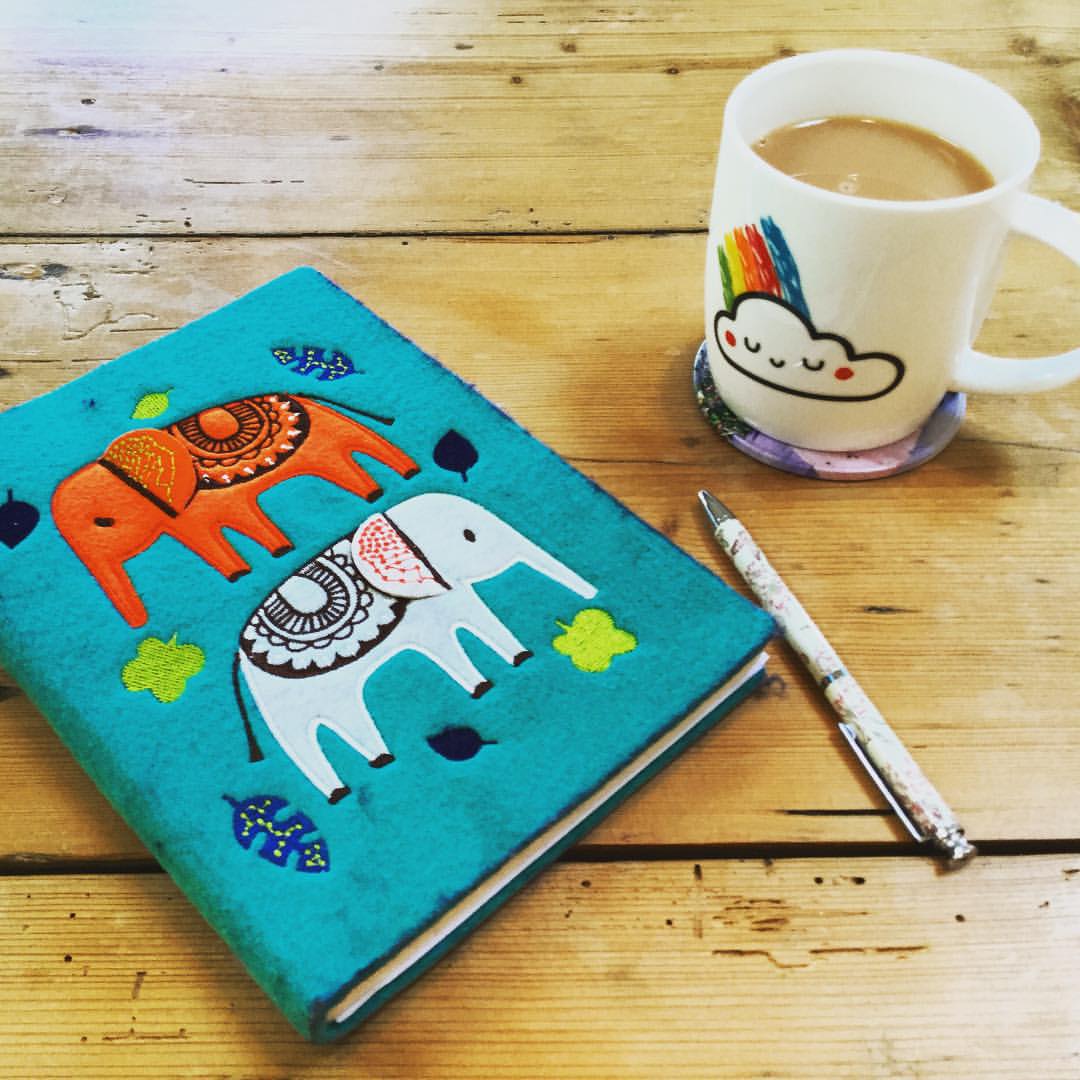
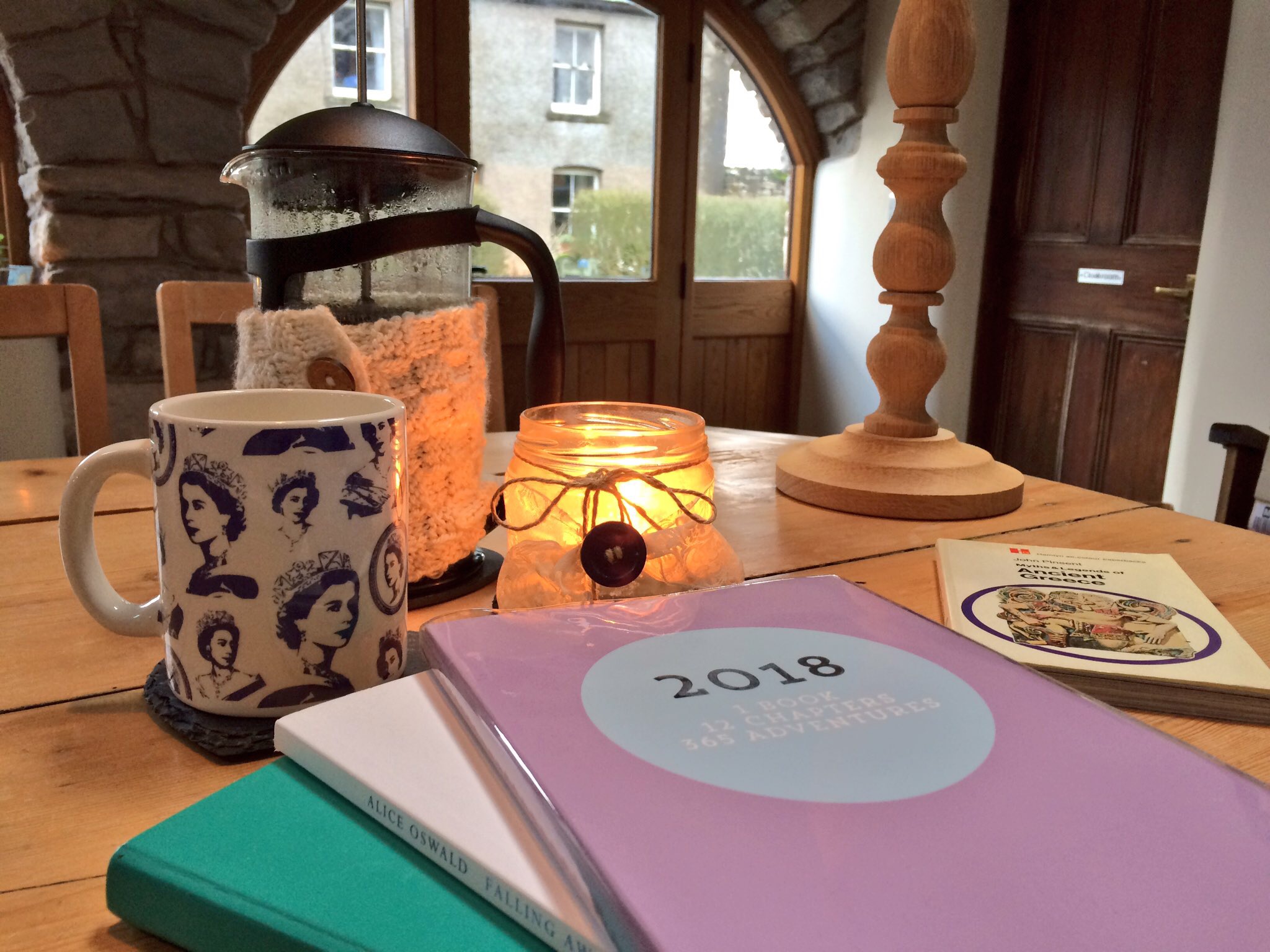
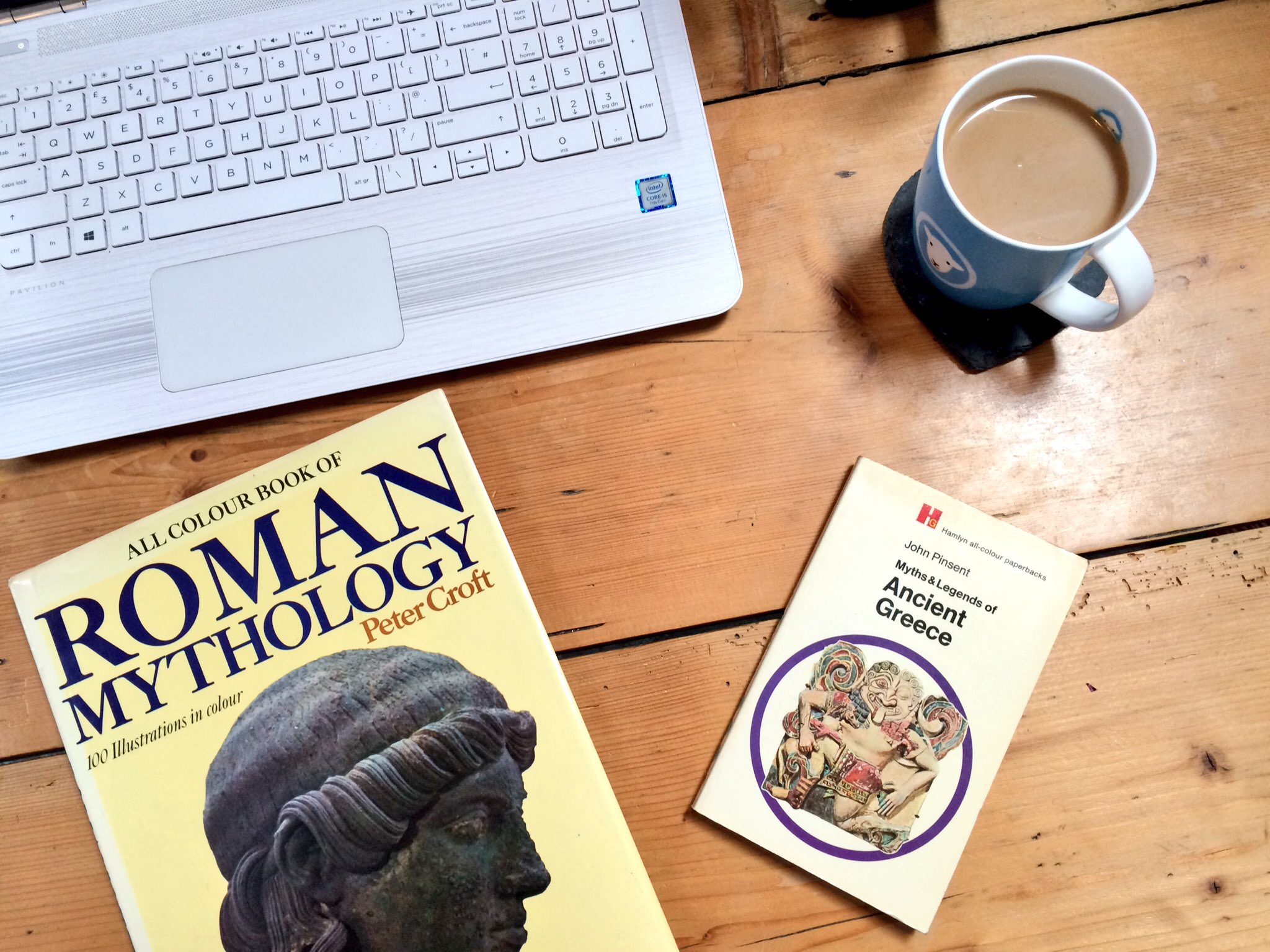
the writing desk - February 2018

So what does ‘being a writer’ really involve?

The 3 main things a writer needs to do (the ‘essential skills’ on the job description, if you like) are:

Write:

This goes without saying, I suppose, but it’s important to remember that you can’t be a writer if you don’t write anything. It’s all very well owning a rack of flouncy white shirts and a feather quill, but it’s the words on the page that are at the forefront of the job. They’re your product.

Imagine a biscuit factory. It’s got a killer marketing campaign, a red-hot accounts department, wonderful managerial staff… In fact, everything it does is first class. Except it never makes any biscuits. Well, no, not quite never. I mean, it made a biscuit once. Or rather, it mixed up the cookie dough, but then never got round to baking it. But still, it loves to talk at parties about how it’s a really really great biscuit factory.

It just doesn’t work, does it? If the biscuit factory doesn’t make biscuits, then it has no product, and nothing else really matters. (If talking about poetry / fiction / any other form of writing as a ‘product’ offends you, then I’m sorry. But this post is about the business of being a writer, and any business needs a product, no matter how soulful and erudite that product may be.)

Read:

Following closely behind writing is reading. Though really, I should say that reading comes before writing, rather than after it. Because the reading, as I’m sure we all know, informs the writing. To continue the biscuit factory metaphor: you need to have tasted biscuits before to know what they’re supposed to look like; you need to have seen a biscuit recipe to know what normally goes into them; you need to know what other biscuit factories are making if you want to make something that’s truly your own.

I’ll admit that reading is often the first thing to be sacrificed when I’m struggling for time – something I’m really determined to work on this year. But it’s amazing how many people think they can skip over the reading bit. I was once chatting to a guy before a poetry open mic night, and during the conversation I asked him who his favourite poets were. With a look of greatest derision, he replied that he didn’t read poetry, because it would cramp his writing style and he wanted to remain individual. Needless to say, his poetry was not individual, but instead was universally bad. (This was also the guy who, later that evening, told me my poetry was ‘unfeminine’, and that I should write about ‘nice things like flowers and rabbits instead’ – and then later proceeded to aggressively heckle a poet who was performing a more political piece. But that’s another story.)

Edit:

This is another absolute must for writers: once you’ve read plenty of books, and you’ve written your own creative work (whether it’s a haiku or a 100,000-word novel), you need to edit it. For some reason, this is another step that people sometimes think they can skip, as if the words they first scribble onto the page or bash away on the keyboard are somehow divine and Must. Not. Be. Tampered. With.

I don’t know whether this is because we’re lazy, and once we’ve written ‘The End’ we just want it to be over. Maybe we’re all just too eager to move onto the next thing. Or perhaps we’ve convinced ourselves into believing in the sacred moment of inspiration as some sort of untouchable perfect truth. Whatever reason, it’s almost always completely and utterly wrong. The work needs editing. Writing is a craft as well as an art, and a piece of writing needs to be crafted.

This doesn’t just mean checking for spelling and punctuation errors, either. It means rewriting. It means reworking, as if the poem/story/whatever is a piece of clay and you have to mould it into the shape it ought to fit. Sometimes it’s like a house that needs tearing down and building back up again, with the same bricks all present, but just a different architecture. Editing is a skill in and of itself – and it doesn’t stop once you hand in the manuscript to your agent / editor and get it accepted. The editing goes on and on, usually for months.

*

I bought some fancy coloured gel pens for editing

These are my three absolute essentials to being a writer. The ‘necessary skills’ on the job description. The rest of it sort of depends on what sort of writer you want to be, and how you want to run your business. But here are a few common ‘desirable skills’, which can definitely help you on your way to being a writer:

Emails: Ok, I know it’s obvious, and I know it isn’t particular to writers. But it’s worth mentioning, if only because it takes up so much blooming time. Whatever business you’re running, dealing with emails is an important and time-consuming aspect of the job. It’s just the world we currently live in. And being a writer is no different.

Submissions: If you want people to read your work, you’re going to have to make some sort of effort to get it out there. Of course, one method of doing this is going down the self-publishing route, but I’m going to leave that to one side for this post – partly because it isn’t my field of expertise, but mainly because once you’re self-publishing, you’re not just being a writer: you’re also being an editor, a copyeditor, a proofreader, a designer, a marketing person, a sales rep, and a whole host of other things besides. So looking at the more traditional route: submitting your work. This can be as big and momentous as submitting a novel to agents, or as frequent as submitting poems to journals or competitions. Either way, the skill set is the same: research your options and opportunities; tailor your submission to the recipient; create some sort of system so you know which pieces you’ve sent to whom, and when; try not to get too disheartened if / when it comes back as a no.

Applications: In the next column over to submissions is applications. This is about looking for those other opportunities for you as a writer, which you can apply to – such as funding opportunities, residencies, and any freelance work that might be up your street. (Rather than submitting your new type of biscuit to a ‘biscuit of the year’ competition, you’re looking for a council grant to help you build that new wing of the biscuit factory. That sort of thing.) There’s no rule that says you have to do this, but if you get a grant to buy you time to write, then that’s got to be a good thing. After all, if you’re thinking of your writing as a business, then you need to find a way to make that business pay. (I’ll talk about other ways to earn a living from writing in another post.) But warning: depending on the application, these can be incredibly time-consuming, which means lots of time writing applications, less time writing the real creative stuff.

Marketing: Again, there’s no rule that says you have to do this as a writer, but more and more, it’s expected that writers will assist in marketing their own book. As well as the book, however, writers often find they have to market themselves as people. Luckily, there’s no set way of marketing yourself, or your book, which largely means you can tailor it to what you feel comfortable doing. If you love making YouTube videos, then great, you can start a book vlog. If you hate the idea of filming yourself, but you’d love to go out and run events in local bookshops, then that’s also great.

Blogging & social media: This is probably really a part of the ‘marketing’ point above, but it’s such a major thing that I think it deserves its own subheading. Often with these things, you’re not marketing a specific book (or one particular type of biscuit), but you’re marketing yourself as a whole brand. And you’re doing this not by shouting into the twitter-void in the hope that someone somewhere will hear your echoes. You’re doing this by connecting with people: with your readership, with fellow writers, with other people in the literary industry. All too often I see writers tweeting things like ‘Buy my book!’ followed by a link and 9-10 hashtags. Once or twice this is fine, but when this is the only thing a writer ever seems to tweet, then you have to question why you’re following that person. After all, if you had a choice between eavesdropping on, or even engaging in, an interesting conversation, or standing beside the man in the sandwichboard continuously yelling about some promotion or other, I can guess which one you’re most likely to pick.

Talks / Panels / Readings: Again, the days where writers wrote a book, came out for a signing or two the week it was published, then returned to their garret to work on the sequel are long gone. It’s very common for writers to give readings of their work, or to be expected to talk on subjects related to their book – either individually or as part of a panel discussion. This isn’t just a case of showing up and rattling something off, either. Like anything else, all these appearances require preparation. The ability to prepare for these, and then to perform well in them, is another skill in the writer’s job description.

Writing (again): As well as working on your own creative projects, as a writer you might also be expected to write articles and commissioned pieces. This is much in the same vein as giving talks or appearing on panels, except that it’s written down and published, instead of spoken live.

Workshops / Teaching / Project Management: And lastly, there are all the ways that a writer can make money, which are indirectly related to writing, but not writing itself. Many writers teach, or run workshops, or mentor other writers. Or they manage writing-related projects, or work for literature-based organisations. All these things have their own job descriptions, but I wanted to make a nod to them here, just to illustrate the sheer variety of skills required to ‘be a writer’, beyond just the skill of ‘writing.

*

Good luck – and keep writing!

It’s a thing any writer will be familiar with: the too-thin envelope in the post, containing that single slip of photocopied paper; the email that starts ‘thank you for submitting/applying/sending’ and continues shortly after with ‘unfortunately’; or just the billowing silence until time runs out and you realise that acknowledgment is never going to come.

It happens all the time. Last week, I wrote a post about the number of rejections I received in 2018 (54, in case you’re wondering), and on how this related to other outcomes for my submissions. This week, I’m less interested in the mathematics, and more interested in the psychology of it all. After all, nobody likes to feel rejected, but if it’s going to happen a lot (which, if you’re a writer, it almost certainly is), then you need to find a way of dealing with it.

Social media addiction - Katie Hale, Cumbrian poet, writer and artist

1 – Own it.

One way to cope with those pesky rejection letters is to own your own rejection. We’ve all heard stories of writers who paper their downstairs loo with rejection letters. I’ve heard that Lulu now even offers a service where they’ll print your rejection letters on toilet paper for you, so you can quite literally flush them away. Charming. Personally, I keep all of my responses from journals / magazines etc in two folders in my desk drawer: one for rejections, one for acceptances. My aim is for the acceptance folder to one day outgrow the rejection folder, but even if it doesn’t, that isn’t really the point. The main point is that the very act of filing the letter gives me (and that rejection) a sense of purpose.
NB: In a world where most rejections come in the form of emails rather than snail mail, you can either print each email out in order to file it, or create a colour-coded spreadsheet, where you can colour the squares on the table once a submission is returned to you, successful or otherwise.

Writing poetry with a cup of tea. Katie Hale, Cumbrian poet / writer etc
Poetry & a cuppa

2 – Reject ‘rejection’.

This thought is all about framing – along the lines of nobody beeing able to make you feel inferior without your consent (thanks, Eleanor Roosevelt). Basically, if you don’t think of it as ‘rejection’, then maybe it will hurt less. Think of it instead as fishing. You keep casting your line out, and you keep reeling it in. Sometimes there’s a wriggling fish hooked on the end, but most times it’s empty. That’s ok, though. This is just another opportunity for you to add fresh bait.

typewriter - Katie Hale

3 – Keep lots of irons in the fire.

And speaking of fresh bait… Always have multiple submissions that you’re waiting to hear back from. If you pin all your hopes on one submission, and it comes back as a no, then you’re going to be understandably devastated. If you’ve always got a number of things you’re waiting on, it’s not going to be such a big deal if one of them comes back as a no.

4 – And keep working.

If you’re going to sustain this level of sending out work, then it stands to reason that you need to keep creating work to send out. Which is a good thing, because really, the writing is the most important part. It’s why we do all this other stuff, like sending off poems to magazines and submitting funding applications. If you remember that the writing is key, and the rest is, essentially, all just guff, then whenever a rejection comes in, you can just pull back to the writing.

5 – Celebrate your successes.

It’s one thing owning your rejection, but the things you really want to own are your successes. So tell people. Be rightly proud of your achievements. This doesn’t mean you have to kick modesty to the curb, but don’t high your light under a bushel either. If you’ve achieved something, give yourself credit for it. And while you’re giving yourself credit, why not give yourself cake, or a bubble bath, or a new pen or something – some little treat to reward yourself. If you were a banker or a stock broker or something high-flying, you might get a bonus when you performed particularly well. Think of that coffee & walnut cake as your writerly equivalent of a 6-figure banker’s bonus.

*

Good luck! And whatever your coping method: keep writing, and keep putting your work out there.

‘I’m so glad I live in a world where there are Octobers.’
L. M. Montgomery, Anne of Green Gables

I love Octobers. I love the excuse to curl up in front of the fire and drink hot chocolate. I love the changing leaves. I love it when the clocks go back and I get to sleep for an extra hour. I even love the darker nights, because they somehow make everything seem closer and cosier. What I don’t love is how my house suddenly becomes full of horrifically gigantic spiders. Urgh.

That aside, I’ve had a wonderful, if very busy, October this year. So busy that I think I blinked and suddenly it’s November. Which means not all that long to get things ready for Christmas… But I’m going to leave that can of worms well and truly closed.

Dove Cottage, home of Cumbrian poet William Wordsworth

A Few Good Things:

There are quite a few things to celebrate this month, starting with my poem, ‘Bugs’, which received second place in the Oxford Brookes International Poetry Competition, judged by Kayo Chingonyi. This is one of those poems that I’ve had kicking around for a while, so I was particularly overjoyed that it was selected for this. (You can read my poem, and the other prizewinners, here.)

And speaking of selections: a week or so ago, I also learned that I’d won the Munster Literature Centre’s ‘Fool for Poetry’ chapbook competition! This means that my chapbook, Assembly Instructions, will be published and launched at Cork International Poetry Festival in March next year.

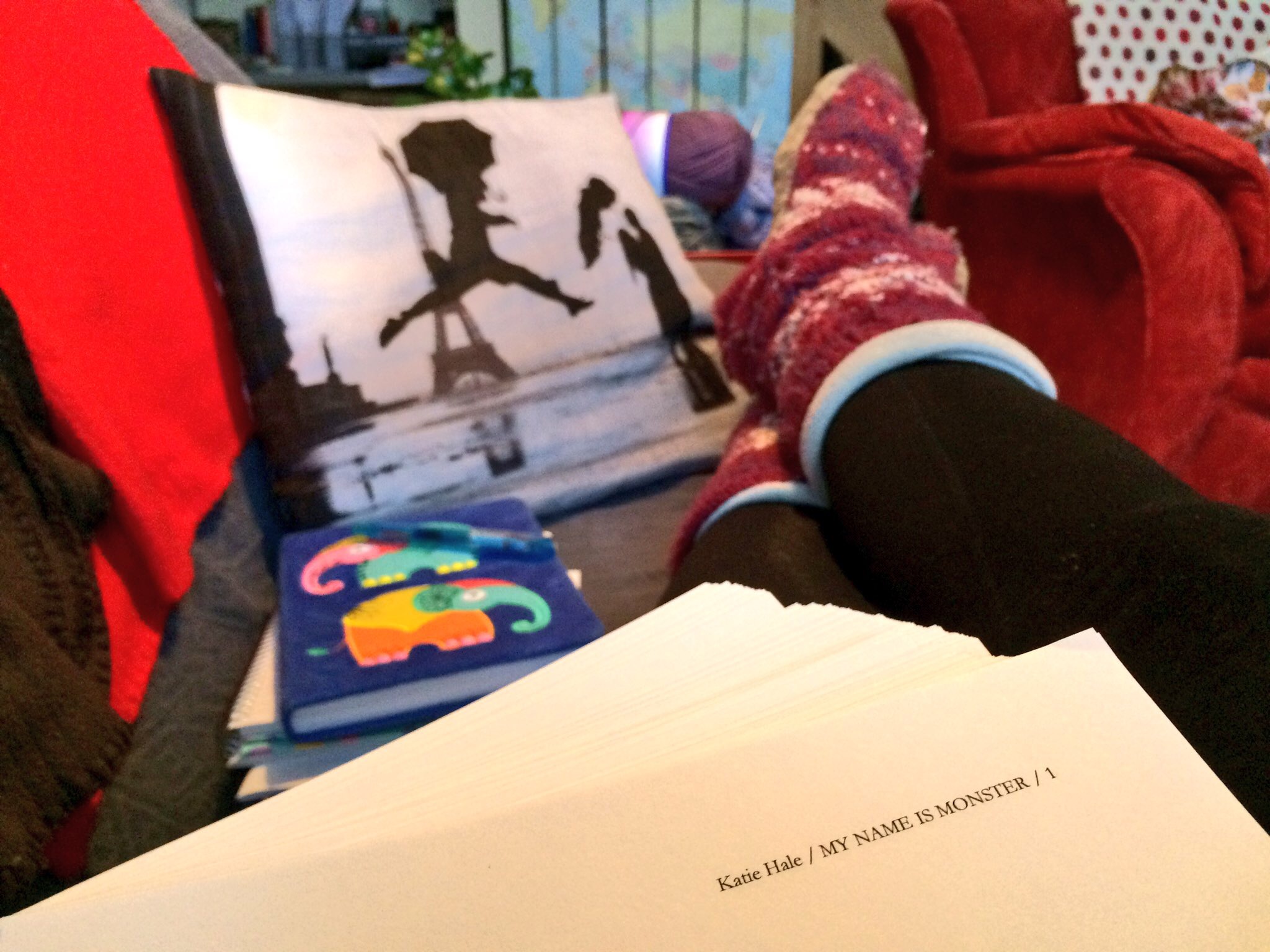
On this fiction side of things, I received the proof pages for My Name is Monster this month, so I’ve been working through those while drinking copious amounts of coffee. But the plus side is that it means proof copies are about to go to print – which means that soon I’ll be able to hold a copy of my novel that looks something like an actual book!

But plenty to be getting on with in the meantime – like the many school workshops I’ve led this month, including a full day at my old school, QEGS in Penrith. Last time I led a workshop there, I blushingly confessed to the librarian that I’d had my first kiss in that school library over a decade earlier, so I was slightly entertained when she introduced me to the students as, ‘Katie: a former QEGS pupil who knows this library extremely well!’ I was even more entertained by the sign that I spotted in the library this time around, which I’m pretty sure wasn’t there before:

And while we’re on the subject of the past…

A couple of weeks ago, I found myself in front of a camera on two separate occasions, filming commissioned poems with an historical twist. The first was a poem written for the National Trust, as part of an oral history project working with a group of former miners in Whitehaven, using their words and mine to create a poetic response to what they told us about their memories of the mines.

The second was for BBC Radio Cumbria, to be aired as part of the First World War centenary commemorations in November. We were lucky enough to be allowed to climb Carlisle Cathedral bell tower to film this on the roof, which was 130 (incredly steep and narrow and slightly terrifying) steps up, but which had a magnificent view across the city. So I’m looking forward to seeing the finished result for both pieces.

I’ve been up in Carlisle quite a lot over the past few weeks, as it happens. Early in October, Carlisle saw the 5th year of Borderlines Book Festival, where I led a poetry workshop on inspiration and ‘Provoking the Creative Brain’, as well as reading at the launch of This Place I Know: the fantastic new anthology of Cumbrian poetry from Handstand Press.

And then on the Monday, I was back up to Carlisle and in the Radio Cumbria studio. For anyone who hasn’t yet listened to BBC Radio Cumbria’s new Arty Show, you definitely should. It’s 3 hours on a Monday evening, with a real variety of interviews / features / music – and they always have two studio guests with them for the duration, discussing their art forms and providing commentary on the programme’s other features. And on Monday 8th October, I was a guest on the show, along with stone sculptor Shawn Williamson.

Cumbria

When I haven’t been hanging out in Carlisle, I’ve been in the south of the county. My friend Jessi came to stay from Edinburgh for a few days, during which we went to a weekend workshop on editing and structure, run by Zosia Wand at the Reading Room in Ulverston. It was such an inspiring and useful weekend, and a wonderful opportunity to focus very specifically on structure for two whole days – though admittedly by the end of the Sunday we were shattered and our brains were completely worn out. I guess there’s a limit to how much creativity you can (or should) pack into a day!

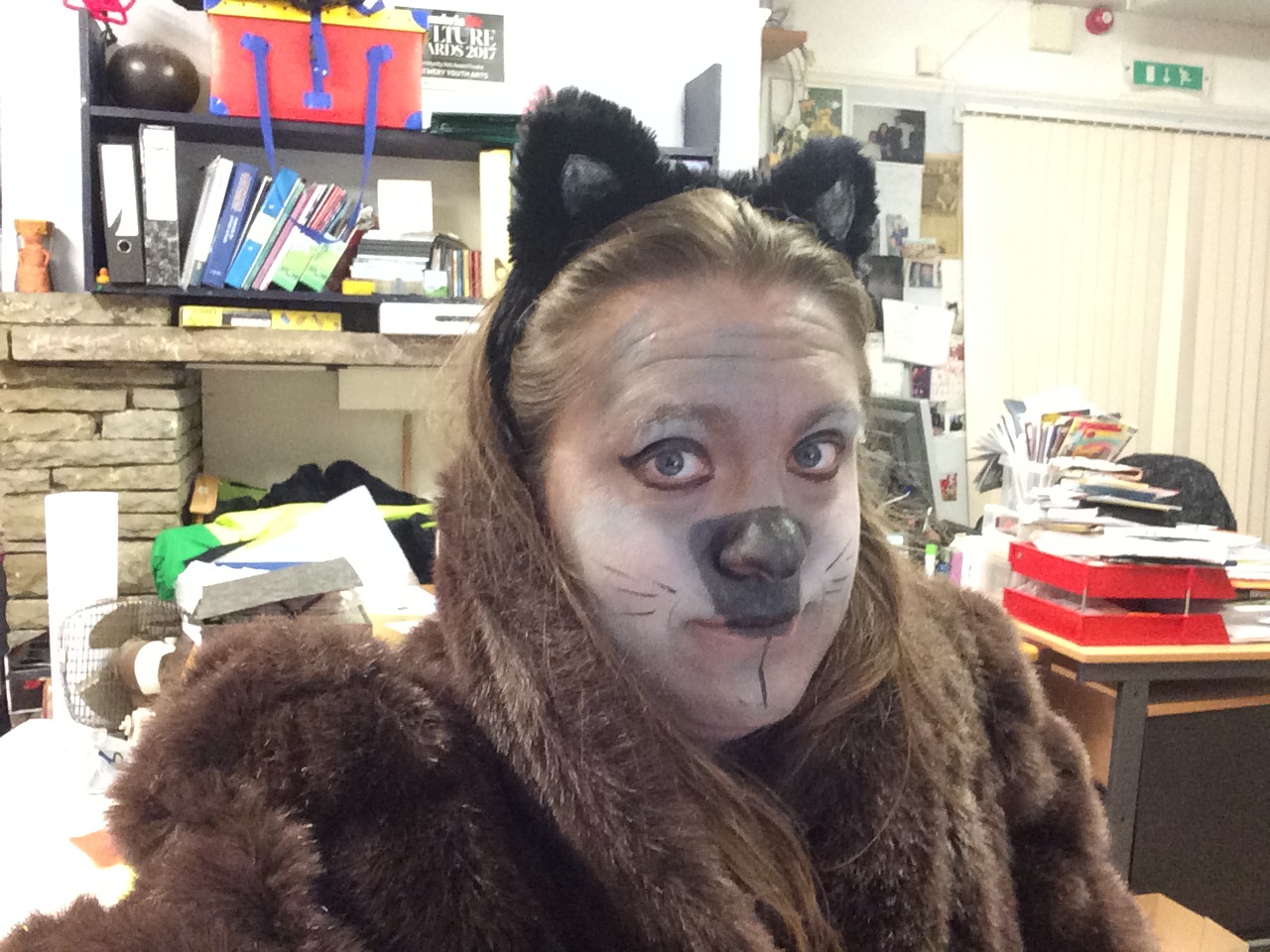
On a more personal note, this month my grandma turned 98, and on the same day my friend Tam got married in a beautiful (if chilly) outdoor ceremony at Arnos Vale in Bristol. And of course there was Halloween, which meant trick-or-treating with my goddaughter; she was dressed as Little Red Riding Hood, her mum was dressed as a grandma, which left me to be the wolf. So, obviously, I made my most elaborate attempt at wolfish facepaint – which I then had to wear to teach my youth arts class at The Brewery in Kendal, because I hadn’t had time in between to change.

The Month in Submissions:

As I’ve mentioned before, I originally wanted to attempt 100 submissions this year so I could show how slim the odds are on each individual submission being successful. For a while it was working, and I was getting nice big packets of rejections every month – but October has definitely bucked the trend. For the first time since I started measuring the outcome of my submissions in this way (actually scrap that, I think for the first time ever), I’ve had the same number of successful replies as unsuccessful ones.

  • Submissions made: 8
  • Unsuccessful: 5
  • Successful: 5

Three of these successes are under wraps till further notice (though make no mistake, I will be making a song and dance about them when the time comes). The other successes were coming second in the Oxford Brookes International Poetry Competition, and winning Munster Literature Centre’s Fool for Poetry Chapbook Competition. Not bad, as months go!

The Month in Books:

Only 4 books this month, and one of them was very short. But I’m hoping that November will provide a bit more reading time, as I’m planning to be spending a bit more time on public transport of one sort or another, which is usually pretty good reading time. Fingers crossed.

For October, though, my reading was:

  • playtime, by Andrew McMillan
  • My Name is Leon, by Kit de Waal
  • Create Dangerously, by Albert Camus
  • All the Journeys I Never Took, by Rebecca Tantony

*

The Month in Pictures:

As you can tell from the title of this blog post, I’ve let these monthly updates slide a little. There has been a reason for this – kind of. For a couple of months, I felt as though there wasn’t really much to update on. I felt sort of stuck, and at the same time in a hurricane of self doubt. I was considering a big change-up, wondering whether the whole writing thing was ever going to work out. There were electricity bills nudging at my bank account, and worries battering my brain.

And then in the middle of it all: July.

IMG_6054

It’s amazing how one small moment can turn everything around. For me, it was sitting in the cafe at the Royal Exchange in Manchester, waiting to go and meet a friend. I was planning to spend an hour or so writing, but before I did, I thought I’d have a quick check of my emails. There, sitting all innocent in my inbox, was a notification: a call to action, to check my Arts Council online portal.

A couple of months before, I’d applied for an Arts Council grant from their new funding stream: Developing Your Creative Practice. These grants are for individual artists, and, as the name suggests, they’re to help you develop your artistic practice. I checked my account on the portal. I’d got a grant.

Just like that, I didn’t need to worry. For around 6 months of 2019, there will be money coming into my account to support me while I write. I’ll be spending 5 months at home, working on my first full collection of poetry, as well as spending almost 3 weeks in America, researching my family and social history of the US: 2 weeks at New York Public Library, and 4 days in Virginia.

Just like that, my work felt validated. I felt legitimised as a writer. The doubts are still there, of course, but they’re smaller now, easier to screw up into a ball and toss out of sight for a while.

IMG_6317

The bizarre thing is, now that I look back on the last 3 months from this vantage point, I can see that they were all actually quite successful in their own right. Sometimes I guess we just need that external validation to remind us that we’re on the right course.

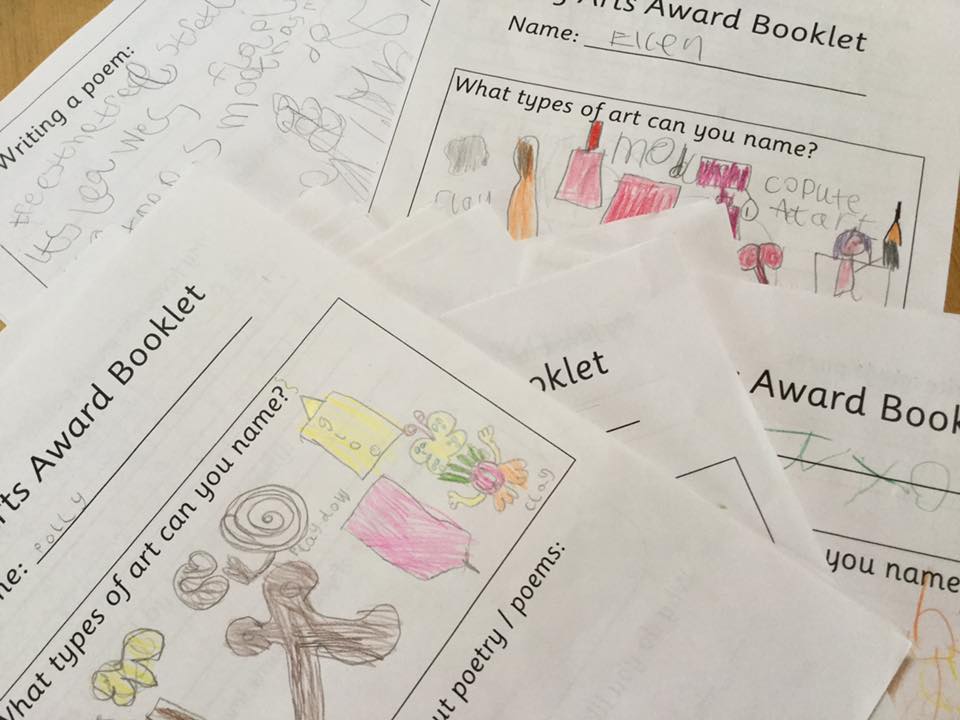
For instance, in May, I ran a series of workshops in Shap Primary School (my old stomping ground), which led to all of the Yr3/4 class gaining their Arts Award Discover, and 12 Yr5 children being put forward for Arts Award Explore. I also ran a selection of workshops for the Wordsworth Trust, with a few more due to happen in the autumn term.

In June, I went on an Arvon course, taught by George Szirtes and Pascale Petit, where I wrote so intensively for a week and made huge leaps forward with my collection-in-progress. It was so inspiring to spend a week in such beautiful surroundings, focussing so completly on poetry and on the development of my work and practice – especially under the guidance of two such excellent tutors.

June also saw what we might call Shriver-gate, with Lionel Shriver letting her terror of diversity show and causing a twitter storm in response – as well as a united response from the Penguin WriteNow writers. Much as I’m reluctant to give Shriver any more air-time, I am incredibly proud of my WriteNow family, of the way we banded together to fight intolerance, and of the open letter we wrote in response.

You can read an article about our response here, and our full letter to Shriver here.

July has seen me run a creative workshop at the Barbican Centre, as part of their Summer Camp for young people. Around 7 years ago, I joined Barbican Young Poets during my final year of university. Now, it feels as though I’ve come full circle, working with Kareem Parkins-Brown (another former Barbican Young Poet) to run a poetry workshop for young people, back at the Barbican.

The past three months have also seen the first 4 plays of this year’s summer season at Theatre by the Lake – which, as usual, I’ve been reviewing for Radio Cumbria – as well as attending some great poetry readings, including the Pavillion Poets reading in Grasmere, and the launch of Hannah Hodgson’s debut pamphlet, Dear Body.

I’m also starting to get more commissions – which is incredibly exciting. From my first commission in 2017, for National Poetry Day / BBC Local Radio, through the Subject to Change commission from Barbican Centre Creative Learning in January, I now have 3 poetry commissions on the go. Which is, I suppose, another point about counting rejections & acceptances: you only end up counting the things you actually apply for, the cold-call applications, if you like. Whereas so much of the important career-building stuff comes into your inbox through other routes and contacts. Call it the statistic-less successes. But more on these commissions as and when the finished work makes its way out into the big wide world.

IMG_6543

May / June / July Submission Statistics:

Back at the end of April, I wrote about how I was getting a little overwhelmed by the number of rejections coming in. I think rejections have always been at this kind of level, but it’s just that when you’re actively counting them, you really notice how quickly they’re mounting up.

Still, that’s the point of all this counting: transparency. To show that, even when I’ve had a particularly good month, the rejections still come piling in. To show it isn’t all sunshine and launch parties.

  • Submissions made: 20
  • Rejections: 18
  • Acceptances: 2
  • Partial successes: 1

One of the acceptances, in this instance, is of course my successful Arts Council grant. The other was having a poem accepted into an anthology of Cumbrian poetry, which is coming out from Handstand Press later in the year, and which has a really exciting selection of poets listed in its contents page.

The partial success is a ‘no, but we’re interested in working with you on a different project’: an application that opens conversations, rather than providing a specific opportunity.

I guess this is the point I’m making: that even when the rejections come pouring in (I’ve had 37 rejections so far in 2018, in case you’re wondering), all it takes is one or two successes to set things back on track. So keep submitting. Keep putting yourself out there, however raw and terrifying it feels.

IMG_6589

The months in books:

August will see the publication of the first book developed through Penguin Random House’s WriteNow scheme: The Reinvention of Martha Ross, by Charlene Allcott. I was lucky enough to read this pre-publication, and I can honestly say, it’s a heart-warming, funny, unflinching look at the ways we break down and build ourselves back up. And now I can’t wait to read all the rest of the WriteNow books!

  • How to be Both, by Ali Smith
  • Madame Zero, by Sarah Hall
  • Dark Days, by James Baldwin
  • The first person, by Ali Smith
  • Dear Body, by Hannah Hodgson
  • Thicker Than Water, by Cal Flyn
  • The Build Environment, by Emily Hasler
  • Tell Me How It Ends, by Valeria Luiselli
  • Stay With Me, by Ayobami Adebayo
  • Mama Amazonica, by Pascale Petit
  • Cumbrian Folk Tales, by Taffy Thomas
  • Never Say Die, by Anthony Horowitz
  • Child I, by Steve Tasane
  • Autumn, by Ali Smith
  • The Reinvention of Martha Ross, by Charlene Allcott

The months in pictures:


April is the cruellest month…

Thanks T S Eliot, but this year April hasn’t been cruel so much as confusing – and I mean that mostly in terms of time. Forget the mini heatwave that had everyone thinking it was August for a weekend, or the snow flurries that came less than a fortnight before that. No, what I really mean is that April seems like it’s been the longest month of the calendar, and yet it also feels like March was only yesterday.

I think it has something to do with being in limbo. There’s been a lot of waiting this month, of suspending myself between projects, having to flit from one thing to another as time and deadlines dictate. When you do a creative writing course – particularly a long-term one like a Masters – people often talk to you about sustaining creative your practice after the course is over. In other words, making sure you don’t stop writing just because you’ve jumped back into the stream of real life. But what they mean is carving out time to write. People rarely talk about juggling multiple creative projects, and the brain space that takes up – how so often doing lots of things can end up feeling a bit like you’re doing nothing at all.

Not true, of course. Remember what I said about this April feeling like the longest ever month? Part of that has come from cramming things into it – from drafting a number of poems, to getting Draft 8 of the novel underway. Not to mention getting involved with the LabelLit project for Poetry Day Ireland, fitting in a bunch of applications (see below), and trying to get the garden sorted – on top of brief trips to my Somerset, Wiltshire and London, the latter to head to the Penguin Random House offices on the Strand to catch up with the wonderful WriteNow crew, on the hottest day of the year. Phew!

I’d love to say that May was going to be calmer, but in reality April was supposed to be the calm before the storm, and look how that turned out! So I think I’m going to have to wait at least a couple of months for things to slow down. Which is great in a way – I love all the work that I’m doing, and May/June/July is always busy season for schools’ workshops, which are hugely enjoyable and inspiring in their own right. I also love the productive energy that can build up at times like this – as long as I remember to take a break at some point to avoid burnout. I guess that’s what it’s all about, really, isn’t it? Finding that balance. Unfortunately, I’m not quite sure how to do that yet. At least, it isn’t an exact science. More like a feeling that I sometimes get wrong. But if I do figure it out, I’ll let you know

In the meantime: May is another month…

April submission statistics:

When I set out to do this whole ‘100 submissions in a year’ thing, I wanted to make a point about how much rejection you have to deal with as a writer. I was making a point about how hard it is, and about the sheer number of nets you have to cast into the water in the hope of landing just a couple of fish. So it shouldn’t really surprise me that so many of my nets are coming back empty. After all, wasn’t that the point I was trying to make all along?

I actually think I’m pretty good with rejections. I have a system (it involves spreadsheets) that means every time I get a rejection (or an acceptance) I get to tick it off the list, one way or another – and I do love ticking things off lists. But here’s a head’s up, in case you were wondering: relentless rejection can be really blooming tough. It happens – most writers will tell you that acceptances / rejections come in cycles or phases (often successes seem to come in groups of 3). But this cycle of rejections is testing the resolve.

Still, that’s also the point I’m making, right? It’s tough. The only solution is to power on through. So, powering on through this month, here are my April statistics. Here’s hoping May’s are a little more optimistic!

  • Submissions made: 7
  • Rejections: 4

The month in books:

This month, I’ve come to realise something about time. More specifically, about how I allocate my time. Sometimes, if I feel I’m not writing as much or as well as I’d like to, I think it must be because I’m not allocating enough time to the actual writing process. But then, 15 minutes of free writing can be hugely valuable and productive, especially for poetry – so maybe that’s not the issue after all. I think where I struggle is finding the time to read and to reflect. This is a much slower process than the actual writing. It’s about taking time out from the busy task-driven life and thinking.

I don’t take nearly enough time to sit and read. There’s always something else that takes priority (usually with good reason, like paid work), but it’s the thing I need think I most need to carve out time for in my life.

With that in mind, here’s my meagre book list for the past month (meagre in quantity, but mighty in quality):

  • Physical, by Andrew McMillan
  • Artemis Fowl, by Eoin Colfer
  • Attrib., by Eley Williams
  • Selected Poems, by Thom Gunn & Ted Hughes
  • When Light is Like Water, by Molly McCloskey

The month in pictures:

Spring is here! Well, almost. Sort of. Not really. It came for a little while, and then it went again.

But that’s kind of how I feel about my life as a writer, too. Things come and go: inspiration, motivation, high points, low points, belief in your own creative ability. It’s natural to have a less-than-constant relationship with the work in this way. After all, I think very few people go into work every day with an unstoppable spring in their step – and when you’re a writer you’re digging so deep into your own psyche that it’s natural for the rest of your life to come to bear on your writing, and vice versa.

Certainly that’s the way it’s felt for me this month. There’s been a lot of waiting around for things (responses from submissions etc), and I’ve discovered that I’m not amazing at waiting. I’ve also been focussing a lot on admin, which is great in that it’s necessary, and I love the feeling of ticking it all off the list, but when coupled with a lack of actual writing can feel like a bit of a creative drain. Still, I think it’s no terrible thing to take a brief break from the writing desk, especially after reaching a crucial stage in a big project, and letting the batteries recharge.

Editing the novel

And on the flip side, in the outrageously positive column for this month:

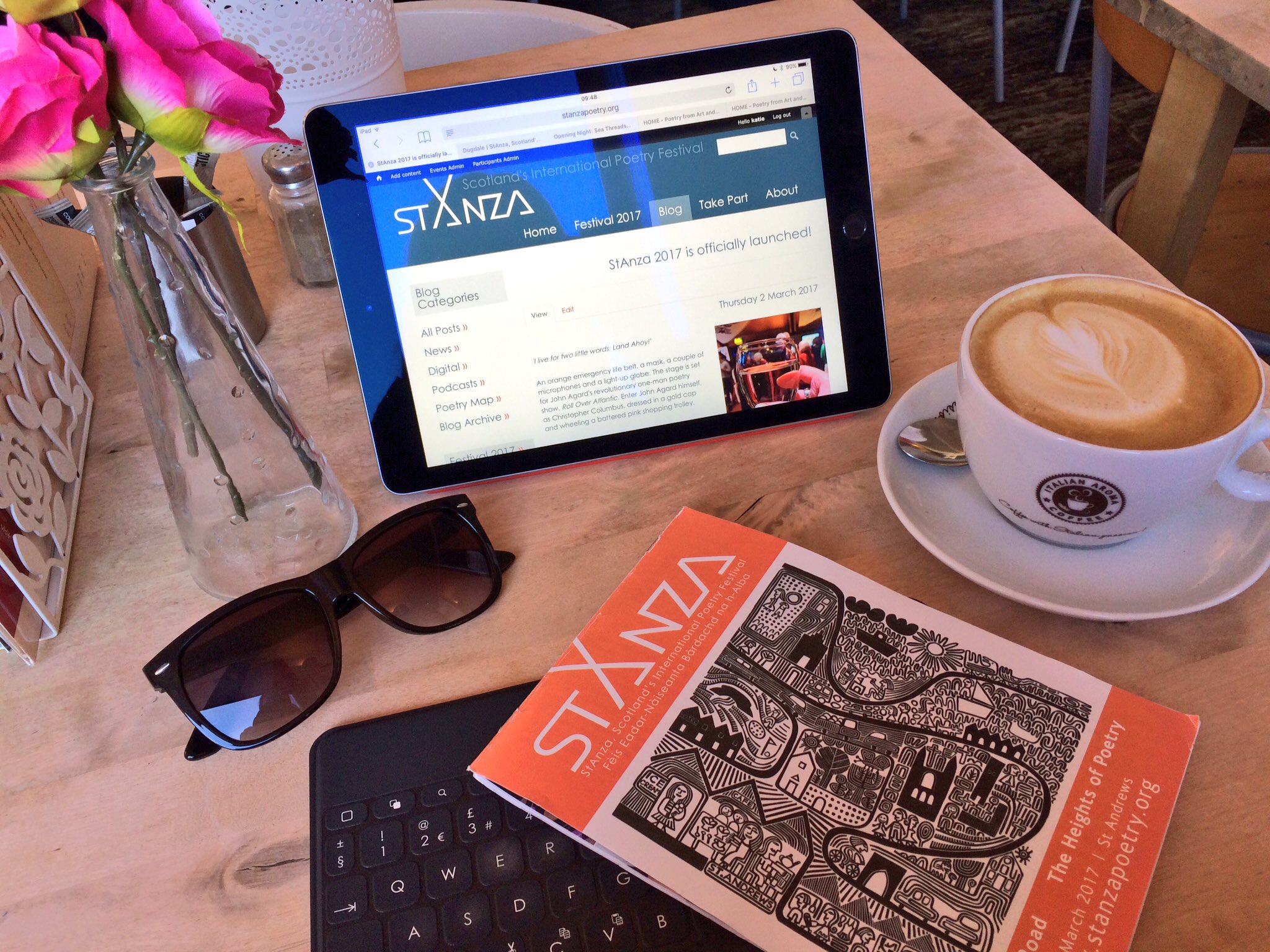
StAnza in particular is something that deserves an extra mention here. I first volunteered as a Participant Liaison Volunteer in 2013, and (with a couple of exceptions due to work commitments) I’ve been going back ever since. The festival has become a sort of poetry family, so it was extra special to be invited to read there this year. Even more special was being invited to read at the Festival Launch Extravaganza on the opening night (alongside such fantastic poets as Michael Symmons Roberts, Rita Ann Higgins & Sinead Morrissey), and to help close the festival as part of the panel that made up the Festival Plenary. It means so much to feel supported and encouraged by an organisation that you’ve respected for so long, and that you came to know during such a seminal part of your development as a writer.

I was also asked to write some of the StAnza in-house blog posts during the festival – I guess I didn’t do too badly at this last year if they saw fit to ask me again. This year I shared the post with Carly Brown, who is another long-standing StAnza volunteer who has performed at the festival.

StAnza blog post #1:
Wine, Words, and a Wonderful Beginning

StAnza blog post #2:
A Coming Together of Voices

The other great thing about festivals is always the way they challenge my creative thinking. At StAnza, I was lucky enough to be asked to read the translations for Maud Vanhauwaert during her performance. I learned quite quickly that this was not going to be a straightforward exercise in alternating between Dutch poems in her voice and English translations in mine. Instead, we spent the hour before the performance coming up with interesting ways of performing alongside one another, of integrating performances so that original and translated text spoke to one another, and occasionally spoke with one another, to create a performance that embraced the many levels of translation rather than simply bowing to its complications. It was also a lot of fun, and reminded me how much I enjoy performing – particularly performing alongside other people. While I may not be creating a multi-player poetry show in the near future, it did make me think in greater depth about my own creative practice, and other ways I could work as a poet, and as a writer more generally.

Watch this space, I guess!

StAnza Poetry Festival - places in St Andrews


March submission statistics:

In terms of submissions, March has been a bit of a continuation of February. Lots of rejections this month – which I suppose reminds me of why I’m doing this ‘100 submissions’ challenge in the first place: to prove how difficult it is to get along as a writer, and how much stamina you need in order to see those successes trickling in.

With 90% of my feedback being negative this month, it made that one small success event sweeter – especially when it came from such an unexpected source, with a piece of flash fiction being accepted for publication. Flash fiction isn’t exactly my usual genre, either, but it’s always good to broaden your horizons, especially in this case!

So here are my March stats:

  • Submissions made: 6
  • Rejections: 9
  • Successes: 1

Fingers crossed for April…

Snow in Cumbria - lonning

The month in books:

March has been a strange month for books. For a lot of March, I felt as though I couldn’t really focus on anything. Not because the books weren’t good (they were), but because I think my brain was saturated with words, from filling my every waking moment with poetry at StAnza Poetry Festival, to what felt like the herculean effort of finishing Draft 7 of the novel. So I purged. Effectively I pressed reboot on my brain’s creative systems. I went back to something I loved when I was younger, which didn’t requre my analytical brain to engage with my creative impulses and spark anything new. It was just a case of enjoyment, and letting my mind refresh, before I felt I could move back to things that challenged me / my thinking a little more:

  • Stormbreaker, by Anthony Horowitz
  • Point Blanc, by Anthony Horowitz
  • Skeleton Key, by Anthony Horowitz
  • Eagle Strike, by Anthony Horowitz
  • Scorpia, by Anthony Horowitz
  • Ark Angel, by Anthony Horowitz
  • Snakehead, by Anthony Horowitz
  • Crocodile Tears, by Anthony Horowitz
  • The Tragic Death of Eleanor Marx, by Tara Bergin
  • On Poetry, by Glyn Maxwell

The month in pictures:

February has been a month of opposites for me: up & down, success & failure, sun & snow. Mostly, though, I’ve been doing two things: walking along the beach and editing the novel.

I was lucky enough to get away from the chilly UK temperatures for a week, and spend some time soaking up the sun (and sangria) in Portugal with my parents. We stayed just outside a little town called Almancil, and did nothing more stressful than walk the 3-ish miles along the sand to the little collection of beach restaurants. Before I went, I was thinking of the trip as something of an indulgence. After all, I had a great long to do list to get through, and probably not enough time to get through it.

But something I’m coming to understand more and more is how important it is to take time to relax. To read a book (or three). To spend time with people you care about. To get outside and walk.

By the time I got on the flight home, I was completely ready to get back to working – which was good, because I was delivering a full day of workshops at Queen Katherine School in Kendal the very next day.

So moving into March, relaxing is something I’m going to make sure I incorporate more into my life – as a deliberate act, rather than just crashing out in front of Netflix because I’m too tired to drag myself upstairs to bed. March is shaping up to be a slightly busier month than February, too, so I think I’m going to need that discipline. Luckily, I’ve learned to crochet this month, so that should provide a good amount of down time to let my brain switch off & clear out…

February also marked an important anniversary (to me, at least): a year since I discovered I’d been accepted onto the WriteNow mentoring scheme by Penguin Random House. Looking back, it’s incredible to think that, within the space of that year, I’ve gone from thinking of myself as a poet who probably shouldn’t be dabbling in fiction because it’s not her ‘thing’, to thinking of myself as a poet & novelist, perfectly justified in giving equal attention to both forms. I’ve also gone from having a few thousand hastily-written words to being just a couple of days away form finishing Draft 7 of the manuscript. I’ve gotten to work with a wonderful & insightful editor, and also now have an agent – as well as gaining a whole group of friends in the other mentees, who have now become a kind of writing family.

WriteNow has given me so much confidence in my prose writing, and in my writing in general. I guess it just goes to show how much can happen in a year.

So I’m celebrating this anniversary by, well, continuing to work on the novel. (Also by consuming large quantities of hot chocolate & marshmallows, but that’s partly down to the snow.) Here’s to the next year!


the writing desk - February 2018

February submission statistics:

This year, I’m aiming to submit to / apply for 100 things. Part of the point of this is to get a big enough sample size, so that at the end of the year I can show that writing isn’t all sunshine & roses; there are days when all you get are rebuttals, and those acceptances can feel few and far between. In a way, this goal makes it easier when I get rejections, as each ‘no’ is just another step closer to proving my point about how hard it can be to get on as a writer.

But this month, I’ve been finding it hard. I’ve always thought I was quite good at dealing with rejection (at least, with literary rejection), in a kind of shrug-my-shoulders-and-move-onto-the-next-thing kind of way. But after getting multiple rejections all within a few days of each other, it’s kind of starting to rub. Especially as a couple of those were for things I really wanted.

Having said that, I still have a lot of applications / submissions out there waiting for a response, and I did have one success this month (although it’s only loosely connected to the ‘writing’ part of my life, in that it’s arts-based: as of March, I’ll be working one day a week doing admin for the Brewery Arts Centre’s Youth Arts department).

So, with all that in mind, here are my February stats:

  • Submissions made: 5
  • Rejections: 5
  • Successes: 1

Time to start working on the March submissions…

Portugal

The month in books:

A nice mix of prose & poetry this month, including one book that I think might make it onto my list of favourites: the incredible Station Eleven, by Emily St John Mandel.

  • The Lauras, by Sara Taylor
  • Inside the Wave, by Helen Dunmore
  • Station Eleven, by Emily St John Mandel
  • A Whole Life, by Robert Seethaler
  • The Abandoned Settlements, by James Sheard

The month in pictures:

This January has been all about getting the ball rolling (in some cases literally, as this month I also went bowling for the first time in nearly a decade – but that’s a separate story).

I always feel like January’s an odd one. In some ways, it’s all about positivity: looking forward to what the new year might bring, blasting through that to do list with all the optimism of being at the start of something. Then again, it’s also a weirdly long month, filled with post-Christmas blues and bitter weather. That’s pretty much how the month has been for me: filled with lots of exciting writing-related things, but also lots of sitting in my lonely kitchen, forcing myself to confront my manuscript.

Good Things:

St Ives: Having wanted to go on a writing retreat for ages and never quite got round to it, I was thrilled to be invited on one with a lovely group of poets, at the Treloyan Manor Hotel in St Ives. Five of us (me, Emily Hasler, Holly Hopkins, Kim Moore & Hilda Sheehan) spent five nights there, and five days strolling by the sea, eating the most enormous amounts of food, and occasionally writing a poem or two. It was exactly what I needed after the post-Christmas rush, and the early-January onslaught of admin. A chance to refresh and let the sea breeze blow away the cobwebs. I came away from the retreat thinking that, even though I hadn’t written much, it was probably good for my creativity all the same. Then I got home and looked in my notebook, and realised that I’d actually written loads! Strange how creativity can creep up on you like that.

Barbican Subject to Change: As part of the Barbican Centre’s ‘The Art of Change’ programme for 2018, twelve poets have been selected to write poems for the Creative Learning department, each inspired by something that happened in a given month. I was given January, and so decided to write about the ‘honey’ incident that took place on Virgin Trains at the start of the month – when a Virgin Trains East Coast customer, Emily Cole, complained on Twitter about a male staff member’s passive aggressive use of the word ‘honey’. Rather than acknowledging the situation, the company’s initial response was to ask if she would ‘prefer ‘pet’ or ‘love’ next time’. This led me on to thinking about gendered language and micro-aggressions, and the way that even inoffensive language can be used as a way of exerting power. You can read the full poem (and more about gendered language, and poetry as a vehicle for change) here. Or watch the film of the poem:

Schools workshops: With the new year has come a new set of schools workshops – and of course continuing with some existing favourite groups. (New career milestone: going for a meeting in the school library where, nearly half my lifetime ago, I had my first kiss.)

T S Eliot Prize readings: Oh, and I also had a great night at the T S Eliot Prize reading at the Southbank Centre. So much fun seeing so many poets in one room – even if it is a very very big room.

St Ives writing retreat

January Submissions Statistics:

This year, I’m aiming to submit to / apply for 100 things. This isn’t just some masochistic attempt to deny myself a social life while I type CVs and artist statements deep into the night. It’s about providing clarity, so that at the end of the year, I can give an accurate percentage of how many of these submissions resulted in rejections, acceptances, or even partial acceptances. It’s about honesty: showing that the writing life isn’t all sunshine and roses, competition wins and launch parties.

Of course, it’s also about making the effort to put my work out there.

So with that in mind, here are my stats for January. (NB: I know they’re kind of high on the submissions, but low on the replies. Which makes sense if you think about it. January is always the month when people tend to be most eager about keeping new years resolutions, right? And a lot of these things have really long turnarounds.)

  • Submissions made: 23
  • Rejections: 1
  • Partial successes: 1 *

* This month, I successfully applied for a grant from the Cumbria Community Foundation Cultural Fund, which will part-fund my place on an Arvon course later in the year. I’m really excited about this, as I’ve wanted to go on an Arvon course for years, and never been able to afford it. (I’m counting it as a ‘partial’ success because I didn’t quite get the full amount I applied for, but make no mistake – I’m still counting partial successes as a success in their own right!)

The month in books:

It’s been a very poetry-heavy January this year – though I also read Erling Kagge’s Silence in the Age of Noise, which reads less like informative non-fiction and more like meditation. Which, at the time, was exactly what I needed. Aside from that one exception, though, this month’s reading has been decidedly poetic: a mixture of re-reading collections I’d already read, thoroughly reading collections I’d so far only been dipping into at odd intervals, and exploring new collections – mostly from the T S Eliot Prize shortlist.

  • Loop of Jade, by Sarah Howe
  • Falling Awake, by Alice Oswald
  • A Tongue in the Mouth of the Dying, by Laurie Ann Guerrero
  • Little Gods, by Jacob Polley
  • Night Sky with Exit Wounds, by Ocean Vuong
  • Silence in the Age of Noise, by Erling Kagge
  • All My Mad Mothers, by Jacqueline Saphra
  • The Radio, by Leontia Flynn

The month in pictures:

In 2017 I aimed for 100 rejections.

I fell pretty far short of the mark (only 41 rejections, I’m afraid), but that isn’t really the point. The point was that, by aiming for such a huge number of rejections, I would take the fear out of submitting applications for things in the first place. After all, it doesn’t matter if you don’t get accepted for something when you’re only counting the rejections.

(This isn’t my idea. I stole it a year ago from Kim Liao’s article.)

Plenty of writers get downhearted when they receive a rejection letter. Plenty of others use reverse psychology on themselves, and keep / frame / paper their downstairs loo with their rejections. Both of these reactions are totally natural. After all, human beings are social animals (even writers), and rejection is a scary thing, especially when millennia of evolution have instilled in you this idea that acceptance is key to survival.

But for writers, I’m afraid rejection is par for the course – no matter how good you are.

Last year, I had a good year. I got accepted on Penguin Random House’s WriteNow mentoring scheme, I had a pamphlet published and a show at Edinburgh Fringe, and I even won a couple of poetry competitions.

But I also received those 41 rejections. The problem is, those rejections are largely silent – probably because I don’t post about them, either on here or on social media. This is my own coping strategy: rather than weeping or celebrating, I note the rejection down, shrug it off, and then move on to the next application. But perhaps it gives a false impression of my success.

I have a number of friends who are writers. Some of them are very positive and upbeat about their careers – and when you look at their success, it’s easy to see why. (Though you can bet that they’ll have their fair share of rejections, too.) Some of my writer friends are less upbeat. I’ve spoken to people who feel that nothing ever goes their way; they hardly ever manage to get their poetry in magazines, or their short stories placed in competitions, etc. It’s understandable that this gets people down – especially when all your friends seem to be doing so well around you. It’s easy to compare the toughest bits of your own life with the best bits of somebody else’s.

So this year, I’m aiming for 100 applications and submissions.

Instead of noting down my rejections, I’m going to make a note of my applications & submissions, and then record the outcome: success / partial success / rejection.

At the end of the year, I want to be able to see not just the number of rejections I’ve received, but the percentage. For me, this is the only way to be completely transparent about how tough it can be to be a writer – so that I can share these figures, and show that it definitely isn’t all acceptance letters and launch parties.

I’ll share my rejection / success ratio (all being well, there will be graphs!) and I’ll also share the number of applications & submissions I manage to make, whether I achieve my aim of 100, or fall slightly short – or even exceed my own expectations.

Think of it as data sharing at the end of a scientific experiment.

But of course, the more data you have, the more accurate the experiment. Anyone else fancy aiming for 100 submissions & applications this year? It’s less than 2 a week.

Who’s with me?

One of the things I love about blogging is being able to rediscover my thoughts: being able to look back on a whole year of writing just by scrolling back through my posts. Perhaps the most revealing is looking at where I was a year ago, and comparing it to where I am now.

So often, it feels like we’re not making progress. At least that’s how it is for me, and I’m sure for so many other people out there, writers and otherwise. When you’re living life on it’s day-to-day basis, it can be hard to see the larger changes taking place – even when you’re having a good year, which 2017 has definitely been for me.

Looking back on my end-of-year update at the end of 2016, things have definitely changed. I’ve now been working mostly freelance for two full years. At the end of year 1, I was wrestling with the idea of being an ’emerging’ writer, and wondering when a writer gets to say they’ve ’emerged’. I may still be classed as an ’emerging writer’ for the purposes of funding bids / applications etc, but if the process of becoming a writer is like a chick being born, then this year I’ve definitely hatched.

Katie Hale headshot

Poetry:

This year, I’ve published a pamphlet. Breaking the Surface came out in June 2017, published by Flipped Eye. I ended up having a plethora of launches (one in the Engine Bay at Eden Arts, a joint launch with Pauline Yarwood, and a launch with open mic night at Cakes & Ale in Carlisle). After so many years of working towards a debut pamphlet, it feels slightly weird to finally have it out in the open, but a wonderful kind of weird – especially as I’m now (very slowly) working towards a full collection.

It’s also been a year of prizes. There’s a theory among poets that prizes come in threes. I think one must have snuk in under the radar, though, because this year I’ve had some sort of success in four separate awards: I was lucky enough to win the Jane Martin Poetry Prize and the Ware Poetry Prize, to come second in the Tannahill International Poetry Prize, and to be shortlisted for the Ballymaloe International Poetry Prize – all within a couple of months of each other! I guess things really do happen all at once.

Perhaps my achievement of the year is getting a word in the Oxford English Dictionary. As part of the Free The Word project, connected with this year’s National Poetry Day celebrations, I was commissioned by BBC local radio to write a poem based on a Cumbrian dialect word. Naturally, I decided to write about twining (moaning / complaining) – a word in such common parlance up here that I never actually realised was dialect until I went to university, and suddenly realised nobody had a clue what I was talking about. I was then filmed performing the poem; you can read / watch it here.

Katie Hale - Breaking the Surface (Flipped Eye, 2017)

On top of that, I’ve also been involved in a few festivals this year.

In March, I was the in-house blogger for StAnza International Poetry Festival – a festival I’ve volunteered at for the past few years, and always one of the first things in my new diary each year. Especially this year, as I’ll be reading at the festival in March 2018!

Skip forward a few months, and I helped create a guerrilla poetry event for Kendal Poetry Festival. Working with Dove Cottage Young Poets, we created postcard poems, which we then handed out in Kendal on market day. My particular highlights of that event were the woman who told me she’d had a terrible morning so I’d just made her day, the man who quoted William Henry Davies to me, and the armed policeman putting a poem inside his jacket so he could ‘carry it next to his heart’.

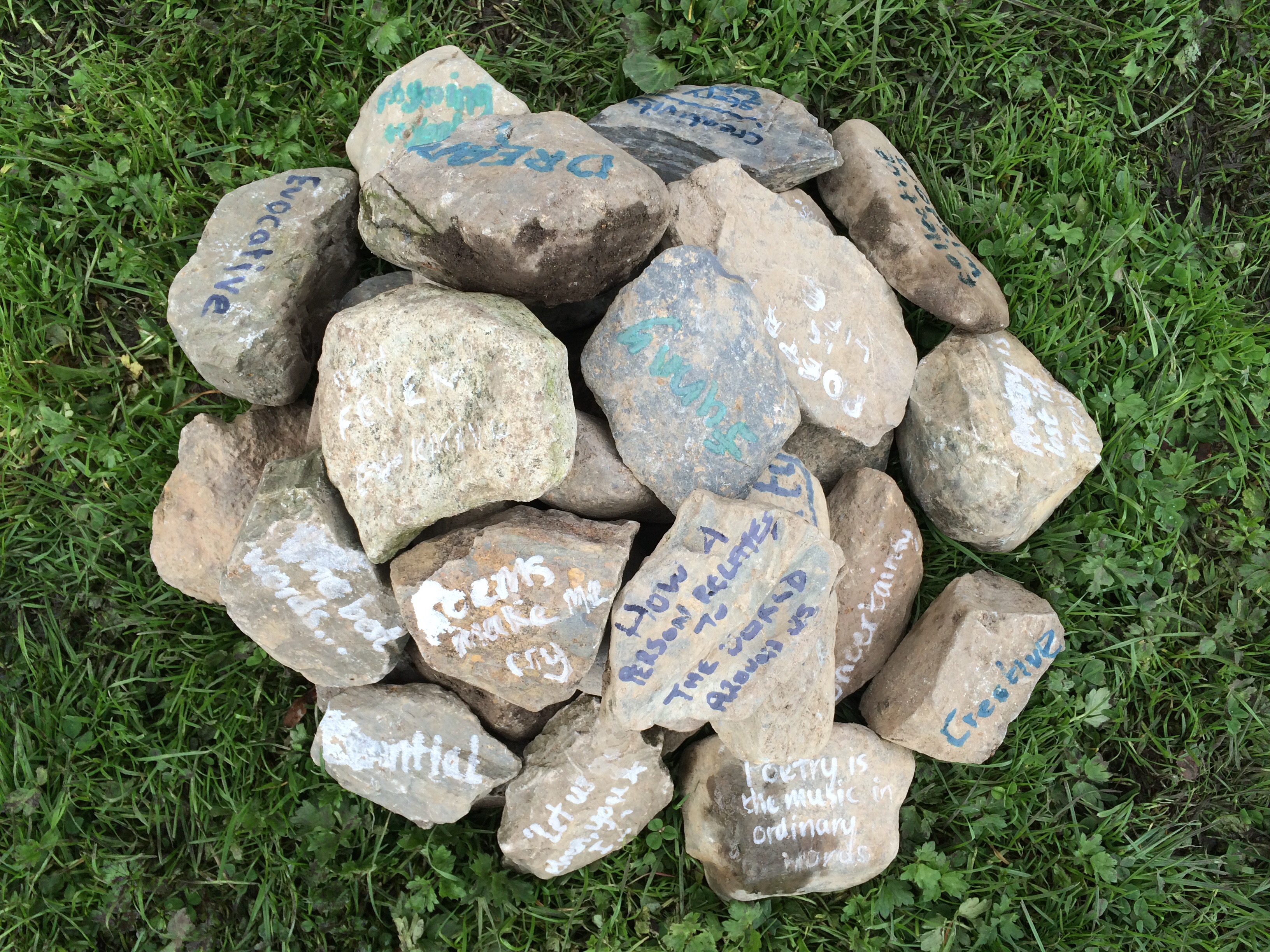
I also created a guerrilla poetry project for Lakes Alive festival: this time, a Poetry Cairn. One of the things that never fails to bring me joy about poetry is the way it can bring people together. For the project, people were encouraged to think about what poetry meant to them, and to write the answer on a stone, which we gradually built into a cairn. The best part of the project, however, was the conversation this request inevitably sparked, with people reciting poetry to me, talking shyly about their own writing, or just musing on what poetry was.

Just a week later, I was at Rheged in Penrith, hosting an Adult Youth Club for C-Art Festival, featuring the wonderful Loud Poets collective, and Edinburgh-based band Ekobirds. There was poetry and music, naturally. But like any good youth club, we also had crayons, plastecine and a quiz.


Katie Hale. Photo - Tom Lloyd

And speaking of youth…

This year I’ve delivered a number of workshops in schools. I’m still working with my wonderful group at St Patrick’s School, through the Wordsworth Trust. It’s such a rare privelege to keep returning to the same group over an extended period of time, getting to see them develop and grow, both as children but also in their writing. They’re a fantastic group, who never cease to surprise and impress me with their words and ideas.

But I’ve also delivered some hugely enjoyable one-off workshops, such as workshops for National Poetry Day (also with the Wordsworth Trust), and a number of workshops for New Writing North, which led to a couple of showcase events and an anthology of the students’ work.

Phew! Talk about a busy year – and it hasn’t all been about poetry…

Barrow Island Primary School - work with New Writing North and Katie Hale

Fiction:

At the end of 2016, I started writing fiction. On the off-chance that my prose-writing wasn’t ridiculous, I submitted the first 1000 words of a novel to WriteNow: Penguin Random House’s new mentoring scheme. And, just before Christmas last year, I heard I’d been accepted onto the Manchester Insight Day. Apparently around 3000 people applied for WriteNow in its first year, and this meant that I was in the top 150. That alone gave me the confidence boost I needed to actually continue writing the novel, and to believe that the idea I could write fiction wasn’t such a crazy one after all.

Since the Insight Day in February, it’s all been a little bit of a whirlwind, to be honest. Over the month or so that followed, I heard that, from the insight day, I’d been shortlisted for the year-long mentoring scheme run by Penguin Random House. After a nerve-wracking phone interview (in which the PRH fire alarm went off and my interview had to be paused while everyone evacuated the building), I learned that I’d made it through. Out of the original 3000, twelve of us were selected to take part in a year-long mentoring programme.

Since then, I’ve drafted and redrafted (and redrafted and redrafted) the novel. I’ve had some hugely beneficial feedback meetings with my editor, and am currently about to embark on Draft 7.

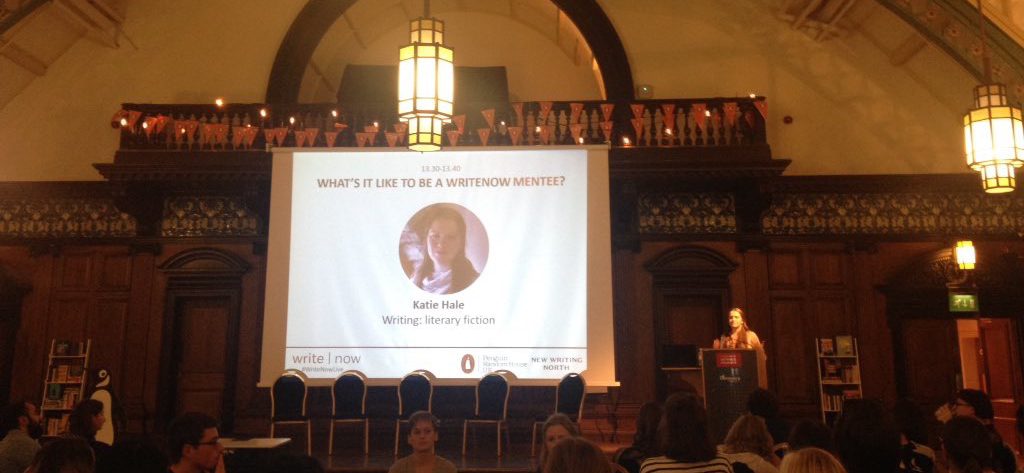
I’ve been to a wonderful meet-up weekend, and spent time with the other mentored writers, who are all lovely. I also had a wonderful day at the Newcastle Insight Day, where I was asked to give a talk to 50 shortlisted writers for the next round of the mentoring scheme – including friend & fellow Cumbrian poet Polly Atkin, who has since been accepted on Year 2 of WriteNow. Go Cumbria! (If you fancy it, you can read the talk I gave here.)

And most recently (just in the past week, in fact), I’ve got an agent. I’m super excited to be represented by Lucy Luck, at Conville + Walsh (part of Curtis Brown). Such a great early Christmas present!

My Writing Life: February - Katie Hale, Cumbrian writer
WriteNow insight day with Penguin Random House

Theatre:

As if poetry & fiction weren’t enough, this has also been a pretty theatre-heavy year.

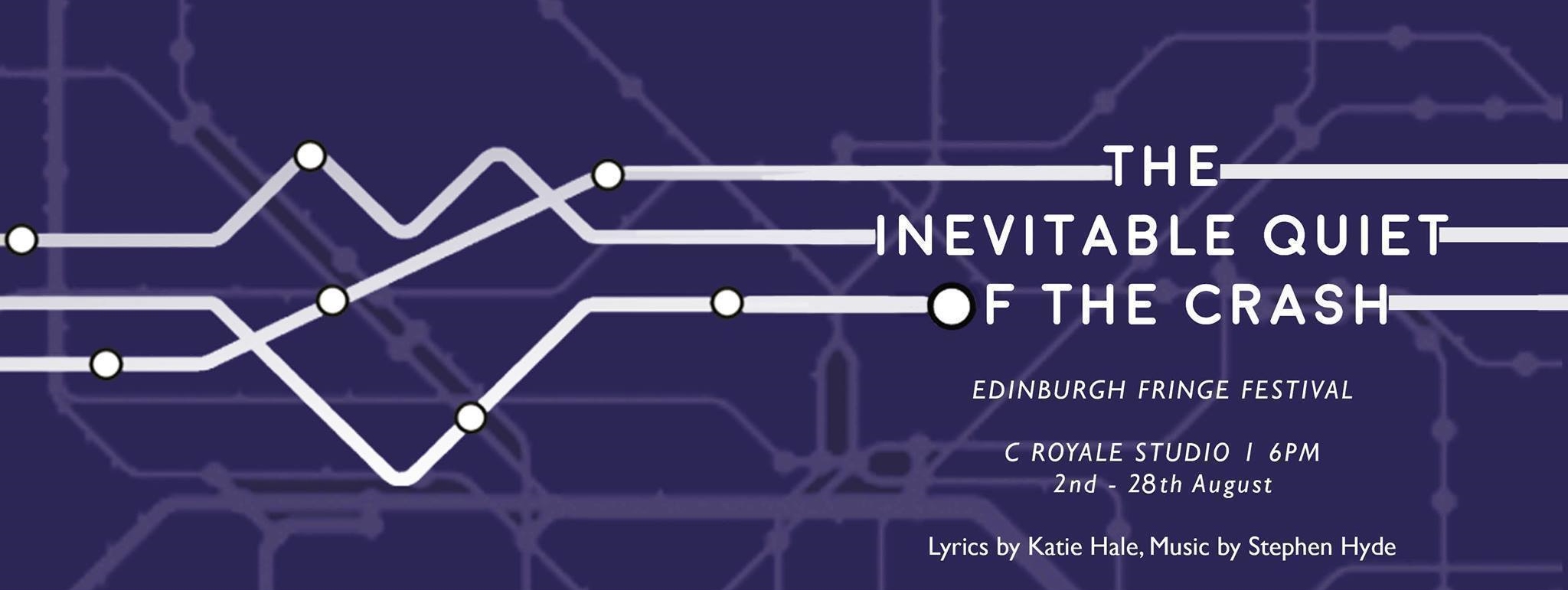
In 2017, I achieved my long-standing ambition of taking a show to Edinburgh Fringe. I worked with my friend & composer Stephen Hyde to rewrite the show we created in 2015 (then called Yesterday), to create a very different production: The Inevitable Quiet of the Crash.

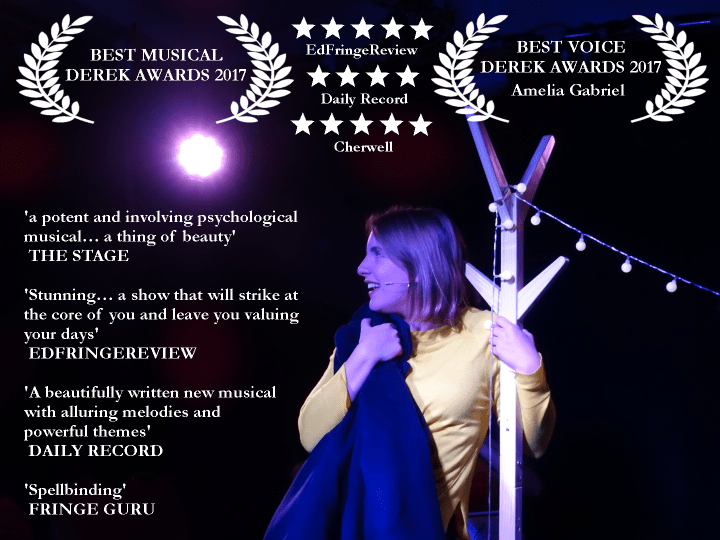
The Inevitable Quiet of the Crash played throughout the Fringe at C Royale: a new C Venues-run location on George St. We had a fantastic team (thanks, FoxTale Productions!) and a wonderfully talented cast & band. So no wonder we got some good reviews!

The Inevitable Quiet review quotes

It’s also been an amazing year for travel. Aside from spending the best part of August in Edinburgh (a city I love and could always spend more time in), I’ve also been to Cambodia and Vietnam, and then to Iceland with the wonderful Jessi Rich.

The Year in Pictures:


I usually feel as though things wind down as I get into November. Like tying things up before the end of the year and a new chapter begins in January.

To a degree, that’s been the case this month, but it’s also been a month of getting things moving. I’ve delivered a few schools workshops for the Wordsworth Trust – including to my regular Yr 5 group at St Patrick’s School in Workington, who are such a joy to work with, and whose growing confidence in their writing is a privilege to watch. Listening to them talk about why they liked different types of poems was heart-warming: from the children who liked ‘how to’ poems because it’s an inherently kind form, to those who loved confessional poetry because it was a chance to own up to all their naughty moments without being told off!

I’ve also taken part in a few workshops this month, and I have one or two more before the year is out. Trying to keep the creativity going over the next month, and not stagnate in a puddle of mulled wine and chocolate coins.

But if I’m honest, poetry has been forced to take a bit of a back seat this month. Instead, it’s been (nearly) all about the novel. I had another feedback meeting with my editor, which was followed by a get-together of all of this year’s WriteNow mentored writers, at the Penguin Random House offices on the Strand. It was so good to meet the other writers – many of whom I’ve been chatting to on whatsapp for the past 6 months or so. As well as the editorial support and access to contacts that the WriteNow scheme has given me, I’m so grateful for the support network of other writers that’s come about among the mentees. It’s really reinforced for me how important it is to have other writers to turn to, whether in a crisis or just for a bit of TLC when you’re struggling on a tricky bit of the novel. The WriteNow group is great for that.

But now it’s back to catching up on all the poetry-related things I didn’t do during November, as well as all the applications / funding bids / emails etc that I put off while I was getting the novel manuscript up to standard (which seems to have been a recurring theme this year). Especially as I’ve just spent the past couple of days in Vienna (Christmas markets are the best)!

So maybe not so much winding down for Christmas, as that feeling of doing your homework on the morning bus…

Ah well. Here’s to a busy December!

(Oh, and in other news, I’m now on my third cold in a month, which has to be some sort of record. Fingers crossed I can chase it away soon! And yes, this is a plea for sympathy – and soup, if anyone fancies making me any…?)

deer in Richmond Park

The month in books:

  • The Huntress Sea, by Sarah Driver
  • Kumukanda, by Kayo Chingonyi
  • Fish Can Sing, by Halldor Laxness
  • Spill Simmer Falter Wither, by Sara Baume

Currently reading: Night Sky with Exit Wounds, by Ocean Vuong

The month in pictures:

Last night I went to see the fantastic Andrew McMillan perform at Poem & a Pint. He read from his multi-award-winning (make that multi-multi-award-winning) collection, Physical, and then tantalised us with material from his upcoming collection, Playtime.

Playtime doesn’t come out till next year, but in the meantime, here’s on of the poems I performed at one of the open mic slots last night. As you may have guessed, it’s titled after a Joni Mitchell song. It was shortlisted for the 2017 Ballymaloe International Poetry Prize and features in my pamphlet, Breaking the Surface (Flipped Eye, 2017):

You’re in My Blood like Holy Wine

The nights we came home drunk and every night,
we sat side by side, toes curled over the cliff
of the bed in your Oxford bedsit, and talked

about nothing. I know this, because it struck me
how precisely we controlled our breath,
how intricate each flex and shiver of skin

for words that no one cared about. We talked
about next door, the radio constant
through the brickwork, clutching at stations

before moving on. Sometimes, our arms
brushed and for a second, I spiralled
like smoke. There were always cigarettes

and the faint smell of apples, your burgundy
sweater, and the bristled curve of your throat.
There were dark thumbprints in the bowls

of old wine glasses, stacks of plates
like unopened letters, crumbs
sharp as insects littering the rug –

and all the words I didn’t know how to say
were crows, flapping their frantic wings
against the inside of my mouth.

I swallowed, and they clawed my stomach
raw and sick. I’ve tried to drown them
in spirits, thick and toxic as the dark,

drown them till they tasted of nothing
but iron and burnt toast, and my body
was a smudge of wings on a pebble beach.

I’ve tried to speak. Once, I twisted my fingers
in the duvet, as if there would be ripples
that could reach you: your solid, immovable legs.

You shut the blinds, switched on the desk lamp
and Joni Mitchell – how I could drink a case of you
and I would still be on my feet – but before the end

you cut the track to watch the trailer
for the new James Bond. You said, I know
how you feel about me, and I believed you.

*

Remember the Church of the Assumption
of Our Lady in Mosta? Where the bomb
that plummeted through the roof in 1942

into the middle of a morning mass
without exploding was still on display,
and the little card proclaimed this a miracle

in several languages. Remember
how we watched it for almost twenty minutes,
how its silence filled the room

till we imagined we could hear it ticking:
a gunmetal heart; the weight of a hammer
raised above a head or bell

about to be struck; the stretched skin
of a drum anticipating thunder.
Or maybe it was just our own blood

beating against our ears like fists
against a door. Remember how I said, I wish
it would do something drastic, I wish it would explode?

October is the month of Halloween, so for this month’s prompt I’m suggesting a little bit of necromancy.

One of the things that always fascinates me about poetry (and about writing in general) is the way it is always a balance between the known and unknown, the explained and the imagined, the writing and the reading. How much is the writer telling us, and how much do we have to work out for ourselves? How much is recognisable and familiar, and how much is completely new to us? A piece of writing where we recognise nothing may be a great feat of imagination, but it requires too big an ask of the reader. On the flip side, a piece of writing where everything is so familiar that there’s nothing to surprise us may be easy to understand, but it does little to retain our interest. Writing, like so many forms of creativity, is about balance.

One way to achieve this balance is to take something recognisable and give it a new angle. Set a familiar story in a new location. Pick up a person we all know and drop them in a completely alien environment. Put Cinderella on a Blackpool hen party. Sleeping Beauty in a coma in a hospital ward. Hansel & Gretel in a refugee camp.

This is something Carol Ann Duffy does in a number of poems in The World’s Wife, giving stories and myths and historical figures a contemporary setting. In his newest collection, The Unaccompanied, Simon Armitage sets an episode from The Odyssey in Poundland.

So that’s my challenge for this month:

Take a figure from history, or a story, or a myth, and put them somewhere in today’s world.

How do they react to what’s around them? You could write the poem with your character confused by modern technological developments, as they probably would be if they’d been time-travelled across the years. Or you could keep the character the same, but put them in the modern world as though it’s their natural habitat. What new light does this process shed on the character? What new light does it shed on the modern setting?

Good luck, and happy writing.

For some reason, I thought things would quieten down once the Fringe was over. I thought September would be a fairly easy month, where I could focus on redrafting the novel without much distraction.

Wrong, as it turns out – though in the best possible sense.

To begin with there was a month’s worth of admin & emails to catch up with, where I’d spent the whole of August concentrating solely on the Fringe. Turns out that coming home to several hundred emails in your inbox does actually take some time to deal with – and catching up on sleep can be even trickier to fit in. But at least once that was all done, September could really get underway.

Poetry Cairn, Lakes Alive Festival

I’ve had a couple of performances this month, the first of which was Lakes Alive Festival in Kendal. My performance took place in a giant teepee in the afternoon, but in the morning I created a Poetry Cairn. Over the course of a morning, I invited passers-by to talk to me about poetry. What does poetry mean to you? People were then encouraged to write their answer on a stone and add it to the cairn, so that by the end of the morning, we had built a cultural landscape marker of our own, marking people’s relationships to poetry.

I was also thrilled to be part of a second festival this month, hosting an Adult Youth Club event at Rheged, as part of Eden Arts’ C-Art Festival. Based on the idea that you’re never too old to have fun, the event featured music from Ekobirds and poetry from the fantastic Loud Poets collective, as well as a quiz, and tables strewn with crayons & modelling clay.

Katie Hale. Photo - Tom Lloydphoto: Tom Lloyd

And continuing on the poetry theme, this month also brought National Poetry Day. This year for National Poetry Day, BBC Local Radio commissioned 12 poets (one from each region) to write a poem based on a local dialect word. The project was called #FreeTheWord, and was run in partnership with the Oxford English Dictionary.

I was selected to represent Cumbria in the project, and wrote a poem based on the verb ‘to twine’ (meaning ‘to moan’ or ‘to complain). The poem is called ‘Ode to Twining’ and you can read it and watch the video here.

Click here to hear the poems from the other BBC regions.

But September has also been a month of fiction. Despite everything else, I’ve also been working on my novel, which is now at the redrafting stage. I think I expected this stage to be easier than writing the first draft. After all, at least I wouldn’t be confronted with the monolithic blank page. But actually I think it’s harder. There’s more pressure when you’re redrafting. Suddenly it starts to matter whether it’s ‘good enough’, whereas before it was just about building up the word count and getting the bones of the story down on the page. Suddenly, I’m having to try to hold the whole novel in my head at once.

But that doesn’t mean it isn’t enjoyable – which is a good thing, as I was worried I’d be less fired up by the manuscript once I’d written how the story ends. Hopefully, this means I’m doing something right. Penguin Random House seem to think so, so that’s encouraging!

Penguin Random House: WriteNowLive Newcastle

And speaking of PRH… Last weekend I was invited over to Newcastle, to speak at the next round of WriteNow Live insight days. This is part of the shortlisting process of the second year of WriteNow, and as one of the first year’s mentored writers, PRH asked me to go and talk about my experience of the project so far, and the impact it’s had on me. Mainly, I talked about how being accepted on the scheme, and having someone champion my work, has boosted my confidence, and help me overcome those internal barriers to writing the manuscript in the first place. You can read the whole speech here, if you fancy.

Then suddenly September is over, October has arrived, and it’s well and truly autumn. Guess I’ll just have to spend those chilly autumn days snuggled up inside & working on my manuscript!

*

The month in books:

It hasn’t been a bad month for reading, although as always, I wish I could carve out more time for it. Especially now the nights are drawing in; there’s nothing better than curling up by the fire with a mug of hot chocolate and a good book.

  • Urban Myths and Legends (Emma Press anthology)
  • Often I Am Happy, by Jens Christian Grøndahl
  • Russian Roulette, by Anthony Horowitz
  • Good Bones, by Margaret Atwood
  • Imaginary Friends, by Philip Pullman
  • Room, by Emma Donoghue
  • The Power, by Naomi Alderman
  • The Unaccompanied, by Simon Armitage

*

The month in pictures:

Save

Save

Save

Save

It’s amazing how much time it takes to get back to normal after a month of being away. Especially when that ‘month away’ involves taking a show to Edinburgh Fringe. I’ve been back home about a week and a half now, and I think I’ve finally caught up on sleep, got back to grips with what day of the week it is, and (mostly) responded to the emails stacked up in my inbox.

Edinburgh Fringe was an incredible experience. Although I didn’t get to see as many other shows as I’d imagined I would (the one down-side of having to work on and flyer for your own show), I don’t think I’ve ever felt so steeped in art and creativity. I spent practically the whole month with my head buzzing with ideas and just itching to pick up a pen.

Of course, the month wasn’t without its difficulties. When your director tumbles down Arthur’s Seat and breaks her ankle, or one of your cast members loses her voice, or the mics stop working half way through a show, you have to find a way to rally round. But that’s why it’s so important to have a good team on board. Which, luckily, is exactly what we had.

The Fringe in numbers:

360 tweets
33 stars given
26 performances of The Inevitable Quiet of the Crash
11 cast, band & crew members
7 trains taken
5 flats stayed in
2 awards won
1 ride in the back of an ambulance
1 cello string snapped
100+ coffees drunk

The Inevitable Quiet of the Crash ran at C Royale, 2-27 August 2017.

CAST:

Anna // Emilie Finch
Sally // Amelia Gabriel
Julia // Ellen Timothy

*

BAND:

piano // Peter Shepherd
drums // Chris Cottell
cello // Emily Hill & Susie Lyness

*

CREATIVE:

words // Katie Hale
music // Stephen Hyde
director // Issy Fidderman
musical director // Peter Shepherd
movement director // Nils Behling
lighting // Jennifer Hurd
sound // Nat Davies

*

BEHIND THE SCENES:

production // Edward Armstrong & Anya Boulton
marketing
// Katie Hale & Anya Boulton
trailer // Úna O’Sullivan

Keep an eye out for the future of the show!

Save

Save

Save

With The Inevitable Quiet of the Crash opening in Edinburgh this week, I’m thinking in dramatic terms at the moment. BUT that doesn’t mean that you have to write drama for this prompt. In fact, it’s probably better if you don’t…

This month, it’s all about the detail. It’s about observation and imagination. It’s about exploration on the most minute level.

This month, I’m challenging you to describe the events of a single second.

It’s up to you what happens in that second. It could be nothing much more than you, sitting on the sofa looking out of the window. Or it could be something much more dramatic, like a gunshot or jumping from a diving board.

Whatever moment you choose, try to imagine every single detail of that one action. Think of it like a single second of film.

What is your body doing (or the body of the person in the scene, if it isn’t you). How do the muscles move? What triggers them? Is it a reflex reaction, or the product of long deliberation? Is the action reluctant or keen? Are the limbs heavy, or quick and agile? What’s going through your mind / the character’s mind? It’s surprising how many things a person can think in one second. There are our active thoughts – the things we’re conscious of thinking, that we might narrate in a stream-of-consciousness. Then there are the other more subtle associations. The smell of herbs that half-take us back to that restaurant in Italy; the way the light catches the window, which makes us feel all warm inside. The things we feel without actually thinking them aloud.

Then of course, there’s what’s happening in the rest of the scene. Are the surroundings changing? Is there something happening far away that affects the mood? What happened just before? What’s about to happen next? All these things have an effect on the moment.

So that’s my challenge. Tell the story of a second. The whole story. In a single second.

Good luck!

Five minutes ago it was the end of May. Now it’s nearly the end of July.

When I think about it, it isn’t really suprising that the time’s gone so quickly. After all, it’s been a pretty busy couple of months…

Poetry:

BREAKING THE SURFACE: The main thing in my poetry life is that I’ve launched my pamphlet! Yes, that’s right: I am now the author of a slim volume of poetry which actually has my name on the cover and my poems on the pages in between.

Breaking the Surface officially came out at the end of June, but I sort of jumped the gun on that one, and had the launch on 6th June. Well, I say ‘the launch’ – what I actually mean is the first launch, because I had two.

The first was at Penrith Old Fire Station. I read poems from the pamphlet, alongside two members of Dove Cottage Young Poets, who also performed, and who pretty much stole the show: Hannah Hodgson & Emily Asquith. I say ‘pretty much’ because there was also an open mic, and – more importantly – a buffet. Always a good thing at a poetry event! (Or any event, for that matter…)

The second was in Crosthwaite Village Hall. This was a joint launch with Pauline Yarwood, whose pamphlet, Image Junkie, is published by Wayleave Press.

PRIZES: I’ve also had a lucky couple of months (following on from another lucky couple of month before that). My poem, ‘The Selkie’s Child’, was chosen by Hannah Lowe to win the Ware Poetry Prize. A couple of weeks later, another poem (‘Offcomer’) was shortlisted for the Frogmore Papers Poetry Prize.

Fingers crossed the lucky streak keeps going!

ALSO: As well as prizes & publications, there’ve been quite a few performances. (Alliteration – see what I did there?) Some of these were my own (I had a lovely evening as the guest reader at an open mic night at Cakes & Ale in Carlisle, and a trip to Derby to read for Derby Poetry Group).

Some of the performances, though, were other people’s. In particular, July saw the culmination of a schools project I’ve been working on with New Writing North. This year, I’ve been working with three schools across Cumbria (Barrow Island Primary School, St Bede’s Primary School & Monkwray Junior School), to write poems based on New Writing North’s children’s show, Hey Presto! – which toured libraries at the end of last year. The project culminated in the production of an anthology, called All the Things We Would Pull from a Magic Hat, and performances in Monkwray School and Barrow Library. Seeing the children’s pride in performing their poetry for an audience, and their excitement at having their names in a book, was the perfect end to the project.

Barrow Island Primary School - work with New Writing North and Katie Hale


Fiction:

The fiction has been largely in a ‘thought’ phase over the past few weeks. This isn’t a cop-out of saying that I haven’t been working on it. I have. But so much of a writer’s work goes on in the mind, and that’s what’s been happening with the novel.

In June, I went down to London for my first WriteNow mentoring meeting with my editor at Penguin Random House. It was such a rewarding meeting: to have somebody look at the first draft of the novel in its entirety and really examine what was working and what still needed attention. There was a lot of very encouraging positive feedback. There were a couple of sections that I wasn’t sure about, which Tom (my editor) highighted as needing work, so it was good to have that confirmation.

Generally, it’s left me with a lot to mull over, ready to start reworking the existing draft in the next week or so.

Meanwhile, I’ve been working on…

The Inevitable Quiet of the Crash - a new musical at Edinburgh Fringe 2017, lyrics by Katie Hale & music by Stephen Hyde

Theatre:

The Inevitable Quiet of the Crash opens at Edinburgh Fringe in ijust a few days time! Which means the past 8 weeks have involved a lot of last-minute edits and adjustments as we work towards opening night.

Something fascinating happens when you give your words over to somebody else to work with. Suddenly, the words cease to be yours. Someone else takes them, rolls them around their mouth and delivers them back to the world in a voice that isn’t yours. It’s the closest I’ve been to becoming Frankenstein, literally bringing another human to life.

But of course, working with other people inevitables means changing things. One of the joys of working with actors is that they inhabit the character fully. Of course, this is something I try to do during the writing process, but I’m trying to juggle multiple characters, multiple storylines, and an overarching plot. Whereas for the actor, they focus on the one character and learn to inhabit their skin. They walk in the character’s shoes. They look through the character’s eyes – which means that they spot things that I don’t.

Hence rewrites and revisions.

The result? Hopefully a more rounded and complete show, with truer, deeper characters. Hopefully a successful run at the Fringe!

Find out more about the show and how to get tickets here.

Or read my interview with Gareth Vile, talking about the show here.

*

So all in all, a pretty busy couple of months!

Oh yes, and I also went to Iceland with my friend & fellow writer Jess Rich. (The country, that is – not the frozen food shop.)

Iceland

The months in books:

I haven’t actually read as much as I’d like to these past couple of months – probably because I’ve been so busy writing, travelling, and tying myself up in admin knots. But what I have read has been a good mixture of new works (or at least, new to me) and old favourites.

I’ve particularly enjoyed rereading the Harry Potter series. A few weeks ago, Harry Potter turned 20. So that evening, when I couldn’t sleep, I pulled my tatty, dogeared but very well-read Philosopher’s Stone from the shelf and immersed myself. What fascinated me most was how much more I noticed this time around. I’ve read these books several times; I thought I knew everything they had to offer. But this was the first time I’d read them since starting to write fiction of my own, and suddenly I’d become alive not just to the stories, but to the writing itself. One of the message’s in Alain de Botton’s The Art of Travel (which I also read recently) is that drawing an object helps you to observe and understand that object; it’s the same with writing. Now that I’ve tried to create my own story, I can observe and understand J K Rowling’s writing process in a completely different light.

  • Confabulations, by John Berger
  • Girl Meets Boy, by Ali Smith
  • The Character of Rain, by Amelia Nothomb
  • Harry Potter and the Philosopher’s Stone, by J K Rowling
  • Harry Potter and the Chamber of Secrets, by J K Rowling
  • Harry Potter and the Prisoner of Azkaban, by J K Rowling
  • Harry Potter and the Goblet of Fire, by J K Rowling
  • Harry Potter and the Order of the Phoenix, by J K Rowling
  • Harry Potter and the Half-Blood Prince, by J K Rowling
  • Harry Potter and the Deathly Hallows, by J K Rowling
  • The Fishermen, by Chigozie Obioma
  • The Art of Travel, by Alain de Botton

The months in pictures:

Save

Save

Poetry has a very close relationship to sound. It’s one of the things that sets it apart from prose, which is often read internally; poetry changes so much when it’s performed out loud. With its long association with an oral tradition, with ballads and song, with rhythm, meter and rhyme, the very act of writing poetry becomes an act of engaging with sound.

‘Poetry begins in those situations where the voice has to be raised: the hawker has to make himself heard above the market hubbub, the knife-grinder has to call the cook out into the street, the storyteller has to address a whole village, the bard must command the admiration of the court. The voice has to be raised. And it is raised in rhythm.’ – James Fenton, An Introduction to English Poetry (London: Penguin Books, 2003)

I actually ran a school workshop about poetry and sound just the other week. I was working with my regular group of Yr 4 pupils at St Patrick’s School in Workington, where we looked at John Clare’s poem, ‘Pleasant Sounds’. We talked about Clare’s use of ‘sound words’ (such as ‘pattering’ and ‘whizzing’), and about how some of the sound words he used were unexpected, like ‘flirt’ and ‘halloos’. Then the children thought about a favourite place, and wrote about all the different sounds they could hear in that place.

Which brings me onto this month’s challenge:

Write about the next sound you hear.

It could be a large sound, or a very small one. Whatever it is, I want you to focus on it. Describe it in as much detail as you can.

Start by describing the sound itself – what are the best words for the sound you can hear? Is it loud or quiet? Does it invade your ears, or do you really have to strain to hear it? Is it continuous, or short and sharp like a puncture?

Then expand the picture out from there. What’s making the sound? Can you see it? What does it look like? Whatever’s making it: does it change as it makes the sound? How does it affect the other sounds around it? How does it affect you? Does it remind you of something else? Another time you heard it, perhaps, or something else that makes a similar noise?

The trick with this exercise is focus. Focus all your energy and attention on that one sound, and let the detail fill the words.

As always, I’d love to see the results. Good luck, and happy writing!

After a month of writing very little while travelling around Cambodia & Vietnam, May has been full on. Honestly, since landing at Manchester airport at the end of April, I don’t think I’ve stopped.

Finding time to write in London

After the Ballymaloe International Poetry Prize’s award ceremony in Dublin, and the South Downs Poetry Festival weekend residential over the bank holiday weekend, May got into full swing with a couple of days hanging out on London’s Southbank and writing, as well as seeing ‘Consent’ at the National Theatre, and drinking wine with friends (always important).

From there, I headed up to Cambridge for the Jane Martin Poetry Prize award ceremony, held at Girton College. Judged this year by Grevel Lindop & Malcom Guite, the Jane Martin Poetry Prize is awarded annually to a poet under 30, for a group of up to four poems – and this year, I was lucky enough to win it. It was a really fun evening, with the award ceremony taking place in the old library, followed by a delicious formal hall dinner. I spent the night in the college, then headed home the next day.

Which was a good thing, because while I’ve been at home, there have been progressions with all three of my big current projects:

Poetry: This month I wrote a couple of new poems, but more importantly: I proofed my pamphlet. It was an odd (but satisfying) experience, seeing the printer’s proof arrive in my inbox – like spending years growing & nurturing a tree, then coming out of the house one day to find it suddenly in bloom. But that blossom will be turning into something even more substantial this week, as the pamphlet itself finally arrives, ready for the big launch on Friday. Very exciting!

Novel: A huge one this month, as I’ve finally finished the first draft of the novel! Which means that I actually got to the end, with no gaps in the middle which just say ‘write something here’. It may be messy, but it’s still a full complete draft. At that moment, when I plugged my laptop into the printer and pressed ‘print’, I was so excited I actually wriggled – like Christmas Eve when I was a child, and I couldn’t sleep for wriggling. Now, I just need to edit it. (I say ‘just’…) I have my first one-to-one with my wonderful editor on the Penguin Random House WriteNow scheme, Tom, in a couple of weeks, and after that I’ll have a better idea of how to move forward with the manuscript. But still: exciting times!

Musical: I’ve done very little actual work on the musical this month – and what I have done has only been in the past week, as we start to look at shaping this draft up into its ‘finished’ form, ready to workshop it with the cast next month. BUT that doesn’t mean nothing has been happening, because tickets for the musical (called The Inevitable Quiet of the Crash and co-written with composer Stephen Hyde) went on sale! The show runs 2nd – 26th August 2017, at the Edinburgh Fringe, and you can book your tickets nicely in advance here.

And that’s pretty much been my life this month! Lots of writing. Not a lot of sleep. Ah well. Maybe June will be a bit more relaxed…? (I doubt it.)

The month in pictures:

Save

Save

Until very recently, I was an unbeliever. I’m not talking about religion or magic or the supernatural – I’m talking about writers’ block. If you’d asked me a year ago, I’d have said there was no such thing. I thought it was all a figment of the imagination.

Then it came for me.

In some ways, I stand by what I said: it is all in the mind. But: ‘Of course it’s all in your head. But that doesn’t mean it isn’t real.’ (Thanks, Dumbledore.)

The way I see it, there are two types of writers’ block, each with their own different cure.

TYPE ONE:

The Easy Type

I’ve met so many people who tell me they have trouble writing. When I ask them how often they write, the answer is often something along the lines of: ‘I’m not writing at the moment, I’m looking for inspiration.’

‘Inspiration exists, but it has to find you working.’ – Pablo Picasso

Here’s the thing: writing is hard. You’re reaching into the mysterious parts of your soul, pulling out what you find and attempting to wrestle it onto a page. You’re pulling something fragile out into the open. Naturally, the body tries to put up defences.

‘The easiest thing to do on earth is not write.’ – William Goldman

Writing can be mentally and emotionally draining. It’s so much easier to check facebook, or binge watch a TV show, or do the dishes, or check our emails, or cook an elaborate dinner, or any of the other things we do to avoid actually sitting down and writing.

This procrastination can be a manifestation of many things: fear of getting it wrong; laziness; taking the easy road; an uncertainty about the work; embarrassment; worry about not living up to other people’s expectations…

For all of these, there’s one very simple cure:

Make the time to sit down and write.

An hour. Two hours. Three. It’s up to you, just as long as you go to your writing space and stay there. Don’t get up and dust the top of the kitchen cupboards. Don’t tweet. Leave the list of household chores somewhere where you can’t see it.

If nothing comes, write about how you can’t think of anything to write. Repeat this routine every day, or every couple of days, as often as you can. If you turn up to work, then eventually the inspiration will as well.

writing prompt - Katie Hale

TYPE TWO:

The Tricky Type

What makes Type One easy to cure is that the cure is physical. You get yourself into your writing space and something will eventually turn up. Type Two is so tricky because the cure isn’t physical. It’s a purely mental battle, and that’s much harder to fight.

This is the type of writers’ block I didn’t realise existed, until about a year ago. Because sometimes, it isn’t just laziness or a fear of creating the work that blocks us. Sometimes, there’s a much deeper problem.

I’m talking about things that go beyond the work itself. Big things. Things like grief for a loved one. Anxiety. Depression. A big upheaval. Some sort of earthquake that shakes the foundation of our lives.

Something like this isn’t always a block. Sometimes, it can draw the work out of us and turn the creativity into a therapeutic process. But often, this therapeutic creativity comes later. Initially, there’s a block.

This block can’t always be solved by just turning up to the writing station. Often, solving the root problem has to come first. There’s no easy way to do that. Anyone who has ever suffered from any form of mental health issue will know that it’s a complicated process – one that takes time and patience and a lot of self-acceptance – and that ‘solving’ is often a misnomer anyway.

And often, once the root problem is addressed, or at least accepted, the writing will start to flow again. Not always, but for me, this can help. (Of course, at this stage, you still need to turn up to the desk…)

Good luck, and happy writing!

Poetry can be about anything. In many ways, that’s a huge advantage. It gives you freedom to explore any subject that interests you, and to view it through whatever frame seems appropriate. As I like to tell children in my schools workshops, there are no rules in poetry.

But all those options can be a little bit daunting. You know that feeling when you’re looking at a menu and there’s too much to choose from, it’s overwhelming, and suddenly you don’t want to eat anything at all? Sometimes I feel a bit like that about poetry.

So I thought I’d create a prompt that restricts that slightly.

Your goal? To write about something blue.

It can be anything you like – big, small, bright blue, sky blue, azure, navy… Maybe a poem about a shallow coral sea, or the depths of the Pacific. Perhaps the sky on a summer day, or a swimming pool in a fancy hotel. Or maybe it’s a smaller object: a blue bottle, a favourite pair of denim dungarees, bathroom tiles. Perhaps you want to write about blueness in the figurative sense, about being blue, or playing the blues.

Whatever you choose, start with the object and its blueness. Continue writing from there, and see where the poem takes you.

As always, I’d love to see anything you come up with.

Good luck, and happy writing!

Another month – how do they go so quickly?

March always feels as if it should be a month of waking up. It’s when nature really kicks into gear at the end of a long winter. The nights are lighter, I can ditch the heavy winter coat, and there are daffodils in the jug on my windowsill. Oh, and lambs in the field. One of my favourite things about spring, and one of the joys of living in the country: getting to see the lambs skipping and playing in the fields around the house.

Of course, it isn’t just about flowers or adorable farmyard animals. It’s also (like every month) about writing.

And I couldn’t have asked for a better start to the month. At the beginning of March, a whole host of poets & poetry lovers make their annual pilgrimage to St Andrews in Fife, for one of the best poetry festivals around: StAnza. I first went to StAnza during my MLitt year at St Andrews, when I volunteered as a Participant Liaison Officer, looking after poets & speakers, and taking them to and from the venue (or ‘PL-ing’, as it’s known by regular festival volunteers).

This year was my third StAnza, and as wellas PL-ing, I was also the festival’s in-house blogger. This meant writing a blog post each day about what had happened at the festival the day before. In some ways, this was quite a challenge, as there was pressure to write something (and something interesting, too) every day. I couldn’t just switch off for a day. But the flip-side of that was that it made me focus. During every event, I was concentrating, making notes, making sure I had something to say about it for the blog. Which meant that I probably took in more from the festival than normal – which is saying a lot, because I usually come away with my head stuffed full of thoughts & words & ideas.

Since I first volunteered there in 2013, the festival has really become a kind of family. It’s such an inspiring week, and has become a highlight of my social and creative calendar.

Read my StAnza blog posts here:

StAnza blog post writing

At the end of February, I learned I’d been selected for Penguin Random House’s Write Now mentoring scheme. In March, Penguin Random House publicly announced the list of mentees, which was exciting, and pretty much wholly occupied my twitter stream for a while. The actual mentoring process hasn’t started yet, but already it’s pushed me to write more of the manuscript, which can only be a good thing.

Poetry-wise it’s been a month of successes, too.

This month, the shortlist for the Ballymaloe International Poetry Prize was announced. There are four writers shortlisted, and this year, my poem was one of them! Now I need to figure out what to wear for the prizegiving next month…

And, as if that wasn’t enough, the following week I received second prize in the Tannahill Poetry Prize, based in Scotland. We went up to Lochwinnoch for the prizegiving evening – me & my fan club (aka parents). It was an evening of music, courtesy of local folk duo Witches Brew, and poetry, from the other prizewinning writers and from judge Sally Evans. Cue a bit of a Cumbrian takeover, by both myself and Kathleen Jones (who won the third prize & is also a Cumbrian poet).

I’ve also delivered a few schools’ workshops this month, for New Writing North and the Wordsworth Trust – including one at Dove Cottage, which is always good fun. (Although sometimes it feels as though you’re writing with Wordsworth looking over your shoulder.)

Mostly, this month just feels as though it’s flown by. Like the writing time has just disappeared in a whirlwind of everything else happening. Which is maybe a good thing. Sometimes I think that I need a break from writing. Creativity is a muscle, and while it’s good to exercise that muscle, it can also get overworked. Sometimes I just think I need to give the writing muscles a break.

*

THE MONTH IN BOOKS:

This month has been a fairly quiet one for reading, with only two books (though numerous individual poems – too many to list here). Part of this is that I simply haven’t made enough time for reading. Part of it is that I think my brain is starting to feel saturated, clogged up with words. But that’s fine – I have a break coming up very soon… (But shhh. Spoilers.)

This month’s two books are:

  • The Idle Traveller, by Dan Kieran
  • The Quiet American, by Graham Greene

THE MONTH IN PICTURES:

About a month ago, I wrote a post about how not to perform at an open mic night. Today, I wanted to expand on that, and talk about how to behave in a workshop.

Now before I start, I want to say that I love writing workshops. I’m part of 4 separate writing groups who meet in person, I’m in a couple of online writing communities, and I have two friends who I submit writing to on a weekly basis. Feedback workshops were a big part of my Masters, and I’ve benefited from them on a few writing residentials, too. I also happen to run writing workshops myself.

And yet…

If you regularly attend writing workshops, then you’ll probably instantly be able to think of a few examples of people who’ve rubbed you up the wrong way. This is to be expected. You’re putting a group of individuals in a room together, and basically asking them to dissect each other’s babies. It’s not surprising that people can feel a little raw, and tempers can flare.

Still, it needn’t turn into Hunger Games-style armageddon, or some sort of Mean Girls back-stabbing exercise in passive aggression. It’s basically all about consideration for others.

Katie Hale, Cumbrian writer / poet, runs creative writing poetry workshops for young people and children in schools and colleges

HOW NOT TO TAKE PART IN A WRITING WORKSHOP:

  • Say, ‘Here’s what I think of this poem,’ and then rip the piece of paper into tiny shreds.
  • Bring along your best poem, which you have no intention of changing. After all, you’re not there to actually workshop your poem, are you? You’re there to impress everyone with what an amazing poet you are. And people will be so bowled over by the fact they can’t find a single criticism to make about your writing, they’ll instantly want you to be their best writer-friend.
  • Listen to everyone’s feedback, then say, ‘Thanks, but I’m not going change it because I’ve already published it.’
  • Bring along that 20-page poem that’s been sitting in your desk drawer (unless you absolutely know that this is the kind of workshop that accepts longer pieces).
  • Use the phrase: ‘This poem’s shit.’
  • Aggressively defend your poem. Someone has taken the time to give you their considered opinion, so surely it’s only right that you batter them back down over it until they see it your way.
  • On the flip side: aggressively attack someone else’s poem. Sure, it’s their poem, but if they don’t agree with a piece of your advice, then you should keep repeating it (getting louder each time) until they do agree.
  • Take a phone call in the middle of the workshop.
  • While someone else is trying to make a point, have your own conversation – especially if that conversation is about how bad the poem is.
  • If it’s the kind of workshop with writing exercises, wait till the end to tell the workshop leader that you hate writing exercises because you find them prescriptive, and therefore haven’t written anything all workshop.
  • Tell everyone that you don’t really like workshopping your poems, because you don’t trust other people to understand them.

Got any more workshop horror stories? I’d love to hear them! Comments below….

Last week, I made my annual trip north to StAnza International Poetry Festival. This was my third festival volunteering for StAnza, and as well as my usual job of looking after poets, I had the responsibility of being the festival’s in-house blogger.

Amongst all the wonderful talks and readings and performances, there was one event that stood out as being not about the art (at least, not in its purest form), but about the practicalities of making that art pay.

‘Making a Living as a Poet’ was an event sponsored by the Society of Authors. Chaired by Ken Cockburn, poets Sarah Hesketh and Harry Giles talked about how to make money from being a poet – although, as Harry qualified, ‘You can make a living from poetry, but it’s a crap living.’ 

That aside, I thought I’d share with you some of the wisdom learned during that event.

Reading April De Angelis, 'Playhouse Creatures'
April De Angelis, ‘Playhouse Creatures’

HOW TO MAKE A LIVING AS A POET:

  • Find cheap rent. Poetry doesn’t pay well. Unless you have some uncanny luck or you’ve made a deal with the devil to bag a big prize every couple of months, you’re not going to make it onto the Forbes rich list through writing poems. So living somewhere where the rent is a bit cheaper, and living costs are more affordable, is going to be vital.
  • Turn up to stuff. Like so many fields of work, poetry and writing are all about making connections. I don’t mean this in a kind of ‘old boys’ way, but if someone recognises your name on an application, it’s a good start. If you get to know people, they’re more likely to think of you when it comes to work. This goes for organisations, arts councils, collaborations with other artists… The good thing is that poetry networking isn’t nearly as scary as big business networking; it isn’t about striding into a room in a sharp suit, killer heels and blood-red lipstick, then bowling everyone over with with that cut-throat marketing pitch. It’s actually just about hanging out with other lovely artsy people and having interesting conversations.
  • Say yes to everything. Become known as the person who will do the work, rather than the person who refuses the work. Sarah Hesketh started the event by saying that, by accepting any work she could in the field of literature, there’s now ‘a touch of poetry’ on everything she does. Or, as Harry Giles said: you can’t get a full-time job just making art, but you can stitch together enough arts jobs to almost make a living.
  • Be nice. People don’t re-employ people who are rude to them. It’s just common sense.
  • Be professional. Same thing. If you never meet deadlines, or you constantly bitch about your colleagues (which will get back to them – it’s a small world), or you don’t do the work you’ve agreed to do, then people are unlikely to come back to you when the next employment opportunity comes around.
  • Seek out funding. Don’t wait for the work to come to you. Go out and find it. A couple of people seemed surprised by this – isn’t it pushy to ask for work / funding when it hasn’t been offered? But let’s use a more quotidien analogy: grocery shopping. Let’s say you’ve run out of food. Your cupboards are empty, there’s nothing but that mouldy bit of cheddar at the back of the fridge, and all you have in your freezer is half a bag of frozen peas. There are two options. Option 1: sit at your kitchen table twiddling your thumbs and hope someone knocks on your door with a trolley-full of food. Option 2: go to the supermarket and do some food shopping. Obviously, the most obvious and effective of these is option 2. You go out and get some food. It’s the same with work and funding. Instead of waiting for someone to come along and offer you a residency, get in touch with the organisation where you’d like to be poet-in-residence and work together to put together a funding bid. Instead of wishing someone would pay you just to write poems, apply for PhD funding: 3 years of effectively being paid to write a collection of poems. Of course, this all means more admin, but as Harry put it: ‘Making art is also the amin of making art.’ Which brings me onto…
  • Do an apprenticeship. As with any industry, you need to learn how it operates, and have the skills to operate within it. Sarah Hesketh spent a few years working for small arts organisations, in the kind of admin role where she learned how to do everything: events planning; marketing; press releases; funding bids; working with artists; evaluation… All the arts admin skills you need to operate as an individual artist. Of course, this isn’t everybody’s cup of tea. Some artists can’t think of anything worse than having to spend half (or even most) of their day doing admin. Which is fine. There are plenty of other ways to support your writing. Get a job in a cafe or a bar. Work in a funeral parlour. Drive an ice cream van. As long as you’re doing something that you enjoy and that still leaves you at least some time for the writing, then that’s fine. Living as a writer can be as individual as the writing itself.
  • Don’t rely on publishing a book as a way of getting rich. Harry Giles: ‘You make beer money publishing a book. Think about a book as a business card.’ The sad fact is that you don’t get 6-figure advances for poetry. Most books and pamphlets are published by small independent presses and a run of 500 is generally considered pretty good going. So just because you’ve got a book- or pamphlet-deal, it doesn’t mean you can’t start shopping for a luxury yacht. Although the actual writing of poems may be the biggest thing in terms of importance, it’s probably going to be the smallest in terms of actual financial income. But…
  • Make really good art. Although it might not make much money in and of itself, it’s still important that you write really good poems. If you’re applying for residencies or academic positions or running poetry workshops, then the people you’re teaching or applying to will want to know you’re competent in your art form. It isn’t a financial goldmine, but it’s still the thing around which all the rest of your work centres. Which is good, because the poetry is probably the reason you’re doing all this in the first place.

Other than that, just keep your fingers crossed you win something big, like the National Poetry Competition. There’s always an element of luck in life – do you meet the right person who’s going to love and champion your work, or do you write that poem which happens to speak to the personal experience of the editor selecting work for a magazine? But the more you go to things and meet people and put your work out and apply for opportunities and get involved, the greater the chance of those things happening.

The more nets you throw out, the more chance you have of catching a fish.

Read why I’m aiming for 100 literary rejections this year.

Series 1, Episode 2: Stephen Hyde

Face to Face is a series of short monthly conversations with interesting people about the things that interest them. Phones down. Screens closed. Talking face to face.

S1 E2: In this episode, I talk to Stephen Hyde about the collaborative creative process.

Stephen Hyde is a composer, director and creator of theatre. Born and bred in Cumbria, Stephen moved to Manchester in 2009 to study composition at Chetham’s School of Music, after which he took up a choral scholarship at Merton College, Oxford. He is co-founder of touring Shakespeare company Three Inch Fools, and production company leoe&hyde, and his interests lie in aesthetics, Shakespeare, neo-noir film, musical theatre and folk.

I first met Stephen at Penrith Junior Players 15 years ago, when I was just 11.

Since then, we’ve worked together on a number of shows through the youth theatre – including his memorable portrayal of a Vicar for the first show I ever wrote back in 2007. In 2015, we co-created Yesterday: A Musical in Three Halves, which premiered at the Burton Taylor Studio in Oxford. Now, we’re rewriting the show for a Fringe production, and discussing future ways of working together…

I started going to open mic nights regularly when I was 18 and at university. Every week or two, I would catch the train into London and read at Poetry Unplugged at the Poetry Cafe in Covent Garden. It was a friendly and encouraging introduction to the open mic scene, and I became more confident performing my work to a bunch of strangers.

Since then, I’ve lost count of how many open mic nights I’ve been to. I’ve read in open mics at festivals, in bars, and in cafes, across two continents. I even run one every month at Penrith Old Fire Station.

Most of the time open mics are enjoyable and a fun way to spend an evening. But now and then, things happen. The balance tips, and writers start behaving badly. Sometimes, it’s a subtle thing that some of the audience may not even notice. Sometimes it’s so obvious it becomes a talking point for numerous open mic nights to come – a kind of writerly water cooler moment.

Guerrilla Poetry at Deptford Lounge

All of the following are based on real encounters at real open mic nights over the years:

HOW NOT TO READ AT AN OPEN MIC NIGHT:

  • Go over your time. Everyone has been asked to stick to 3 minutes, or 2 poems, and everyone obediently does. Not you though – you sneak an extra poem in there, and double your time. Nobody will mind, right? Not when your stuff is ‘so much better’ than everybody else’s?
  • Read an epic. It’s your pride and joy and took you years to complete – surely that means everyone else should sit politely through all 17 pages of it?
  • Stand up, announce that you’ve only ever written one poem but would like to take this opportunity to share it – then proceed to do so for the next 45 minutes.
  • Scroll through your phone and catch up on social media while other people are reading.
  • Have a chat in the middle of someone else’s set.
  • Leave as soon as you’ve read your poem.
  • Put your name down to perform, then leave without telling anybody before your set.
  • Keep your phone on loud. If you get a phone call in the middle of someone’s set, well that’s ok – your social life is much more important than their poem.
  • When that phone you forgot to put on silent does ring out: answer it, then have a conversation about how you can’t talk now, because you’re at an open mic night.
  • Heckle (unless you’re 100% sure that it’s the kind of night that allows this, and that the performer expects this). You think the performer is an ‘arrogant sod’? Well, why not shout out and tell him so in the middle of his next poem?
  • Film the performers without asking them first – especially if you’re not the organiser.
  • Use the last bit of your set to plug your own open mic night, which is ‘better than this one’.
  • Go to the bar in the middle of someone’s reading, especially if the bar is on the other side of the performance space, and you have to physically move the performer half way through their poem, in order to get past.

And that’s about it! Any other open mic horror stories to share? I’d love to hear them – share in the comments.

~ dates & details of Word Mess open mic night in Penrith, Cumbria ~

From beginnings last month, to endings…

This month’s writing prompt is about writing to a constraint. For me, some of my favourite writing has come from not being able to write completely freely. A good example of this is form.

‘Writing free verse is like playing tennis with the net down.’ – Robert Frost

I’m not sure I fully agree with this quote by Robert Frost, as I think writing free verse carries its own challenges and subtleties. But I know what he means.

Sometimes, witing to a form can force you to raise your game. It forces you to take the poem in a different direction. If you can’t find a word that says what you want to say and still fits the form, then you have to say something different. Form can push you outside of your comfort zone, and force you to think outside the box.

(It’s actually the same reason I often won’t let my school groups write rhyming poetry, when I want them to focus more on freeing their imagination.)

writing prompt - Katie Hale

This prompt isn’t to use a traditional form, but it hopefully it will bring out something different and unexpected in your writing.

Write a poem using the end-words from a different poem.

Take another poem (by somebody else) as your starting point. Try to make it a contemporary poem that you don’t already know, so that you’re not constantly thinking of the original poem while you’re trying to write your own.

Don’t read the original poem; just write down the last word of each line.

Then, write your own poem, ‘filling in the gaps’. What you should end up with are two completely different poems (the original and your own), but with the same words ending their lines.

Obviously, once you’ve done this exercise, you can rewrite your poem and remove any of those end-words that really don’t belong, and edit your poem as normal.

Your original poem can be any contemporary poem (try to avoid anything too old, as you may get stuck with some anachronistic ‘thou’ and ‘thee’ language). But if you’re struggling to find one, here’s a suggestion:

Window, by Peter Dale

And if you don’t want to see the rest of the poem, the line endings are as follows:

gaze
seem
sun
it
mist
her
look
love
face
pass
sun
child
hers
personal

Good luck! I’d love to see any / hear which poems you chose. Comments in the boxes below 🙂

Series 1, Episode 1: Supal Desai

Ever notice how most of our interaction is now via phone, or messenger, or email, or skype? At least, it sometimes seems that way for me.

Face to Face is a new series of short conversations I’ll be having every month, talking to interesting people about the things that interest them. We’ll be chatting over cups of tea & pieces of cake, in my kitchen or wherever there’s a chance to stop and swap thoughts.

Phones down. Screens closed. Talking face to face.

S1 E1: In this first episode, I chat to Supal Desai about blogging and the creative process of writing a blog post.

Supal is the founder of a business risk consultancy based in London and the blogger behind the travel lifestyle blog, chevrons & éclairs. Her ideal Sunday would find her starting the morning in bed with a good book, newspaper or a cuddle, and then making brunch alongside music and endless cups of coffee. Her love for culture, art and history has taken her to the most exotic parts of the world, where she uses that opportunity to curate content that tells a story through fashion and food editorials.

So where do I come in?

I first met Supal in my friend’s kitchen, during our Masters year at St Andrews. She was cooking up something delicious-looking, and I was trying to convince her that haggis were little creatures that lived in the mountains.

Four and a half years later, we’re here:

Happy New Year!

When I was running Rabbit Rabbit (rabbit) young writers’ group, I used to send the young writers a writing prompt every week. I missed doing it, so I’m going to share a writing prompt as part of my weekly (weekend-ly) blog posts. I’m not Jo Bell, and this isn’t 52, so I’m going to share one a month rather than one a week: the first Sunday of every month.

And because this is January and it’s the first one, I thought I’d share a prompt about beginnings.

writing prompt - Katie Hale

If you think about famous novels, there are probably at least a few whose opening lines come to mind. Which makes sense – the beginning of a book is the part that’s supposed to grab us and make us want to read further.

For me, a good opening to a book is one that draws me in. It’s one that raises questions, or suggests a struggle that needs to be resolved. Sometimes it puts us right in the middle of the drama, straight away.

Take these examples – which, because we’re still within the festive season, I’ve done as a quiz (answers at the bottom of the post):

QUIZ:

  1. ‘It was a cold day in April and the clocks were striking thirteen.’
  2. ‘Marley was dead, to begin with.’
  3. ‘When he woke in the woods in the dark and the cold of the night he’d reach out to touch the child sleeping beside him.’
  4. ‘He was an old man who fished alone in a skiff in the Gulf Stream and he had gone eighty-four days now without taking a fish.’
  5. ‘People are afraid to merge on freeways in Los Angeles.’
  6. ‘Lyra and her daemon moved through the darkening Hall, taking care to keep to one side, out of sight of the kitchen.’
  7. ‘When the doorbell rings at three in the morning, it’s never good news.’
  8. ‘It was love at first sight. The first time Yossarian saw the chaplain he fell madly in love with him.’
  9. ‘He was afraid to go to sleep. For three weeks, he had been afraid of going to sleep.’
  10. ‘The boys, as they talked to the girls from Marcia Blaine School, stood on the far side of their bicycles holding the handlebars, which established a protective fence of bicycle between the sexes, and the impression that at any moment the boys were likely to be away.’
  11. ‘It was the best of times. It was the worst of times.’
  12. ‘The boy with fair hair lowered himself down the last few feet of rock and began to pick his way towards the lagoon.’
  13. ‘They say it came first from Africa, carried in the screams of the enslaved.’
  14. ‘In my younger and more vulnerable years my father gave me some advice that I’ve been turning over in my mind ever since.’
  15. ‘Like most people I lived a long time with my mother and father. My father liked to watch the wrestling, my mother liked to wrestle.’

How many did you get? Answers at the bottom of the post…

*

Writing a gripping first sentence is all very well for the opening of a novel, which sets up plot and conflict and character and story. But what about poetry?

I wonder how many of us think about setting up conflict and character and story in the opening of a poem? I wonder how many of us write opening lines to grip people with the drama of the poem, the way we might in a novel?

So that’s my prompt:

Write an opening line for a poem, which sets up drama and / or mystery, and whose sole purpose is to grip the reader.

Then, and only then, you can try writing the rest of the poem.

Here are a few poems that I think grip the reader really well:

‘Here, Bullet’, by Brian Turner

‘Bird’, by Liz Berry

‘Kiss’, by Ruth Padel

Happy writing!


ANSWERS:

  1. Nineteen Eighty-Four, George Orwell
  2. A Christmas Carol, Charles Dickens
  3. The Road, Cormac McCarthy
  4. The Old Man and the Sea, Ernest Hemmingway
  5. Less Than Zero, Bret Easton Ellis
  6. Northern Lights, Philip Pullman
  7. Stormbreaker, Anthony Horowitz
  8. Catch 22, Joseph Heller
  9. Strange Meeting, Susan Hill
  10. The Prime of Miss Jean Brodie, Muriel Spark
  11. A Tale of Two Cities, Charles Dickens
  12. Lord of the Flies, William Golding
  13. The Brief Wondrous Life of Oscar Wao, Junot Diaz
  14. The Great Gatsby, F Scott Fitzgerald
  15. Oranges are not the Only Fruit, Jeanette Winterson

The end of another year, and a whole 12 months since I gave up my main source of income in order to focus more on my writing. A whole 5 months since I went completely freelance. I don’t think it’s any less scary than it was back in January, but it’s a funny thing, looking back on a year. In some ways it seems like forever, and at the same time it feels like no time at all.

For instance, I feel a little bit like I’m still taking baby steps; I’m definitely still an ’emerging’ writer, though I’m not sure how I’ll know when I’ve actually ’emerged’. But then when I sit and list everything I’ve done this year, it feels like much more than a year’s worth of work.

Writing at the Wellcome Collection

Poetry

Most of my focus this year (as always) has been on poetry, and writing as much of it as I can. I’ve started going to Kim Moore’s Barrow poetry writing workshops, and Brewery Poets writing group, and a monthly poetry sharing evening in Shap, which have all been great for making me write more. So great, in fact, that I’ve started writing a new long poetry sequence (so a huge thanks to the Poetry Business workshop at Kendal Poetry Festival, for the spark which set that sequence off for me in June).

As if that wasn’t enough, I’ve also started a monthly wordy open mic night in Penrith. Word Mess takes place on the 3rd Tuesday of every month (except December & August) in the old mess hall at Penrith Old Fire Station (Eden Arts). Attendance has been building steadily, and we now have a lovely little group of regulars, and a slightly bigger group of occasional-ers – though whether they come because of the quality of writing or the quality of the bar is anyone’s guess! Maybe for both.

In terms of my own poetry, it hasn’t gone badly: a couple of poems in magazines, including one that’ll be in The North in January; a commended poem in York Poetry Competition; and being shortlisted for the Jane Martin Poetry Prize.

Not bad – but it isn’t all about poetry.

I don’t know how other people work, but I meet a lot of people who categorise themselves. ‘I’m a novelist’, or ‘I’m a poet’, or ‘I write for theatre’. Obviously there are people who pick a form and stick to it, which is fine if that works for them – but I used to think that was the only ‘correct’ way to do things. In fact, I spent a couple of years actively not writing anything but poetry, because I had this bizarre notion in my head that writing prose or script would somehow make me a lesser poet.

script writing for theatre - Katie Hale

Theatre

Writing Yesterday with Stephen Hyde last year, the theatre bug bit me again, and those play ideas that had been simmering under the surface kept nudging at me – so this year, when I suddenly had more time on my hands, I decided to let them out.

This year I’ve drafted two play scripts – both of which are currently both sitting in a drawer fermenting, until enough time has passed for me to look at them with fresh enough eyes to give them a proper redraft. It’s been so great to get back into playwriting, that I almost don’t mind whether anything happens to them or not. The feeling of exercising those script-writing / dialogue / plot muscles was satisfying enough in itself. Like when you go for a run after a long period of inactivity, and you feel a kind of glorious ache in all the muscles you haven’t used for ages.

Then, while I was stuck in Tulsa airport for 24 hours as a storm raged in Chicago and the UK voted to leave the EU, I wrote the lyrics for a new song (also by Stephen Hyde), for the Three Inch Fools’ touring production of Macbeth. I think there may be a recording of this surfacing at some point in the new year, but for now, if you’re not already a Fools fan, you should definitely check them out.

I’m also getting stuck back into the rewriting process of Yesterday, working with Stephen. After a few months working very solidly on my own, it’s good to get back to collaborating again, and to remember that excitement of bouncing ideas back and forth between two people until they become something much bigger than either of you could access alone, and neither of you can quite say who came up with what. Much more of this to follow in the new year…

New York - writing in a cafe, Katie Hale

Fiction

Ok, so I haven’t really been a fiction writer for about half a decade. Like most writers, I guess, I started out writing fiction, because stories are the first creative thing you’re taught to write in school. But my poetry, and even my theatre, has superceded my fiction for the last ten years, and the fiction has been basically absent for around half that time.

And yet… Like a lot of people, I had a novel lurking. You know the one, swimming in the depths of your brain – the one that floats to the surface when you feel particularly inspired by a good book you’ve read, or when you’re trying to get to sleep, or doing the dishes.

This year, I decided to give it a go. So far, I’m only about half way through the initial drafting stage, so there’s no knowing whether anything will come of it, or whether (perhaps like the play scripts) it will just sit in my desk drawer. But already it’s looking hopeful.

Over the summer, Penguin Random House put out a call for submissions from minority writers, to receive a place on one of their WriteNow insight days, which includes a 20-minute one-to-one with an editor. Having submitted an application & 1000-word extract with my ‘I’m not really a fiction writer but I’ll give this a go’ hat on, I couldn’t really believe it when I heard I’d got a place on the Manchester insight day in February 2017 – especially when I heard that there were over 2000 applications for just 150 places. Talk about a confidence boost!

Even if nothing else comes of this, that acceptance email has given me the confidence to write a novel (well, novella) that otherwise would have remained unwritten.

Arts Award Discover workshops

Projects

Work-wise, my main project this year has been running schools workshops and delivering Arts Award Discover. I delivered I-can’t-quite-remember-how-many workshops in schools for the Wordsworth Trust, to tie in with their Arts Award Discover project, where the children wrote poems about places that meant something to them. I also ran Arts Award in Shap and Clifton Primary Schools, which was great fun – especially in Shap School, which was my alma mater. (Can you call it an alma mater for a primary school, or is that just for universities?)

As always, the children blew me away with the quality of work they produced. One particular phrase that I wished I’d written myself came from an 8-year-old, who wrote, ‘I am as shy as a funeral.’ I think I was too gobsmacked to think clearly for about 5 whole minutes. So that night I shared the simile on facebook, and got a whole host of gobsmacked reactions from other people, too.

Oh, and speaking of sharing…

This year I created Poetry Plaster Packs. The idea was to share little packets around Penrith on Valentine’s Day. Each one contains: a plaster (for the literal cuts and scrapes), a cheerful little poem (for the figurative ones), and a little gift – because let’s face it, who doesn’t love a present? I shared about 40 on Valentine’s Day, and a few more since. I suspect I may be distributing a few more in the new year, too.

I’ve also had 3 online projects this year:

The Sam Thorpe Trust Fund: I put together the website for this earlier in the year, and it’s worth checking out, especially if you’re in the Penrith area. The Fund gives grants to young people who want to do something extraordinary, and to schools / organisations that work with young people.

#SomethingGood: On Wednesday 9th November, I was sitting on my sofa in a state of shock, having spent an almost-sleepless night watching America elect a future president with no history of government but a long history of racism, misogyny, and abuse of power. I wanted to do something, but I wasn’t sure what. Some of my American friends were posting on social media about how to contact your senator to raise protests, but I’m not American; I don’t have a senator. Instead, I decided to do something quieter, but hopefully also positive:

The Tea Break Project: And speaking of America, I’ve also started a new travel blog this year. Some of you might remember my first travel blog, Second-Hand Hedgehog. I’ve now moved to a new online home: www.teabreakproject.com – with (hopefully) better content, better design, and better stories from life on and off the road. This year, my travels have included Portugal, Marrakech, Kansas, a massive road trip up the west coast of America and into Canada, and a week in New York.

*

The Year in Books

Every year I make it my goal to read at least 50 books. This year I’ve read 57, which isn’t bad – although I haven’t read as much poetry as I’d have liked. Something to make sure I work on next year.

I have, however, read a lot of plays, thanks to my rekindled interest in theatre and writing for the stage.

I’ve also read a lot of contemporary literary fiction written in the first person, to try to get my head in the right place for drafting the novella. Among these, I’ve discovered Margaret Atwood. How it’s taken me till age 26 to read any Margaret Atwood, I have no idea, but I’m buzzing with that exciting feeling that comes when you fall in love with an author’s writing style. I have to physically prevent myself from running to the till every time I see one of her books in a bookshop.

As well as new discoveries, I’ve made a great rediscovery this year: The Little House on the Prairie. I re-read this in preparation for my trip to Kansas (and the real-life little house on the prairie just outside my great aunt’s home town of Independence). I thought I knew the story. What I hadn’t realised was that I’d only ever read that one book in the series, and that they were a fascinating insight into American history and culture, and why the middle of the country is the way it is.

My top 10 books this year (in alphabetical order):

  • Margaret Atwood, The Blind Assassin
  • Zinnie Harris, How to Hold Your Breath
  • Laura Ingalls Wilder, The Little House on the Prairie (series)
  • Helen Mort, No Map Could Show Them
  • Rory Mullarkey, The Wolf from the Door
  • Max Porter, Grief Is the Thing with Feathers
  • James Rebanks, The Shepherd’s Life
  • Warsan Shire, Teaching My Mother How To Give Birth
  • Em Strang, Stone
  • Elizabeth Strout, My Name is Lucy Barton

*

The Year in Pictures

Save

Save