This week I was planning to write a long and highly thoughtful blog post about some aspect of writing, but I think I used up all my writing juices on completing the first draft of the novel (!) – so I decided to be topical instead, and share a teaser poem from my upcoming pamphlet, Breaking the Surface (Flipped Eye).

(By the way, if you haven’t already put it in your diary, the launch is on Fri 2nd June! More here.)

Rain, Steam and Speed – The Great Western Railway

after Turner

So slight it could almost be an accident
in the turmoil of colour and oil, racing
across the wingspan of the bridge
into the present – a flick of a hare

boxing the future, jacking its sharp angles
over dabbled green, its ears slipstreamed
to the focal point, and back legs springing
like a voice reaching the end of a question.

It runs to show man the limits of his progress.
It runs in terror of the industrial age.
It runs to demonstrate the engine’s speed.
It runs because it is a hare and hares run.


Rain, Steam and Speed – The Great Western Railway‘ was first published in The Compass

BREAKING THE SURFACE

{pamphlet launch, reading & open mic}

Friday 2nd June, 7:30pm
Penrith Old Fire Station, Bridge Lane, Penrith, CA11 8HY

FREE*

‘Katie Hale’s nimble poems, attuned to both the mythic and the quotidian, are full of the delighted surprise and sadness of being alive. Read them and be thrilled.’ – Jacob Polley

It’s here. It’s happening. The poems I’ve been pouring myself into creating for the past few years are coming together in a physical thing that can be bought and read and carried around. Which basically means you can keep my soul in your handbag.

The launch event will be me reading from the pamphlet, Breaking the Surface, alongside guest readers (who I’ll be announcing gradually to increase anticipation, the way they do the Glastonbury line-up), and open mic slots for anyone who wants to sign up on the night. Come along for a night of poetry celebration!

There’ll also be a bring & share supper, so please do dig out that secret family recipe / buy a big bag of crisps on the way over.

Breaking the Surface is published by Flipped Eye.

*Please bring food to share. Bar on site.

Let me know if you’re coming HERE.

Sometimes, writing is about not writing. Sometimes, you have to put down the pen and get busy living in order to have anything to write about. At least, that’s my excuse for April.

April has been a month of clearing my head of all the wordy detritus that’s built up there over the past few months. Honestly, I think I needed the break. At the end of March my brain just felt stuffed, and writing felt difficult (more difficult than usual), as though I was forcing the words out kicking and screaming. Creativity is a muscle, after all, and any muscle can become overworked and strained.

So I’ve spent the past month travelling.

Cambodia. Vietnam.

Katie Hale - Vietnam
I’ve spent a fair bit of time on boats, and a fair bit of time eating all the delicious food I can get my hands on. The only reason I’m not currently the size of a house is that I’ve also spent quite a bit of time walking, whether that’s wandering round towns and cities, or the 3 day trekking tour I bravely embarked on in the hilly northwest of Vietnam around Sa Pa.

I’ve always believed that walking is good for writing. I’m not alone in this belief: I know a number of writers who extol the virtues of a good walk for clearing the brain. Wordsworth used to compose sonnets during his walks on the beach at Calais.

Maybe it’s something to do with the rhythm. Maybe it’s the chemical change enacted on the body by keeping it in motion. Maybe it’s the feel of ground beneath the feet, of groundedness. Whatever the answer, I’ve come home itching to pick up my pen and get the ball rolling on my various projects again.

Well – I say I’ve come home… I did, sort of. For about 2 days. Now I’m off again, although this time I feel slightly more justified in that I’m currently travelling for work. (I love saying that: travelling for work. It sounds so important & businesslike.)

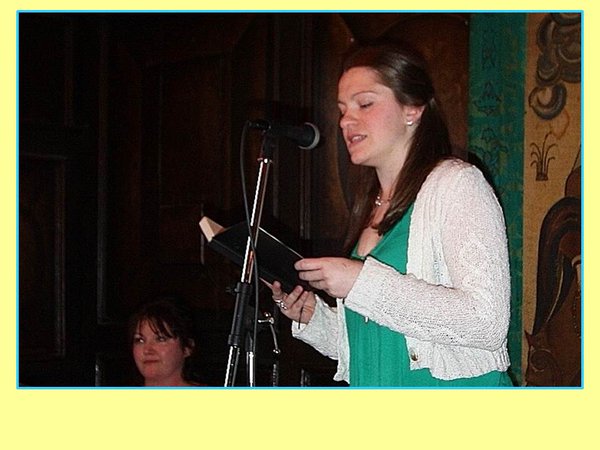
This week, I’ve spent a couple of days in Dublin, where I was shortlisted for the Ballymaloe International Poetry Prize. I didn’t win, but the evening was lovely enough even without winning. Each of the shortlisted poets read their poem, and we were then all presented with our cheques (!) and photographed, and everyone drank wine. There was so much wine on tap all evening: poetry events done right.

Ballymaloe International Poetry Prize award ceremony - Katie Hale
Ballymaloe International Poetry Prize award ceremony

After the award ceremony, there was a reading by Don Paterson and Colette Bryce. I’d heard Colette read before at a workshop weekend at the Wordsworth Trust, but it was wonderful hearing her read from her new Selected Poems, like a cross-section of her writing career so far. As for Don Paterson, I’ve heard him read a few times, as he was one of the tutors on my Masters at St Andrews, but I always enjoy hearing him read: his precise and often ominous poems interspersed with moments of his self-deprecating humour. As with all good poetry readings, this was followed by a trip to the pub, and a long conversation with Don & my friend Ann, who did the Masters at the same time as me and completely surprised me by showing up the the Ballymaloe Prize reading to hear me read. A wonderful affirmation of the generous nature of the poetry world.

From Dublin, I flew to Gatwick, to take the train to Petersfield for the South Downs Poetry Festival Residential, tutored by Kim Moore & Hugh Dunkerley, which I was lucky enough to receive an emerging writers’ bursary for. The long weekend focussed broadly on landscape, with workshops encouraging us to think about the internal and external landscapes, journeys through them, and how we address and perceive elements of the landscape around us. After a month’s break from writing creatively, the residential was a baptism of fire, and I came away with five almost-complete poems, and a couple of bits of raw material that may or may not shape up into something in the future. So talk about a productive weekend!

Writing in Halong Bay, Vietnam - Katie Hale
Writing in Halong Bay, Vietnam

The Month in Books: 

You know when you’re browsing an airport bookshops between flights, and you aren’t really there because you’re planning to buy a book, you’re just trying to kill some of your layover time? And then suddenly you see a friend’s book on the bestseller stand, and obviously it’s like fate intervening and telling you that you can’t not buy it? At Singapore airport, that’s exactly what happened to me, when I saw (and of course couldnt’ resist buying) Cecilia Vinesse’s heart-warming young adult novel, Seven Days of You. Cecilia was another students on the St Andrews creative writing Masters at the same time as me, so it was particularly special to be able to buy and read a book that I’d heard so much about, and seen during the earlier stages of its creation process.

Other than that, I’ve been reading quite a bit about Cambodia & Vietnam, in an effort to connect my reading with my travels. I love doing this: I love that experience of reading about a place, and then looking up from the page to find that I’m actually there.

  • Cambodian Stories from the Gatiloke
  • The Sorrow of War, by Bao Ninh
  • Seven Days of You, by Cecilia Vinesse
  • The Clothing of Books, by Jhumpa Lahiri
  • The Quiet American, by Graham Greene

Reading list - Katie Hale
The Month in Pictures: 

(During my 4 weeks in Cambodia & Vietnam, I took over 3000 photos. Don’t worry. They’re not all posted here.)

Crockery
hard white seeds that don’t grow in the ground

The word has left you. Instead, you turn
your plate-like hands, the way a ploughshare
turns up rocks, or the bones of small mammals.
You stare at the creases in the loose squares
of your palms, as though each
is a path you’ve never travelled.

Sometimes, we try to follow them –
trace them back down all the years
to when their route was still uncut: farm tracks
not yet tarmacked, or sheep trods across
a common field, where footsteps still raised
a breath of dry earth; where the seeds,
secreted in the ground, would wake in later months
as beetroot, potatoes, carrots, parsnips, swede.


‘Crockery’ first appeared in the 2015 Templar Anthology, Mill


Until very recently, I was an unbeliever. I’m not talking about religion or magic or the supernatural – I’m talking about writers’ block. If you’d asked me a year ago, I’d have said there was no such thing. I thought it was all a figment of the imagination.

Then it came for me.

In some ways, I stand by what I said: it is all in the mind. But: ‘Of course it’s all in your head. But that doesn’t mean it isn’t real.’ (Thanks, Dumbledore.)

The way I see it, there are two types of writers’ block, each with their own different cure.

TYPE ONE:

The Easy Type

I’ve met so many people who tell me they have trouble writing. When I ask them how often they write, the answer is often something along the lines of: ‘I’m not writing at the moment, I’m looking for inspiration.’

‘Inspiration exists, but it has to find you working.’ – Pablo Picasso

Here’s the thing: writing is hard. You’re reaching into the mysterious parts of your soul, pulling out what you find and attempting to wrestle it onto a page. You’re pulling something fragile out into the open. Naturally, the body tries to put up defences.

‘The easiest thing to do on earth is not write.’ – William Goldman

Writing can be mentally and emotionally draining. It’s so much easier to check facebook, or binge watch a TV show, or do the dishes, or check our emails, or cook an elaborate dinner, or any of the other things we do to avoid actually sitting down and writing.

This procrastination can be a manifestation of many things: fear of getting it wrong; laziness; taking the easy road; an uncertainty about the work; embarrassment; worry about not living up to other people’s expectations…

For all of these, there’s one very simple cure:

Make the time to sit down and write.

An hour. Two hours. Three. It’s up to you, just as long as you go to your writing space and stay there. Don’t get up and dust the top of the kitchen cupboards. Don’t tweet. Leave the list of household chores somewhere where you can’t see it.

If nothing comes, write about how you can’t think of anything to write. Repeat this routine every day, or every couple of days, as often as you can. If you turn up to work, then eventually the inspiration will as well.

writing prompt - Katie Hale

TYPE TWO:

The Tricky Type

What makes Type One easy to cure is that the cure is physical. You get yourself into your writing space and something will eventually turn up. Type Two is so tricky because the cure isn’t physical. It’s a purely mental battle, and that’s much harder to fight.

This is the type of writers’ block I didn’t realise existed, until about a year ago. Because sometimes, it isn’t just laziness or a fear of creating the work that blocks us. Sometimes, there’s a much deeper problem.

I’m talking about things that go beyond the work itself. Big things. Things like grief for a loved one. Anxiety. Depression. A big upheaval. Some sort of earthquake that shakes the foundation of our lives.

Something like this isn’t always a block. Sometimes, it can draw the work out of us and turn the creativity into a therapeutic process. But often, this therapeutic creativity comes later. Initially, there’s a block.

This block can’t always be solved by just turning up to the writing station. Often, solving the root problem has to come first. There’s no easy way to do that. Anyone who has ever suffered from any form of mental health issue will know that it’s a complicated process – one that takes time and patience and a lot of self-acceptance – and that ‘solving’ is often a misnomer anyway.

And often, once the root problem is addressed, or at least accepted, the writing will start to flow again. Not always, but for me, this can help. (Of course, at this stage, you still need to turn up to the desk…)

Good luck, and happy writing!

Another month – how do they go so quickly?

March always feels as if it should be a month of waking up. It’s when nature really kicks into gear at the end of a long winter. The nights are lighter, I can ditch the heavy winter coat, and there are daffodils in the jug on my windowsill. Oh, and lambs in the field. One of my favourite things about spring, and one of the joys of living in the country: getting to see the lambs skipping and playing in the fields around the house.

Of course, it isn’t just about flowers or adorable farmyard animals. It’s also (like every month) about writing.

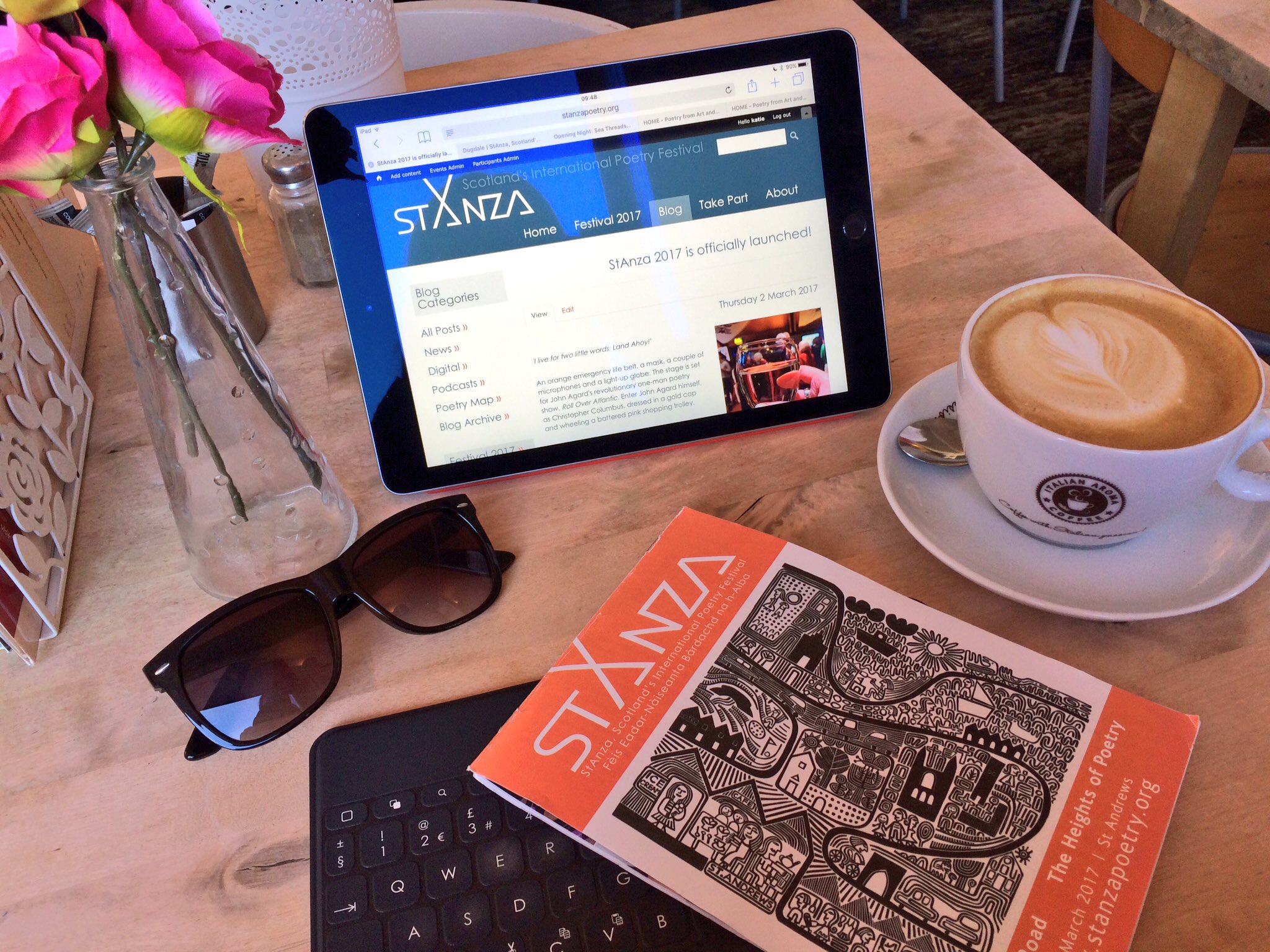
And I couldn’t have asked for a better start to the month. At the beginning of March, a whole host of poets & poetry lovers make their annual pilgrimage to St Andrews in Fife, for one of the best poetry festivals around: StAnza. I first went to StAnza during my MLitt year at St Andrews, when I volunteered as a Participant Liaison Officer, looking after poets & speakers, and taking them to and from the venue (or ‘PL-ing’, as it’s known by regular festival volunteers).

This year was my third StAnza, and as wellas PL-ing, I was also the festival’s in-house blogger. This meant writing a blog post each day about what had happened at the festival the day before. In some ways, this was quite a challenge, as there was pressure to write something (and something interesting, too) every day. I couldn’t just switch off for a day. But the flip-side of that was that it made me focus. During every event, I was concentrating, making notes, making sure I had something to say about it for the blog. Which meant that I probably took in more from the festival than normal – which is saying a lot, because I usually come away with my head stuffed full of thoughts & words & ideas.

Since I first volunteered there in 2013, the festival has really become a kind of family. It’s such an inspiring week, and has become a highlight of my social and creative calendar.

Read my StAnza blog posts here:

StAnza blog post writing

At the end of February, I learned I’d been selected for Penguin Random House’s Write Now mentoring scheme. In March, Penguin Random House publicly announced the list of mentees, which was exciting, and pretty much wholly occupied my twitter stream for a while. The actual mentoring process hasn’t started yet, but already it’s pushed me to write more of the manuscript, which can only be a good thing.

Poetry-wise it’s been a month of successes, too.

This month, the shortlist for the Ballymaloe International Poetry Prize was announced. There are four writers shortlisted, and this year, my poem was one of them! Now I need to figure out what to wear for the prizegiving next month…

And, as if that wasn’t enough, the following week I received second prize in the Tannahill Poetry Prize, based in Scotland. We went up to Lochwinnoch for the prizegiving evening – me & my fan club (aka parents). It was an evening of music, courtesy of local folk duo Witches Brew, and poetry, from the other prizewinning writers and from judge Sally Evans. Cue a bit of a Cumbrian takeover, by both myself and Kathleen Jones (who won the third prize & is also a Cumbrian poet).

I’ve also delivered a few schools’ workshops this month, for New Writing North and the Wordsworth Trust – including one at Dove Cottage, which is always good fun. (Although sometimes it feels as though you’re writing with Wordsworth looking over your shoulder.)

Mostly, this month just feels as though it’s flown by. Like the writing time has just disappeared in a whirlwind of everything else happening. Which is maybe a good thing. Sometimes I think that I need a break from writing. Creativity is a muscle, and while it’s good to exercise that muscle, it can also get overworked. Sometimes I just think I need to give the writing muscles a break.

*

THE MONTH IN BOOKS:

This month has been a fairly quiet one for reading, with only two books (though numerous individual poems – too many to list here). Part of this is that I simply haven’t made enough time for reading. Part of it is that I think my brain is starting to feel saturated, clogged up with words. But that’s fine – I have a break coming up very soon… (But shhh. Spoilers.)

This month’s two books are:

  • The Idle Traveller, by Dan Kieran
  • The Quiet American, by Graham Greene

THE MONTH IN PICTURES:

Last week, I made my annual trip north to StAnza International Poetry Festival. This was my third festival volunteering for StAnza, and as well as my usual job of looking after poets, I had the responsibility of being the festival’s in-house blogger.

Amongst all the wonderful talks and readings and performances, there was one event that stood out as being not about the art (at least, not in its purest form), but about the practicalities of making that art pay.

‘Making a Living as a Poet’ was an event sponsored by the Society of Authors. Chaired by Ken Cockburn, poets Sarah Hesketh and Harry Giles talked about how to make money from being a poet – although, as Harry qualified, ‘You can make a living from poetry, but it’s a crap living.’ 

That aside, I thought I’d share with you some of the wisdom learned during that event.

Reading April De Angelis, 'Playhouse Creatures'
April De Angelis, ‘Playhouse Creatures’

HOW TO MAKE A LIVING AS A POET:

  • Find cheap rent. Poetry doesn’t pay well. Unless you have some uncanny luck or you’ve made a deal with the devil to bag a big prize every couple of months, you’re not going to make it onto the Forbes rich list through writing poems. So living somewhere where the rent is a bit cheaper, and living costs are more affordable, is going to be vital.
  • Turn up to stuff. Like so many fields of work, poetry and writing are all about making connections. I don’t mean this in a kind of ‘old boys’ way, but if someone recognises your name on an application, it’s a good start. If you get to know people, they’re more likely to think of you when it comes to work. This goes for organisations, arts councils, collaborations with other artists… The good thing is that poetry networking isn’t nearly as scary as big business networking; it isn’t about striding into a room in a sharp suit, killer heels and blood-red lipstick, then bowling everyone over with with that cut-throat marketing pitch. It’s actually just about hanging out with other lovely artsy people and having interesting conversations.
  • Say yes to everything. Become known as the person who will do the work, rather than the person who refuses the work. Sarah Hesketh started the event by saying that, by accepting any work she could in the field of literature, there’s now ‘a touch of poetry’ on everything she does. Or, as Harry Giles said: you can’t get a full-time job just making art, but you can stitch together enough arts jobs to almost make a living.
  • Be nice. People don’t re-employ people who are rude to them. It’s just common sense.
  • Be professional. Same thing. If you never meet deadlines, or you constantly bitch about your colleagues (which will get back to them – it’s a small world), or you don’t do the work you’ve agreed to do, then people are unlikely to come back to you when the next employment opportunity comes around.
  • Seek out funding. Don’t wait for the work to come to you. Go out and find it. A couple of people seemed surprised by this – isn’t it pushy to ask for work / funding when it hasn’t been offered? But let’s use a more quotidien analogy: grocery shopping. Let’s say you’ve run out of food. Your cupboards are empty, there’s nothing but that mouldy bit of cheddar at the back of the fridge, and all you have in your freezer is half a bag of frozen peas. There are two options. Option 1: sit at your kitchen table twiddling your thumbs and hope someone knocks on your door with a trolley-full of food. Option 2: go to the supermarket and do some food shopping. Obviously, the most obvious and effective of these is option 2. You go out and get some food. It’s the same with work and funding. Instead of waiting for someone to come along and offer you a residency, get in touch with the organisation where you’d like to be poet-in-residence and work together to put together a funding bid. Instead of wishing someone would pay you just to write poems, apply for PhD funding: 3 years of effectively being paid to write a collection of poems. Of course, this all means more admin, but as Harry put it: ‘Making art is also the amin of making art.’ Which brings me onto…
  • Do an apprenticeship. As with any industry, you need to learn how it operates, and have the skills to operate within it. Sarah Hesketh spent a few years working for small arts organisations, in the kind of admin role where she learned how to do everything: events planning; marketing; press releases; funding bids; working with artists; evaluation… All the arts admin skills you need to operate as an individual artist. Of course, this isn’t everybody’s cup of tea. Some artists can’t think of anything worse than having to spend half (or even most) of their day doing admin. Which is fine. There are plenty of other ways to support your writing. Get a job in a cafe or a bar. Work in a funeral parlour. Drive an ice cream van. As long as you’re doing something that you enjoy and that still leaves you at least some time for the writing, then that’s fine. Living as a writer can be as individual as the writing itself.
  • Don’t rely on publishing a book as a way of getting rich. Harry Giles: ‘You make beer money publishing a book. Think about a book as a business card.’ The sad fact is that you don’t get 6-figure advances for poetry. Most books and pamphlets are published by small independent presses and a run of 500 is generally considered pretty good going. So just because you’ve got a book- or pamphlet-deal, it doesn’t mean you can’t start shopping for a luxury yacht. Although the actual writing of poems may be the biggest thing in terms of importance, it’s probably going to be the smallest in terms of actual financial income. But…
  • Make really good art. Although it might not make much money in and of itself, it’s still important that you write really good poems. If you’re applying for residencies or academic positions or running poetry workshops, then the people you’re teaching or applying to will want to know you’re competent in your art form. It isn’t a financial goldmine, but it’s still the thing around which all the rest of your work centres. Which is good, because the poetry is probably the reason you’re doing all this in the first place.

Other than that, just keep your fingers crossed you win something big, like the National Poetry Competition. There’s always an element of luck in life – do you meet the right person who’s going to love and champion your work, or do you write that poem which happens to speak to the personal experience of the editor selecting work for a magazine? But the more you go to things and meet people and put your work out and apply for opportunities and get involved, the greater the chance of those things happening.

The more nets you throw out, the more chance you have of catching a fish.

Read why I’m aiming for 100 literary rejections this year.

What they say about January being like a kick-start into the new year isn’t true in the slightest. It’s all about February. January is like the push-start you have to give the rusty old banger to get it out of the driveway; Febraury is when the thing really splutters and roars into action.

In other words, for the shortest month of the year, it’s been kind of a busy one.

My Writing Life: February - Katie Hale, Cumbrian writer
An evening stroll

For one thing, I’ve been running loads of schools workshops, for the Wordsworth Trust and for New Writing North. I’ve got to work in some new schools, and go back to St Patrick’s School in Workington, where I’m working with the same amazing group of Yr 4s over the course of two years. Some truly amazing poems – some which have been running around in my head ever since. In fact, thery’re so good that they deserve their own blog post. Which they’ll get.

The downside to schools workshops? All the bugs that are going round. I’m used to coughs and colds (I seem to have one about 50% of the time), but a couple of weeks ago I picked up the weirdest bug I’ve ever had – so weird that at first I didn’t even realise it was a bug. It was a headache. I say headache – I really mean migraine. And that was it – no sickness, no cough or cold, nothing. Just this headache, which stayed for around 36 hours and then mysteriously vanished, though not without making me miss seeing Narvik at Theatre by the Lake. Humph.

Maybe being forced to spend a day in bed isn’t hugely terrible though… Maybe my brain just needed that bit of a rest, as it’s pretty much been all go since the start of the month.

The month started with a big one: a trip to Manchester for the WriteNow insight day. WriteNow is a scheme run by Penguin Random House to engage and develop minority writers. The day itself was full-on and intense, with talks from writers, editors, agents, publishers – as well as a wonderful opportunity to meet other emerging writers, and an invaluable one-to-one with an editor, looking over a section of my manuscript. It felt like a year’s worth of literary knowledge, experience and connections, all packed into a single day. So no wonder I came home and slept for 11 hours!

And, in a nice gesture towards symmetry, at the end of the month (as in, yesterday) I discovered that I’ve been selected as one of 12 new writers on the WriteNow mentoring scheme! Which basically involves a year’s mentoring from an editor at Penguin Random House. Needless to say, I spent much of the evening (after Word Mess) dancing round my bedrom with wild abandon.

So, with writing bug well and truly lodged, I started out on the rest of the month, joining a new writing group as well as going to a couple of tried & tested old ones. I also made it to Poem and a Pint in Ulverston for the first time – one of those things I’ve been meaning to do for months, which was a lovely evening. (Thanks as well to Kim Moore for those homemade scones…)

Obviously, there’s been a lot of writing happening this month, as always, and I’ve just finished another intensive writing session with Stephen Hyde, working on our rewrite of the musical. It’s a funny one, working collaboratively – in some ways, hugely rewarding as you work with double the brain-power, and in some ways tricky, as you have double the creative doubts to wrestle with. Still, it’s the results that count, and the session was the most productive we’ve ever had – desptie the fact it was only 5 days instead of our usual week, or maybe because of it. We even had a chance to record a Face to Face conversation for this blog, all about the collaborative creative process.

So what next? Well, March is going to be a busy one, with StAnza Poetry Festival looming large, followed by a lot more schools workshops before I head off to Cambodia & Vietnam! But that’s another story. For now, here are some books:

THE MONTH IN BOOkS:

  • Human Acts, by Han Kang
  • The Heretic, by Richard Bean
  • Dreams of Violence, by Stella Feehilly
  • Land of the Dead; Helter Skelter, by Neil LaBute

THE MONTH IN PICTURES:

The Fighting Temeraire tugged to her Last Berth to be broken up, 1838

after Turner

I folded myself into the cool side of the duvet;
you tugged it under your legs. Teach me
about art
, I said. In that September heat,
my voice’s waterfall tumbled and broke.
It struck me then how your skin
was tinged with sickness, how your hair
hung lank, a wind-dropped sail, and your eyes
looked slightly left of my face. You said: Turner
maybe used too much yellow, and nobody knows
if he was radical in his approach to colour
or partially blind – his vision stained
to antique maps, until everything looked
like a work of art.
Which brings this to what
you taught me:             how to fall apart.


The Fighting Temeraire tugged to her Last Berth to be broken up, 1838‘ was first published in The Compass

January always feels like an odd month to me. It seems to take ages to get going, and then before you know it, it’s almost over. Cue a frantic rush to get up to date on all the things I should have been doing at the start of the month. Oops.

That aside, January is always a month of beginnings. It’s a month of testing myself, to see how closely I can stick to my newly made resolutions. So far, it’s been a bit of a mix.

  • I haven’t got particularly far with my 100 rejections – although I did send some poems out the other day, so maybe there’ll be some on their way shortly.
  • I’ve read 4 books, so I guess I’m kind on track to my 50 by the end of the year.
  • So far, I’m keeping up with my weekly blog posts, so that’s a big tick on the resolutions list.
  • As for the novella, I’m now officially over half way through the first draft of this, so this one is looking fairly promising.

Sometimes when you travel, it's easy to forget how beautiful it is at home.

But how has it gone apart from that?

Mostly, I’ve been trying to get back into some sort of routine. Before Christmas, I had about 3 weeks of being in this fantastic routine that was probably one of the most productive of my life: get up before 7am, write all morning, sometimes go for a walk / run, do admin in the afternoon, relax / read / make Christmas decorations in the evenings. Then Christmas happened and that sort of went by the wayside. Now, I’m getting into a kind of routine, which isn’t really the one I want. It seems to be: get up late, mooch around trying to write, fail, read a book to pass the time, finally manage to write something that’s halfway decent by about dinner time, do some frantic admin, clamber into bed at around 1am.

Luckily, I’ve spent the past week with Stephen, working on the rewrites of our musical – and there’s nothing like another person to make you get your act together and get working, so it’s been a productive week. Keeping my fingers crossed that that productivity follows me into February.

In other news:

I had a great weekend in London with the lovely Elizabeth Mann, at the T S Eliot readings (and spending far too much time & money in the city’s various bookshops). It was such an inspiring occasion – and a huge congratulations to Jacob Polley on his win!

January’s Word Mess open mic night was one of the busiest we’ve had, with a fantastic variety of readers. (The next one will be on Tuesday 28th February.)

I started 2 new blog series: a monthly writing prompt, starting with a prompt about beginnings; and Face to Face, series of short conversations I’ll be having every month, talking to interesting people about the things that interest them. So far, so good! 🙂

I’ve started my schools workshops again. One of my personal favourites was looking at riddles & kennings with my Yr 4s at St Patrick’s Primary in Workington. Their special topic is currently the arctic, so we wrote some arctic-themed riddles. Any guesses…?

I am a ship-sinker.
I am a crack-maker.
I am a wave-breaker.
What am I?

*

I am a birth-giver.
I am a snow-hunter.
I am a seal-eater.
I am a den-sleeper.
What am I?

*

I am a cookie-eater.
I am a toy-maker.
I am a milk-drinker.
I am a sleigh-driver.
I am a chimney-climber.
I am an elf-checker.
I am a beard-grower.
What am I?

Looking forward to going back there this month to work more on description & close observation.

THE MONTH IN BOOKS:

  • All We Shall Know, by Donal Ryan
  • The Handmaid’s Tale, by Margaret Atwood
  • Anthology of the Sea (Emma Press)
  • Reasons to Stay Alive, by Matt Haig

Currently reading: The Art of Travel, by Alain de Botton, and Human Acts, by Han Kang

THE MONTH IN PICTURES:

Over the past decade or so, there seems to have been a growing trend for writing in coffee shops. Whether this has been popularised by J K Rowling’s accounts of writing the first couple of Harry Potter books in The Elephant House in Edinburgh, or just a knock-on effect of the growing coffee shop culture, I’m not sure.

I like it though, this gradual graduation of the writing process into the public space. No more the weary novelist, cramped alone in his tiny attic room, shut away from the world as he squeezes words from his brain with only a few spiders for company. No more the lonely poet, tramping verse across the mountaintops, singing them mournfully back to the wind. (Well, maybe still here and there in Cumbria…)

Writing in coffee shops in Cumbria - Brew Brothers, Kendal
Brew Brothers, Kendal

Writing in coffee shops brings writing out into the open. For me, it stops is being some secretive, mystery thing that unusual-looking people do in the privacy of their own homes, and turns it into something public. Oh, you see that woman over there with the flat white and a Mac? She’s an author. That man with the doodled notebook? He’s writing poems.

I think (or maybe I hope) that when people see writers writing like this, it reaffirms the fact that writing is real work. I think that sometimes, non-writers underestimate just how hard writing can be. After all, we just sit at a table and make stuff up, right? What’s so hard about that? It probably doesn’t even take very long. Writers probably spend most of their time sleeping or practising their autographs…right?

If you’re a writer, this attitude is probably pretty familiar. If you’ve shared a house with someone who isn’t themselves a writer / artist, you’ve probably had to fight tooth and nail to protect your writing time, and stop it morphing into washing up time, or putting-the-bins-out time. You’ve possibly also had to put up with comments like, ‘Are you busy? Or are you just writing?’ I actually had a friend who asked me: ‘Are you working or writing today?’ I think my response was, ‘Umm, both…?’

At least when it’s out in the open people can see you’re working. Well, sort of. I mean, I’m not saying that people can see you at the coal face, because for writers most of the work does and always will take place inside our heads – but at least people can see you’re putting in the hours.

Cakes & Ale bookshop cafe, Carlisle, Cumbria
Cakes & Ale, Carlisle

Writing in coffee shops is also a good way for me to shake my ideas up a bit. There’s nothing like a change of setting to help with a change of mind, or a bit of people watching to bring in some added inspiration. If I’m stuck on what to write, I tend to do one of two things: read a book, or migrate to a cafe. Sometimes I do both.

Not that I never write at home. I do. I write at my kitchen table, at my desk, on my sofa, in bed… Sometimes while I’m cooking I’ll write standing up at the kitchen counter. But sometimes at home I can feel too conspicuous. Which is a weird thought, since I live on my own – who is there to be conspicuous to? But at home, everything clamours for my attention, because everything is my responsibility. There are a million other jobs that need doing, from hoovering to re-stacking the log basket to dusting the tops of the kitchen cupboards.

Whenever I’m even remotely considering dusting the tops of the kitchen cupboards, I know I must be procrastinating, and it’s definitely time for a change of scene.

For me, writing in a coffee shop can help me feel like a ‘real’ writer. Going to a specific place, like going to an office, can help remind me that, like any job, I have to put the hours in. It can spur me on mentally and give me a fresh creative canvas. When I want to get some serious writing done, they can give me a break from the thousand other things that try to hold me back.

Also, I just quite like coffee.

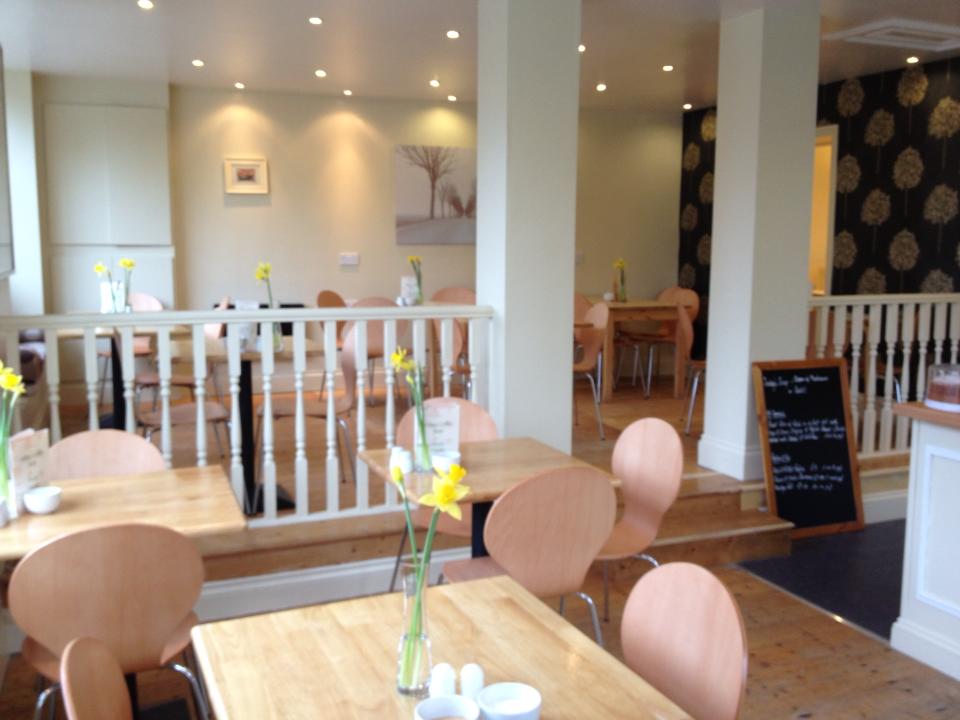
Abbey Coffee Shop, Shap, Cumbria - best cafes for writing in
Abbey Coffee Shop, Shap

These are my 5 favourite coffee shops for writing in in Cumbria:

1: Abbey Coffee Shop, Shap

The Abbey Coffee Shop in Shap is my local. If I’m stuck and it’s a nice day, it’s just a 15 minute walk across the fields. Perfect for instilling that freshness of thinking.

There’s no wifi at the Abbey Coffee Shop – it’s a ‘talk to people rather than phones’ kind of place, with a really friendly, local feel. I don’t think I’ve ever been in there without seeing someone I know – something that can be great for the lonely writer. (Stuck on my own in that attic with the spiders? No thanks…) The only issue with this (for writing, at least) is that it can get crazily busy around the middle of the day, which means that taking up a table by yourself with nothing but a latte and a notebook for 2 hours isn’t really acceptable. But get there early when they open, and it’s great – not to mention the fact that the freshly baked scones will still be warm.

It’s also run by locals, so it’s supporting local business: my friend Rowan, who I went to primary school with, and her dad, who makes the world’s best lamb & apricot casserole. No exaggeration.

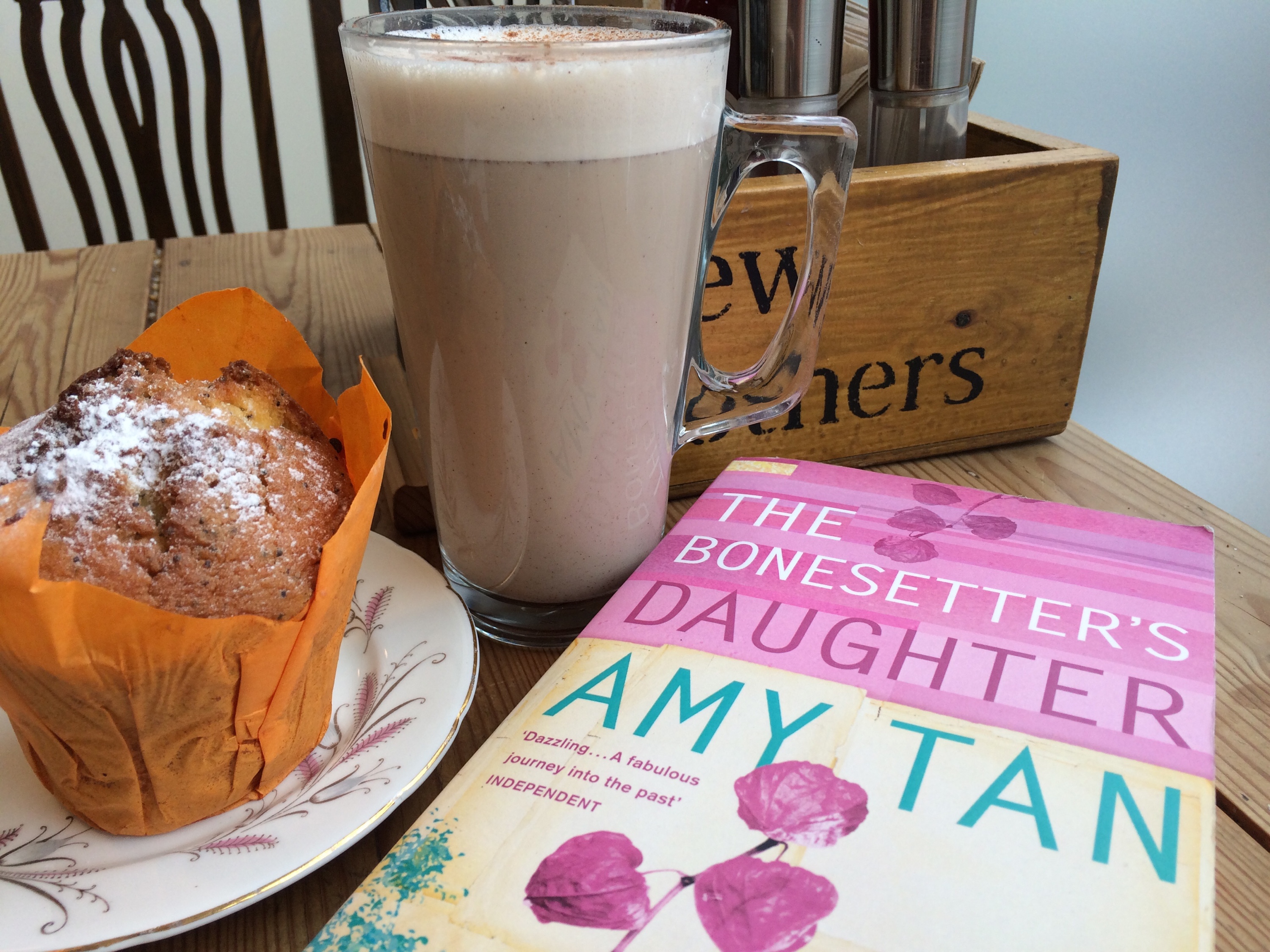
2: Brew Brothers, Kendal

I once saw Brew Brothers described as ‘an urban cafe in a rural setting’, which is a description I took issue with, as I don’t see Brew Brothers as an ‘urban’ cafe at all. For one thing, it has a giant blown up photo of a sheep covering one whole wall. I think the person who wrote that description was confusing urban with hipster, because Brew Brothers is a very hipster place. Eclectic chairs, an old piano stool, pretty mismatched china, water served in jam jars… Basically it’s my favourite kind of style in a nutshell.

Like the Abbey Coffee Shop, it can get super busy during the middle of the day, but that’s because the meals and cakes are both delicious. Plus it’s about the only cafe I know which offers a big choice of different flavours of chai latte.

Brew Brothers cafe, Kendal, Cumbria - best cafes for writing in
Brew Brothers, Kendal

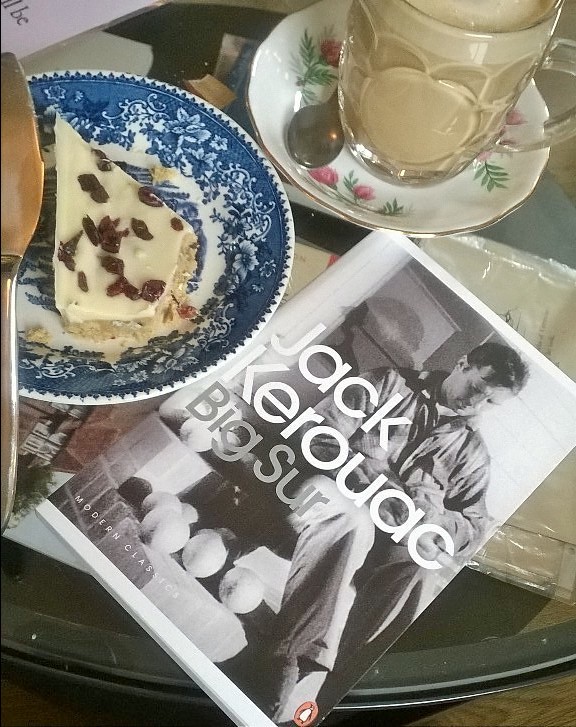
3: Cakes & Ale, Carlisle

Cakes & Ale is attached to Bookends, the independent book shop in Carlisle, which itself is attached to Bookcase: the biggest and best warren of a second-hand book shop I think I’ve ever been in. Mum & I once wandered apart in here, and she had to phone me to see where I was, because apparently she’d been calling my name and I hadn’t heard. Turns out we were still on the same floor, which shows how big the bookshop is.

The books seem to spill over into the cafe, too. If I’m stuck on what to write, there’ll always be something interesting to read in Cakes & Ale. Or I can just listen to whatever’s on the turntable of the record player, or order another yummy cake. (Cake seems to be a developing theme in these cafes. Just so you know, that isn’t a coincidence.)

4: The Yard Kitchen, Penrith

If you’re looking for an inspirational place and you can’t find a cafe attached to a bookshop, find one attached to a salvage yard. The Yard Kitchen oozes vintage salvage style, from the wood-burner in the back room, to the neon sign that slightly older Penrith folk will recognise from one of the now-closed nightclubs. There’s also an upstairs snug, which is a great space for writing when you want to get away from it all a bit. In the summer, there’s also an outside seating area, with views across town to the beacon.

Oh, and in case you haven’t guessed already, the cakes are amazing. Especially the scones.

5: The Wild Strawberry, Keswick

Of these coffee shops, the Wild Strawberry is the one I go to least. No reflection on the cafe itself, but just because I don’t often find myself in Keswick with a couple of hours looking for somewhere to do some work. But when I do, this is generally the place I gravitate towards. (Though I avoid going at all during school holidays, especially in August, when Keswick turns into a great big tourist trap.)

Downstairs, The Wild Strawberry is pretty bustling, but I like to secrete myself away somewhere upstairs, where there’s less pressure on you to leave as soon as your coffee cup is empty. Also, they have good cakes (of course) and nice milkshakes.

*

Oh, and if you have any other great cafe recommendations, do let me know – I’d love to expand my repertoire!

The Find

The day you found the seal skin on the beach,
you called to me to look. You stared
at the folded stinking mess of it:

the jilted flippers, the serrated fur, the tear
where it was pulled from its body.
You did not know my longing for the sea.

I bent to stroke it, ran my fingers
over the blooded blubber, weighing
half-human in my arms.
I wrapped myself into its comfortable wetness.

Turning to look at you with my new
black eyes, I slipped back
into the rocking waves – the way a hand
slips once, and quietly, from a sleeping form.


‘The Find’ was commended in the 2015 Ware Poets Open Poetry Competition

I’ve never been very good at new year’s resolutions. Or rather, I think I’m good at them in the same way that everyone else is good at them: for about 3 weeks in January, and then letting them fall by the wayside for the rest of the year.

But this year, I’m making a number of them, and I’m determined to still remember what they were this time next year. Even more, I’m determined to achieve them, so that next year I have to come up with some new ones.

poetry definitions - Katie Hale
^ I guess I could aim not to be a ‘poetaster’…?

If 2016 has been the year of celebrity deaths & surprise election results, then I’m intending to make 2017 the year of writing-in-numbers (as distinct from writing-by-numbers, which is not to be encouraged).

And those numbers are: 100, 50 and 1

*

RESOLUTION NUMBER 1:

Inspired by Kim Liao’s article back in June, I’m aiming for 100 literary rejections.

This is the one resolution that I actually don’t mind whether I achieve it or not. The idea is that aiming for rejections is less daunting than aiming for acceptances, so you’re more likely to bite the bullet and submit in the first place.

And 100 is such a big number that it forces you to think outside the box and submit to opportunities that you wouldn’t normally consider inside your comfort zone. Given that this is exactly how I got my place on Penguin’s WriteNow insight day in Manchester for February 2017, it’s something I already believe in: apply for opportunities, as you never know where that opportunity may lead.

(Obviously, if I somehow miraculously achieve 100 acceptances instead of 100 rejections, I think I’ll get over the fact that I didn’t tick off the resolution itself.)

new year writing resolutions: Katie Hale

RESOLUTION NUMBER 2:

As always, I’m aiming to read 50 books in 2017.

This is always my resolution (at roughly one a week, I see no reason why I shouldn’t be able to achieve this). In 2016 I read 57 books, and I’d quite like to read more this coming year. After all, reading is the key to writing.

As for what I’ll be reading, I already have a few books lined up – thanks in part to a late December splurge at the New Hedgehog Bookshop in Penrith. And then I’d like to read some of the poetry & fiction that’s been waiting patiently on my shelves, as well as building a bigger library of contemporary plays. And with StAnza in March and Kendal Poetry Festival in June, I’m pretty sure there’ll be plenty of new poetry to tempt me.

*

RESOLUTION NUMBER 3:

To write 50 blog posts for this blog.

Really, I’m going for one a week, but 50 is a nicer number than 52, and it gives me a little bit of wiggle room.

Some of these will be writing updates, some will be actualy pieces of writing (from me and hopefully also from some of my schools workshops), and some will probably just be a bit of fun.

I’m also planning to post a monthly writing prompt, on the first Sunday of every month. When I was running my young writers’ group, I used to email the young writers a prompt every week – so I thought I’d continue the tradition, but on a slightly less frequent basis. After all, I’m not Jo Bell.

script writing for theatre - Katie Hale

RESOLUTION NUMBER 4:

To take 1 show to the Fringe.

But more on that in the new year, hopefully. Spoilers!

*

RESOLUTION NUMBER 5:

To finish at least 1 draft of the novella.

1 draft. 1 very very rough and probably unfit-for-human-consumption draft.

Actually, I’m hoping to have this completed by the end of February, so really there’s no reason not to complete several drafts of it in the months that follow. At least, that’s the plan. But other things always crop up – and yes, Stephen, if you’re reading this, don’t worry: I will also be working on the rewrite of Yesterday during this time. Just hoping that old stereotype about women being good at multi-tasking proves to be true!

typewriter - Katie Hale

So there are my 5 new year’s resolutions for 2017.

2016 has felt a lot like finding my feet as a full-time writer. I’m hoping that 2017 is when I’ll really start to run.

*

Happy New Year!  🙂

Save

The end of another year, and a whole 12 months since I gave up my main source of income in order to focus more on my writing. A whole 5 months since I went completely freelance. I don’t think it’s any less scary than it was back in January, but it’s a funny thing, looking back on a year. In some ways it seems like forever, and at the same time it feels like no time at all.

For instance, I feel a little bit like I’m still taking baby steps; I’m definitely still an ’emerging’ writer, though I’m not sure how I’ll know when I’ve actually ’emerged’. But then when I sit and list everything I’ve done this year, it feels like much more than a year’s worth of work.
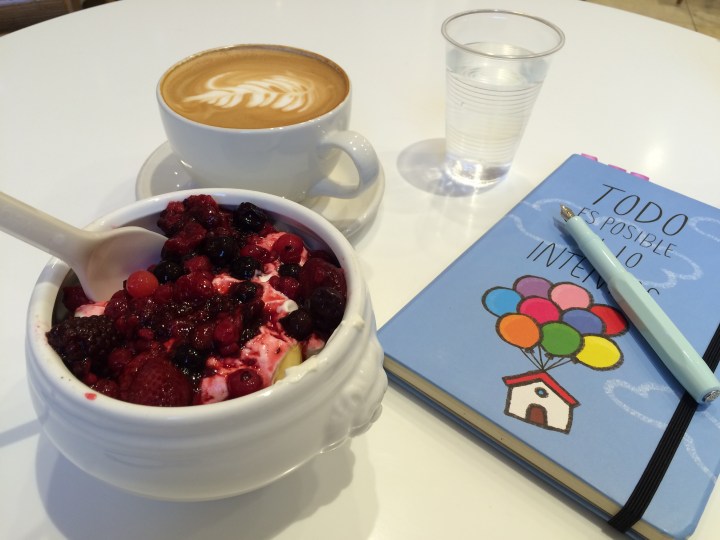
Writing at the Wellcome Collection

Poetry

Most of my focus this year (as always) has been on poetry, and writing as much of it as I can. I’ve started going to Kim Moore’s Barrow poetry writing workshops, and Brewery Poets writing group, and a monthly poetry sharing evening in Shap, which have all been great for making me write more. So great, in fact, that I’ve started writing a new long poetry sequence (so a huge thanks to the Poetry Business workshop at Kendal Poetry Festival, for the spark which set that sequence off for me in June).

As if that wasn’t enough, I’ve also started a monthly wordy open mic night in Penrith. Word Mess takes place on the 3rd Tuesday of every month (except December & August) in the old mess hall at Penrith Old Fire Station (Eden Arts). Attendance has been building steadily, and we now have a lovely little group of regulars, and a slightly bigger group of occasional-ers – though whether they come because of the quality of writing or the quality of the bar is anyone’s guess! Maybe for both.

In terms of my own poetry, it hasn’t gone badly: a couple of poems in magazines, including one that’ll be in The North in January; a commended poem in York Poetry Competition; and being shortlisted for the Jane Martin Poetry Prize.

Not bad – but it isn’t all about poetry.

I don’t know how other people work, but I meet a lot of people who categorise themselves. ‘I’m a novelist’, or ‘I’m a poet’, or ‘I write for theatre’. Obviously there are people who pick a form and stick to it, which is fine if that works for them – but I used to think that was the only ‘correct’ way to do things. In fact, I spent a couple of years actively not writing anything but poetry, because I had this bizarre notion in my head that writing prose or script would somehow make me a lesser poet.
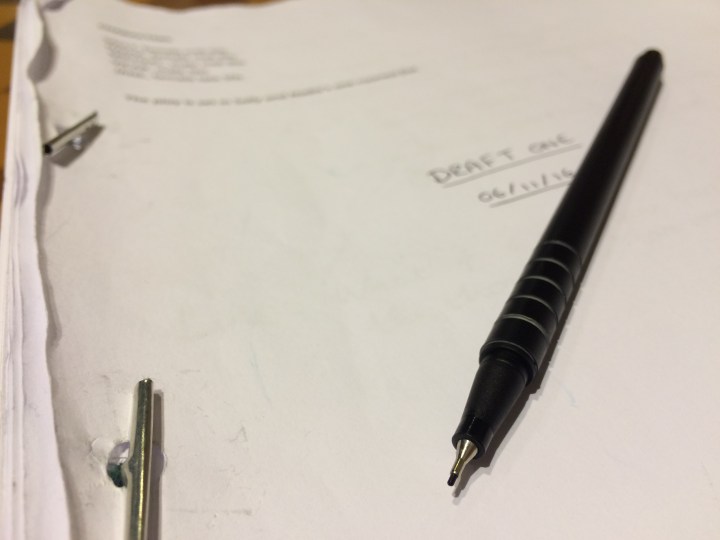
script writing for theatre - Katie Hale

Theatre

Writing Yesterday with Stephen Hyde last year, the theatre bug bit me again, and those play ideas that had been simmering under the surface kept nudging at me – so this year, when I suddenly had more time on my hands, I decided to let them out.

This year I’ve drafted two play scripts – both of which are currently both sitting in a drawer fermenting, until enough time has passed for me to look at them with fresh enough eyes to give them a proper redraft. It’s been so great to get back into playwriting, that I almost don’t mind whether anything happens to them or not. The feeling of exercising those script-writing / dialogue / plot muscles was satisfying enough in itself. Like when you go for a run after a long period of inactivity, and you feel a kind of glorious ache in all the muscles you haven’t used for ages.

Then, while I was stuck in Tulsa airport for 24 hours as a storm raged in Chicago and the UK voted to leave the EU, I wrote the lyrics for a new song (also by Stephen Hyde), for the Three Inch Fools’ touring production of Macbeth. I think there may be a recording of this surfacing at some point in the new year, but for now, if you’re not already a Fools fan, you should definitely check them out.

I’m also getting stuck back into the rewriting process of Yesterday, working with Stephen. After a few months working very solidly on my own, it’s good to get back to collaborating again, and to remember that excitement of bouncing ideas back and forth between two people until they become something much bigger than either of you could access alone, and neither of you can quite say who came up with what. Much more of this to follow in the new year…

New York - writing in a cafe, Katie Hale

Fiction

Ok, so I haven’t really been a fiction writer for about half a decade. Like most writers, I guess, I started out writing fiction, because stories are the first creative thing you’re taught to write in school. But my poetry, and even my theatre, has superceded my fiction for the last ten years, and the fiction has been basically absent for around half that time.

And yet… Like a lot of people, I had a novel lurking. You know the one, swimming in the depths of your brain – the one that floats to the surface when you feel particularly inspired by a good book you’ve read, or when you’re trying to get to sleep, or doing the dishes.

This year, I decided to give it a go. So far, I’m only about half way through the initial drafting stage, so there’s no knowing whether anything will come of it, or whether (perhaps like the play scripts) it will just sit in my desk drawer. But already it’s looking hopeful.

Over the summer, Penguin Random House put out a call for submissions from minority writers, to receive a place on one of their WriteNow insight days, which includes a 20-minute one-to-one with an editor. Having submitted an application & 1000-word extract with my ‘I’m not really a fiction writer but I’ll give this a go’ hat on, I couldn’t really believe it when I heard I’d got a place on the Manchester insight day in February 2017 – especially when I heard that there were over 2000 applications for just 150 places. Talk about a confidence boost!

Even if nothing else comes of this, that acceptance email has given me the confidence to write a novel (well, novella) that otherwise would have remained unwritten.

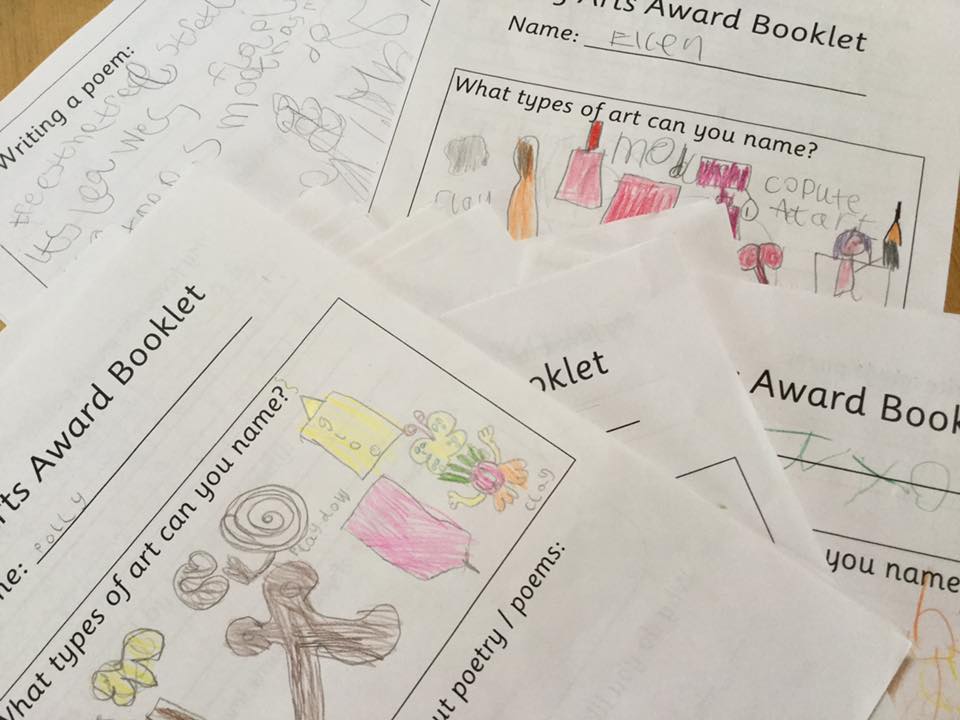
Arts Award Discover workshops

Projects

Work-wise, my main project this year has been running schools workshops and delivering Arts Award Discover. I delivered I-can’t-quite-remember-how-many workshops in schools for the Wordsworth Trust, to tie in with their Arts Award Discover project, where the children wrote poems about places that meant something to them. I also ran Arts Award in Shap and Clifton Primary Schools, which was great fun – especially in Shap School, which was my alma mater. (Can you call it an alma mater for a primary school, or is that just for universities?)

As always, the children blew me away with the quality of work they produced. One particular phrase that I wished I’d written myself came from an 8-year-old, who wrote, ‘I am as shy as a funeral.’ I think I was too gobsmacked to think clearly for about 5 whole minutes. So that night I shared the simile on facebook, and got a whole host of gobsmacked reactions from other people, too.

Oh, and speaking of sharing…

This year I created Poetry Plaster Packs. The idea was to share little packets around Penrith on Valentine’s Day. Each one contains: a plaster (for the literal cuts and scrapes), a cheerful little poem (for the figurative ones), and a little gift – because let’s face it, who doesn’t love a present? I shared about 40 on Valentine’s Day, and a few more since. I suspect I may be distributing a few more in the new year, too.

I’ve also had 3 online projects this year:

The Sam Thorpe Trust Fund: I put together the website for this earlier in the year, and it’s worth checking out, especially if you’re in the Penrith area. The Fund gives grants to young people who want to do something extraordinary, and to schools / organisations that work with young people.

#SomethingGood: On Wednesday 9th November, I was sitting on my sofa in a state of shock, having spent an almost-sleepless night watching America elect a future president with no history of government but a long history of racism, misogyny, and abuse of power. I wanted to do something, but I wasn’t sure what. Some of my American friends were posting on social media about how to contact your senator to raise protests, but I’m not American; I don’t have a senator. Instead, I decided to do something quieter, but hopefully also positive:

The Tea Break Project: And speaking of America, I’ve also started a new travel blog this year. Some of you might remember my first travel blog, Second-Hand Hedgehog. I’ve now moved to a new online home: www.teabreakproject.com – with (hopefully) better content, better design, and better stories from life on and off the road. This year, my travels have included Portugal, Marrakech, Kansas, a massive road trip up the west coast of America and into Canada, and a week in New York.

*

The Year in Books

Every year I make it my goal to read at least 50 books. This year I’ve read 57, which isn’t bad – although I haven’t read as much poetry as I’d have liked. Something to make sure I work on next year.

I have, however, read a lot of plays, thanks to my rekindled interest in theatre and writing for the stage.

I’ve also read a lot of contemporary literary fiction written in the first person, to try to get my head in the right place for drafting the novella. Among these, I’ve discovered Margaret Atwood. How it’s taken me till age 26 to read any Margaret Atwood, I have no idea, but I’m buzzing with that exciting feeling that comes when you fall in love with an author’s writing style. I have to physically prevent myself from running to the till every time I see one of her books in a bookshop.

As well as new discoveries, I’ve made a great rediscovery this year: The Little House on the Prairie. I re-read this in preparation for my trip to Kansas (and the real-life little house on the prairie just outside my great aunt’s home town of Independence). I thought I knew the story. What I hadn’t realised was that I’d only ever read that one book in the series, and that they were a fascinating insight into American history and culture, and why the middle of the country is the way it is.

My top 10 books this year (in alphabetical order):

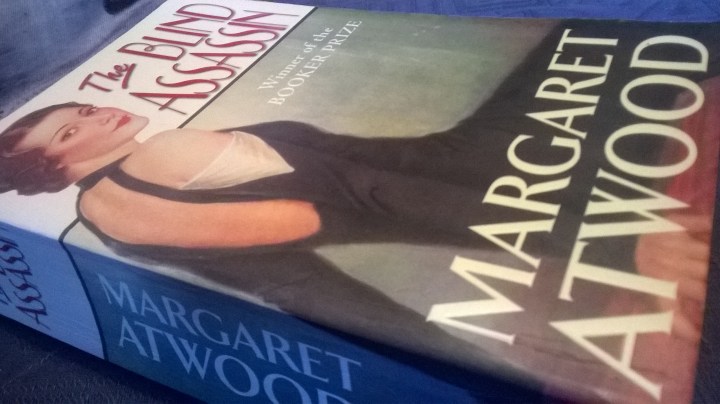
  • Margaret Atwood, The Blind Assassin
  • Zinnie Harris, How to Hold Your Breath
  • Laura Ingalls Wilder, The Little House on the Prairie (series)
  • Helen Mort, No Map Could Show Them
  • Rory Mullarkey, The Wolf from the Door
  • Max Porter, Grief Is the Thing with Feathers
  • James Rebanks, The Shepherd’s Life
  • Warsan Shire, Teaching My Mother How To Give Birth
  • Em Strang, Stone
  • Elizabeth Strout, My Name is Lucy Barton

*

The Year in Pictures

Save

Save

Remember back in January, when I said I would write a blog post every week this year, about my life as a writer? Yeah…

Oops.

One of the hardest things to adjust to this year has been introducing myself as a writer. I think this is something that all writers struggle with at some point: we spend so long cramming our writing time in alongside other jobs, that when we’re asked the inevitable, ‘So what do you do…?’ our first answer is rarely, ‘I’m a writer.’ At what point do you become a writer? Is it when you start writing (or are you still a waitress / teacher / administrator / whatever your day job is)? Is it when you get something published? Maybe it’s when you first earn money from your writing, or when someone else first introduces you as a writer.

When I quit one of my jobs at the end of 2015, to free up more time for my writing, I was faced with this problem: do I put ‘writer’ on official forms, in the little box marked ‘occupation’?

Previously, I’d always put my official Prism Arts job title (‘Creative Programme Administrator’), as my other part-time job had a much less fixed title. But then when that was gone, what to call myself? I wasn’t making a living from my writing – could I still get away with calling myself a writer, or was that some kind of fraudulent optimism?

The first time I had to actually make this decision was in Marrakech airport in January, filling out a landing card. I put ‘writer’, mainly because I didn’t know what else to put – and let’s face it, partly because I just liked the idea of calling myself a writer.

So I got into the (constantly morphing, incredibly haphazard) queue for passport control, clutching my little landing card. After 45 minutes of navigating a queue that kept merging and changing direction and disappearing altogether, I finally made it to the desk. I handed over my passport and landing card.

The customs officer checked them against each other: ‘Writer?’

‘Yes.’

‘What kind of writer?’

I was struck by the suspicion and antagonism in his voice.

Looking back, I think he thought I might be a journalist or professional blogger, and that I might be in Morocco to work, which would be a problem on my tourist visa. But it made me think: writers have a lot of influence – just look at the new ‘post-truth’ world we apparently live in following the American elections. Being a writer is a powerful and dangerous thing – no wonder he questioned me.

‘Poetry,’ I told him.

At that his expression cleared, he stamped my passport, and he waved me on my merry way without a so much as a second glance. Apparently, Moroccan border control doesn’t consider poetry a particularly dangerous form of writing – rightly or wrongly.

So when do you get to call yourself a writer?

This year, I’ve decided that it’s all about approach. For me, it’s about how serious you are about your writing. Is it something you strive towards on a daily basis, or is it something you turn to every once in a while when the inspiration strikes? For instance, I take a lot of photos, but I would never call myself a photographer. I just don’t work at it enough, and photography will never be the number one priority in my life.

Writing, however, is. And I intend to keep calling myself a writer, regardless of how much money my writing is (or isn’t) making me.

Save

Save

Save

Save

My Writing Life: Week 13

It’s been another busy week (of course), with a straight run of poetry events to start it off. Oh, and hot chocolate. LOTS of hot chocolate.

Kennedy's Fine Chocolates, Orton, Cumbria

Monday was World Poetry Day (so a belated Happy World Poetry Day!), which I celebrated at a poetry sharing event in Shap Library. It was a lovely evening, with about eight of us there, just reading and sharing our favourite poems with one another. I took Liz Berry’s Black Country and Kei Miller’s The Cartographer Tries to Map a Way to Zion. We also had bits of Kate Tempest, Robert Browning and Pablo Neruda, to name just a few.

Tuesday saw the first ever Word Mess! Word Mess is the new open mic night that I’m hosting in Penrith, through New Writing Cumbria. It’ll be happening on the fourth Thursday of every month, upstairs in the old mess hall at Penrith Old Fire Station. We had a small but perfectly formed crowd to start us off this month, and hoping to grow the event over the months to come. (Next one will be Thursday 26th April!)

Wednesday was a poetry event on a wholly different scale, with a trip down to London for this year’s Barbican Young Poets Showcase. This is an epic annual event, and a fantastic celebration of some incredible young writers. It was also a great opportunity for a catch-up with some former Barbican Young Poets, from my year and others.

I then managed to take a bit of a break from poetry, what with Easter, a birthday and a few good books. (Note: Easter egg hunts with an under-two-year-old are adorable!)

Unfortunately, not much on the writing side this week, but plenty of reading, and as everyone knows, reading is the first step to writing. Though I’m considering attempting NaPoWriMo starting next week, so I’ll definitely have to up my poetry game before that starts. Pressure!

The Week in Books:

IMG_0178

Two novellas from the Myths series, and a recent novel:

  • Jeanette Winterson, Weight
  • Margaret Atwood, The Penelopiad
  • Kazuo Ishiguro, The Buried Giant

These were some of the products of my recent new-book-buying extravaganza. I always love reading brand new books – I think probably because I do it so rarely. There’s something magical about being the first one to open the pages, like exploring a new land.

The  Week in Pictures:

My Writing Life: Week 12

Well, they do say that things come in threes, and the good stuff has been rolling in this week – on Thursday / Friday / Saturday, just to make it nice and easy.

YorkMix / York Literature Festival Poetry Competition - Katie Hale, Cumbrian poet & writer
YorkMix / York Literature Festival Poetry Competition

Thursday: I started a new job! It’s still for Eden Arts, so not a new place of work, but it’s a new project, and gives me an extra day a week in the office. It’s about helping NHS recruitment to the area, by promoting Cumbria as a place not just to visit, but also to live and work. One of the ways we’re doing this is via social media, with images and captions about what makes Cumbria a great place to live. Not just mountains. Not just lakes. But lifestyle. (Head over and like the facebook page here. Go on, I dare you.)

Friday: I learned that a funding application I submitted was successful! I’ve received funding from the Arts Award Access Fund to work with two primary schools, to deliver Arts Award Discover workshops for over 100 children. I also had a lovely meeting with Zoe at the Wordsworth Trust and a chance to see the Wordsworth Country exhibition, and then spent the afternoon relaxing at Allan Bank (National Trust property), reading a book and overlooking the lake.

Saturday: I went to York, where I read at the awards event for the York Mix / York Literature Festival Poetry Competition. Why? Because my poem, ‘The Raven Speaks’, was Commended! Whoop whoop!

So all in all, the latter end of the week was pretty successful.

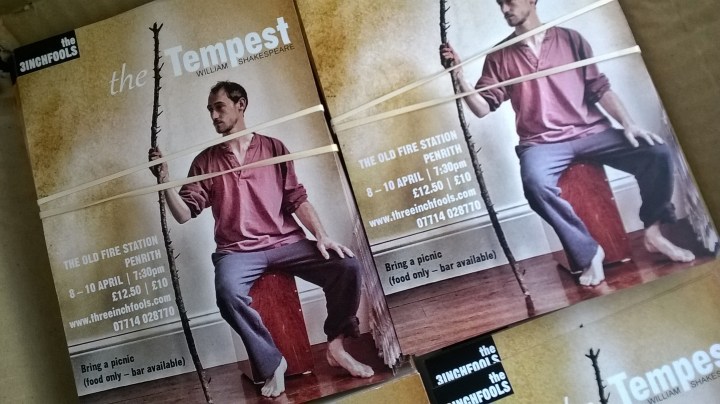
Plus, I’ve also been doing some marketing this week for the Three Inch Fools’ production of The Tempest, which will be coming to Penrith Old Fire Station in under 2 weeks! (8th – 10th April, tickets available here, by the way…)

Three Inch Fools The Tempest: touring Shakespeare in Cumbria, Penrith Old Fire Station, Eden Arts

Which has meant lots of whizzing round the county with posters & flyers. Should be a great production – come along for the ride!

Add to that some blue skies and sunshine, a stroll across the fields, spending a morning writing at the Abbey Coffee Shop in Shap, a trip to an independent bookshop, and lots of flowers bursting from the ground, and you get a pretty good week all round.

Margaret Atwood, The Blind Assassin

The week in books:

Just one book this week: Margaret Atwood’s The Blind Assassin.

But if you’re only going to read one book in a week, make it this one. I’ve been absolutely bowled over by Atwood’s beautifully evocative descriptive prose. (I tweeted this at her during the week, and got a tweet back saying thanks! Yay!) Every page yielded some turn of phrase that struck me so much that I wanted to make a note of it – which I obviously I had to stop myself doing, or I would never have managed to read the book.

I enjoyed it so much, that when I hit up Carlisle’s independent bookshop on Sunday afternoon, I was determined not to come away without another Margaret Atwood. Just a little something to keep me going…

The week in pictures:

My Writing Life: Weeks 10 & 11

A fortnight of updates this week – which is my way of skirting round the issue of not posting last weekend. Largely becauuse of the hearty poetry overdose mentioned above.

The fortnight in numbers:

  • 1 completed draft of a play script
  • 1 funding application submitted
  • 1 review written for Words by the Water
  • 2 festivals (StAnza Poetry Festival & Words by the Water)
  • 3 strolls along the St Andrews sea front
  • 4 bookshops visited (including a beautiful new one in St Andrews)
  • 5 prompts written for my young writers
  • 6 books read / partly read
  • 8 trips to various St Andrews cafes
  • 9 teddy bears donated for an upcoming project
  • 16 new books acquired (oops!)
  • 35 (ish) events worked on / attended
  • Countless coffees / teas / chai lattes drunk

Hence only 1 blog post.

St Andrews castle & Castle Sands beach

Over the past two weeks, I’ve attended two festivals. I volunteered at StAnza Poetry Festival (St Andrews, Fife), and then received a young person’s bursary to attend Words by the Water in Keswick. (I’m going to miss being a ‘young person’ once I turn 26. Goodbye rail discounts and cheap theatre tickets. Hello adulthood.)

StAnza was a wonderful whirlwind of poetry. I counted up from the brochure, and I think I attended and / or worked on around 25 poetry events over 5 days. Poets from Jo Bell, to Don Patterson, to Lemn Sissay, to Sean O’Brien, to Matthew Sweeney, to Em Strang, to Fiona Benson… The list goes on and on.

Words by the Water was slightly less hectic: only 10 events, and I was only attending those, rather than working on them. I was also lucky enough at Words by the Water that one of my bursary tickets was for James Rebanks’ talk, which was completely packed. I think every single seat in the house was taken – which is around 500 seats. (I wrote a review of this event, as part of my bursary agreement. Hoping it should be on the Words by the Water website in the not-too-distant future.)

We also had a film showing at Penrith Old Fire Station this week: This Changes Everything, followed by a discussion about climate change (which got quite heated, ironically).

Other highlights of the fortnight? I completed a draft and a redraft of my play! I also discovered a lovely new bookshop in St Andrews, where there are sliding ladders to reach the top shelves and they give you a cup of tea while you’re browsing.

The week in books: week 10

The week(s) in books:

  • Joshua Levine, Forgotten Voices of the Blitz and the Battle for Brittain
  • Joshua Levine, The Secret History of the Blitz
  • Caroline Moorhead, Village of Secrets: Defying the Nazis in Vichy France
  • James Rebanks, The Shepherd’s Life
  • David Hare, Amy’s View
  • [currently reading:] Margaret Atwood, The Blind Assassin

An unusual amount of non-fiction recently. Partly because I’ve rediscovered the joys of research (seriously: finding stuff out can be so much fun!) and partly because I’ve been wanting to read James Rebanks’ book for ages, and it’s just come out in paperback (much more affordable than hardback)!

I was also lucky enough to see David Hare speak at Words by the Water, so raided a second-hand bookshop any came out with Amy’s View – now signed by the author.

As for The Blind Assassin: it’s been on my bookshelf for years, so I thought it was high time I actually read it. Only on about page 200, but so far hugely enjoying it.

The week in books: week 11 - David Hare / James Rebanks / Margaret Atwood
The week in books: week 11

The week(s) in pictures:

My Writing Life: Week 9

Posting a day later than usual this week, due to a slightly hectic Sunday. (For ‘hectic’, read: writing a scene of a play, completing two funding applications and working on the bar at Box of Tricks’ Theatre Company’s show, Chip Shop Chips.)

IMG_0095

Which pretty much sums up the whole week, really. In the best possible way.

As well as the Sunday madness mentioned above, this week has seen: a meeting in Kendal for some work I’m doing with Curious Minds (through New Writing Cumbria) – followed by a chai latte at one of my favourite Kendal Coffee shops, Brew Brothers; a comedy night at Penrith Old Fire Station to raise money for Cumbria Flood Appeal, ft. Rory Bremner, Justin Moorhouse, Fred MacAulay and Wendy Wason; a trip to Penrith’s independent cinema to see the NT Live broadcast of the National Theatre’s As You Like It; a very successful meeting at Clifton Primary School to talk about Arts Award; a trip to Carlisle to visit Prism Arts’ Creative Arts & Conversation group; cooking this week’s communal lunch at Eden Arts; writing a couple of new scenes of a play; and another funding application.

Phew!

And you know what it’s made me realise? That I don’t do enough.

No, I don’t mean that in terms of work. In terms of work, I don’t really stop. This is because I’ve spent several years cramming all of my writing and my freelance work into my spare time. So now, having freed up a lot more time for writing and freelance work, I should have lots more spare time. All that time that used to be writing time should now be free.

But there’s a problem: I no longer know how to spend free time.

I know that sounds stupid. But seriously: I had a couple of hours the other day and I seriously couldn’t work out what to do with them. It’s like I’ve forgotten what to do with time that isn’t spent reading or writing.

So that’s one of my targets: to reclaim my free time. More particularly, to reclaim my weekends. (Getting out of bed on a Monday morning is so much harder when you’ve just spent the whole of Sunday working flat out.)

I’m not quite sure what I’m going to do with this free time that I’m determined to make. Something non-word-based. Maybe something outdoors-based? I think I’d like to get back into photography. And maybe do more crafting as well – something I’ve done very little of so far in 2016.

But something that doesn’t let me suffer from creative burnout.

Watch this space!

The week in pictures:

My Writing Life: Week 8

There are good weeks, and there are bad weeks. This week has probably been a bad week.

It started well, with me finishing a scene I’d been struggling on. It ended well, with me finishing (a draft of) another scene I’d been struggling on. The bit in the middle was a little bit less of a cause for celebration.

What can I say? Sometimes, no matter how hard you work at getting words on the page, what you produce just isn’t right. This week has been one of those.

But, as today is Sunday and Monday is all about starting the ball rolling again, I’m determined that next week will be much more productive. (She says, trying not to look at the appointment-packed week ahead of her…)

In other news, tonight I watched the series finale of Dickensian. (IF YOU DON’T WANT SPOILERS, STOP READING NOW!)

Dickens character sketches at Withnail Books, Penrith

Have to say, I was quite disappointed in it. My favourite thing about the show (apart from Tom Weston-Jones, who, by the way, I’ve recently discovered is a fellow Royal Holloway graduate) is the concept of putting all of Dickens’ fantastic characters into a big melting pot and letting them bump up against one another, to who knows what ends? A mixing together of novels to create a new plot entirely: something that the Jacob Marley murder investigation was a brilliant tool for.

Unfortunately, with the murderer identified, the characters seem to have not only retreated back into their own books, but also to be following their own plot-lines.

Not letting Little Nell die earlier on in the series felt like a promise that the stories wouldn’t come to their expected conclusions, yet now at the end of series one, we’re left with Miss Haversham abandoned on her wedding day, refusing to take off the wedding dress or let anyone touch the cake. Big surprise. Oh, and what have they done to set us up for the next series? Showed us Scrooge about to be haunted, and Oliver hanging out with the Artful Dodger. Not exactly what I’d call an original plot…

Don’t get me wrong, though, I’ll still watch it if/when it returns to the screens, if only so I can desperately hope that they haven’t completely done away with Tom Weston-Jones!

But enough Dickens. It’s also been a week where I’ve rediscovered my love of jigsaw puzzles and read a couple of books:

IMG_0093

The week in books:

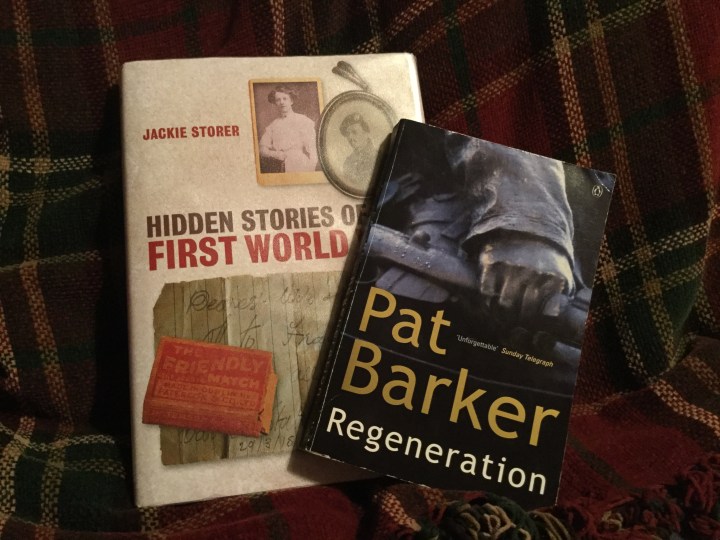
  • Jackie Storer, Hidden Stories of the First World War
  • Pat Barker, Regeneration

Reading-wise, it’s been very First World War-based this week. Hidden Stories of the First World War is a library book, as, yes, I’m very proud to say that I have got back into the habit of taking books out of my local library. Particularly references books. Novels, poetry and plays I tend to get attached to, and want to go back to time and again, so I like to have copies on my shelves.

One book that I’ve revisited a number of times is Pat Barker’s Regeneration. I’ve actually lost count of the number of times I’ve read it (I think 7, although it may just be 6). Re-reading it this week, I realised that it may have, very quietly and without me noticing, become one of my favourite books. It’s just such a good mixture of plot, characters, history, poetry and good writing. I’m sure I’ll end up re-reading it again at some point.

The week in pictures:

Here’s to a much more positive week ahead!

My Writing Life: Week 7

You know those weeks where you think you’ll take it easy and focus on one thing, then by the end of it, you’ve created two new arts projects, drafted three new poems, written 25% of a play, read four books, kept up to date with all your admin, and somehow managed to find time for a bit of a social life as well?

No?

Well this week has been one of those.

The ‘one thing’ I was planning to focus on was the play, so actually 25% is slightly (though only slighlty) under what I wanted to write of it this week.

But, as seems to be my new norm, I’ve been slightly distracted by the poems clamouring for space in my head. I tried (not entirely successfully) to save up the poetic energy till yesterday – when I took part in Kim Moore‘s Barrow Poetry Workshop. As always, I came away from the workshop with something that I want to work on. Poetic energies = successfully channelled.

As for my other artistic energies?

As I was driving home from a busy day at Eden Arts on Tuesday, I started thinking how it was over 2 years since I’d done any guerrilla poetry style projects (the last one being Beneath The Boughs at Lowther Castle in 2013), and how I should probably think about doing another one in the next year or so. By the time I pulled into my drive, I had fully planned not one, but two, new arts projects. By the time I’d made and drunk a cup of tea, I’d ordered all the materials for one of them.

Project 2 is still under wraps for now (though if you have an unloved teddy bear you want to donate to it, drop me a line), but I launched the first project today:

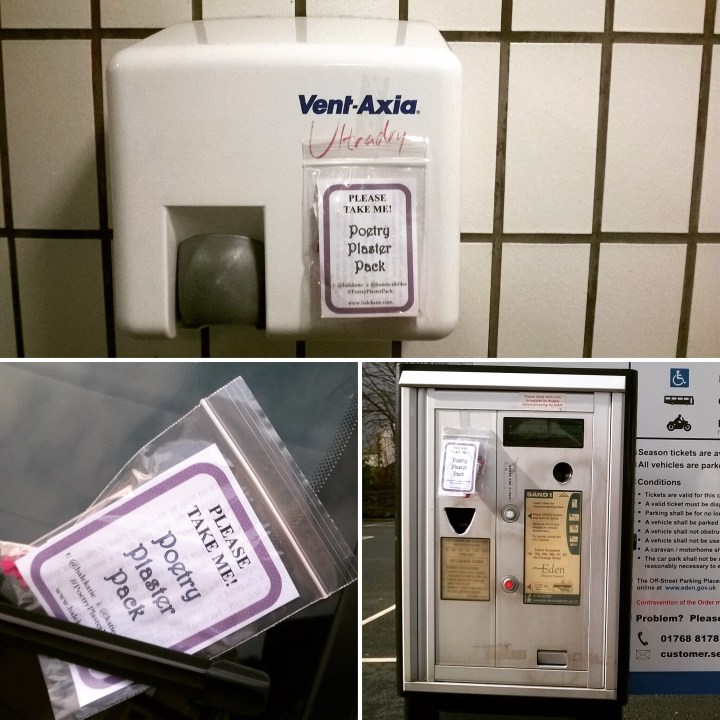
Poetry Plaster Packs aim to spread a little poetry, joy and healing. Each one contains:

  • a plaster (for the literal cuts and scrapes)
  • a cheerful little poem (for the figurative ones)
  • a little gift – because let’s face it, who doesn’t love a present?

Today, I left 40 little Valentine’s Poetry Plaster Packs around Penrith: under car window wipers, stuck to ATMs and inside phone boxes, on dryers in public toilets, and stuck to parking meters.

img_0084

I’ve already had a couple of lovely comment from people. One recipient tweeted this:

While someone else emailed me via my website: ‘With my 3 year old daughter and locked my keys in the car.. your little plaster pack brightened up my day.. and the sweets kept my daughter entertained until the spare set got to me about 40 minutes later. So thank you.’

So far a success! Definitely more Poetry Plaster Packs to follow…

In other news, the Cumbrian weather finally feels like it’s turned (though I’ll say that cautiously, because I don’t want to jinx it). At least, it’s currently snowing, which makes a change from rain, and we’ve had a couple of sunny days, which have meant I’ve been able to go for little strolls along the lanes whenever I’m struggling with a piece of writing: something that never fails to help me find a solution.

The week in books:

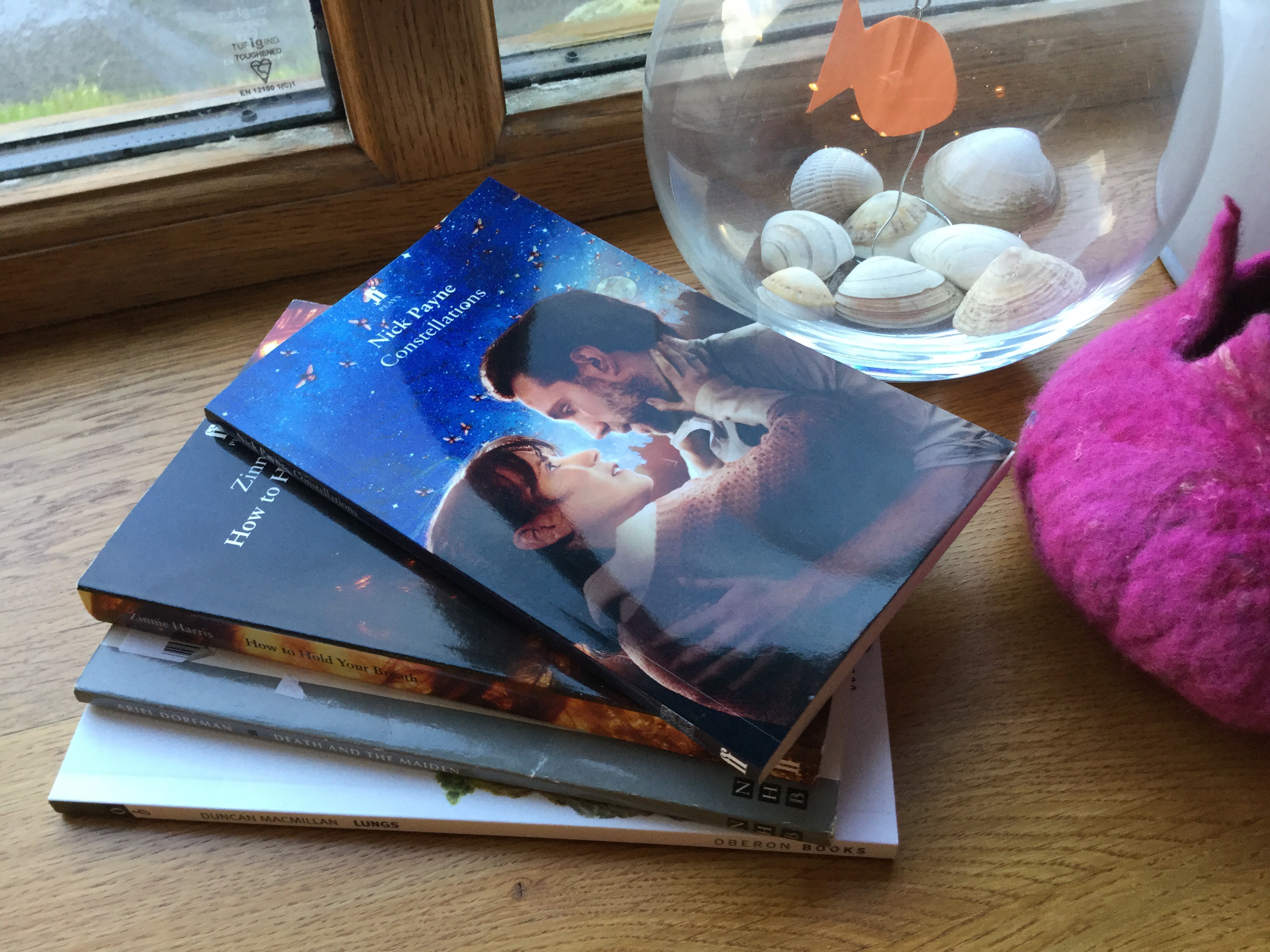
  •  Duncan MacMillan, Lungs
  • Nick Payne, Constellations
  • Zinne Harris, How to Hold Your Breath
  • Ariel Dorfman, Death and the Maiden

A week of theatre this week, in an attempt to keep myself in the playwriting zone. Death and the Maiden has been sitting on my bookshelf for sometime, just waiting to be read, so I figured it was probably about time to give it a whirl. Definitely a good decision to read it.

The other three are more recent plays, and are the three that I (perhaps rather extravagantly) bought last week at the National Theatre bookshop. But money spent on books is never a bad thing, and these three were all such great plays that I’m not sorry at all. How to Hold Your Breath is particularly one that stayed with me; after I read it on Tuesday night, I had a really unproductive morning on Wednesday, as I just couldn’t stop thinking about it! Definitely the mark of a good play.

The week in pictures:

My Writing Life: Week 6

It only feels like a day ago that I was writing last weekend’s blog post, and yet, it also feels like months ago… One of the sure signs of a busy week.

Busy, yes, but also satisfying, hugely enjoyable, and out of the ordinary. In fact, I’m beginning to think that this new life doesn’t have an ‘ordinary’ at all…

InstagramCapture_c173e0cd-542c-4a3d-98d9-6f4bc78f6eea

It’s been quite exciting admin-wise. During my day a week at Eden Arts, we set up and organised a monthly wordy open mic night, Word Mess, which will start in March. I’ve also been handing out leaflets and posters for the Three Inch Fools’ Easter Shakespeare workshops.

Aside from that, it’s been almost a direct split between writing and relaxation.

I spent a couple of days in London, staying with the lovely Supal for a much-needed catch-up and a wander round the capital. We spent a good deal of time in independent book and coffee shops – including the delightful Primrose Hill Books, where I impulse bought a book called The Penguin Lessons (about a teacher at an Argentinian boarding school who rescues a penguin from an oil spill and takes it to live on his terrace at the school). Because let’s face it: who can resist a book about a penguin…? Certainly not me!

I also finally made it to the Attendant Cafe. Attendant is an underground cafe, created in an old public toilet. I’d heard about it ages ago on a couple of travel blogs, and couldn’t wait to visit for myself. (I have a bit of an obsession with toilets; when I was travel blogging I used to publish a ‘Loo witha View’ series, of unusually beautiful views from toilets from my travels). Fittingly, then, this trip to Attendant also doubled up as a chance to chat about blogging and travelling with Supal, who runs chevrons & eclairs.

But London wasn’t all coffee and sightseeing. I also spent some time sitting in one of the work spaces in the National Theatre, via spending a little more money than intended at the National Theatre Bookshop. As you may guess from this week’s reading list (below), I’m currently in playwriting mode. I couldn’t think of a better place to work on a play than in a quiet corner of the National Theatre itself.

Back up north, I spent a day at a poetry workshop at Tullie House Museum & Art Gallery. Tullie House are currently hosting the National Portrait Gallery’s Picture the Poet exhibition. As part of the exhibition’s outreach programme, they’re working with Apples & Snakes to run poetry workshops (leading to a showcase) for groups around Cumbria. One of these groups consists of Tullie House Youth Panel, along with one of my young writers from New Writing Cumbria’s Rabbit Rabbit (rabbit) group. They’re working with poet Jenny Lindsay, who ran a fantastic worksop, as part of a series that will eventually lead to all of the young people writing an individual poem and a group piece.

Needless to say, I took advantage of the workshop and drafted a poem of my own. I may be attempting to focus on playwriting, but somehow poems just keep popping up in my head – and who am I to deny them their existence?

The week in books:

The week in books

  • Sarah Corbett, And She Was
  • Mark Ravenhill, Shopping and F***ing
  • Sarah Kane, Blasted
  • Tom Michell, The Penguin Lessons
  • April de Angelis, Plays: 1 [Ironmistress; Hush; Playhouse Creatures; The Positive Hour]

This week has been largely about drama. It’s been a mixture of re-reads (Blasted, Shopping and F***ing and Hush) and new reads (Ironmistress, Playhouse Creatures and The Positive Hour), which has been both fun and refreshing.

I also read Sarah Corbett’s And She Was, which has been sitting in my car for the past few months, begging to be taken inside / into a coffee shop and read. I saw Sarah perform at Ilkley Literature Festival, and got her book (along with Mona Arshi’s Small Hands, also published by Pavillion Poetry) shortly afterwards.

There was also, of course, the book about a penguin that I picked up in Primrose Hill. Because, once I’d bought it, I could hardly resist reading it, now, could I?

The week in pictures:

A little bit of everyday life this week, from insightful passages in books, to cafes, to birthday cake:


My Writing Life: Week 4

I’ve always been a bit contrary. Even when I was at school, I never wanted to do the thing I was supposed to be doing – but in my own special geeky little way. I still worked hard, but I did French homework when I should have been concentrating on maths revision, and then maths homework when I should have been learning French vocabulary.

This week has been a little bit like that.

Recently, I’ve been thinking in plays. I firmly believe that different ideas come in different shapes: some are poem-shaped, some feel like pieces of drama, and some are undoubtedly novels. Recently, I’ve been having a lot of play-shaped thoughts, so at the start of the week, I decided to focus on playwriting and start drafting a piece of theatre that’s been gestating in the recesses of my brain for the past few months.

But, in typical me fashion, no sooner had I started getting words on the page, than my brain started firing off poems with all the frequency and urgency of a machine gun. Which is wonderful! But also slightly irritates the planner in me.

But the plus side of all this is that this has been my most productive week for poetry in over a year, which is wonderful.

It’s also been a week of meetings, starting with a very positive meeting at Shap School, about the prospect of running some workshops there, followed by the lovely weekly informal over-lunch meeting at Eden Arts (the first I’ve been able to make in a long time), and rounded off with a great meeting with James of Three Inch Fools (touring Shakespeare) to talk about marketing for their Easter workshops and performances.

It’s also been a week of flooding and books…

The week in books:

  • Angela Carter, The Bloody Chamber
  • A S Byatt, The Djinn in the Nightingale’s Eye: Five Fairy Stories

This week has been a week of modern fairy tales. (I was tempted to add Gail Carson Levine’s Ella Enchanted to the list, but I figured I should probably spend the time writing instead.) On Tuesday, I’d planned to pop into Prism Arts in Carlisle for a catch-up, but the wind and rain were so wild that I decided it was safer staying at home. As the river crept further and further back up the road, I snuggled up in front of the fire and read a book that’s been on my to-read list (and on my bookshelf) for years: Angela Carter’s The Bloody Chamber. After that, I was on such a roll with fairy tales, that I decided to also read A S Byatt’s The Djinn in the Nightingale’s Eye: Five Fairy Stories. Not only were these great reads, but I think they maybe had a slight influence on my wrting this week, too:


Not really any pictures from this week, but I did make a little for-fun video of last week’s trip to Morocco. The main outcome of this was my realising that I need to take much more video footage when I travel somewhere:


72 hours in Marrakesh from Katie Hale on Vimeo.

My Writing Life: Week 3

Three weeks into my new writing life, and I finally feel like I’m getting into some sort of rhythm. Which is strange, when you think that I haven’t yet had a ‘normal’ week. Take this week, for instance, where I spent the first two days of it in Marrakesh, bartering, discovering and soaking up the sun instead of writing. (Don’t worry, though – I’ve had a few very productive days to make up for it.)

InstagramCapture_0ba2f985-4c15-4dc8-94b2-0427c5598c19

But it hasn’t just been poetry I’ve been writing this week, though I have written and edited a good deal of that. I’ve written a little bit of drama. I’ve also been writing tweets.

Yes, this is the week that I created a trending hashtag on twitter.

For those of you who saw it, I’m talking about the #derangedpoetess controversy. For those of you who didn’t see it, let me give you a brief bit of background:

In last week’s Sunday Times, journalist Oliver Thring published an article about recent T S Eliot Award-winner Sarah Howe. On Friday, sparked by a tweet from Amy Key, a number of poets accused the article of being sexist.

I saw Amy’s initial tweet, followed her link to the article, and watched the responses begin to unfold. To be honest, my opinion was that the article probably wasn’t intentionally sexist; it was just bad writing. But you can read the original article here and decide for yourself.

If you ask me, the really unforgivable sexism set in when Oliver Thring, rather than holding his hands up and apologising for any accidental offence, tweeted this:

Well, it isn’t every day you get to respond to a term like ‘deranged poetess’! I tweeted a photo of myself writing, looking very calm and serious, and captioned it as a ‘definitely deranged’ poetess. Then I made it a hashtag.

The hashtag then began trending, and was even written about in a Guardian article! The rest, as they say, is history.

It hasn’t all been social media controversy this week, though. Aside from writing in my now Moroccan-goods-filled house, I’ve also been getting over a cold – aided by some medicine I picked up in a Berber pharmacy in Marrakesh. It’s a black powder, which you wrap in a hankie and inhale the scent, a bit like an olbas inhaler. It instantly clears the sinuses – like a miracle cure! Though I would quite like to know what it is that I’m inhaling… Anyone have any ideas…?

It’s also been a week of reading (though not quite as much as I’d have liked), arranging meetings and organising some volunteering work. And socialising! I know – very unlike me… Apparently writing and having a social life actually can go together!

img_0028

The week in books:

  • Sebastian Faulks, Birdsong
  • Ella Hickson, Eight
  • Mona Arshi, Small Hands

A novel, a play and a collection of poetry: feeling pretty well-rounded in my reading this week. I actually bought Small Hands way back in October at Ilkley Literature Festival, and it’s been sitting in my car ever since, waiting for me to take it into a cafe and start reading it. Unfortunately, my cafe time has been a bit limited since then. But I must say, the little book has waited very patiently, and was well worth it. Some beautiful poems, and also a couple that I could use for teaching, which is always a bonus.

The week in pictures:

As promised last week, this week I’m sharing my photos from Marrakesh. Not necessarily very writer-ly, but full of beautiful bright colours and gorgeous blue skies.

My writing life: week 2

Writing poetry with a cup of tea. Katie Hale, Cumbrian poet / writer etc
Poetry & a cuppa

Confession: at the time of writing, the week is not yet over. I wrote and scheduled this post on Friday. Why? I’m currently in Marrakesh.

Bearing that in mind, it’s been a much shorter-than-usual week for writing, truncated even further by the fact that I’ve spent two days at the New Writing Cumbria office, rather than the usual one. I’ve also been delving into the joys of my tax return.

But even despite all that, I’ve been loving the writing time.

I wrote a poem about a whale, which I think is already very close to the final draft stage. I also discovered a very old draft of a very old poem (well, 3 years old), which I had completely forgotten about, and was able to rework into a completed piece. To make matters even better, it became a gogyoshi-ku. Thanks, BAR poets and Jacob Sam-La Rose, for introducing me to that particular poet form. Oh, in case you were wondering, a gogyoshi-ku consist of a gogyoshi (5-line poem that otherwise has no formal structure) followed by a haiku.

I also did something faintly amazing, and organised my computer filing system for my poetry. Whereas before I had one folder called ‘Poetry’, full of everything from finished pieces to brief jottings that should probably never be revisited, I now have a beautifully streamlined system of folders that gives me a geeky little tingle every time I think about it.

For the organisation geeks among you, my ‘Poetry’ folder is now organised like this:

  • Finished Poems
    • Published poems
    • Waiting for news [submitted to magazines]
    • Other poems
  • Poems to work on
  • Misc. documents
    • [archived drafts and jottings, filed by year]

And, inspired by the wonderful Kim Moore, I’ve now also created an Excel poetry submission spreadsheet, with a list of poems down the side, a list of magazines & journals to submit to across the top, and colour-coded boxes according to whether the poems have been accepted or rejected, or are waiting a response.

Now it’s just a case of making those systems work!


The week in books:

  • [still reading] Sebastian Faulks, Birdsong

(Though in fairness, it is a long book. And with the train ride to the airport and the long-ish flight to Marrakesh, I may have finished it and be onto something else by the time this post goes live.)

The week in pictures:

Photos of Marrakesh to follow next week!


My writing life: week 1

InstagramCapture_9fd867f9-2bde-45e0-bb61-2780dce46999

One week into my new life as a real life writer (!) and it’s time to take stock and see how it’s treating me. Admittedly, it hasn’t exactly been an average week…

I spent most of it in Portugal, thanks to my lovely parents, who decided that after the stress of leaving a job, I needed to relax before really knuckling down to any hard-core writing. So it’s been a week of sun (in small quantities), sand and seafood.

Not working and relaxing abroad means plenty of time for reading, and some time for writing thrown in. Having half-heartedly resolved to write a limerick a day in 2016, this week I’ve managed to write five. (5/7 is pretty good, right?) It’s a great way of practising rhyme without embarking on anything too serious, and a fun way to start the writing day. Here’s my favourite from the week:

There once was a high-handed billy goat
who purchased an outmoded frilly coat.
He thought it looked neat
as he flounced down the street,
but really he looked quite the silly goat!

Naturally, I’m not expecting quite so many late lunches and walks along the beach next week – especially with two days away from the writing desk and in the New Writing Cumria office, and a tax return to complete (joy of joys…)

But I’m definitely aiming for another 5 or so limericks, and plenty other writing besides.

The game, as Mr Holmes would say, is afoot!

The week in books:

  • E. Nesbit, The Enchanted Castle
  • H. G. Wells, The Island of Doctor Moreau
  • William Carlos Williams, Selected Poems
  • Claire Gaskin, a bud
  • [currently reading] Sebastian Faulks, Birdsong

This week has mostly been about novels and imagist poetry.

I started off with The Enchanted Castle, which is a classic Nesbit story about a princess (sort of) and a magic ring, and four children who have a magical adventure – and just what I needed to carry the Christmas childhood feeling forward into the new year. Then, shattering that childhood magic into a thousand sharp-edged pieces, I read The Island of Doctor Moreau, which I can only describe as Animal Farm meets Frankenstein meets Lord of the Flies.

William Carlos Williams is an interesting one – largely because he’s really not my cup of tea. Other than the two poems I knew before reading the collection (think: red wheelbarrow and plums in the icebox), there were only two poems in the whole book that I really, really liked – and they came within the last 5 pages. I’m chalking it up to 230 pages of perseverance.

Currently reading: Birdsong, by Sebastian Faulks

The week in pictures:

Here we are again: teetering on the brink of the old year, about to dive headlong into the new one. 

We’ve spent the past 365 days scaling the ladder, and let’s be honest, by the end, we were probably all in need of a bit of a rest. But now here we are, wobbling at the end of the diving board, sort of wishing we could just inch away from it and come back the way we came, but also excited by what’s to come. The adrenaline’s pumping with anticipation of the unknown, with the possibilities of the future. 

Take a deep breath. Get ready. Jump. 

Normally, I see New Year as something of a let-down, especially after all the glitz and excitement of Christmas. Really, it’s just a passing from one day to the next, where nothing actually changes apart from the fact that we all feel a little more hungover the next morning – a bit like birthdays. 

This year is different. This year, for once, I am actually enacting a momentous change in my life. 2016 will have a very different flavour to 2015. 

Why. I’ve quit my job. 

Ok, I’ve quit one of my jobs. 

For the first time in my life, my time being ‘a writer’ outweighs my time spent on other employment. (Being a student doesn’t count.) And, to allow myself to spend even more time on my writing, I’ve also waved a fond farewell to my travel blog, Second-Hand Hedgehog. I may return to this in the future, but for now I’m planning to concentrate all my creative energies on my poetry and theatre. 

It’s more than a little bit daunting. Remember that diving board analogy? It’s not a coincidence that I don’t really like heights…

But it’s also incredibly exciting. It’s a new beginning, a new chapter, or (to get suitably poetical about it) a new stanza in my life. 

Like with all new beginnings, I’ve made myself a couple of resolutions. 

  1. I’m going to blog about it, every week. Since I’ve given up the travel blog, it’s only fair to give myself some kind of blogging outlet. And if I can be literary at the same time, well, so much the better. 
  2. I’m going to write a limerick a day. About a year ago, I started making up limericks when I was bored: in queues, in the car, in the shower. They’re very much not serious affairs, and are really just a bit of fun – though I suppose they do also practise essential skills like rhyming. I don’t actually expect to stick to this resolution and come out of the year with 366 limericks, but if I aim for one a day, I should at least manage a couple of hundred before next January. 
  3. I’m going to read more. Last year, I didn’t read anything like as much as I would have liked, so this year I’m aiming to remedy that. And as an extra incentive, I’m going to share my reading library on my weekly blog post. 

So there you have it: a new plan for a new year. 

Happy 2016!

x

Yesterday, I posted the trailer to my upcoming musical, Yesterday.

Created in collaboration with friend and composer Stephen Hyde, Yesterday is an intimate new musical telling the story of Alex: a charming, vulnerable and adulterous man. The story is told from the perspective of the three women in his life: the mother who smothers him with love, his deceived wife searching for hope in their marriage, and the the teenage girl in whom he finds solace.

Here is one of the songs from the musical, recorded by Vulture Sessions. Performed by Georgia Figgis, Jemimah Taylor and Joanna Connolly.

More about the musical here.


It’s always exciting as a project races towards its conclusion, seeing all the various strands coming together, slotting into place one after another, often surprising quickly. It’s like solving a rubix cube: one moment it’s a jumble of colours, then suddenly it’s organised and complete. (Or rather, it’s like watching someone else solve a rubix cube – I’ve never been very good at them…)

That’s how it’s been with Yesterday, the musical I’ve written with friend and composer Stephen Hyde. It feels like only yesterday (sorry!) that it was a vague idea we were discussing on afternoon walks in the countryside – and suddenly, it’s complete, cast and in rehearsal.

And to prove it, there’s a trailer:

Yesterday premieres in Oxford, at the Burton Taylor Studio, 16th – 20th June 2015. Tickets available here.

About a year ago, I discovered the work of Nina Katchadourian.

Katchadourian is a Californian artist, who has a series of ‘stacks’ or ‘spine poems’. In these works, she arranges books (usually in stacks, but occasionally side by side) so that the titles create poems.

I thought I would have a go at some of my own ‘spine poetry’, just using the books on my shelves:

*

Spine poetry by Katie Hale, inspired by Nina Katchadourian

The Alchemist on Poetry:

The making of a poem
out of danger;
mining for the light
out of the blue
day.

*

Spine poetry by Katie Hale, inspired by Nina Katchadourian

Enduring Love:

Error.

*

Spine poetry by Katie Hale, inspired by Nina Katchadourian

Frankenstein:

The lovely bones;
heaven eyes;
portrait in skin:

regeneration;

talk of the town.

*

Spine poetry by Katie Hale, inspired by Nina Katchadourian

My Brilliant Career:

The accidental
strong words…

…Goodbye to all that.

*

Spine poetry by Katie Hale, inspired by Nina Katchadourian

How to Paint a Dead Man:

Gold.
Silver.
The colour purple.
Fifty shades of grey.

*