Another month – how do they go so quickly?

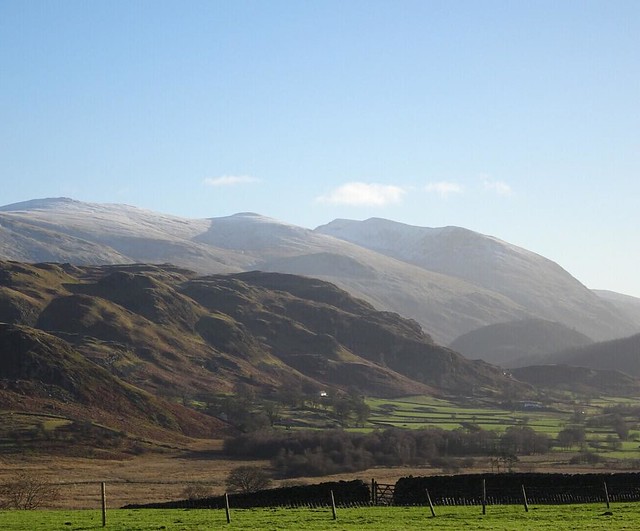
March always feels as if it should be a month of waking up. It’s when nature really kicks into gear at the end of a long winter. The nights are lighter, I can ditch the heavy winter coat, and there are daffodils in the jug on my windowsill. Oh, and lambs in the field. One of my favourite things about spring, and one of the joys of living in the country: getting to see the lambs skipping and playing in the fields around the house.

Of course, it isn’t just about flowers or adorable farmyard animals. It’s also (like every month) about writing.

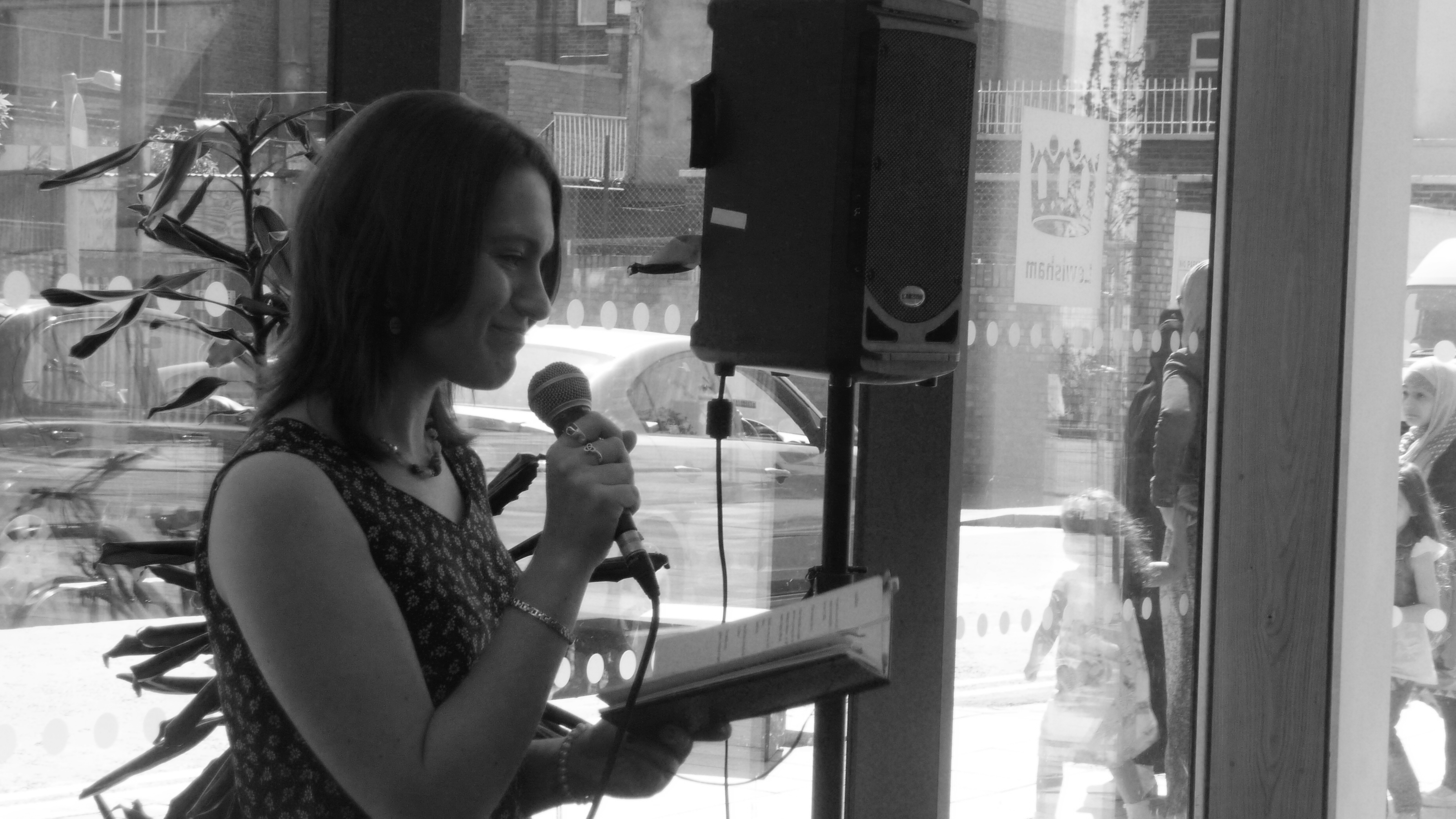
And I couldn’t have asked for a better start to the month. At the beginning of March, a whole host of poets & poetry lovers make their annual pilgrimage to St Andrews in Fife, for one of the best poetry festivals around: StAnza. I first went to StAnza during my MLitt year at St Andrews, when I volunteered as a Participant Liaison Officer, looking after poets & speakers, and taking them to and from the venue (or ‘PL-ing’, as it’s known by regular festival volunteers).

This year was my third StAnza, and as wellas PL-ing, I was also the festival’s in-house blogger. This meant writing a blog post each day about what had happened at the festival the day before. In some ways, this was quite a challenge, as there was pressure to write something (and something interesting, too) every day. I couldn’t just switch off for a day. But the flip-side of that was that it made me focus. During every event, I was concentrating, making notes, making sure I had something to say about it for the blog. Which meant that I probably took in more from the festival than normal – which is saying a lot, because I usually come away with my head stuffed full of thoughts & words & ideas.

Since I first volunteered there in 2013, the festival has really become a kind of family. It’s such an inspiring week, and has become a highlight of my social and creative calendar.

Read my StAnza blog posts here:

StAnza blog post writing

At the end of February, I learned I’d been selected for Penguin Random House’s Write Now mentoring scheme. In March, Penguin Random House publicly announced the list of mentees, which was exciting, and pretty much wholly occupied my twitter stream for a while. The actual mentoring process hasn’t started yet, but already it’s pushed me to write more of the manuscript, which can only be a good thing.

Poetry-wise it’s been a month of successes, too.

This month, the shortlist for the Ballymaloe International Poetry Prize was announced. There are four writers shortlisted, and this year, my poem was one of them! Now I need to figure out what to wear for the prizegiving next month…

And, as if that wasn’t enough, the following week I received second prize in the Tannahill Poetry Prize, based in Scotland. We went up to Lochwinnoch for the prizegiving evening – me & my fan club (aka parents). It was an evening of music, courtesy of local folk duo Witches Brew, and poetry, from the other prizewinning writers and from judge Sally Evans. Cue a bit of a Cumbrian takeover, by both myself and Kathleen Jones (who won the third prize & is also a Cumbrian poet).

I’ve also delivered a few schools’ workshops this month, for New Writing North and the Wordsworth Trust – including one at Dove Cottage, which is always good fun. (Although sometimes it feels as though you’re writing with Wordsworth looking over your shoulder.)

Mostly, this month just feels as though it’s flown by. Like the writing time has just disappeared in a whirlwind of everything else happening. Which is maybe a good thing. Sometimes I think that I need a break from writing. Creativity is a muscle, and while it’s good to exercise that muscle, it can also get overworked. Sometimes I just think I need to give the writing muscles a break.

*

THE MONTH IN BOOKS:

This month has been a fairly quiet one for reading, with only two books (though numerous individual poems – too many to list here). Part of this is that I simply haven’t made enough time for reading. Part of it is that I think my brain is starting to feel saturated, clogged up with words. But that’s fine – I have a break coming up very soon… (But shhh. Spoilers.)

This month’s two books are:

  • The Idle Traveller, by Dan Kieran
  • The Quiet American, by Graham Greene

THE MONTH IN PICTURES:

Last week, I made my annual trip north to StAnza International Poetry Festival. This was my third festival volunteering for StAnza, and as well as my usual job of looking after poets, I had the responsibility of being the festival’s in-house blogger.

Amongst all the wonderful talks and readings and performances, there was one event that stood out as being not about the art (at least, not in its purest form), but about the practicalities of making that art pay.

‘Making a Living as a Poet’ was an event sponsored by the Society of Authors. Chaired by Ken Cockburn, poets Sarah Hesketh and Harry Giles talked about how to make money from being a poet – although, as Harry qualified, ‘You can make a living from poetry, but it’s a crap living.’ 

That aside, I thought I’d share with you some of the wisdom learned during that event.

Reading April De Angelis, 'Playhouse Creatures'
April De Angelis, ‘Playhouse Creatures’

HOW TO MAKE A LIVING AS A POET:

  • Find cheap rent. Poetry doesn’t pay well. Unless you have some uncanny luck or you’ve made a deal with the devil to bag a big prize every couple of months, you’re not going to make it onto the Forbes rich list through writing poems. So living somewhere where the rent is a bit cheaper, and living costs are more affordable, is going to be vital.
  • Turn up to stuff. Like so many fields of work, poetry and writing are all about making connections. I don’t mean this in a kind of ‘old boys’ way, but if someone recognises your name on an application, it’s a good start. If you get to know people, they’re more likely to think of you when it comes to work. This goes for organisations, arts councils, collaborations with other artists… The good thing is that poetry networking isn’t nearly as scary as big business networking; it isn’t about striding into a room in a sharp suit, killer heels and blood-red lipstick, then bowling everyone over with with that cut-throat marketing pitch. It’s actually just about hanging out with other lovely artsy people and having interesting conversations.
  • Say yes to everything. Become known as the person who will do the work, rather than the person who refuses the work. Sarah Hesketh started the event by saying that, by accepting any work she could in the field of literature, there’s now ‘a touch of poetry’ on everything she does. Or, as Harry Giles said: you can’t get a full-time job just making art, but you can stitch together enough arts jobs to almost make a living.
  • Be nice. People don’t re-employ people who are rude to them. It’s just common sense.
  • Be professional. Same thing. If you never meet deadlines, or you constantly bitch about your colleagues (which will get back to them – it’s a small world), or you don’t do the work you’ve agreed to do, then people are unlikely to come back to you when the next employment opportunity comes around.
  • Seek out funding. Don’t wait for the work to come to you. Go out and find it. A couple of people seemed surprised by this – isn’t it pushy to ask for work / funding when it hasn’t been offered? But let’s use a more quotidien analogy: grocery shopping. Let’s say you’ve run out of food. Your cupboards are empty, there’s nothing but that mouldy bit of cheddar at the back of the fridge, and all you have in your freezer is half a bag of frozen peas. There are two options. Option 1: sit at your kitchen table twiddling your thumbs and hope someone knocks on your door with a trolley-full of food. Option 2: go to the supermarket and do some food shopping. Obviously, the most obvious and effective of these is option 2. You go out and get some food. It’s the same with work and funding. Instead of waiting for someone to come along and offer you a residency, get in touch with the organisation where you’d like to be poet-in-residence and work together to put together a funding bid. Instead of wishing someone would pay you just to write poems, apply for PhD funding: 3 years of effectively being paid to write a collection of poems. Of course, this all means more admin, but as Harry put it: ‘Making art is also the amin of making art.’ Which brings me onto…
  • Do an apprenticeship. As with any industry, you need to learn how it operates, and have the skills to operate within it. Sarah Hesketh spent a few years working for small arts organisations, in the kind of admin role where she learned how to do everything: events planning; marketing; press releases; funding bids; working with artists; evaluation… All the arts admin skills you need to operate as an individual artist. Of course, this isn’t everybody’s cup of tea. Some artists can’t think of anything worse than having to spend half (or even most) of their day doing admin. Which is fine. There are plenty of other ways to support your writing. Get a job in a cafe or a bar. Work in a funeral parlour. Drive an ice cream van. As long as you’re doing something that you enjoy and that still leaves you at least some time for the writing, then that’s fine. Living as a writer can be as individual as the writing itself.
  • Don’t rely on publishing a book as a way of getting rich. Harry Giles: ‘You make beer money publishing a book. Think about a book as a business card.’ The sad fact is that you don’t get 6-figure advances for poetry. Most books and pamphlets are published by small independent presses and a run of 500 is generally considered pretty good going. So just because you’ve got a book- or pamphlet-deal, it doesn’t mean you can’t start shopping for a luxury yacht. Although the actual writing of poems may be the biggest thing in terms of importance, it’s probably going to be the smallest in terms of actual financial income. But…
  • Make really good art. Although it might not make much money in and of itself, it’s still important that you write really good poems. If you’re applying for residencies or academic positions or running poetry workshops, then the people you’re teaching or applying to will want to know you’re competent in your art form. It isn’t a financial goldmine, but it’s still the thing around which all the rest of your work centres. Which is good, because the poetry is probably the reason you’re doing all this in the first place.

Other than that, just keep your fingers crossed you win something big, like the National Poetry Competition. There’s always an element of luck in life – do you meet the right person who’s going to love and champion your work, or do you write that poem which happens to speak to the personal experience of the editor selecting work for a magazine? But the more you go to things and meet people and put your work out and apply for opportunities and get involved, the greater the chance of those things happening.

The more nets you throw out, the more chance you have of catching a fish.

Read why I’m aiming for 100 literary rejections this year.

I started going to open mic nights regularly when I was 18 and at university. Every week or two, I would catch the train into London and read at Poetry Unplugged at the Poetry Cafe in Covent Garden. It was a friendly and encouraging introduction to the open mic scene, and I became more confident performing my work to a bunch of strangers.

Since then, I’ve lost count of how many open mic nights I’ve been to. I’ve read in open mics at festivals, in bars, and in cafes, across two continents. I even run one every month at Penrith Old Fire Station.

Most of the time open mics are enjoyable and a fun way to spend an evening. But now and then, things happen. The balance tips, and writers start behaving badly. Sometimes, it’s a subtle thing that some of the audience may not even notice. Sometimes it’s so obvious it becomes a talking point for numerous open mic nights to come – a kind of writerly water cooler moment.

Guerrilla Poetry at Deptford Lounge

All of the following are based on real encounters at real open mic nights over the years:

HOW NOT TO READ AT AN OPEN MIC NIGHT:

  • Go over your time. Everyone has been asked to stick to 3 minutes, or 2 poems, and everyone obediently does. Not you though – you sneak an extra poem in there, and double your time. Nobody will mind, right? Not when your stuff is ‘so much better’ than everybody else’s?
  • Read an epic. It’s your pride and joy and took you years to complete – surely that means everyone else should sit politely through all 17 pages of it?
  • Stand up, announce that you’ve only ever written one poem but would like to take this opportunity to share it – then proceed to do so for the next 45 minutes.
  • Scroll through your phone and catch up on social media while other people are reading.
  • Have a chat in the middle of someone else’s set.
  • Leave as soon as you’ve read your poem.
  • Put your name down to perform, then leave without telling anybody before your set.
  • Keep your phone on loud. If you get a phone call in the middle of someone’s set, well that’s ok – your social life is much more important than their poem.
  • When that phone you forgot to put on silent does ring out: answer it, then have a conversation about how you can’t talk now, because you’re at an open mic night.
  • Heckle (unless you’re 100% sure that it’s the kind of night that allows this, and that the performer expects this). You think the performer is an ‘arrogant sod’? Well, why not shout out and tell him so in the middle of his next poem?
  • Film the performers without asking them first – especially if you’re not the organiser.
  • Use the last bit of your set to plug your own open mic night, which is ‘better than this one’.
  • Go to the bar in the middle of someone’s reading, especially if the bar is on the other side of the performance space, and you have to physically move the performer half way through their poem, in order to get past.

And that’s about it! Any other open mic horror stories to share? I’d love to hear them – share in the comments.

~ dates & details of Word Mess open mic night in Penrith, Cumbria ~

From beginnings last month, to endings…

This month’s writing prompt is about writing to a constraint. For me, some of my favourite writing has come from not being able to write completely freely. A good example of this is form.

‘Writing free verse is like playing tennis with the net down.’ – Robert Frost

I’m not sure I fully agree with this quote by Robert Frost, as I think writing free verse carries its own challenges and subtleties. But I know what he means.

Sometimes, witing to a form can force you to raise your game. It forces you to take the poem in a different direction. If you can’t find a word that says what you want to say and still fits the form, then you have to say something different. Form can push you outside of your comfort zone, and force you to think outside the box.

(It’s actually the same reason I often won’t let my school groups write rhyming poetry, when I want them to focus more on freeing their imagination.)

writing prompt - Katie Hale

This prompt isn’t to use a traditional form, but it hopefully it will bring out something different and unexpected in your writing.

Write a poem using the end-words from a different poem.

Take another poem (by somebody else) as your starting point. Try to make it a contemporary poem that you don’t already know, so that you’re not constantly thinking of the original poem while you’re trying to write your own.

Don’t read the original poem; just write down the last word of each line.

Then, write your own poem, ‘filling in the gaps’. What you should end up with are two completely different poems (the original and your own), but with the same words ending their lines.

Obviously, once you’ve done this exercise, you can rewrite your poem and remove any of those end-words that really don’t belong, and edit your poem as normal.

Your original poem can be any contemporary poem (try to avoid anything too old, as you may get stuck with some anachronistic ‘thou’ and ‘thee’ language). But if you’re struggling to find one, here’s a suggestion:

Window, by Peter Dale

And if you don’t want to see the rest of the poem, the line endings are as follows:

gaze
seem
sun
it
mist
her
look
love
face
pass
sun
child
hers
personal

Good luck! I’d love to see any / hear which poems you chose. Comments in the boxes below 🙂

January always feels like an odd month to me. It seems to take ages to get going, and then before you know it, it’s almost over. Cue a frantic rush to get up to date on all the things I should have been doing at the start of the month. Oops.

That aside, January is always a month of beginnings. It’s a month of testing myself, to see how closely I can stick to my newly made resolutions. So far, it’s been a bit of a mix.

  • I haven’t got particularly far with my 100 rejections – although I did send some poems out the other day, so maybe there’ll be some on their way shortly.
  • I’ve read 4 books, so I guess I’m kind on track to my 50 by the end of the year.
  • So far, I’m keeping up with my weekly blog posts, so that’s a big tick on the resolutions list.
  • As for the novella, I’m now officially over half way through the first draft of this, so this one is looking fairly promising.

Sometimes when you travel, it's easy to forget how beautiful it is at home.

But how has it gone apart from that?

Mostly, I’ve been trying to get back into some sort of routine. Before Christmas, I had about 3 weeks of being in this fantastic routine that was probably one of the most productive of my life: get up before 7am, write all morning, sometimes go for a walk / run, do admin in the afternoon, relax / read / make Christmas decorations in the evenings. Then Christmas happened and that sort of went by the wayside. Now, I’m getting into a kind of routine, which isn’t really the one I want. It seems to be: get up late, mooch around trying to write, fail, read a book to pass the time, finally manage to write something that’s halfway decent by about dinner time, do some frantic admin, clamber into bed at around 1am.

Luckily, I’ve spent the past week with Stephen, working on the rewrites of our musical – and there’s nothing like another person to make you get your act together and get working, so it’s been a productive week. Keeping my fingers crossed that that productivity follows me into February.

In other news:

I had a great weekend in London with the lovely Elizabeth Mann, at the T S Eliot readings (and spending far too much time & money in the city’s various bookshops). It was such an inspiring occasion – and a huge congratulations to Jacob Polley on his win!

January’s Word Mess open mic night was one of the busiest we’ve had, with a fantastic variety of readers. (The next one will be on Tuesday 28th February.)

I started 2 new blog series: a monthly writing prompt, starting with a prompt about beginnings; and Face to Face, series of short conversations I’ll be having every month, talking to interesting people about the things that interest them. So far, so good! 🙂

I’ve started my schools workshops again. One of my personal favourites was looking at riddles & kennings with my Yr 4s at St Patrick’s Primary in Workington. Their special topic is currently the arctic, so we wrote some arctic-themed riddles. Any guesses…?

I am a ship-sinker.
I am a crack-maker.
I am a wave-breaker.
What am I?

*

I am a birth-giver.
I am a snow-hunter.
I am a seal-eater.
I am a den-sleeper.
What am I?

*

I am a cookie-eater.
I am a toy-maker.
I am a milk-drinker.
I am a sleigh-driver.
I am a chimney-climber.
I am an elf-checker.
I am a beard-grower.
What am I?

Looking forward to going back there this month to work more on description & close observation.

THE MONTH IN BOOKS:

  • All We Shall Know, by Donal Ryan
  • The Handmaid’s Tale, by Margaret Atwood
  • Anthology of the Sea (Emma Press)
  • Reasons to Stay Alive, by Matt Haig

Currently reading: The Art of Travel, by Alain de Botton, and Human Acts, by Han Kang

THE MONTH IN PICTURES:

Happy New Year!

When I was running Rabbit Rabbit (rabbit) young writers’ group, I used to send the young writers a writing prompt every week. I missed doing it, so I’m going to share a writing prompt as part of my weekly (weekend-ly) blog posts. I’m not Jo Bell, and this isn’t 52, so I’m going to share one a month rather than one a week: the first Sunday of every month.

And because this is January and it’s the first one, I thought I’d share a prompt about beginnings.

writing prompt - Katie Hale

If you think about famous novels, there are probably at least a few whose opening lines come to mind. Which makes sense – the beginning of a book is the part that’s supposed to grab us and make us want to read further.

For me, a good opening to a book is one that draws me in. It’s one that raises questions, or suggests a struggle that needs to be resolved. Sometimes it puts us right in the middle of the drama, straight away.

Take these examples – which, because we’re still within the festive season, I’ve done as a quiz (answers at the bottom of the post):

QUIZ:

  1. ‘It was a cold day in April and the clocks were striking thirteen.’
  2. ‘Marley was dead, to begin with.’
  3. ‘When he woke in the woods in the dark and the cold of the night he’d reach out to touch the child sleeping beside him.’
  4. ‘He was an old man who fished alone in a skiff in the Gulf Stream and he had gone eighty-four days now without taking a fish.’
  5. ‘People are afraid to merge on freeways in Los Angeles.’
  6. ‘Lyra and her daemon moved through the darkening Hall, taking care to keep to one side, out of sight of the kitchen.’
  7. ‘When the doorbell rings at three in the morning, it’s never good news.’
  8. ‘It was love at first sight. The first time Yossarian saw the chaplain he fell madly in love with him.’
  9. ‘He was afraid to go to sleep. For three weeks, he had been afraid of going to sleep.’
  10. ‘The boys, as they talked to the girls from Marcia Blaine School, stood on the far side of their bicycles holding the handlebars, which established a protective fence of bicycle between the sexes, and the impression that at any moment the boys were likely to be away.’
  11. ‘It was the best of times. It was the worst of times.’
  12. ‘The boy with fair hair lowered himself down the last few feet of rock and began to pick his way towards the lagoon.’
  13. ‘They say it came first from Africa, carried in the screams of the enslaved.’
  14. ‘In my younger and more vulnerable years my father gave me some advice that I’ve been turning over in my mind ever since.’
  15. ‘Like most people I lived a long time with my mother and father. My father liked to watch the wrestling, my mother liked to wrestle.’

How many did you get? Answers at the bottom of the post…

*

Writing a gripping first sentence is all very well for the opening of a novel, which sets up plot and conflict and character and story. But what about poetry?

I wonder how many of us think about setting up conflict and character and story in the opening of a poem? I wonder how many of us write opening lines to grip people with the drama of the poem, the way we might in a novel?

So that’s my prompt:

Write an opening line for a poem, which sets up drama and / or mystery, and whose sole purpose is to grip the reader.

Then, and only then, you can try writing the rest of the poem.

Here are a few poems that I think grip the reader really well:

‘Here, Bullet’, by Brian Turner

‘Bird’, by Liz Berry

‘Kiss’, by Ruth Padel

Happy writing!


ANSWERS:

  1. Nineteen Eighty-Four, George Orwell
  2. A Christmas Carol, Charles Dickens
  3. The Road, Cormac McCarthy
  4. The Old Man and the Sea, Ernest Hemmingway
  5. Less Than Zero, Bret Easton Ellis
  6. Northern Lights, Philip Pullman
  7. Stormbreaker, Anthony Horowitz
  8. Catch 22, Joseph Heller
  9. Strange Meeting, Susan Hill
  10. The Prime of Miss Jean Brodie, Muriel Spark
  11. A Tale of Two Cities, Charles Dickens
  12. Lord of the Flies, William Golding
  13. The Brief Wondrous Life of Oscar Wao, Junot Diaz
  14. The Great Gatsby, F Scott Fitzgerald
  15. Oranges are not the Only Fruit, Jeanette Winterson

Here we are again: teetering on the brink of the old year, about to dive headlong into the new one. 

We’ve spent the past 365 days scaling the ladder, and let’s be honest, by the end, we were probably all in need of a bit of a rest. But now here we are, wobbling at the end of the diving board, sort of wishing we could just inch away from it and come back the way we came, but also excited by what’s to come. The adrenaline’s pumping with anticipation of the unknown, with the possibilities of the future. 

Take a deep breath. Get ready. Jump. 

Normally, I see New Year as something of a let-down, especially after all the glitz and excitement of Christmas. Really, it’s just a passing from one day to the next, where nothing actually changes apart from the fact that we all feel a little more hungover the next morning – a bit like birthdays. 

This year is different. This year, for once, I am actually enacting a momentous change in my life. 2016 will have a very different flavour to 2015. 

Why. I’ve quit my job. 

Ok, I’ve quit one of my jobs. 

For the first time in my life, my time being ‘a writer’ outweighs my time spent on other employment. (Being a student doesn’t count.) And, to allow myself to spend even more time on my writing, I’ve also waved a fond farewell to my travel blog, Second-Hand Hedgehog. I may return to this in the future, but for now I’m planning to concentrate all my creative energies on my poetry and theatre. 

It’s more than a little bit daunting. Remember that diving board analogy? It’s not a coincidence that I don’t really like heights…

But it’s also incredibly exciting. It’s a new beginning, a new chapter, or (to get suitably poetical about it) a new stanza in my life. 

Like with all new beginnings, I’ve made myself a couple of resolutions. 

  1. I’m going to blog about it, every week. Since I’ve given up the travel blog, it’s only fair to give myself some kind of blogging outlet. And if I can be literary at the same time, well, so much the better. 
  2. I’m going to write a limerick a day. About a year ago, I started making up limericks when I was bored: in queues, in the car, in the shower. They’re very much not serious affairs, and are really just a bit of fun – though I suppose they do also practise essential skills like rhyming. I don’t actually expect to stick to this resolution and come out of the year with 366 limericks, but if I aim for one a day, I should at least manage a couple of hundred before next January. 
  3. I’m going to read more. Last year, I didn’t read anything like as much as I would have liked, so this year I’m aiming to remedy that. And as an extra incentive, I’m going to share my reading library on my weekly blog post. 

So there you have it: a new plan for a new year. 

Happy 2016!

x