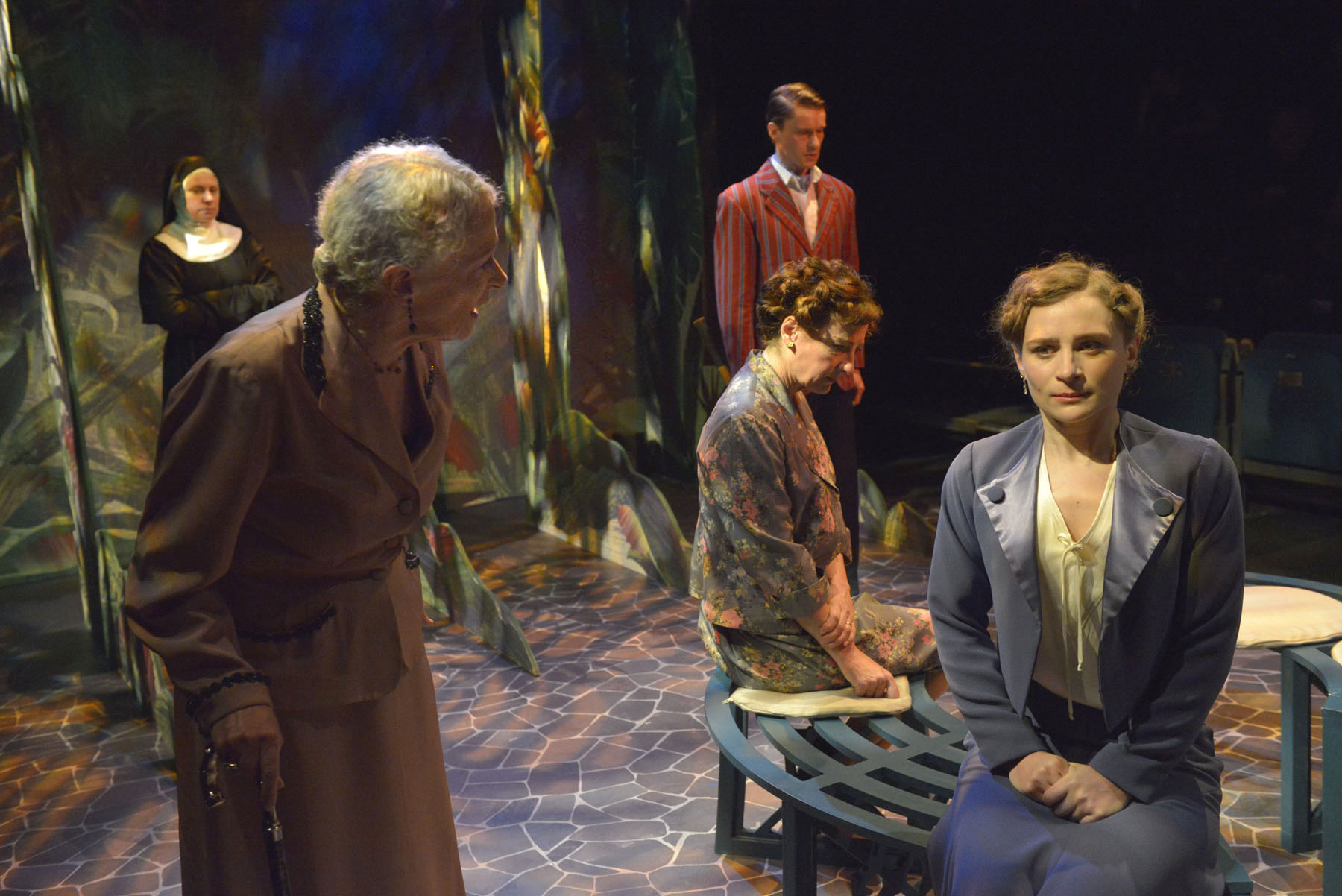
Shelagh Stephenson’s Enlightenment is an unsettling play – one which works on the fears of our imaginations, and the terror of our own smallness in an increasingly global world.
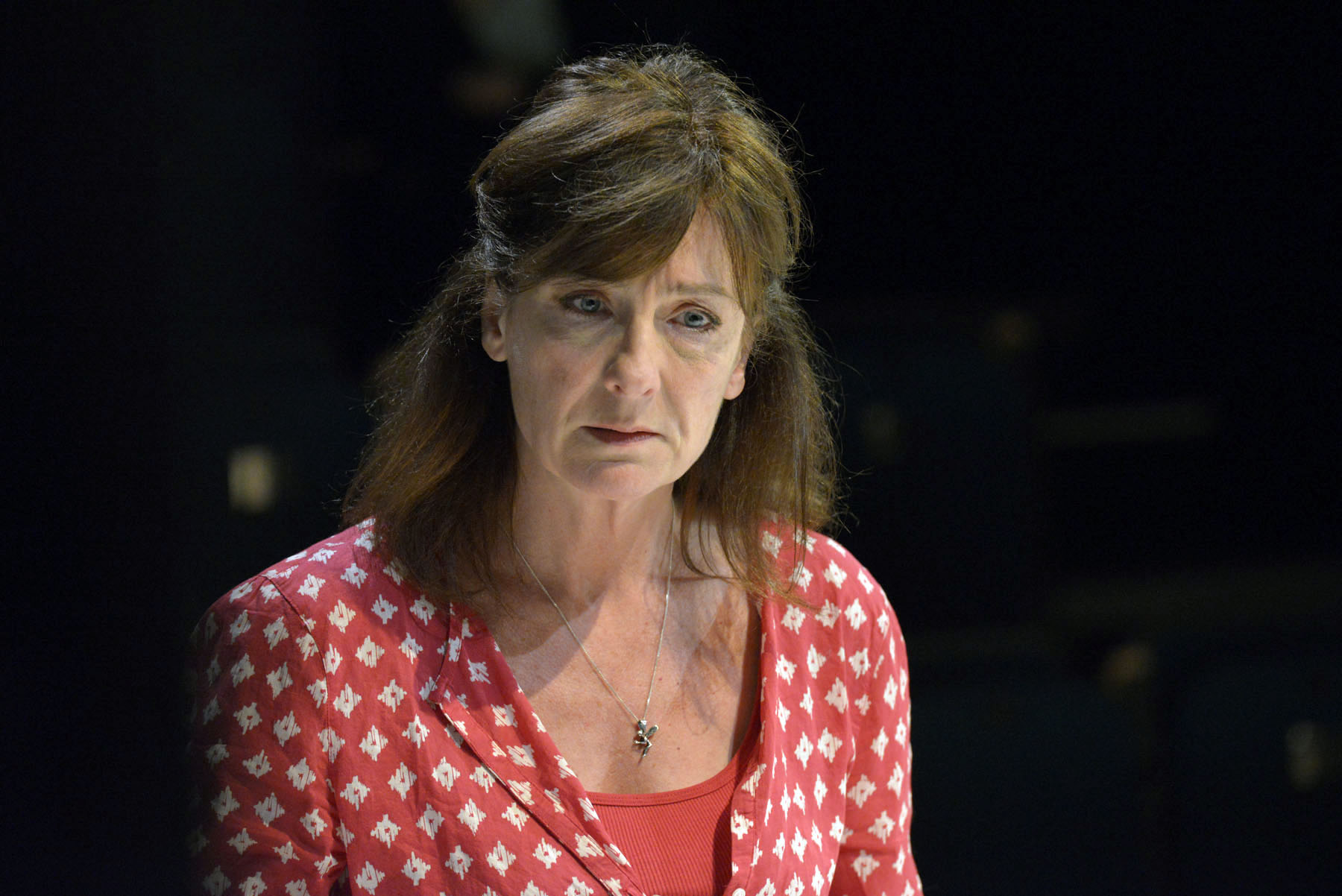
~ Cate Hamer (Lia): photo by Keith Pattison ~

It is this sense of individual insignificance that gives Zoë Waterman’s production such a powerful and contemporary feel – this could be anyone’s house, anyone’s family. In a world where solutions are always just a phone call or the touch of a button away, the sense of these characters’ helplessness pervades the play like a bad dream.

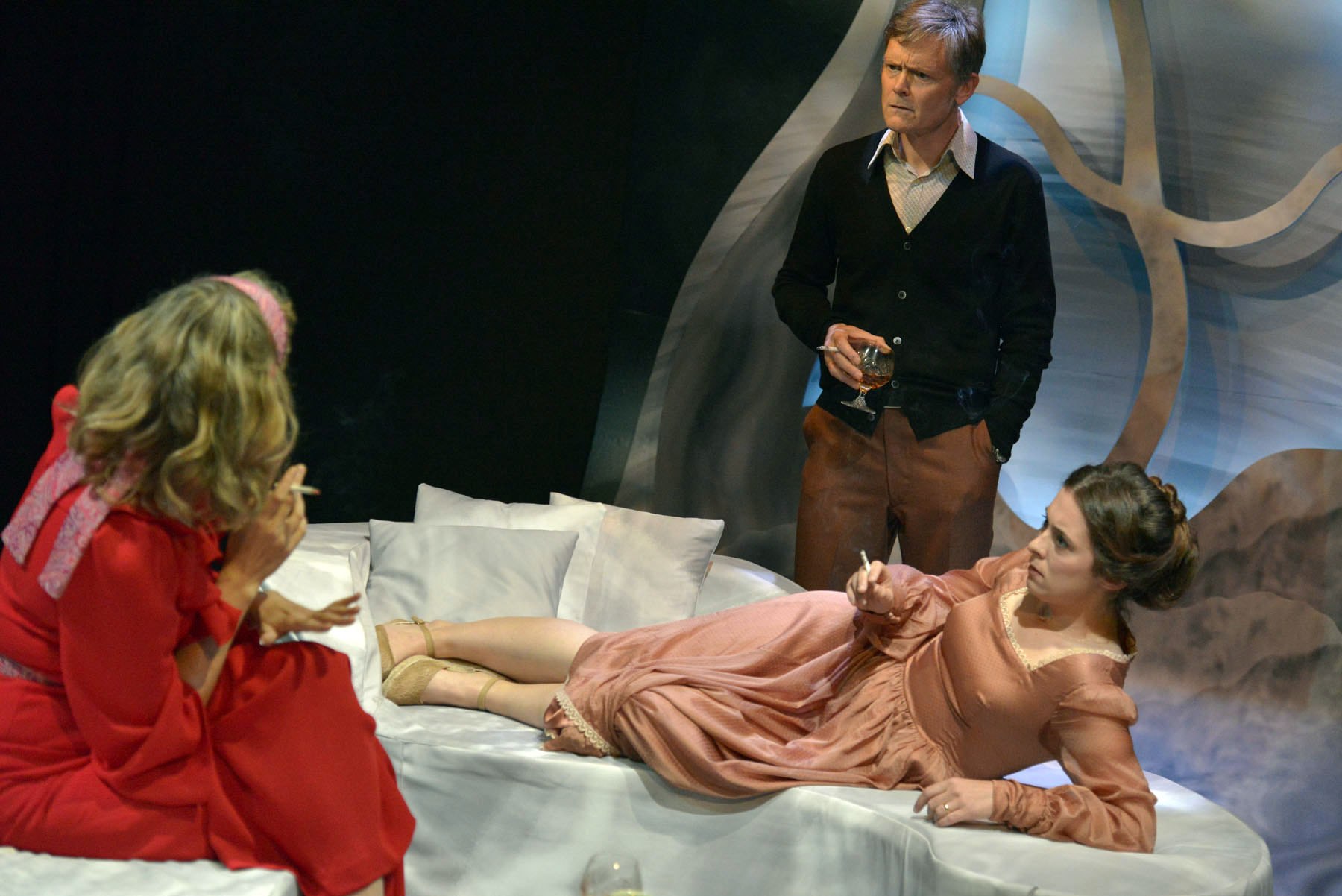
Cate Hamer is a strong central figure as Lia, the mother desperately trying to hold onto herself in her search for answers about her missing son. Through her powerful portrayal of a woman on the edge, we see the struggle for control that plagues all of the play’s characters, from the belligerent Gordon (Peter MacQueen) to Joanna, the ambitious media woman, played by Charlotte Mulliner. Mulliner perhaps best represents the precariously balanced nature of control; she is the character who has most of it at the start of the play, and the only one to bow out as soon as she feels it slipping. Her smart heels and slick performance throw Hamer’s portrayal of a frayed and despairing Lia into sharp relief.

Meanwhile, Patrick Bridgman excels in the role of Lia’s partner, Nick, whose cynical retorts provide much of the play’s humour – a humour that teeters on the edge of hopelessness; Bridgman perfectly balances the two, a master at straddling the line between the emotions he exposes and those he withholds.

However, it is Richard Keightley’s Adam who makes the play a truly disturbing piece. His entrance at the end of the first half is a wave of uncertainty in an already turbulent drama – a wave which becomes a tsunami by the end of the play, as his Machiavellian power games seek to twist the characters against one another with a ferocity that would make Pinter proud. Keightley creates a character with so many layers of manipulation and vulnerability that it becomes impossible to know when (or even if) he ever lays bare this complex character’s troubled core.

Even in such an exceptionally strong season comprising outstanding productions like The 39 Steps and Suddenly Last Summer, Theatre by the Lake’s Enlightenment shines out: a gripping piece of contemporary theatre that seeks to unhinge our sense of control and safety in our own fragile lives.

~ Enlightenment runs at Theatre by the Lake, Keswick, until 7th November 2015 ~

~ Richard Keightley (Adam): photo by Keith Pattison ~

Noël Coward’s Fallen Angels is a play about two spirited women, who, while their more pedestrian husbands are away playing golf, drink themselves into a comical hysteria in anticipation of a visit from their former lover.

Theatre by the Lake production of FALLEN ANGELS by Noel Coward directed by Ian Forrest
~ Polly Lister (Julia), Emily Tucker (Saunders) & Frances Marshall (Jane): photo by Keith Pattison ~

Ian Forrest’s production at Theatre by the Lake delivers both of those things: hysteria on-stage, and comedy off-stage. Despite a slightly slower start, the production picked up in pace and energy with every glass of wine that Jane (Frances Marshall) and Julia (Polly Lister) drank, leading to some all-too-recognisable moments of inebriation and alcohol-induced feuding.

With such comical portrayal of female drunkenness, it is easy to see how Fallen Angels was such a scandalous success when first performed in the 1920s. However, the play’s dramatic impact is perhaps weakened in a society which has (thankfully) moved beyond finding perverse and mildly horrified entertainment in the idea that women, as well as men, might get drunk or have sexual urges. Despite its light entertainment value, it has perhaps become a play with little cultural relevance in our post-sexual revolution, post-Lady Chatterley, post-TOWIE world.

Despite the dated feel of the script, the play was produced and performed to the high standard that one should expect from Theatre by the Lake.

This was a play in which the women (perhaps quite deliberately) outshone the men – though a special mention has to be made of Ben Ingles’ exaggerated suave accent. Emily Tucker gave a strong performance as the self-important maid, Saunders, while Lister and Marshall carried the show brilliantly as the quarrelling best friends, Julia and Jane.

In both Fallen Angels and Abigail’s Party (also part of Theatre by the Lake Summer 2015 season), Lister’s ability to carry a scene and to hold an audience for long periods while alone on stage stood out as impressive, with excellent comic timing and a stage presence that absorbs an audience’s attention. Marshall provided the perfect foil to Lister’s Julia, with an almost immature gaiety that made her a delight to watch.

As with the Theatre by the Lake’s production of Abigail’s Party this season (to which it is quite similar in a number of respects), Fallen Angels may not be an example of thought-provoking contemporary theatre, but it does provide an entertaining evening out.

Theatre by the Lake production of FALLEN ANGELS by Noel Coward directed by Ian Forrest
~ Frances Marshall (Jane) & Polly Lister (Julia): photo by Keith Pattison ~

 ~

Fallen Angels runs in the main house at Theatre by the Lake until 7th November 2015.

A couple of months ago, I was running a poetry workshop in a small Cumbrian primary school on behalf of the Wordsworth Trust. At the start of the session, I asked the children whether they had any questions about poetry or about being a poet. One boy put up his hand and asked, ‘Are you on medication?’

As if that wasn’t enough, this then shaped the questions from the other children, such as: ‘Do you have any allergies?’ I then had a sensible one (‘How long have you been writing poetry?’), but it was instantly followed by, ‘How old are you?’ and several minutes in which the children frantically tried to guess my age. (If you were wondering, by primary school calculations I could apparently be anywhere between 19 and 43.)

I then started asking around, to see if other poets had similar stories of being asked interesting questions. Turns out, they do – particularly when children are involved.

Some of my favourites came from Helen Mort: ‘You’re the Derbyshire Poet Laureate, so does that mean you write poems about cats?’ Another child asked her, ‘Have you written any poems about sparkly fairies?’ – rounded off by a small yr 3 boy in a primary school workshop, who asked her what was in her handbag and if he could have a look.

Another question, which seems universal, is: ‘What do you write about?’

Universal it may be, but it’s still nearly impossibly to answer – so much so that Alex Bertulis-Fernandes described it as an ‘odd question’, despite the fact that it’s annoyingly common: ‘I’m not quite sure why I find it so strange, and I’m sure I’ve asked others the same – my answers to the question always feel unimpressive though.’

Polly Atkin agreed: ‘I hate being asked ‘what kind of poetry do you write’ as though there is an answer to that.’

She also ventured a couple of things she’d been told as a poet, as well as questions she’d been asked, such as a suggestion that she should use her 3rd place competition prize money buy a notebook so she could ‘keep practising’, as well as the cheek of a male poet who told her she should ‘stick to the women’s magazines’.

Another writer who had been told where he should publish his poetry was Owen Collins: ‘my Mum, when struggling to get her head round my ambitions, once told me that she thought I’d be very good at writing the poems for inside birthday cards…’

I’ve experienced this one myself. When I showed people the first good poem that I wrote (well, I thought it was good; it won a prize, so that’s something), one of my parent’s friends told me it was so good, it should go on the inside of a greetings card. I’m pretty sure he meant it as a compliment, but as it was a poem about dissatisfaction with a dying relationship, I’m not sure what kind of card it would be appropriate for. Maybe some kind of ironic Valentine…?

But I think my favourite contribution came from Lindsey Holland, who was asked: ‘If I write about breasts as hills, from a microscopic perspective, is that landscape poetry?’ And I desperately hope she answered yes.

The Lady of the Lake, by Benjamin Askew: Theatre by the Lake, Keswick

Theatre by the Lake production of THE LADY OF THE LAKE by Benjamin Askew directed by Mary Papadima. Review by Katie Hale.
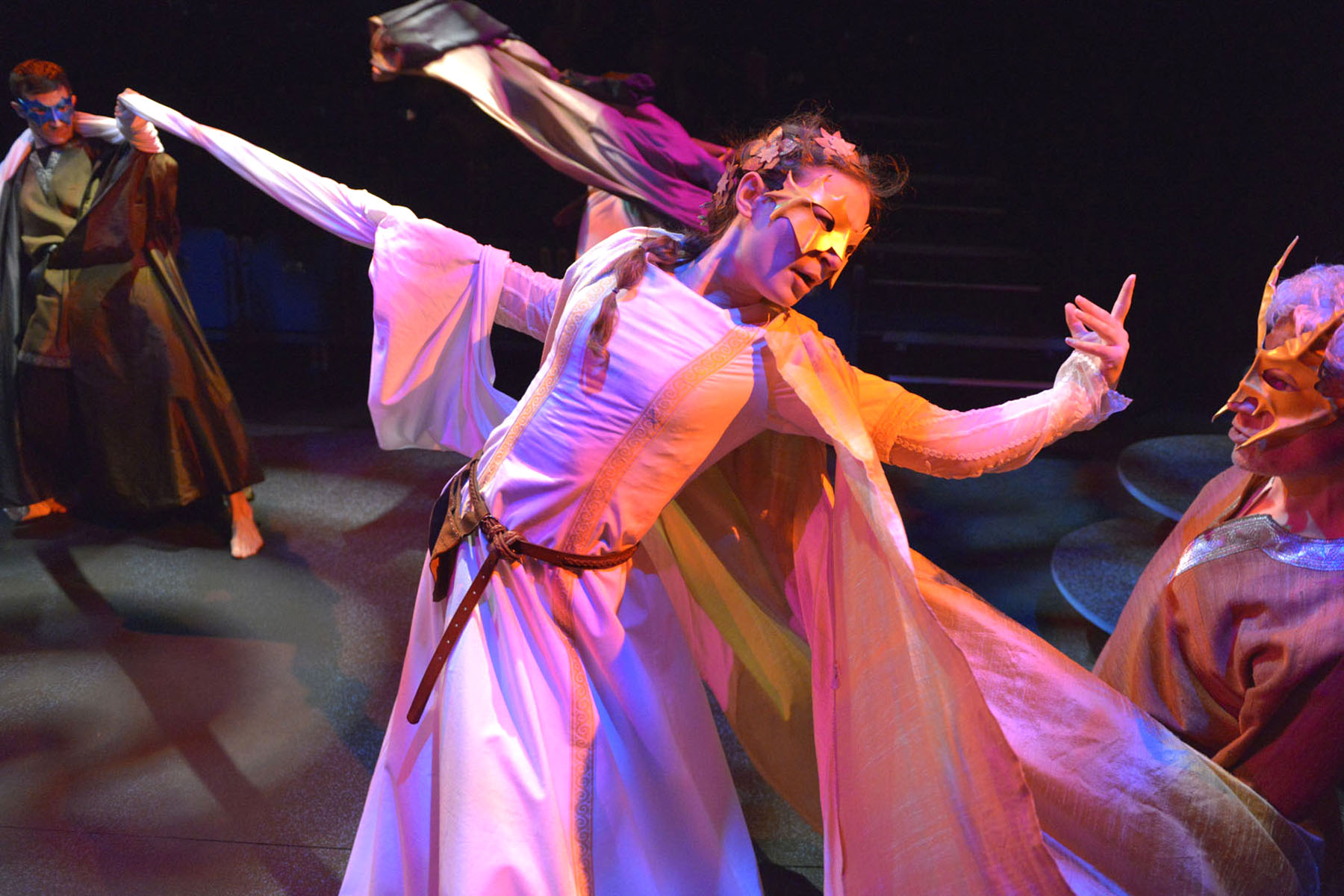
~ Emily Tucker (Morgan), Charlotte Mulliner (Nimue): photo by Keith Pattison ~

When I heard ‘new play about King Arthur written in verse’, I had mixed expectations. Although I always want poetry and verse to succeed, dealing with an established subject matter such as the legend of King Arthur, while using a more traditional form of script-writing, risks the drama feeling staid.

However, despite the play’s mythological setting, it has a contemporary feel. Benjamin Askew’s adaptation of the legend is carefully crafted and controlled, with dialogue that seems both natural and poetic at once.

The Lady of the Lake is also a play which asks big questions about narrative, authorship and autonomy. Framed in the context of a troupe of players, it becomes a play less about the story itself (although it is, of course, a riveting plot), and more about how that story is told and, more importantly, how it is remembered.

Mary Papadima’s stylised direction perfectly complements Askew’s beautiful and subtle verse, while Elizabeth Wright’s deceptively simple set creates almost a blank canvas on which any story could be told.

The integration of music and movement creates a sensory whirlwind, which at times gives the play an almost impressionistic feel – as though reminding us that the story unfolding before us is as fluid as the lake itself.

The only let-down to The Lady of the Lake is its length, occasionally slave to the richness of its intricate plot and sumptuous beauty of its dialogue. However, there is enough talent in the writing and cast to minimise this issue, with Patrick Bridgman playing an uncertain, heartfelt and sympathetic Arthur, years after his prime. Richard Keightley is a disturbingly enigmatic Taliesin, while Charlotte Mulliner and Emily Tucker channelled much of the show’s vivacious energy as Nimue and Morgan.

Benjamin Askew’s The Lady of the Lake is an ambitious play that (for the most part) carries through. In style and technique it is unlike anything I have seen at Theatre by the Lake in recent years: an intriguing piece of theatre.

Theatre by the Lake production of THE LADY OF THE LAKE by Benjamin Askew directed by Mary Papadima
~ Ben Ingles (Owain), Emily Tucker (Morgan), Patrick Bridgman (Arthur/Old Taliesin): photo by Keith Pattison ~

~

The Lady of the Lake runs in the Studio at Theatre by the Lake until Friday 6th November

Yesterday, I posted the trailer to my upcoming musical, Yesterday.

Created in collaboration with friend and composer Stephen Hyde, Yesterday is an intimate new musical telling the story of Alex: a charming, vulnerable and adulterous man. The story is told from the perspective of the three women in his life: the mother who smothers him with love, his deceived wife searching for hope in their marriage, and the the teenage girl in whom he finds solace.

Here is one of the songs from the musical, recorded by Vulture Sessions. Performed by Georgia Figgis, Jemimah Taylor and Joanna Connolly.

More about the musical here.


It’s always exciting as a project races towards its conclusion, seeing all the various strands coming together, slotting into place one after another, often surprising quickly. It’s like solving a rubix cube: one moment it’s a jumble of colours, then suddenly it’s organised and complete. (Or rather, it’s like watching someone else solve a rubix cube – I’ve never been very good at them…)

That’s how it’s been with Yesterday, the musical I’ve written with friend and composer Stephen Hyde. It feels like only yesterday (sorry!) that it was a vague idea we were discussing on afternoon walks in the countryside – and suddenly, it’s complete, cast and in rehearsal.

And to prove it, there’s a trailer:

Yesterday premieres in Oxford, at the Burton Taylor Studio, 16th – 20th June 2015. Tickets available here.

If you’re a fan of the inexplicable style of the 1970s, then Theatre by the Lake’s production of Abigail’s Party, directed by Ian Forrest, could be just what the doctor ordered. If not, then maybe this isn’t the play for you.

Theatre by the Lake production of ABIGAIL'S PARTY by Mike Leigh directed by Ian Forrest - review by Katie Hale
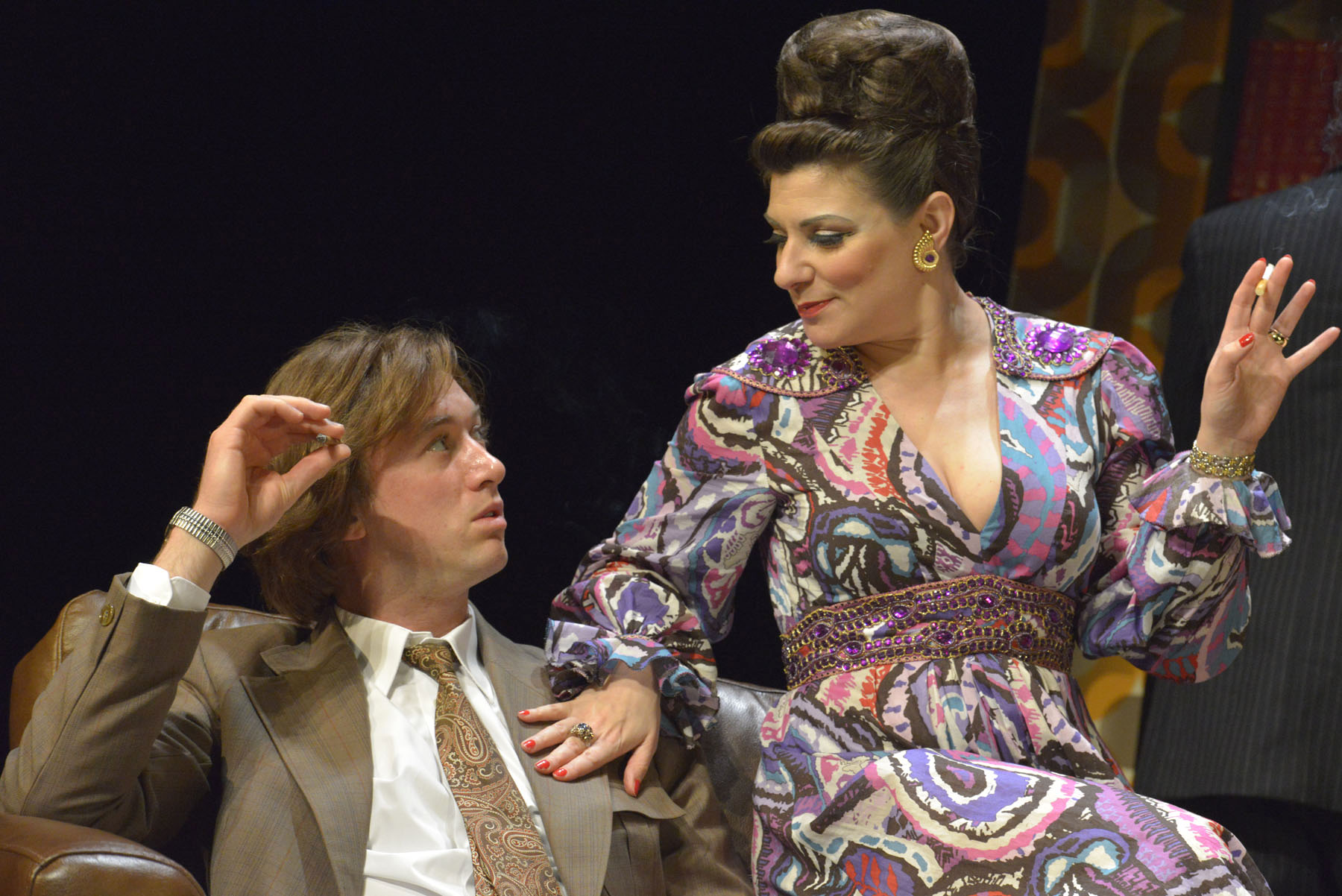
~ Johnny McPherson & Polly Lister: photo by Keith Pattison ~

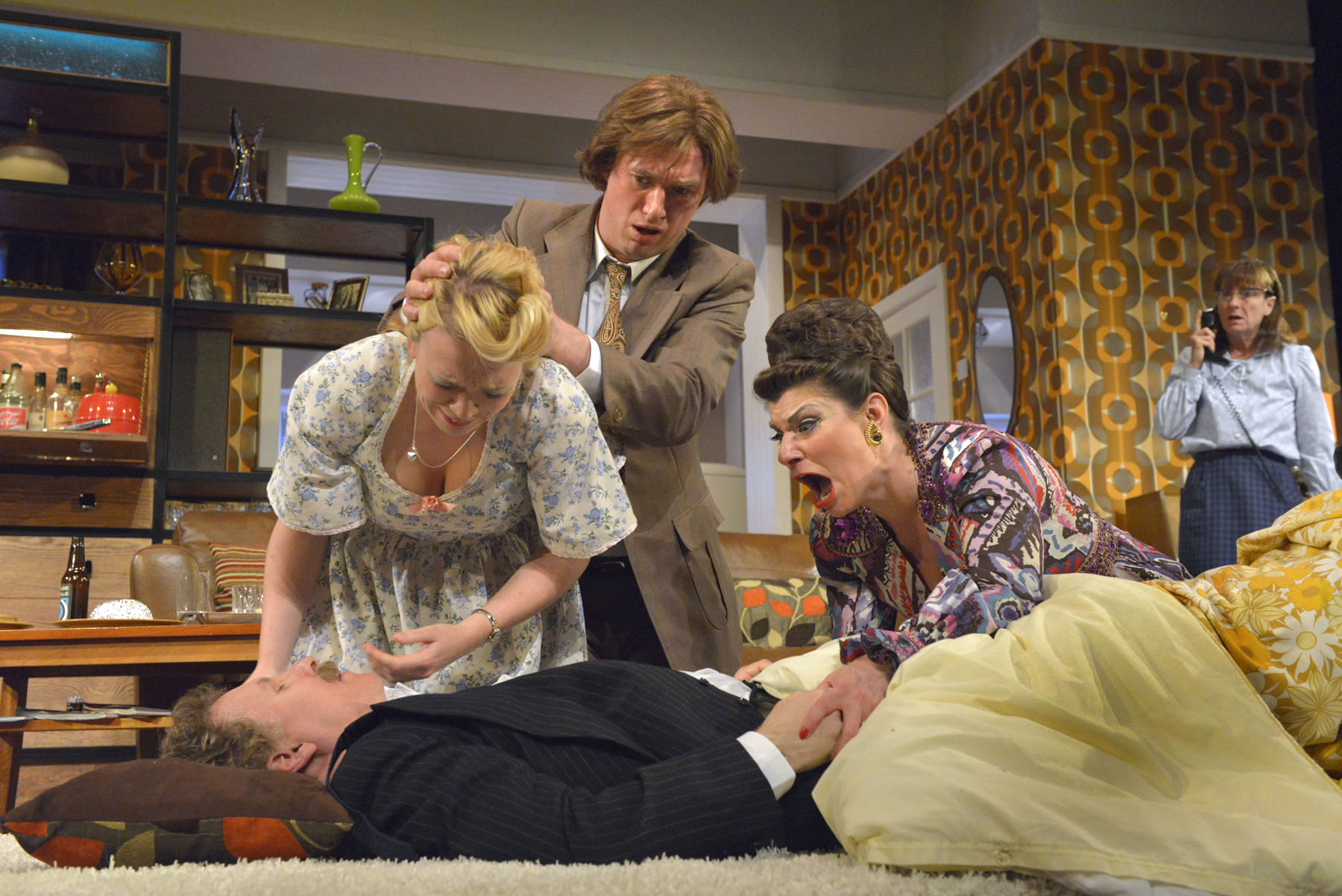
From the moment you enter the auditorium, there can be no doubt about the era of the play: from the orange and brown wallpaper, to the light-up bar and brown leather sofa, Martin Johns’ set feels like a time machine – something the light-humoured production adds to with an announcement to turn off all mobile phones, pagers and polaroids.

But the period style excels itself with the entrance of Beverly (Polly Lister): a 70s vision in a lurid maxi dress and elaborate hairpiece. With her loud costume and character to match, Lister quickly claims the stage, drawing the audience into the tension of the character, as Beverly fights to retain control of this territory throughout the play.

This struggle for control is apparent in all the actors’ portrayals, from anxious, respectable Susan (Cate Hamer), to likeably naïve Angela (Frances Marshall), to Beverly’s condescending but put-upon husband, Laurence (Richard Earl) – perhaps the ultimate victor in the struggle for centre-stage attention.

However, particular credit has to go to Jonny McPherson as Tony, who, alongside Lister, provided most of the performance’s comedic moments – despite the fact most of his lines consisted only of ‘yeah’ and ‘ta’. With perfect comic timing, deadpan expressions, and silences as loud as Lister’s dialogue and costume, McPherson is easily one of the stars of the show.

As with the actors, every aspect of the production was of the high quality that I’ve come to expect from the Theatre by the Lake. But as a whole, Abigail’s Party left me uninspired, despite the obvious quality of the production values. Mike Leigh’s play feels dated, and the stilted dialogue (although comic in its awkward competitiveness) often feels relevant only to the play’s period setting, and without resonance in the modern world.

For those who miss the 70s, or those who want a light-hearted glimpse of them, Forrest’s vision of Abigail’s Party is an entertaining homage to the decade, which seems to exist as an island from the world of 2015 outside the theatre doors. For those searching for a more contemporary theatre experience, however, Abigail’s Party falls short.


~ runs until Friday 6th November ~

Theatre by the Lake production of ABIGAIL'S PARTY by Mike Leigh directed by Ian Forrest - review by Katie Hale
~ Richard Earl, Frances Marshall, Jonny McPherson, Polly Lister: photo by Keith Pattison ~


[Theatre by the Lake: Keswick]

Theatre by the Lake production of John Buchan and Alfred Hitchcock's  The 39 STEPS adapted by Patrick Barlow directed by Abigail Anderson
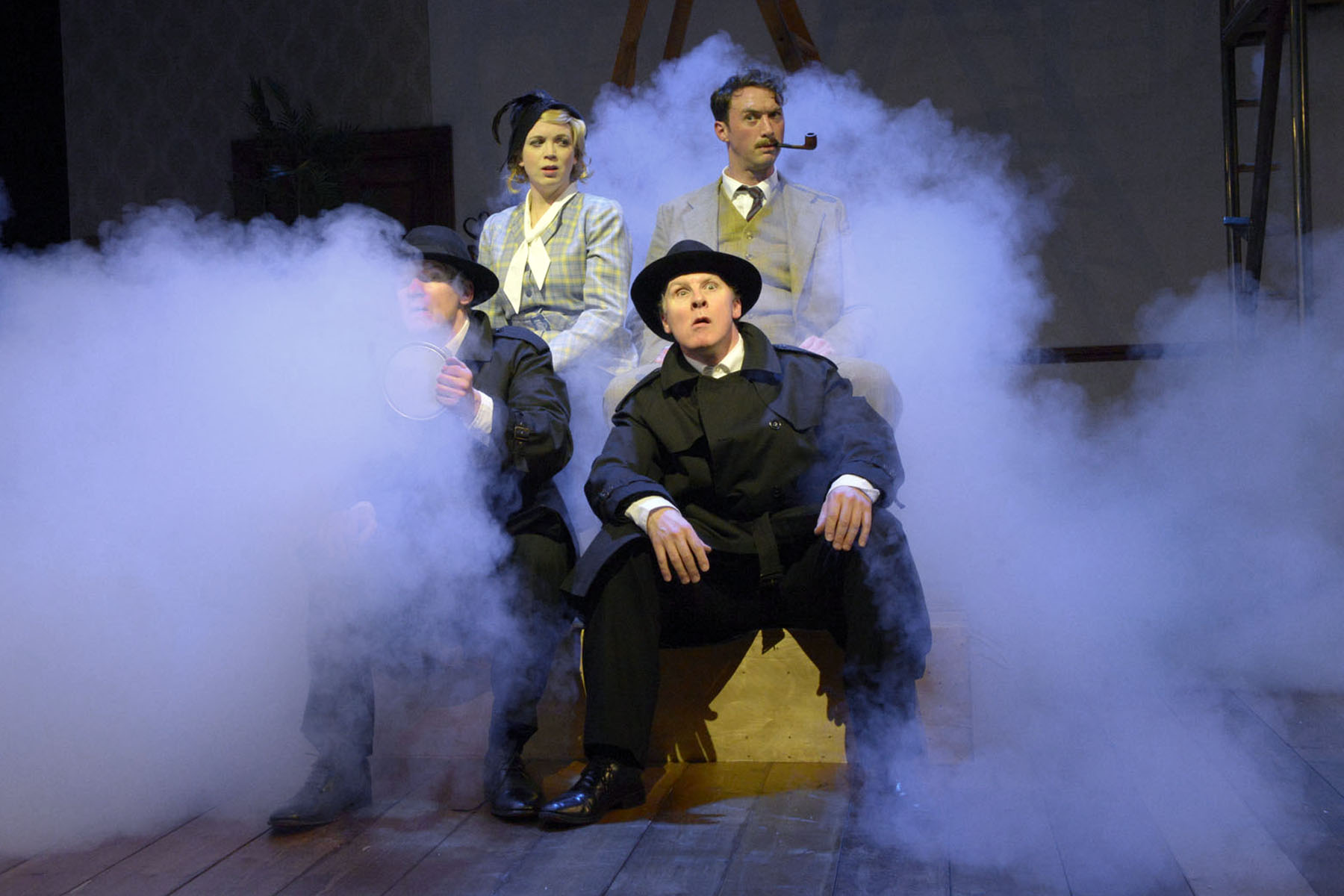
~ Frances Marshall, Jonny McPherson, Patrick Bridgman & Richard Earl: photo by Keith Pattison ~

As a general rule, Theatre by the Lake does big melodramatic comedy well. With a string of successful farces under their belt, and the well-executed vibrant chaos of last season’s Comedy of Errors still in mind, it would have been easy for the theatre to get comfortable.

However, Abigail Anderson’s production of The 39 Steps takes Theatre by the Lake comedy to a new level. It was fast-paced, lively, and witty in its execution. The use Martin Johns’ set was imaginative and entertaining, and added to the quirky success of the play. (In fact, I think this may be the only occasion where I have witnessed a piece of set receive its own round of applause during a scene.)

All four cast members carried the play with seemingly endless amounts of energy. Jonny McPherson’s was a comical mix of inconvenienced English gentleman and dashing, devil-may-care spy, while Frances Marshall transformed with apparent ease from cunning secret agent to innocent and proper love interest , playing all three of her roles with a humour and energy that sparked off McPherson’s own.

Especially brilliant were the two clowns: Patrick Bridgman and Richard Earl. I quickly lost count of the number of characters they each played (often playing multiple characters within the same scene), but each one was unique and entertaining in its own right, and every change was done with superb comic timing.

Special mention, though, has to go to the unseen (but not unheard) star of the show: Sound Designer, Maura Guthrie. Every sound effect (and there were many) furthered the comedy of the play, and helped (along with ladders, a few boxes, some scaffolding and a lamp) to bring the world of The 39 Steps to vibrant and hilarious life.

Abigail Anderson’s The 39 Steps is the best thing I’ve seen in the Theatre by the Lake’s main house in years – and the funniest. We laughed out loud from beginning to end, and would happily go back to see it again. It just proves: you don’t need to go to London to see West End-quality theatre.

~ runs until Wednesday 4th November 2015 ~

Theatre by the Lake production of John Buchan and Alfred Hitchcock's  The 39 STEPS adapted by Patrick Barlow directed by Abigail Anderson
~ Patrick Bridgman & Richard Earl: photo by Keith Pattison ~

Mr Paradise and Suddenly Last Summer at Theatre by the Lake

Theatre by the Lake production of Mr Paradise and Suddenly Last Summer by Tennessee Williams directed by Mary Pappadima
~ Polly Lister, Kate Layden, Richard Keightley, Cate Hamer & Emily Tucker: photo by Keith Pattison ~

‘The work of a poet is the life of a poet, and vice versa, the life of a poet is the work of a poet. I mean, you can’t separate them. I mean, a poet’s life is his work, and his work is his life in a special sense.’

Suddenly Last Summer and Mister Paradise are plays about words: about their persistent endurance and the power it gives them.

Where there is power, there is usually fear, and Mary Papadima’s production of Tennessee Williams’ plays contains this fear perfectly, like a wild animal held in a cage barely strong enough. In Suddenly Last Summer, the focal point of this tenuous restraint is the conflict between Mrs Venable (Kate Layden) and Catharine (Emily Tucker). Layden beautifully conveys the desperately wielded control of a woman all too aware that control is slipping away from her, but it is Tucker who truly commands the audience’s attention. Her performance of a frantic and traumatised girl, clinging to the edge, is both powerful and moving; in the battle between dreadful truth and respectable reputation, it is undoubtedly her voice that cries the loudest and speaks the strongest.

Mister Paradise is also a conflict between two characters over the issue of truth versus reputation, although it is much quieter than that in Suddenly Last Summer. Both Peter MacQueen (as Mr Paradise) and Charlotte Mulliner (as the girl) address their sides of the question with honesty and sensitivity. Mulliner’s youthful optimism and MacQueen’s more experienced, world-weary reluctance act as two sides of the coin on which Mr Paradise’s legacy spins. The two work well together, sparking off one another so that at times, it is like watching a tennis rally, and other times, like watching a fusion of minds.

The two plays sit well together, too. By juxtaposing the two, Papadima brings out the common themes of truth and reputation, and the power of words in creating both. In doing so, she not only puts Tennessee Williams’ two plays up for comparison, but also gives added to power to the words of the plays themselves.

Manly Beach, Sydney, Australia

Last week on my travel blog, Second-Hand HedgehogI talked about the joy of doing work, and the satisfaction that comes through hard-earned achievement. Today I want to turn that on its head – sort of. Actually, I think they’re more like two sides of the same coin.

It’s all very well forcing yourself to do the work that deep down you know you need to do, but it’s quite another thing to do it constantly, and it’s easy to wear yourself out. I’ll hold up my hand as guilty to this – sometimes, I just need to learn when to stop working and rest.

This is probably partly why the travel bug first bit me so hard. I’ve always been a busy person (I was that girl at school who was in every lunchtime club and after-school group going), and I used to fill up my school holidays with camps, courses, projects and, later, with paid employment. Going away on holiday took me away from all of that, and just let me rest. I would sight-see, read books, lounge by the pool or in the sea, and not really have to think about all the things I would normally be thinking about at home.

And this has only become even more pronounced as I’ve got older. At university, I took a year out of my degree to study abroad in Melbourne: a fantastic experience that also meant I was less stressed and more prepared to take on my final year of university. (And come out with a fairly good mark – though of course I don’t like to brag…)

Now I’m working two jobs, plus the odd bit of freelance work, plus trying to find time to write, plus blogging, plus trying to run a house (though I’ll admit the housework does tend to take a back seat – as in, really far back).

Travelling to get away has become essential.

Suitcases on a boat heading for the horizon, Yasawa Islands, Fiji
~ heading for the horizon: Yasawa Islands, Fiji ~

But my problem? I can’t switch off.

This is partly literal: I have a smartphone and everywhere has wifi, so I’m constantly instagramming my travels / updating facebook / tweeting / responding to emails etc. etc. But it’s also a mental thing. I can’t seem to switch off this feverish part of my brain that always insists: you should be working, not idling about enjoying yourself, because goodness knows you’ve got SO much to do, and it isn’t going to happen by accident, you know, and what happens when you suddenly look in the mirror and realise you’ve reached your dotage and not achieved anything you wanted to achieve in life…?

Let me give you an example: a few months ago, I went down to London for a long weekend to visit some friends. I arrived in the evening, stayed overnight with one friend, and then had about 8 hours in the city before meeting up with the second friend. I planned to spend those hours in galleries and museums, soaking up some culture and and enriching my mind / soul / whatever.

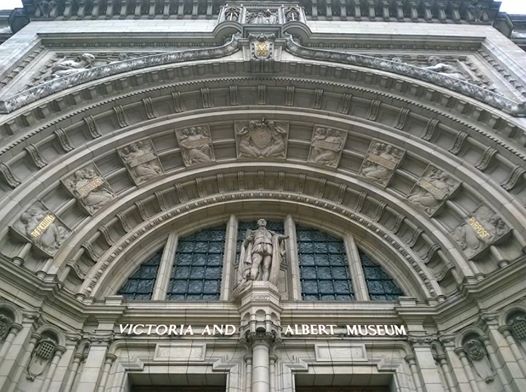
This went fairly well for a few hours. I spent some time in the V&A, admiring the sculpture and following their Shakespeare Trail, then having a picnic lunch in their courtyard while watching the children playing in the fountain and splashing their parents.

Then I felt that familiar niggle at the back of my mind. Maybe it was the presence of all this great art, reminding me that I should probably be working towards creating something of my own. Maybe it was the constant bustle that a gallery (and a city) provides, reminding me that I ought to be busy. Maybe I’m just no good at stopping and relaxing.

I left the V&A to see if the National Gallery could hold my attention for longer, but no: I’d barely been in there fifteen minutes when I started to feel restless.

The result? I spent the next two hours sitting in a coffee shop overlooking Trafalgar Square, working on my writing.

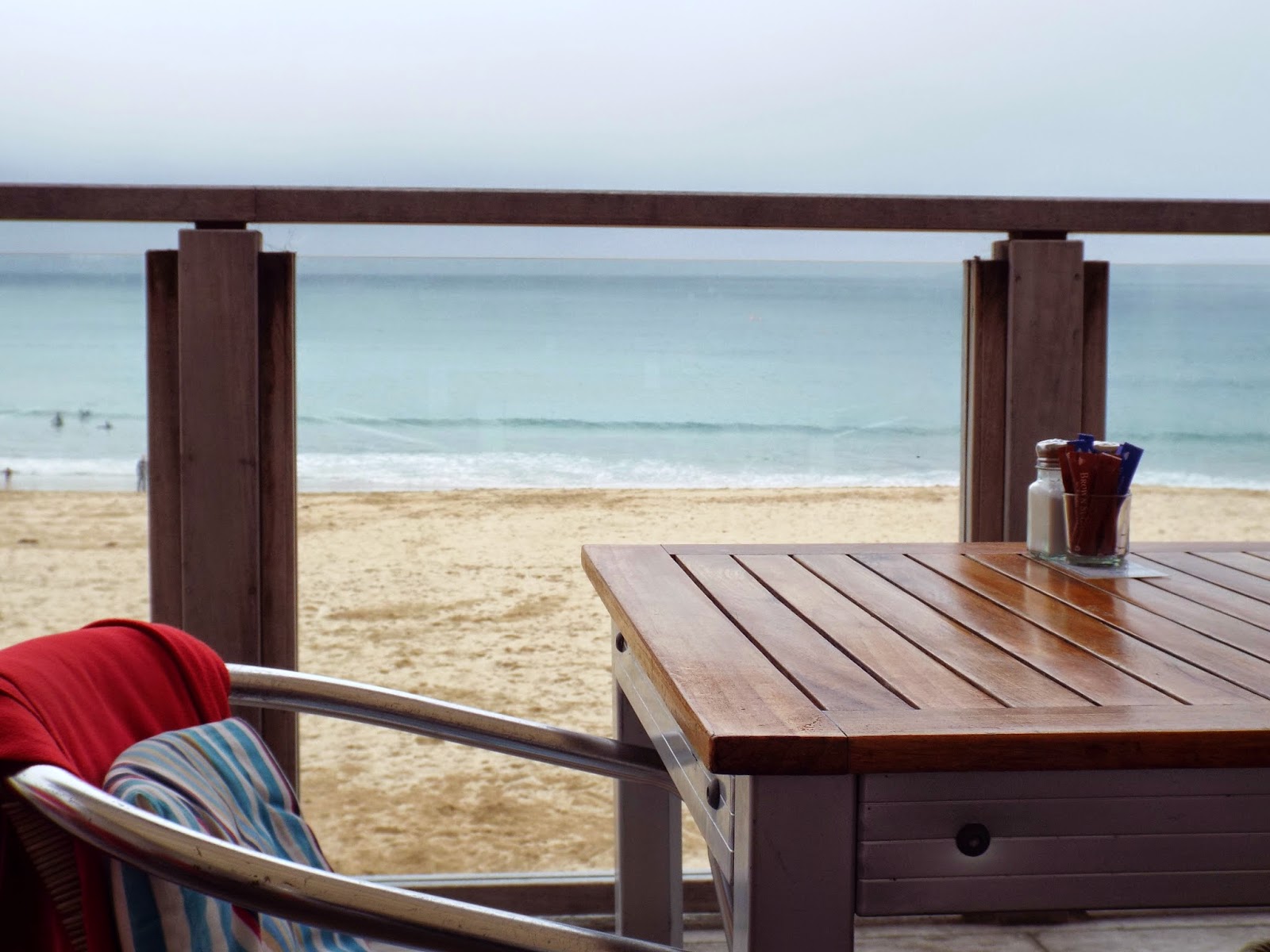
Beach Cafe, St Ives, Cornwall
~ a bit more relaxing than the cafe in Trafalgar Sq: St Ives, Cornwall ~

I’m not saying that’s necessarily a bad thing. Generally, any time I spend writing I see as time well spent. It’s definitely something I’d like to do more of.

What worried me was my absolute inability to relax. It was like an addiction: twelve hours without working and I was getting withdrawal symptoms. I couldn’t concentrate on anything, I felt restless, and the weight of my notebook in my bag was like a constant pressure on my mind. As much as I promote living a life of creativity, that can’t be healthy – can it?

Probably not, but after I’d done those couple of hours of work, I felt much calmer, and enjoyed the remainder of the weekend far more.

Let’s contrast that with a slightly more recent experience.

A couple of weeks ago, I spent about ten days working intensively and (almost) solidly on a writing project with a collaborator. We created tons of material, pretty much draining ourselves of our creativity by the end of it. That’s ok – we had a limited amount of time together and needed to get the work done before we parted ways.

But at the end of it, I forced myself to take a day off from the project. It might not seem like much, but that day allowed me to recharge my creative batteries, and get the project back in perspective.

Yes, I missed the intensive writing I’d been doing on the previous days, but actually, it felt like a bit of a relief to take a day to myself. And for me, that’s where the difference lies: do I have a burning desire to create, or not?

If that burning desire is there, then maybe the break from working can be postponed. After all, nobody wants to shut the door in the face of inspiration.

But if you’ve drained yourself of all your creativity, if you’re just bashing out words for the sake of it, then that’s the time to stop. Take a break. Go for a walk and admire the landscape, or head to a coffee shop and people watch for an hour or so. Take a day to do the housework and ignore your creative projects. Spend a long weekend in a city you’ve never explored. Relax for a week or two on a tropical beach.

The most important thing I’ve learned is to listen to myself: my body / mind / soul / whatever bit of me it is that does the creative thinking. If it’s exhausted and in desperate need of a rest, I humour it. It’ll work that much better once I start again.

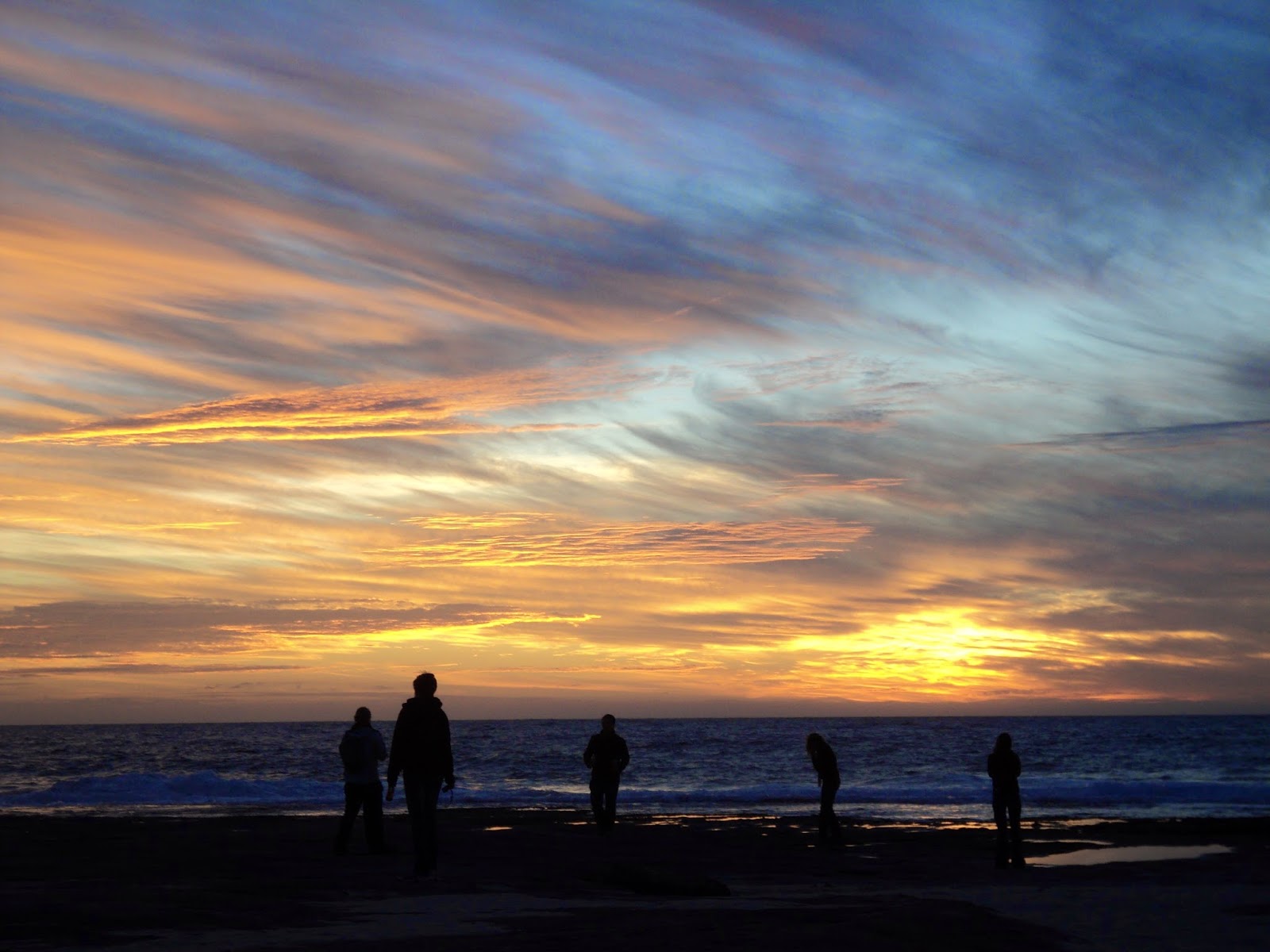
Sunset on the beach: Jake's Point, Western Australia
~ relaxing with a sunset on the beach: Jake’s Point, Western Australia ~

BUT I will be setting myself an alternative writing challenge this April.

Katie Hale, Cumbrian poet and writer

I’ve done NaPoWriMo a few times before. I’ve never completed it, but it’s always been a success.

For those who don’t know, NaPoWriMo (National Poetry Writing Month) encourages you to write thirty poems in thirty days – in other words, one poem for every day in April. I’ve never managed this, but last time I attempted the challenge (2013), I decided that this didn’t matter. I wasn’t a failure because I didn’t write thirty; instead, I was successful in writing ten poems. Had I not been doing NaPoWriMo, I probably wouldn’t have managed that.

In this way, the pressure to write that you get from attempting something like NaPoWriMo (or its novel-writing counterpart in November, NaNoWriMo) is helpful. I just find that I tend to lose heart with the project around Day 11 – not because I don’t want to write, but because there’s a pressure to keep producing completed poems every day, and quite frankly, that’s draining, especially if you’re sharing them with others.

So this year, I’m giving myself a new challenge. To alleviate some of that pressure to create perfectly formed poetry on a daily basis, I won’t be writing poems.

Every day in April, I’ll just be scribbling something down in my notebook.

It could be utter rubbish, or a few minutes’ freewriting which makes absolutely no sense. It could be the nugget of an idea that I want to come back to. Or it could become a perfectly formed completed poem.

In a way, it doesn’t really matter. I’m a great believer in the importance of process over product when it comes to art and creativity, and this is wholly about process. It’s a month where I’ll be forcing myself to scribble, to play with words, and to experiment, with no pressure to turn those scribbles into anything other than illegible squiggles for my eyes only.

And you know what? I can’t wait.

About a year ago, I discovered the work of Nina Katchadourian.

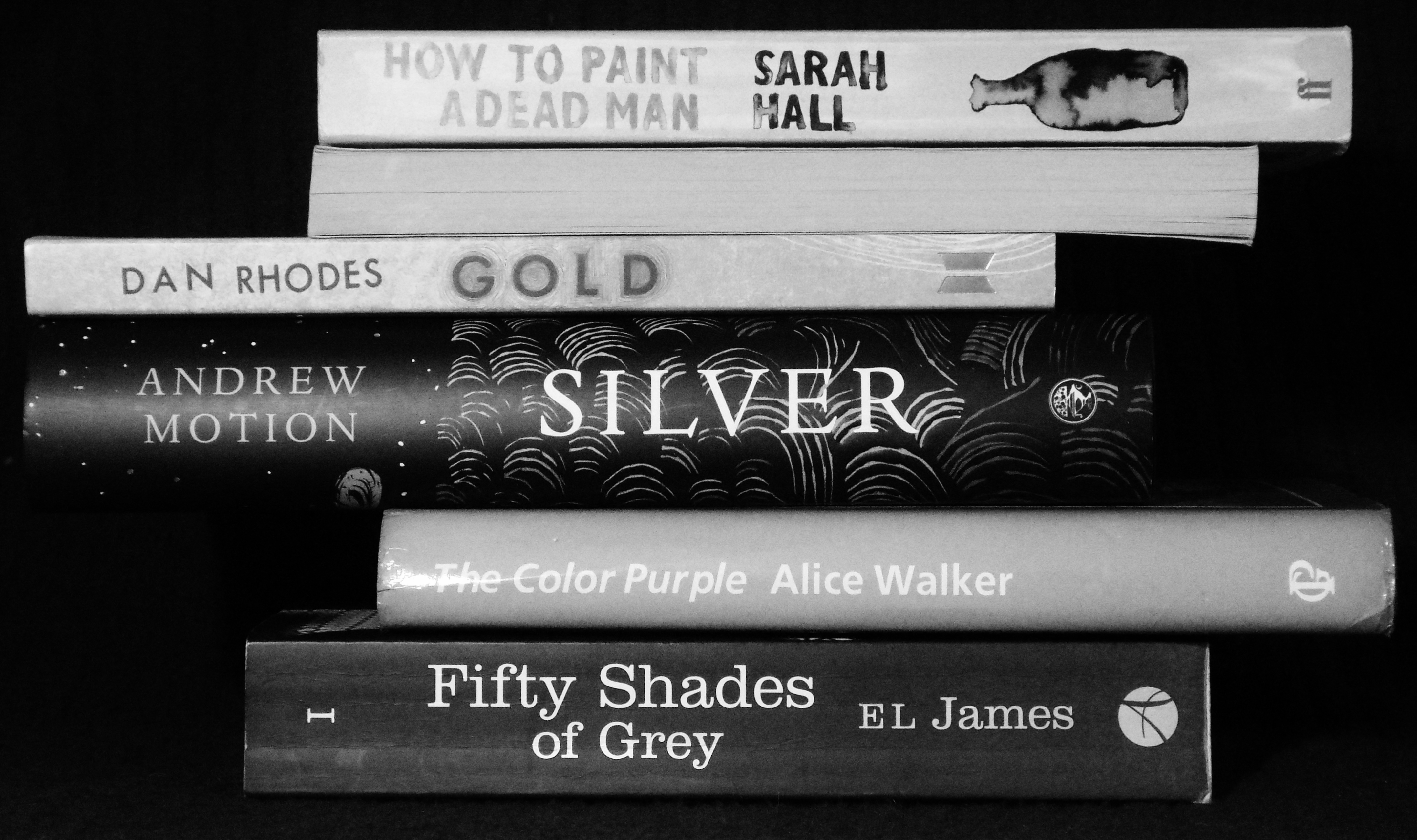
Katchadourian is a Californian artist, who has a series of ‘stacks’ or ‘spine poems’. In these works, she arranges books (usually in stacks, but occasionally side by side) so that the titles create poems.

I thought I would have a go at some of my own ‘spine poetry’, just using the books on my shelves:

*

Spine poetry by Katie Hale, inspired by Nina Katchadourian

The Alchemist on Poetry:

The making of a poem
out of danger;
mining for the light
out of the blue
day.

*

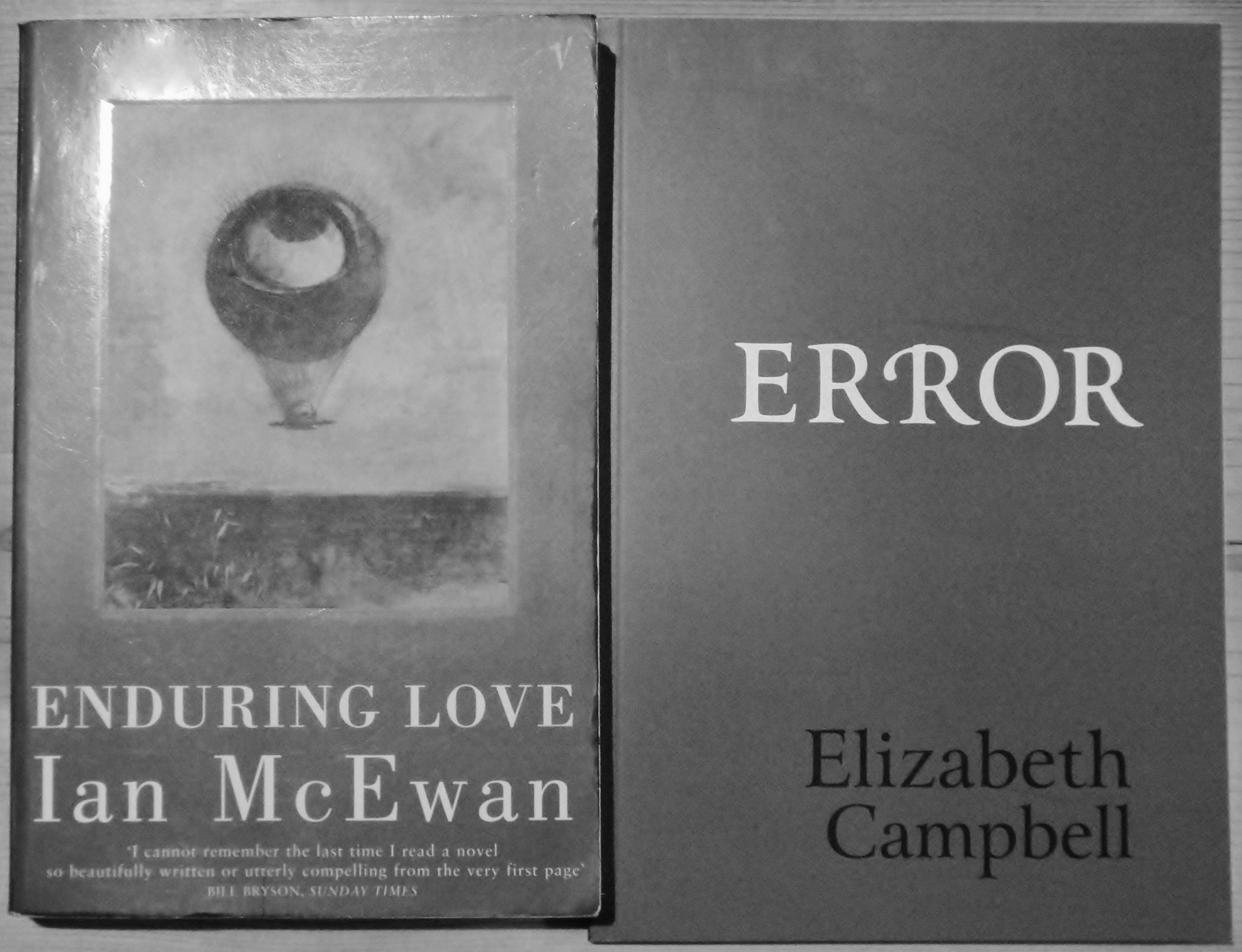
Spine poetry by Katie Hale, inspired by Nina Katchadourian

Enduring Love:

Error.

*

Spine poetry by Katie Hale, inspired by Nina Katchadourian

Frankenstein:

The lovely bones;
heaven eyes;
portrait in skin:

regeneration;

talk of the town.

*

Spine poetry by Katie Hale, inspired by Nina Katchadourian

My Brilliant Career:

The accidental
strong words…

…Goodbye to all that.

*

Spine poetry by Katie Hale, inspired by Nina Katchadourian

How to Paint a Dead Man:

Gold.
Silver.
The colour purple.
Fifty shades of grey.

*

I’ve talked about my job project managing New Writing Cumbria here before.

One of the great things about it is getting to organise (and attend) events like this one, held on Valentines Day: n evening of music and spoken word, featuring Lady Layton, Les Malheureux, and a quiz. Plus, what Valentines night would be complete without a bar, a few love letters, and the chance to burn the name of your ex?

Just a few shots from the evening:

New Writing Cumbria online magazine: The Carrot

At the moment, I have a number of jobs, but one thing that I love about all of them is helping to create interesting artworks. Whether I’m helping teenagers explore the possibility that they can write poetry, or helping facilitate theatre tours and exhibitions at Prism Arts, or working on my own writing, it’s always exciting to see the seed of an idea come to fruition.

Through my job as New Writing Cumbria, I’ve been working with a group of young writers and editors to produce an online magazine of new Cumbrian writing. And I’m delighted to say that Issue #1 has now been published.

For the first issue, we chose the theme ‘Cumbria-land’. We invited anybody from or living in Cumbria to submit work on the theme – but there was also a bit of a twist. While we did want some of the more traditional types of writing (poetry / fiction / script etc.), we also wanted to explore some of the extra options that creating an online magazine provided.

So we actively encouraged people to submit something a little bit different: film / audio / visual art / crosswords / recipes / jokes…

Admittedly, we didn’t receive any crosswords, recipes or jokes (next time, please?) but we did receive a number of visual and audio pieces, as well as some video. We also used visual art from some of the 2014 Young C-Artists.

The idea was to create something that was fun and vibrant: something that didn’t look like a traditional magazine. And I have to say, I think we succeeded.

We had some excellent submissions, from a large number of writers / artists, and working with the young editors was fantastic. It was great to see them getting so passionate in their discussions over which pieces should be included, and it’s moments like that which remind me just why I love doing the jobs I do.

So don’t be shy: head on over to The Carrot and have a read / watch / listen!

When you look around an audience and see a fairy, a man in a top hat and nightshirt, and several pirates, you know you’re in for a good night.

Wendy, John and Michael Darling in Theatre by the Lake's Christmas production of Peter Pan
Isabella Marshall, Meilir Rhys WIlliams & Matthew Coulton: photo by Keith Pattison.

Any theatre that puts on a production of J. M. Barrie’s Peter Pan is starting from a good place – especially when press night is also fancy dress night. It’s a fantastic story, and has a witty, entertaining, timeless script. But the script also presents challenges, the main one of which is of course flying.

To simultaneously fly four actors above the (comparatively small) stage in Theatre by the Lake’s Main House was ambitious, both for the technical staff operating the flight rigging, and for the actors who had to avoid hitting the set or each other. Luke Jerdy as Peter did a particularly exceptional job of making flight look easy and natural.

There were a couple of mishaps with the flight equipment (a couple of tangled wires, and a bump against the wall), but overall the ambition paid off. Against the backdrop of Martin Johns’ beautiful set, and enhanced by his vibrant costumes, flight certainly added to the magical feel of the show.

The cast brought Barrie’s wonderful characters to life: from Isabella Marshall’s sensible and caring Wendy Darling, to Peter Macqueen’s cunning and somewhat misunderstood Captain Hook. Meilir Rhys Williams as Michael, the youngest, was a delight to watch, captivating the audience with his childish mannerisms and charm.

However, it was the Young Chorus who really stole the show. From jellyfish, to mermaids, to the Lost Boys, the younger members of the cast brought their own magic to the performance. They all held their own alongside the professional actors – particularly the Lost Boys, who were challenged with carrying large amounts of the story, and who rose to the challenge magnificently.

Despite the challenges posed by the script, Ian Forrest and Mary Papadima created a feel-good production of Peter Pan, which was rounded off by cheers and whooping from a very appreciative audience.

Last year, after Swallows and Amazons, I came out of the Theatre by the Lake smiling. This year I came out grinning.

One day a week (plus a bit extra), I run New Writing Cumbria for Eden Arts. We do a number of things, btu one thing we’ve just started is putting on events at Penrith Old Fire Station. The first one went down a storm!

The evening featured poet Kareem Parkins-Brown, musicians Kev Kendal and Bill Lloyd, writer Stephen Redman, and filmmaker Richie Johnston. Oh, and a bar inside a horse box, naturally.

Here are a couple of shots from the night:

~ Katie Hayes (Anna), Liam Smith (Deeley), Rebecca Todd (Kate): Photo by Keith Pattison ~

There are plays that make you laugh. There are plays that make you cry. Then there are plays that make you think for days after the curtain call has ended and the lights have gone up. Mary Papadima’s production of Harold Pinter’s Old Times is definitely one of these.

The play appears to start ordinarily enough: a couple, Kate (Rebecca Todd) and Deeley (Liam Smith), anticipating the arrival of Kate’s old friend Anna (Katie Hayes). However, because this is Pinter, all is not as it seems. The surreal curves of the set, reminiscent of a Dali painting, hint at the distorted reality that follows, as Deeley and Anna engage in a power struggle over their claims to Kate. As versions of the past surface, the possibilities voiced (and not voiced) by the characters make the Pinteresque silences spine-tingling – particularly in the intimacy of the Theatre by the Lake’s small studio theatre.

It was this intimate space that helped to produce the play’s intense, claustrophobic atmosphere. However, it was the fearsome, electric, and sometimes sensual onstage chemistry between the actors that really created, sustained and then heightened the tension.

From Hayes’ Anna, confidence in her own sensuality, to Smith’s Deeley, too full of assurances of his role as alpha male, to Todd’s Kate, often voiceless in her position trapped between the two – each of the three elusive roles was executed with a sensitivity and realism that left the audience unsure whose side to take in the unfolding battle for a kind of dominance.

Put all of this against the backdrop of Sanne Noppen’s soundscape of dripping water, rumbles, and low unspecified noises, and the tension and uncertainty in the theatre simmered almost to boiling point.

In a play where memories differ and realities are constantly shifting, and the truth of nothing is guaranteed, it is easy to forget that these are actors, and that we as the audience have unwittingly become a part of the layered and manufactured realities that make up the fabric of the play. It is the sort of production that leaves you reeling.

[Theatre by the Lake: Keswick]

The Comedy of Errors has a quite frankly ridiculous plot, even by Shakespearean standards, about the mistaken identities of two sets of twins separated at birth. If Ben Travers’ Rookery Nook (also showing in Theatre by the Lake’s main house this season) is an outrageous farce, then Shakespeare’s shortest play outstrips it in its barely controlled madness – which is exactly what makes it such good fun to watch. 

Comedy of Errors 2

Fortunately, Ian Forrest’s production of The Comedy of Errors did not try to dial down or intellectualise the humour of Shakespeare’s text. Instead, the vibrant chaos of Martin Johns’ set enhanced the chaotic plot as the characters chased each other around the stage in a manner that would have made Ben Travers proud.

Henry Devas as Antipholus of Ephesus and Bryn Holding as Antipholus of Syracuse mirrored each other perfectly in their confusion and bewilderment as the play developed, without losing their individuality as separate characters, while James Duke and Chris Hannon as the two Dromios provided the production with well timed and executed (if occasionally slightly overdone) slapstick humour.

The two main women in the play provided another expert pairing, as the sisters Adriana (Cate Cammack) and Luciana (Jennifer English). However, unlike the similarities between the two sets of twins, these two seemed to delight in their contrast, with English’s calm and reasoned demeanour providing the perfect foil for Cammack’s comic hysteria.

But it was two of the smaller parts that really stole the show. Matthew Vaughan’s superb comic timing was unsurpassed, both as the goldsmith, but especially as Dr Pinch, the hysterical and slightly suspect physician, who attempts to perform an exorcism on the bewildered Antipholus of Ephesus.

The other special mention has to go to Peter Rylands, whose silent comic acting as a disgruntled  and unsympathetic merchant was easily as engaging as any of the speaking parts.

Overall, the production was an enjoyable one, combining slapstick and farce with the more subtle witticisms inherent in Shakespeare’s language. It was an entertaining evening out, from which we came away smiling.

Comedy of Errors 1

‘The excellence of every art must consist in the complete accomplishment of its purpose.’ – Alfred Drury

~ Writing advice from Alfred Drury: V&A, London ~

This is the quotation that soars above the entrance to the Victoria & Albert Museum in London. It is. as you would expect, rather fitting. The V&A houses thousands of items, each beautiful and noteworthy in its own way.

It’s also a philosophy I try to follow in my own practice.

I tend to write vary varied material: poetry; blog posts about travel; press releases and publicity material for my jobs. I’m even attempting to write a Mills & Boon-style romance!

But what matters to me isn’t what I’m writing – it’s how I write it. And I know that sounds slightly corny, so let me explain:

When I’m writing poetry, I focus very closely on the language I use, on the images it creates, and on the sound of the words when spoken aloud. I pay attention to meter and cadence, and think actively about rhyme. The result is usually less than a page, but that doesn’t mean it’s a quick process. Instead, it’s as though the writing process has been condensed and strengthened, like that double strength fruit cordial that you somehow always end up using too much of.

When I’m writing for my romance, however, the process is entirely different. Partly because it’s all just a bit of fun, although I do still want to do the job properly (heaving bosoms and all!). So I focus on the story: how events shape emotions, and how to get characters from A to B. I don’t focus too closely on the language: it’s more like impressionism, with broad brush strokes just intended to convey feelings, rather than meticulously engineered imagery and sound.

Totally different ways of writing, but they do have something in common: in both situations, I’m trying to achieve a purpose. Whether that purpose is the precise conveyance of an exact emotion, or the deep desires of two characters with sexual tension so thick you couldn’t slice it with an electric carving knife. What matters is achieving your goals.

‘The excellence of every art must consist in the complete accomplishment of its purpose.’

I’m not assuming my work is excellent – although that’s obviously what I strive for. And I strive for excellence by striving towards the various purposes I set out to accomplish.

Now excuse me, I have a romance to write…

~

This post originally appeared on my travel blog: Second-Hand Hedgehog.

[Theatre by the Lake, Keswick]

It isn’t often that a play can make you laugh and cry simultaneously. Alan Bennett manages it. So does Brendan Murray.

Seeing The Lights

At first, Seeing The Lights is a seemingly light and casual play about family disputes. At its heart, however, it is emotional and highly charged.

As an ill (and possibly dying) old woman prepares for her birthday, the only present she wants is for the whole family to be together to visit the Blackpool Illuminations like they used to. But one of her children is half the world away in Australia, and the two closer to home are far from united. In the confined setting of a northern terraced house, frictions intensify and old rifts widen.

The Theatre by the Lake’s programme describes the play as a comedy, which is largely accurate. However, Murray’s quirky dialogue often catches you unawares, and a surprising turn of phrase can tip the balance between comedy and heart-wrenching sadness – all the more heart-wrenching because of the intimate domesticity of director Stefan Escreet’s production in the Studio Theatre.

The two rooms that make up Anna Pilcher Dunn’s set are recognisably unremarkable, while Laura Cox’s portrayal of the central character, known only as ‘Mum’, feels like the sort of person you would probably know. In fact, the whole family dynamic at times feels uncomfortably familiar.

Terry (James Duke), the son-turned-carer, is at once universal and surprising, witty and tender. Although Seeing The Lights is very much an ensemble production, for me it was Duke’s honest acting and complex emotion towards Mum that carried the play, and it was for him that I rooted in the warzone of family life.

However, some pity also has to be felt for the children’s partners, Ray (Chris Hannon) and Nasir (Alan Suri) – both in their own way caught between two warring camps. Characters who could so easily have become passive and helpless instead provided just enough resistance to the formidable yet vulnerable Muna (Rebecca Todd), to enable the complex and shifting family dynamic that drives the entire plot.

It is also what makes Brendan Murray’s play a mirror in which we can see the fraught complexities of any family. At least, I know I can see mine.

[Theatre by the Lake, Keswick]

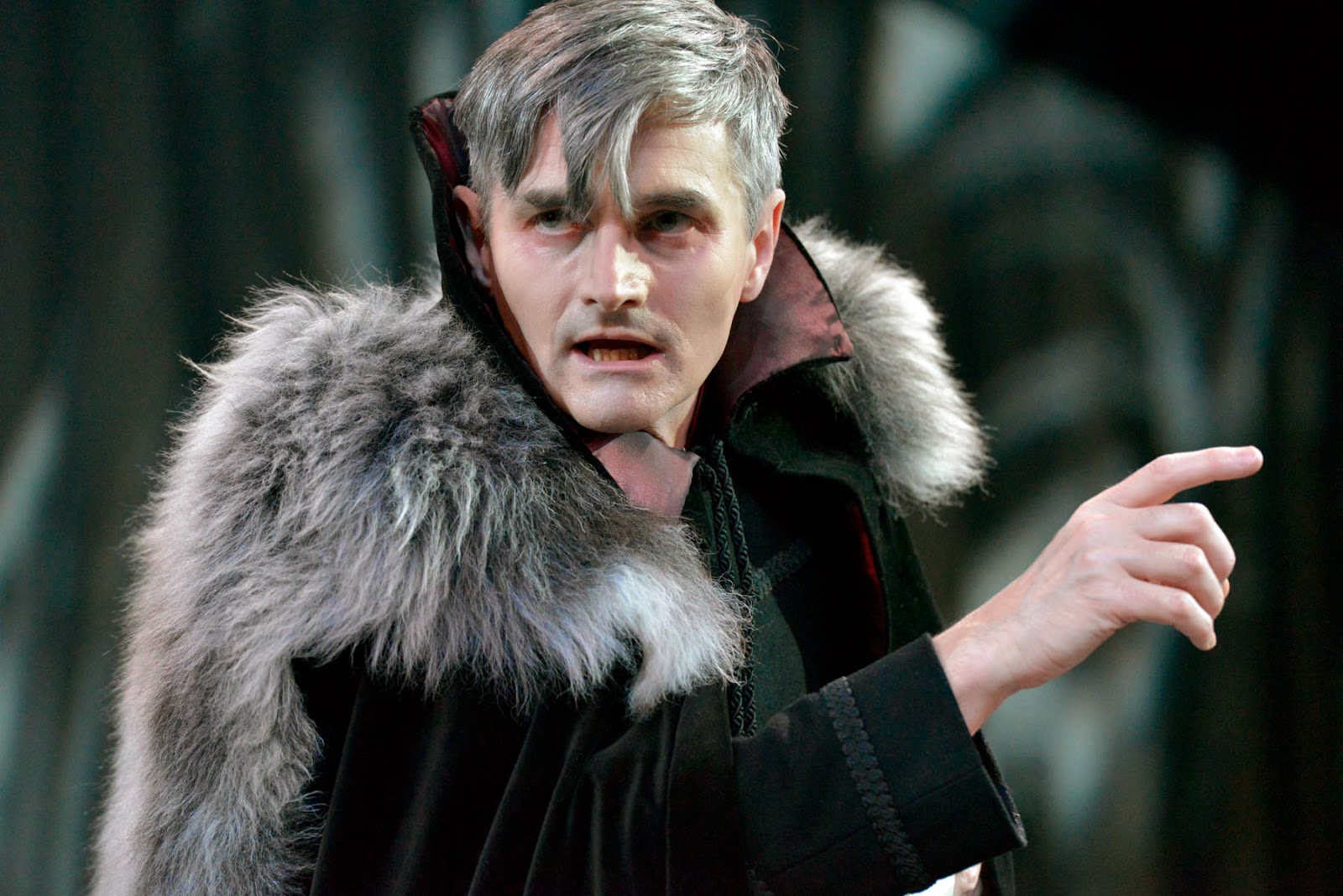
In anything written by the Scots Makar (think ‘Scottish poet laureate’), you expect a witty and surprising use of language – and Liz Lochhead’s adaptation of Bram Stoker’s Dracula does not disappoint. The script was full of humour and dramatic irony, which Mary Papadima’s production brought out in full, and brought a thoroughly modern feel to the classic tale.

~ Matthew Vaughan (Count Dracula); photo by Keith Pattison ~

Enhancing this contemporary atmosphere was the set, whose clean lines and muted colours were beautifully simple and versatile. Transitions between locations (from Whitby, to Bedlam, to Dracula’s castle  in Transylvania) were therefore both swift and entirely believable, aided by Andrew J Lindsay’s video, and Dan Steele’s superbly atmospheric music.

The play also contained some stellar individual performances. Matthew Vaughan played a formidable yet almost feline Dracula, reminiscent of Olivier’s Richard III. His manipulation of Lochhead’s dialogue was masterful, and he held the audience in thrall as easily as he did the other characters.

Opposite the vampire’s cunning intelligence, Henry Devas played Jonathan Harker as a pitiably naive young man, at times almost like a young boy caught in a trap.

The two main women also gave excellent performances, with Cate Cammack’s Mina an excellent (comparatively) rational older sister to Jennifer English’s young, wanton Lucy.

The other performance which deserves great acclaim was that of Liam Smith’s Renfield. Perfectly balancing the line between madness and reason, his adoption of the character was complete – so complete, in fact, that it took me until the curtain call to recognise him from The Winterling. His physical performance was also very impressive.

But the play was not perfect. Stoker’s novel covers hundreds of miles and a lot of plot, and the play also felt a bit too long. It was frequently a struggle to hear the dialogue, which was a shame for such an otherwise enjoyable production. However, for me the incredible individual performances outweighed these shortcomings, and still made the play a great evening out. (And, at almost three hours long, it’s certainly value for money!)

[Theatre by the Lake, Keswick]

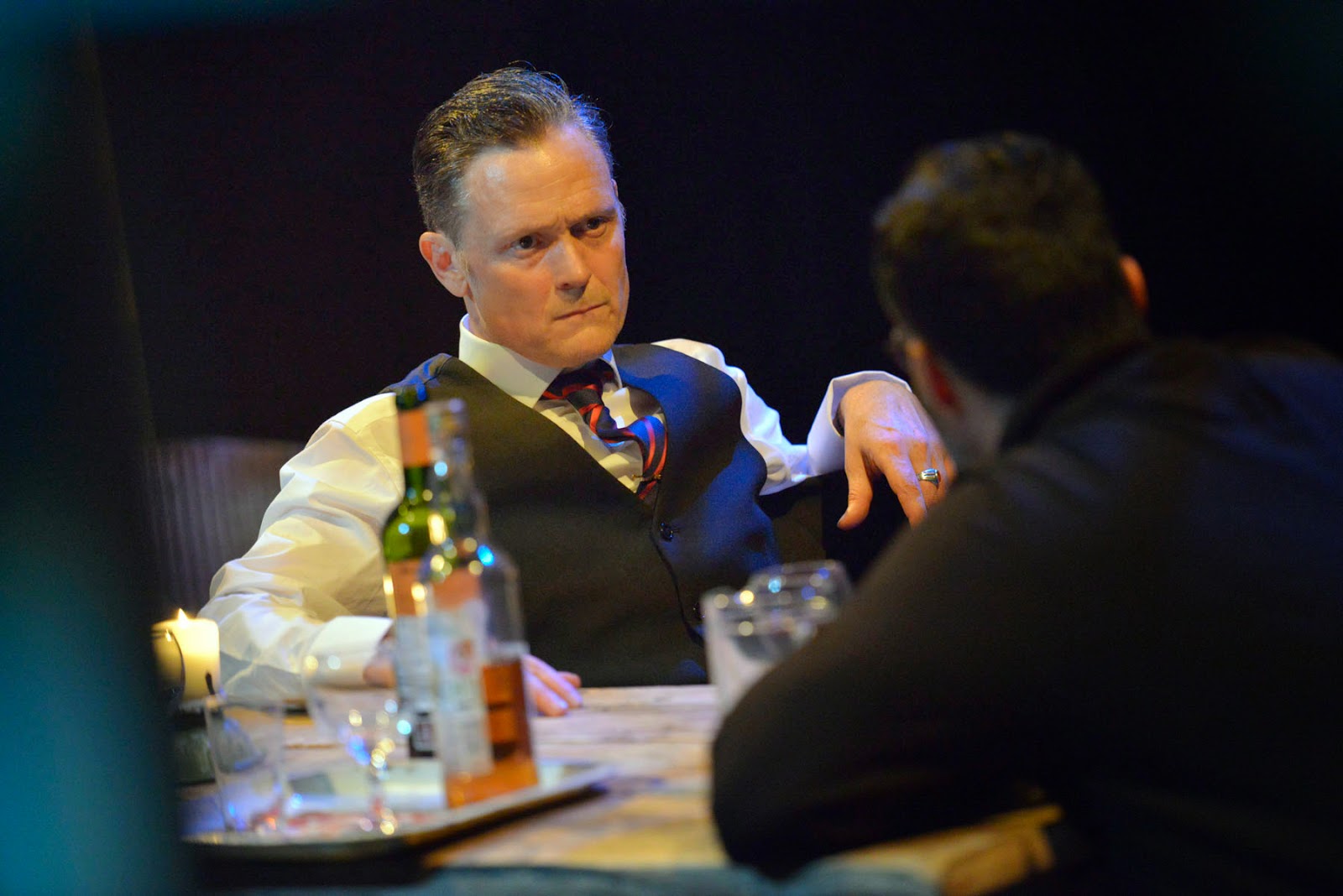
A stormy night in a candlelit house in the middle of nowhere; it sounds like the setting for a gothic horror novel. But Jez Butterworth’s The Winterling is firmly grounded in reality – even if it is a warped and troublesome reality. 

PRESS Winterling
~ Liam Smith (West) and Alan Suri (Wally); photo by Keith Pattison ~

The Winterling is a homage to Harold Pinter: throughout the play, the characters struggle for the upper hand, and Jez Pike’s production brings out the tension and fear of the unknown so typical of Pinter. The play is also darkly humorous, and Butterworth’s quirky and halting dialogue was handled superbly by all of the cast.

Particularly impressive was one exchange between West (Liam Smith) and Patsy (Henry Devas), as they quizzed one another on the history of an ancient fort. Watching the two men challenge each other’s knowledge was like watching a young stag challenge the alpha male; the tension in the theatre was palpable.

Alan Suri’s Wally formed the third side of this power triangle. Although Suri perhaps handled Butterworth’s halting dialogue least successfully, he nevertheless created an initially vulnerable yet ultimately imposing figure as he fought for his superiority within the group.

In a parallel triangle, where West, Draycott and Lue quite literally claimed their space, the tension seemed lessened. Although not without a certain hardness, Draycott (James Duke) elicited both laughter and pity, while Jennifer English’s Lue seemed so real, I wanted to reach out and help her realise the dream towards which she strives throughout the play.

However, the star role was taken by Maura Guthrie’s sound design. From the outset, Guthrie’s soundscape gave the sense of total immersion in the world and style of the play. As fighter planes roar and thunder overhead during the blackouts, the tone for the play is set: this is a vulnerable space, one where anything could happen and the characters’ destinies are not entirely within their own hands. It is a place for fear, and for the sudden impact of the unexpected.

If drama is conflict, then Theatre by the Lake’s production of The Winterling is a tense and darkly funny drama.

[Theatre by the Lake, Keswick]

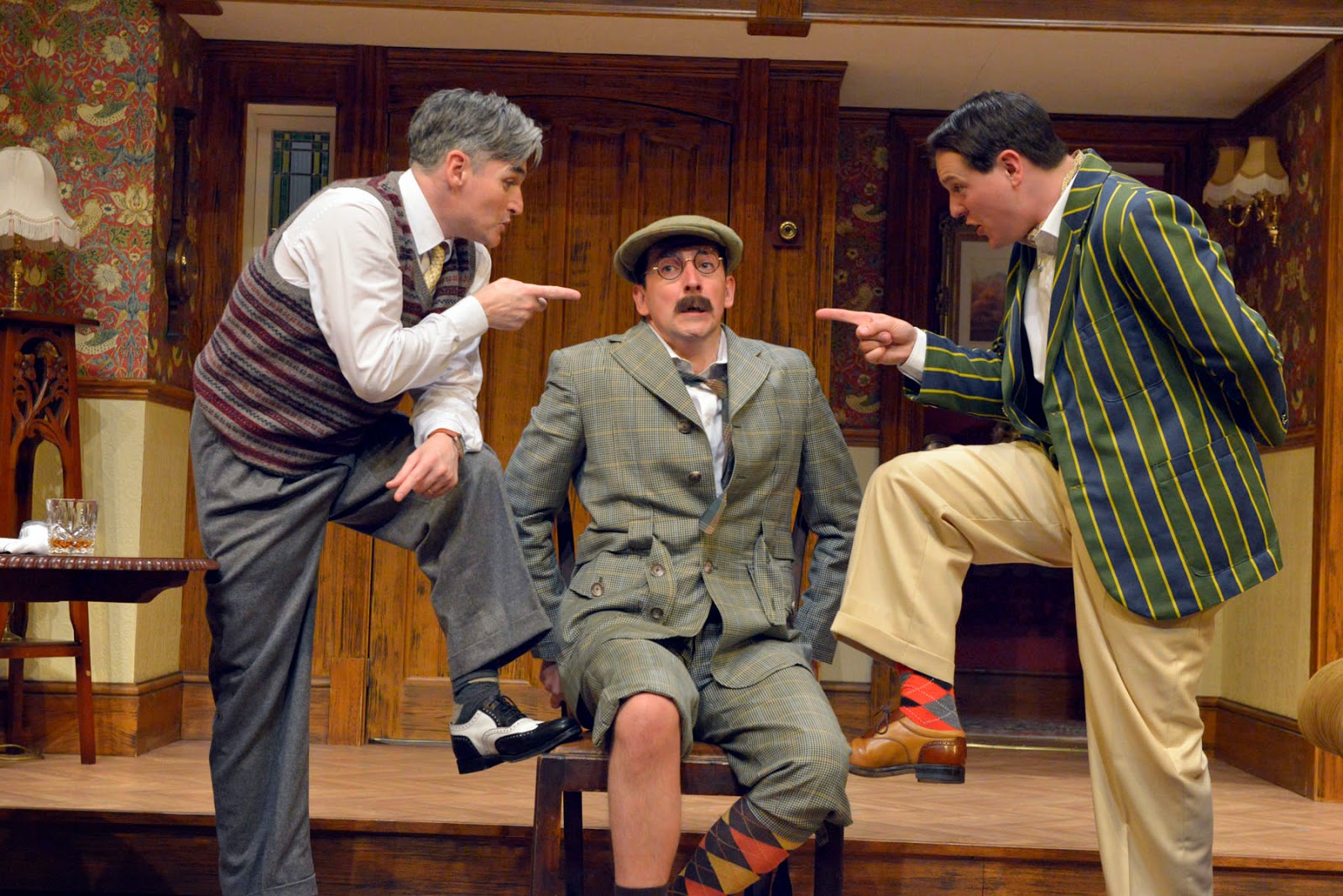
A house in the country. A pretty but distressed girl running from her angry German stepfather. A rumour-mongering woman with a downtrodden husband. A vicious cat, and two slightly hapless cousins waiting for something interesting to happen.

Let chaos ensue…

Rookery Nook
~ Matthew Vaughan, Chris Hannon & Bryn Holding: photo by Keith Pattison ~


From the moment we saw the stage, Martin Johns’ set created the tone for the rest of the play: large, respectable, and plenty of doors for hiding places and near misses.

Despite a slightly slow start, Ian Forrest’s stylised production of Ben Travers’ Rookery Nook lived up to expectations. Much of the joy in a farce comes from dramatic irony (knowing something the characters are yet to discover), and this was dealt with superbly by all of the cast.

However, and the scenes of comical violence were less convincing. At times when no action or revelation were occurring, the pacing sometimes felt baggy, as though the play was treading water until the next moment of hilarity. During those hilarious moments, though, we frequently found ourselves laughing out loud, and losing ourselves in the conceit of the play.

The central pairing of conspiratorial cousins Clive and Gerald Popkiss (Bryn Holding and Matthew Vaughan) provided a strong backbone for the play, as they sought to help beautiful ingénue Rhoda (Cate Cammack). Cammack’s initial entrance provided a breath of fresh air for the drama, and it was at this point that the first act really took off.

Chris Hannon’s physical comedy as the downtrodden Harold Twine was well maintained, as his wife (Katie Hayes) sought to unravel the mischief, helped judgmental housekeeper Mrs Leverett (Laura Cox) with her slightly questionable accent.

A special mention needs to be made for Katie Norris’ portrayal of floozy Poppy Dickey; although only on stage for a short time, she provided fun and laughter, and ‘flags for the lifeboats’ became the quote of the night!

Overall, Rookery Nook was an enjoyable evening out, and we came away smiling. Some of the dialogue could have been tighter and the action slicker, but this is something that I’m sure will improve as the performance run continues, and the production becomes the crisp, funny farce that it has the potential to be.

Poetry Installation: Lowther Castle, Cumbria

Beneath The Boughs was an installation of contemporary poetry at Lowther Castle, Cumbria, which took place over two months in summer 2013.

The installation featured work by poets from Cumbria to Singapore, and included poems hung from trees, in Victorian summer houses, and even on underwear on a laundry line! The exhibition also included an interactive area, where visitors could create their own poems, as well as work by local students from Shap Primary School and Queen Elizabeth Grammar School.

Over seven thousand people saw the exhibition, which was funded by Arts Council England.

Photography by Katie Johnston.

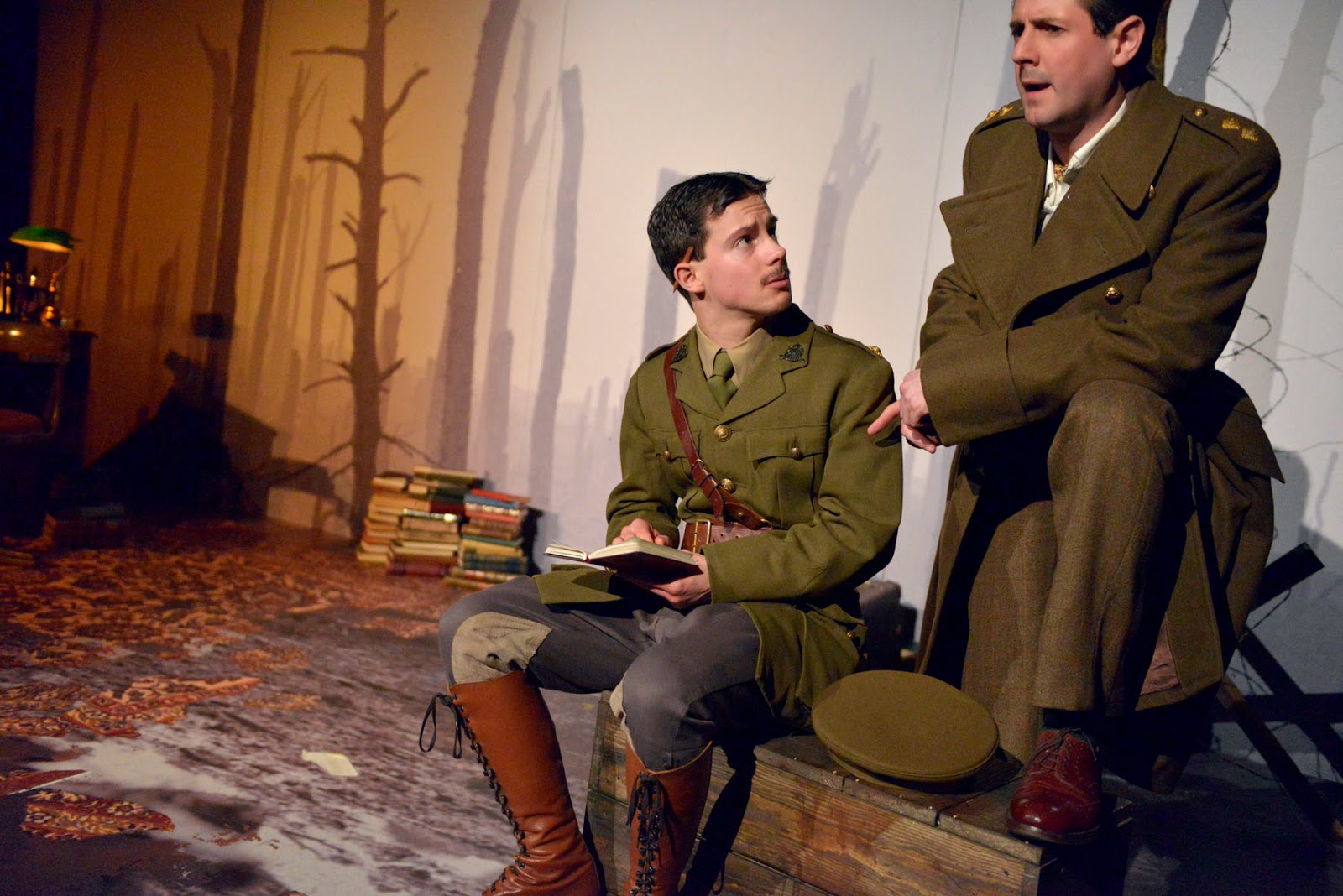
Stephen MacDonald’s Not About Heroes is a play about poetry. It is also a play about pity. It is, of course, a play about war. But above all, it is a play about the strong friendship between two men: Wilfred Owen and Siegfried Sassoon.


~ Philip Labey and Mark Addis in Not About Heroes ~

In the Theatre by the Lake’s current production, directed by Jez Pike, Owen and Sassoon are thoughtfully portrayed, not only as the great poets we recognise today, but as people, with their own fears, hopes and doubts.

Both cast members (Philip Labey as Wilfred Owen and Matt Addis as Siegfried Sassoon) portrayed this human aspect beautifully, and did a superb job of carrying the play. Their more humorous moments brought a vitality to what is essentially a very wordy play, while the inevitable tragic ending caused more than one set of tears in the audience.

As Sassoon battled against his inner turmoil, Addis’ speech at times became almost uncomfortably loud in the intimate space of the Studio Theatre, leaving Labey’s Owen like a startled deer in the brazen headlights of the older poet. Labey’s timidity during the characters’ first meeting was something any writer or creative writing student will identify with, but it was incredibly moving to watch him grow in confidence into the man that Owen was destined never to fully become.

This inevitable pathos is echoed by the simplicity of Martin Johns’ set. The backdrop of dead trees is an ever-present reminder of the war, while the carpet of Craiglockhart hospital on one side of the stage fragments into the blasted mud of the Front on the other.

There were occasions where the play shifted into an overly stylised version of itself (the opening, for example), but fortunately these moments were few and fleeting, and quickly gave way to the real meat of the production: the intimacy between the two poets.

‘The poetry is in the pity,’ reads Owen from his Preface. In Jez Pike’s production, not only poetry and pity, but drama as well, are in the chemistry between the play’s two impressive actors.

Adapting a well-loved childhood classic is always a risk, but in the case of Theatre by the Lake’s Christmas production of Arthur Ransome’s Swallows and Amazons, the risk pays off. Helen Edmundson’s script, directed by Stefan Escreet, brings the novel to life for a new generation, while not losing the magical and nostalgic feel of the book.

~ Caroline Hallam, Nadia Morgan, Rosalind Steele and Joel Sams: photo by Keith Pattison ~

There was a wonderful moment at the start of the show, when there were audible intakes of breath from the audience as the lights went down. Excitement was running high – and it carried on running high for the rest of the evening, for both children and adults alike

For me, one of the most beautiful things about this production was that it reminded me what a play fundamentally is: play. And Theatre by the Lake’s Swallows and Amazons is all about playing.

Designer Martin Johns’ revolving set comprises a huge pile of wardrobes, suitcases and chests of drawers, all of which became the island. The props were similarly created from everyday objects: a parrot from a feather duster; a baby from hot water bottles; birds from garden shears; the Swallow from an upturned table. This creation of the extraordinary from the everyday exercised my imagination, inviting me to play along with the characters. While Theatre by the Lake steers clear of pantomimes, Swallows and Amazons drew me in with a childlike conspiracy of believing, making me feel far more involved in the story than I could have done from just shouting ‘He’s behind you’.

This sense of involvement is aided by the sense of space created by Andrew Lindsay’s superb lighting, and of course by the fabulously versatile actors, who not only play out the story’s various characters, but also sing and dance to Neil Hannon’s lively, catchy songs, and accompany on various musical instruments; I’m sure I wasn’t the only one surprised when only nine people took the curtain call at the end.

All in all, I found Swallows and Amazons a fun and joyous evening out: a performance not just for children, but for the child in all of us.