After the post-publication whirlwind of June, July has slowed down a pace – which I’m hugely grateful for. It’s quite fitting that my only blog post July blog post was about writers’ productivity, and the need to take a break. True, I have been doing the odd bit of writing, but most of that has been in-situ descriptions of Cornish beaches, or jotting down thoughts, or just playing around with forms and ideas. The sort of stuff that will probably never be anything finished, but is just a sort of practice. I think of it like practising scales for a musical instrument: not a finished piece, but necessary for honing skill.
So if I haven’t been writing anything fixed, what have I been doing? What does the writing life involve when there’s no fixed writing project?
Port Eliot Festival
Although my crazy 3 weeks of post-publication book events finished at the end of June, I’m still promoting My Name is Monster, at an average of roughly one festival a month. July’s festival was the wonderful Port Eliot, in Cornwall.
As well as my own event (talking alongside Yara Rodrigues Fowler, author of Stubborn Archivist), I got to enjoy the whole weekend of fantastic literary, music & comedy events. Not to mention the most amazing mussels & chips from a stall by the river. Highlights included: Robin Ince’s impression of Brian Cox as Alan Bennett; Antosh Wojcik’s incredibly moving poetry/drum show, How To Keep Time; fellow WriteNow mentee Elizabeth Jane-Burnett talking about The Grassling; Charlotte Church’s Late Night Pop Dungeon; and hearing Patrick Gale talk about his writing process.
And then, as if that weren’t enough, I decided to stay in Cornwall for a few extra days. The idea was to soak up the sunshine and spend some time sitting on the beach reading books. In reality, there was a violent storm the first night and it poured it down the entire next day – which meant I got soaked on my walk into town, and spent most of the day eating Cornish pasties & looking round the shops & museum instead. Neither of which were bad ways to spend the day, obviously.
The second day was a bit more what I’d had in mind: a 5-mile walk along the coast, past Polridmouth Beach (the inspiration for the beach in Daphne du Maurier’s Rebecca) and along the cliff-tops; followed by an afternoon on Polkerris Beach (snoozing and people-watching as much as reading, really); and a bracing dip in the sea.
Tidelines workshops: ‘the moon’
Speaking of festivals – I’m appearing at Tidelines festival in Grange-over-Sands on 17th August, and in the run-up to this, I ran poetry workshops in two local primary schools: Grange and Cartmel. Tying in the Usborne poetry competition about the moon, and with the 50th anniversary of Apollo 11, these workshops were moon-themed. As always when I run workshops, I was bowled over by some of the things that the children came up with.
One of the exercises I gave them was to create similes & metaphors for their poems (we did this through games, and through imaginative play). Some of my stand-out favourites were:
‘the moon cold as a frog’s skin’
‘earth spinning like a lazy Susan’
Neil Armstrong’s footprint as ‘a maths lesson of parallel lines’
Some of the children will be reading their poems at Tidelines on the morning of the 17th – and I can’t wait to hear them again.
Actively not working
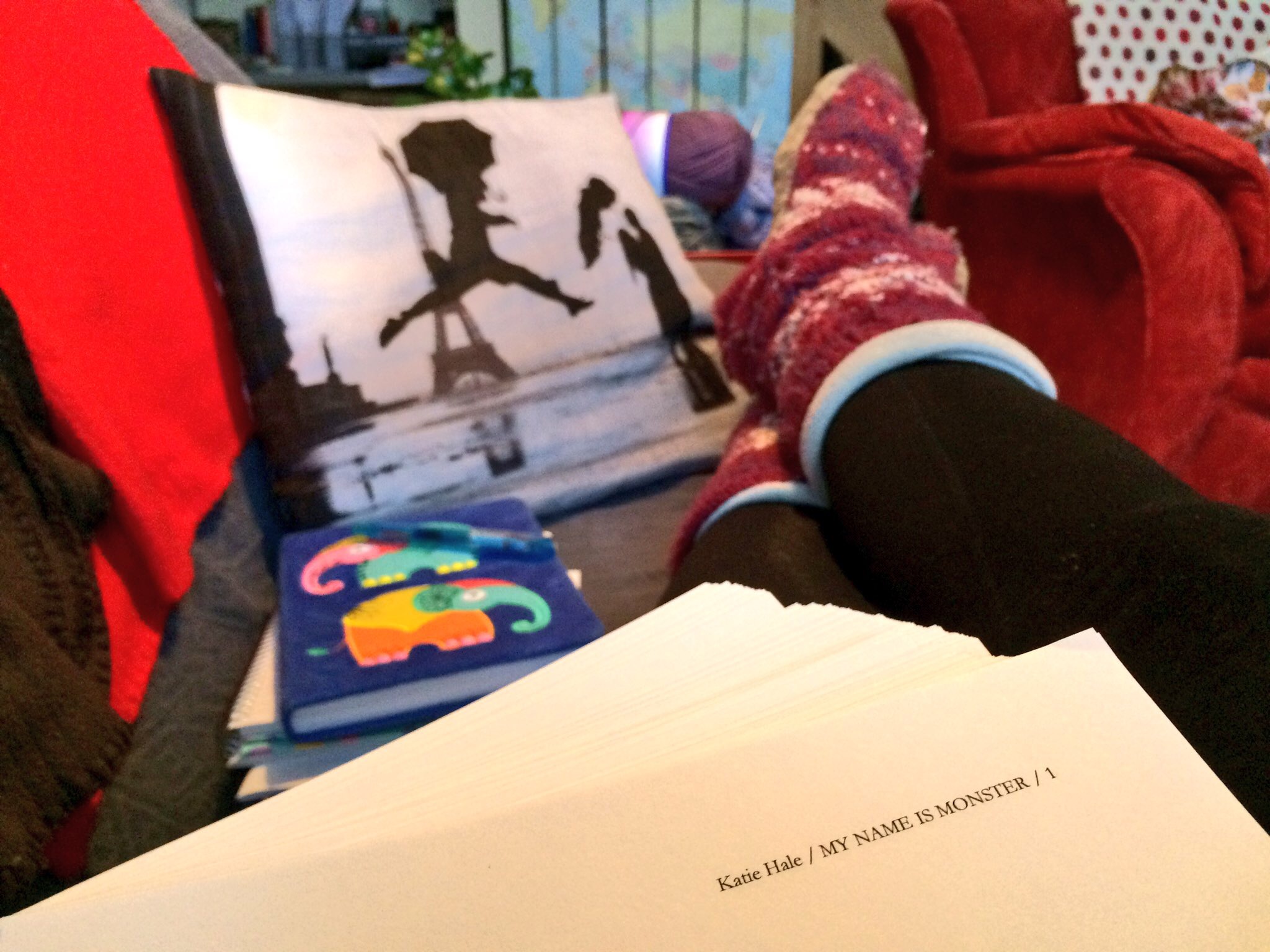
Last but not least, I’ve been actively not working. This goes back to what I was talking about in my previous post, about the need to take a break. Sometimes, the brain just needs a rest. The body, too – particularly after a period of non-stop busy-ness. And let’s be honest, the last time I actually stopped and spent long periods just sitting, and being, and doing very little, was probably sometime before Christmas.
And now?
August is still less hectic than previous months have been, but I’m shifting firmly back into productivity mode. For a start, I’ve got a whole heap of admin to get on top of. Not to mention a dangerously tall pile of books on my bedside table, waiting to be read. Then, of course, I could do with getting back into writing mode – even if it is just doing fragments / little bits of observation that never go anywhere.
And I’m appearing at two festivals in August.
The first I’ve already mentioned, which is Tidelines at Grange-over-Sands on 17th August, where I’ll be talking about My Name is Monster and doing a Q&A.
The second is Edinburgh Book Festival, where I’m doing two events:
AFTER THE APOCALYPSE: an author event, talking about My Name is Monster, on Sunday 18th August, and
OPEN BOOK WITH MARIELLA FROSTRUP: a special edition of BBC Radio 4’s Open Book, alongside Michelle Paver, William Sutcliffe & Patrice Lawrence.
You can also VOTE FOR ME for the Book Festival First Book Award!
The month in books:
As I’ve already mentioned, July has been a slow month in a number of ways – and this has included in terms of books. Only 5 of them this month: four (very) contemporary novels, alongside more of a classic from the 60s – Mary McCarthy’s The Group, which was recommended to me by Julia Armfield and which I thoroughly recommened in turn!
Remembered, by Yvonne Battle-Felton
Starve Acre, by Andrew Michael Hurley
Tentacle, by Rita Indiana
Stubborn Archivist, by Yara Rodrigues Fowler
The Group, by Mary McCarthy
Here’s to a more productive reading month in August.
I haven’t posted anything on here for a couple of weeks – so I thought now might be a good opportunity to talk about writers’ productivity, and the importance of taking a break.
We live in a capitalist society. It’s a society that’s largely focussed on production: on making things (physical or digital) that can have a monetary value. It’s a system that’s been coming under a lot of scrutiny recently, for environmental reasons.
But this isn’t a post about that. It’s about how it translates to creativity – although maybe the two aren’t all that disconnected.
WRITING: THE NEED TO BE PRODUCTIVE:
As anyone who’s written a book can tell you: you need to be productive. There are far more people with ideas for books, than there are people who’ve actually written them. Like anything, it’s about putting the work in. You need to sit down and produce the words – otherwise you’re just daydreaming, and the book will never materialise.
And let’s be honest, most books contain a lot of words. Whether you treat it as a 9-5 job, or cram the writing in to any spare moment between other parts of life, the need for productivity remains.
Think of it like farming a field. If you don’t get up early to plow and sow and reap, then the field is going to remain barren. (Actually, it’s probably going to become a wild meadow, which is great in terms of the environment, but in terms of the book analogy, doesn’t really work, because it’s all jumbled up and uncurated. It’s the equivalent of those packs of fridge magnets with words on them.)
WRITING: THE NEED TO BE UNPRODUCTIVE:
But if you’re farming a field, then you need to think about all kinds of other factors – things like weather and seasons and soil quality.
(Is this metaphor breaking down yet?)
If you keep planting the same field year on year, then you’re going to diminish the soil quality. The crop will gradually leach the nutrients from the ground, and what you’ll be left with will be an inferior ground from which to grow your crop.
In agricultural terms, I guess we’d call this soil depletion. In writing terms, we’d call it creative burnout.
In other words, if you never take a break, you run the risk of draining your creative resources and exhausting those parts of your brain, till what you produce is either thin and straggly and unnourishing, or just non-existent.
BUT A CHANGE IS AS GOOD AS A REST?
Sometimes, though, we can bypass resting altogether. I write both fiction and poetry. Sometimes, when I need a break from one, I find it helpful to switch to the other.
In my slightly crumbly metaphor, this is the same as crop rotation: switching up the fields so they’re producing different crops each year, and therefore have different demands on their soil. But even with crop rotation, there’s a fallow year sooner or later. The need to take a break is written into the land.
SO WHAT DOES TAKING A BREAK LOOK LIKE?
This can be different for each writer, and different at different stages of writing. A literal holiday is, of course, a tried and tested method. Going somewhere sunny for a couple of weeks and drinking daiquiris. But there’s also something to be said for replenishing the nutrients in the soil. Taking some time to read (and read for pleasure, not just for work); to go on walks; to do research that may or may not lead to anything; to think.
For me, at the moment, taking a break looks a lot like this. A bit of reading. A bit of soaking up the sun in the garden (whenever the sporadic summer allows). And a bit (but only a little bit) of writing.
If May felt like the eye of the storm, then June has been full-on hurricane. But, unlike most busy months, it’s mostly been busy with just one thing: the novel.
On Thursday 6th June, my debut novel, My Name is Monster, was officially released. If you weren’t aware of that, then either you’re new to this blog (in which case: welcome!) or you simply haven’t been paying attention. I’ve been talking about it a lot.
Understandably, the rest of the month has been pretty solidly dominated by that. I’ve just finished a run of talks and readings in libraries and bookshops – mostly around Cumbria, but also straying as far as Lancaster, and even to ‘that London’.
(Side note: when publishers put you up in a hotel that’s right next to a heap of excellent independent bookshops, it can be a dangerous thing…)
But the month hasn’t all been novel-related.
Tongue & Talk: The Dialect Poets
This month I also made my Radio 4 debut, with an episode of Tongue & Talk: The Dialect Poets. The programme aired on 2nd June, during the Sunday afternoon poetry slot. And, for some reason I’m still not entirely sure about – maybe becaue my parents couldn’t get the house radio working properly? – we ended up parked in my driveway and listening to it in the car.
Poet and novelist Katie Hale explores the legacy of early dialect poets in her native county of Cumbria, to discover if dialect poetry is a way of expressing local identity.
Cumbria has a long history of dialect poetry, beginning with poets like Josiah Relph, Susanna Blamire and Robert Anderson, and continuing right up to the present day. Katie finds out more about some of these historic poets and their contemporary counterparts. She also speaks to Cedric Robinson – the Queen’s Guide to the Sands of Morecambe Bay – and to farmer and writer James Rebanks, trying to understand the connection between dialect, identity and the land itself. How does the place we live in shape who we are and how we choose to express ourselves?
From a ‘writing life’ point of view, this programme is a perfect example of how one project can lead to another. In 2017, I was commissioned to write a poem for National Poetry Day, in conjunction with BBC local radio. The poem had to be about a Cumbrian dialect word: ‘twining’ (moaning / complaining). As a result, the word ‘twining’ then made it into the Oxford English Dictionary, and BBC Radio Cumbria made a video of the poem.
Because the poem was part of a national project (with 12 poets around the country writing dialect-inspired poems), it was well shared and had pretty good SEO. Which meant that when the production company, Made in Manchester, were googling ‘Cumbria dialect poetry’, my name came up.
At the other end, following the programme’s broadcast on Radio 4, the Lakeleand Dialect Society (who I interviewed as part of the programme) was celebrating its 80th birthday. And so, Radio Cumbria had a few of us on to talk about the importance of dialect – and to give the Radio 4 programme a bit of an extra push. One thing leading to another, leading to another. It often surprises me how much of my career ends up working like that. (Maybe I’ll dedicate a full post to it at some point in the future.)
Back in summer 2018, I worked with a group of former miners from Whitehaven on an oral history project, as part of Tables Turned, a three year participation project run by the National Trust and partners, which is all about bringing together community groups, young people, historians, curators and artists in projects that deepen understanding, build new partnerships and inspire creativity.
After meeting the miners and listening to them recount their experiences of working in the mines on Cumbria’s West Coast, I was commissioned by the National Trust to write a poem in response.
Earlier this year, I was commissioned to write two more poems, inspired by the work the National Trust had done with other groups: pupils from Keswick School, and members of Glenmore art group and Glenmore creative writing group. These poems were a mix of original work, and words collaged from the work and conversation of participants.
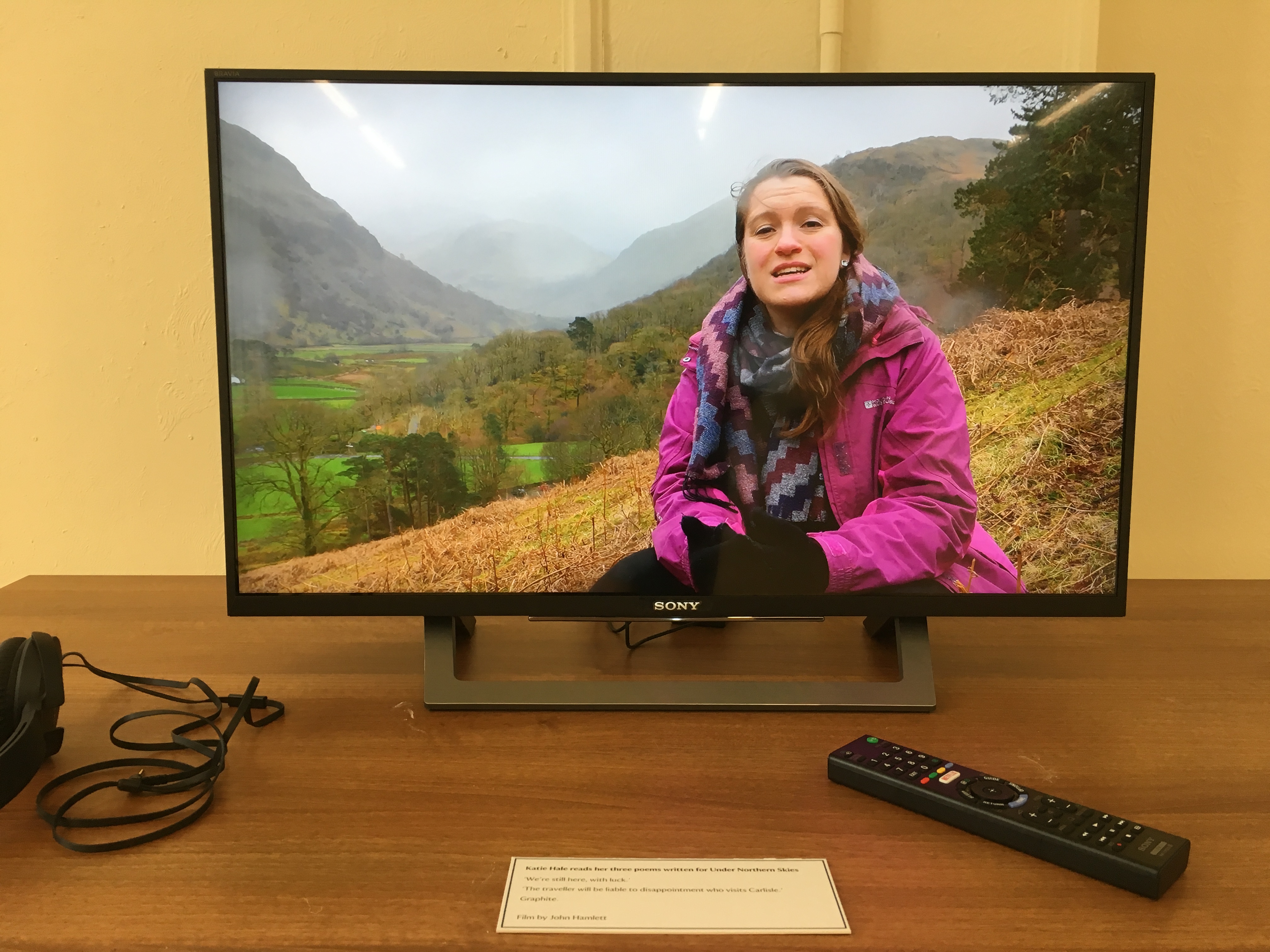
The result: three poems, each then filmed by John Hamlett, which were played as part of an exhibition alongside artwork from the groups, at Carlisle Old Fire Station.
The month in books:
This month has been a bit slower than last month in the reading department. Blame it on all that dashing about between book events! It’s also been largely fiction-based, rather than my usual attempt at balancing fiction with poetry (and a smattering of non-fiction thrown in). Still, that’s ok. I’m on a bit of a fiction bender at the moment, and I’m sure in a month or so that will flip and I’ll be devouring nothing but poetry.
‘When the world is burning, it’s easy to forget about ice…’
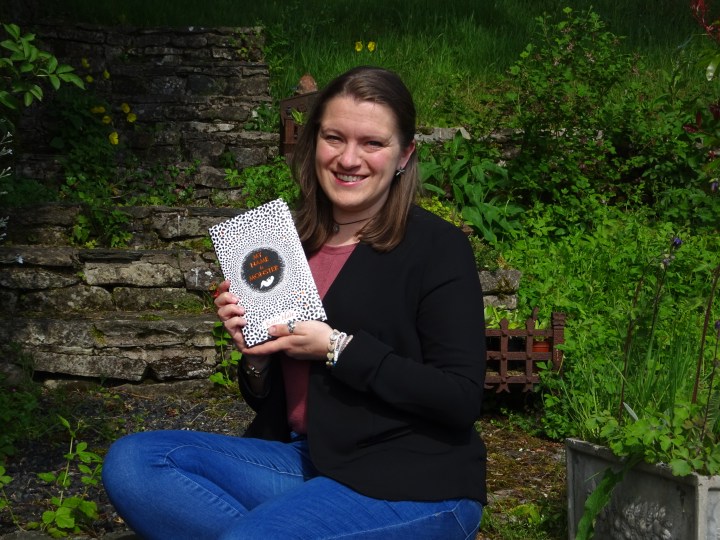
It’s here! Two and a half years after I sat down by the fire and wrote that opening sentence, not really sure whether it would ever amount to anything other than ‘that night I decided not to watch Netflix’, My Name is Monster is a real live book, for sale in regular (and irregular) bookshops.
It’s a slightly odd feeling, knowing that the book is out there in the public. It feels a little bit like going to the supermarket in your underwear – not that I’ve ever done that. It’s the knowledge that people will be reading it (hopefully) and judging it (hopefully not too harshly) and that it’s now completely beyond my control.
In a way, of course, it’s also very liberating – just as I assume it must be walking through the fruit & veg aisle in your knickers.
‘A terrific piece of writing; tough and tender and insightful. I loved it.’
– Joanne Harris, author of Chocolat
*
‘A complex, accomplished debut. The prose dazzles while the themes of feminism, power and fertility sneak in for a gut-punch. It kept me gripped from the first page, and the characters continue to live and breathe in my imagination.’
– Kirsty Logan, author of The Gracekeepers
*
‘Katie Hale has written two fascinating, flawed and compelling characters and, with only two people and an empty world, has created a novel that is gripping, insightful and unique.’
– Claire Fuller, author of Our Endless Numbered Days
*
‘A riveting and disturbing novel, part twisted fairy tale and part dystopian nightmare, in which the primal human need to find meaning and love shines through the darkness of a ruined world.’
– Mick Kitson, author of Sal
Events:
Over the coming weeks, I’ve got a number of events lined up to help promote the book, both close to home around Cumbria, and further afield – specifically London and Cornwall. If you’re near any of these, it would be lovely to see you there:
28 June: My Name is Monster book talk // Cumbria Library Services // Dalton in Furness Library, Cumbria, 10.30am
28 June: My Name is Monster book talk // Cumbria Library Services // Grange over Sands Library, Cumbria, 2.30pm
27 July: My Name is Monster book event // Port Eliot Festival // Walled Garden, 11am
Or, in case you prefer things in a visual format, here’s a handy infographic of my Cumbria events (plus one in Lancaster), created by the lovely Sam Read bookshop:
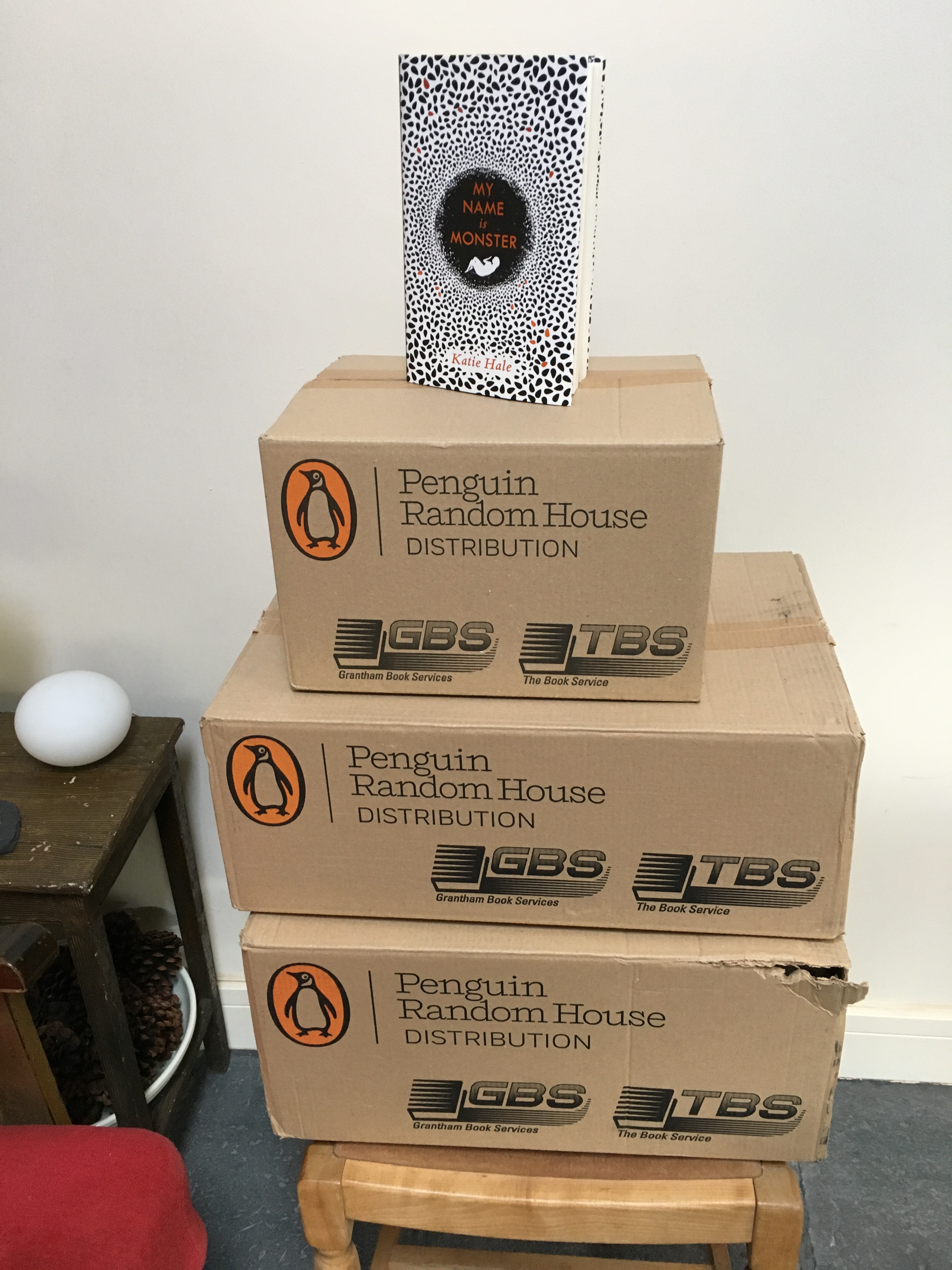
Almost from the moment my flight landed back from the US, I started gearing up towards the next big event of my writing year. If you’re a regular reader of this blog, you’ve probably already clocked that that big event is the release of my debut novel, My Name is Monster, which officially comes out on Thursday 6th June. The finished copies of the book were actually waiting for me when I got home, looking beautiful and shiny through the jetlagged haze.
Since then, it’s been largely a case of getting ready for them to be released into the world. I went up to Edinburgh and signed 135 copies of the book to be sent to independent bookshops. I’ve been writing blog posts. I’ve been talking to local press about the release, and trying to work out what I’m going to say at the launch, and which section(s) of the book I’m going to read. I’ve been talking about it a lot on social media.
Between that and catching up on 6 weeks’ worth of admin, the actual writing time has been a bit thin on the ground. That’s ok. For one thing, I managed to get a lot of writing done while I was in the States, and for another, being a writer isn’t just about writing.
A few good things:
1 – Open The Door Festival
A couple of weeks ago I attended part of the excellent Open The Door festival at Glasgow Women’s Library. What initially drew me to the festival was that my friend and all-round wonderful woman Jess Orr was involved in organising it, and was going to be interviewing Ali Smith during the event on the Saturday evening. But when I looked into it a bit more deeply, and actually googled the programme for the day, I quickly realised that enjoyment of this festival was going to go way beyond personal connection.
Unlike most festivals, which have an audience sitting and listening to what a writer / speaker has to say, then applauding politely and making their way to the bar, Open The Door operated a bit more like a conference, with a choice of interactive breakout sessions, meaning that the attendees were as much a part of the discussion and development of ideas as the writers and facilitators.
This approach led to a much friendlier sort of festival, and made it much easier for interesting conversations to spring up during the breaks.
2 – Theatre by the Lake
This month, the new trailer for the Theatre by the Lake was released, with words by yours truly. This was something I was commissioned to write several months ago, so by the time it came out it had slipped off my radar slightly. So it was a lovely surprise when the finished video popped up on facebook.
3 – Normal Life
One thing that has really been great this month has been getting back into my normal life after so many weeks away, and particularly getting back into attending my normal writing groups.
There’s something about writing groups – the combination of regular structured creative input and the support of trusted peers – that helps feed the creative process. Going back to my regular poetry group and my regular fiction group felt as much like a homecoming as it did landing at Heathrow airport. And of course, it was great to see all those familiar faces again.
Going to America was incredible, and such a boost for my writing and for the particular project I was researching. But returning to my own writing community was equally wonderful.
The month in books:
As with the writing, the reading has been slightly less this month. And, as with the writing, that’s kind of ok. The trick, I think (I hope), is not letting the lack of reading / writing become a habit. Which, given how much I’m itching to get back to both, I don’t think it will.
It’s been prose-heavy this month – something that often happens when I’m limited for time, as reading becomes more escapism at the end of a long day, rather than a habit of immersing myself in poetry first thing in the morning.
I’ve also read four books by friends this month, which always alters the feel of a month’s reading. Two of these came from the WriteNow scheme: Emma Smith-Barton’s The Million Pieces of Neena Gill, and Nels Abbey’s Think Like a White Man. The others were The Accusation, by Zosia Wand, and salt slow, by Julia Armfield. I can heartily recommend all four of these books. Each occupies a different genre (YA fiction; satirical self-help book; thriller; and literary short stories), and each is an example of blooming good writing in that genre.
salt slow is probably the best book I’ve read so far this year (although Lanny is nudging at it from a very close, and debatable, second place), so I think it’s fair to say that May has been a hugely enjoyable month when it comes to books.
The Accusation, by Zosia Wand
Why I’m No Longer Talking to White People about Race, by Reni Eddo-Lodge
The Million Pieces of Neena Gill, by Emma Smith-Barton
Scepticism Inc., by Bo Fowler
Lanny, by Max Porter
Anatomy of a Soldier, by Harry Parker
Natural Mechanical, by J O Morgan
Think Like a White Man, by Dr Boule Whytelaw III / Nels Abbey
Last weekend, I went to the Open the Door festival at Glasgow Women’s Library, where I heard (among other people) Ali Smith talking about the books and writers who had opened the door for her. It got me thinking about the writers that did that for me – both for poetry and for prose.
In poetry, I think this is slightly more complex, as a lot of the poets who have opened the poetry door for me have done it not just through their own writing, but also as individual people I’ve worked with. But what about fiction?
I’ve talked before about how Penguin Random House’s WriteNow scheme gave me the confidence to think of myself as a fiction writer in general – but what about the specific novel? What were the books that opened the door to My Name is Monster?
1 – Robinson Crusoe, by Daniel Defoe
Robinson Crusoe is probably one of the more obvious influences on the book, as in many ways My Name is Monster is a reversioning of Robinson Crusoe. It’s the story of a woman who believes she’s the last person left alive on earth – and then she finds a girl. The book echoes Crusoe’s solitude on the desert island, his quest for survival, and his subsequent finding (and enslaving) of Friday.
I’ve always had quite a complicated relationship with Robinson Crusoe, ever since I had to read it during my first year of university. On one hand, it’s a story that occupies such a prominent place in our culture. It’s amazing how many people know the story (or at least the basic elements of it), without having read the book itself.
It’s also amazing how many of those people think they’ve read the book, even when they actually haven’t. And understandably – on both counts. There are numerous retellings of the Crusoe survival story, from The Martian to Castaway to Bear Grylls, so it makes sense that we think we know it. But the book itself is actually pretty heavy going. There are a lot of pages before Friday even appears (and before the famous ‘footprint in the sand’ moment), largely narrating Crusoe’s religious transformations, or going into very great detail on the mechanics of building a shelter. Despite being a story so many of us think we know, it isn’t exactly a page-turner. At least, not until the pirates show up.
And of course, there’s also the problematic colonial aspect to the book: its positioning of Friday as the enslaved native who Crusoe proceeds to ‘civilise’; Crusoe’s ability to lay claim to the island solely by virtue of his having been washed up there; the problem of his naming of things.
These were all aspects of the book that drew me in, and that made me want to answer it in some way. My Name is Monster is in many ways a reversioning of Robinson Crusoe, but it’s also a response to some of its themes.
2 – Frankenstein, by Mary Shelley
As well as being a retelling of Robinson Crusoe, My Name is Monster is also very heavily influenced by Frankenstein.
Unlike Crusoe, I’ve loved Frankenstein ever since I read it – again during my first year of university. In some ways, the themes of the two classics are quite similar: both deal with one human’s desire to create and control another, and ways of coping with enforced isolation. Both ask who has the power to name a person or a thing.
But whereas Crusoe puts Friday in a position of subservience, Frankenstein presents two individuals with a much more complex creator / created relationship. They are really equal protagonists, and the questions this allows the book to ask are much more complex – questions that have shaped the genre of science fiction ever since, such as to what extent can a created being be considered human?
The question of how much we can truly create another conscious being is one that feeds directly into My Name is Monster – as, of course, does the name ‘Monster’.
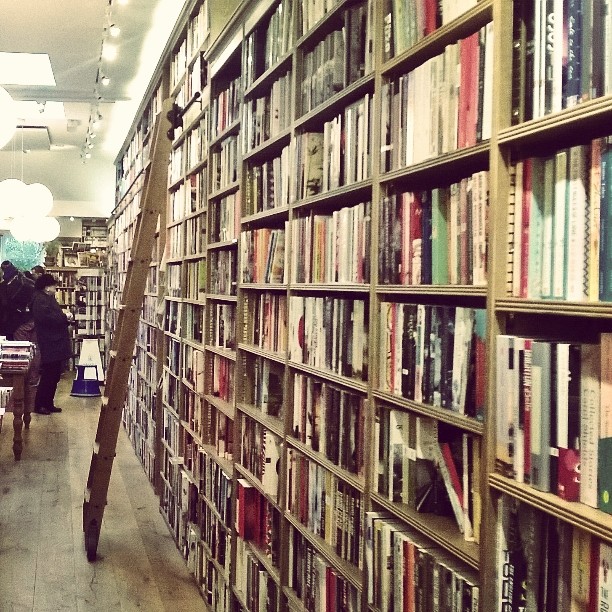
Sliding ladders in Topping’s Bookshop, St Andrews
3 – The Road, by Cormac McCarthy
Given that My Name is Monster is set in an empty world, it’s perhaps unsurprising that there’s a post-apocalyptic novel on this list. I first read The Road when I was at secondary school, and it made a huge impression on me.
What I loved about the post-apocalyptic element to the book, was that that wasn’t the story. The story was the man and the boy, and the relationship between them. The post-apocalyptic setting was just the circumstances needed to tell that relationship story. This is something that interests me: the way something huge can have happened / can be happening in the world of the book, but we remain focussed on the central characters, and on the relationship between them.
Of course, The Road is also just a beautiful written book. The prose is so precise that it feels incredibly simple. But, like most things that appear simple, it’s a demonstration of huge writing skill, and an ability to cut away all the details that don’t really matter – something that’s much harder than it sounds in something the size of a novel!
4 – The Shepherd’s Life, by James Rebanks
The most recent book on this list, The Shepherd’s Life, is only a few years old. It’s a non-fiction book about sheep farming on the Cumbrian fells. It’s a sort of love letter to the landscape I’ve grown up in, and to its agriculture.
When I first moved back to Cumbria after university, I was feeling a bit of resentment. It wasn’t that I didn’t love Cumbria (it’s beautiful, for one thing, and there’s a sense of individuals mattering here in a way that sometimes gets lost in cities) – but it was more that I felt like I ought to have gone somewhere else; this was where I started, and being back here felt like I hadn’t moved forward at all. Like a lot of people who move home / near home, I was worried I would revert to the person I was when I last lived here, aged 18.
Reading The Shepherd’s Life helped me fall in love with Cumbria again. Rebanks’ experiences of Cumbria are very different to mine; although I grew up surrounded by farms and fields and sheep, I’m not from a farming family, so I don’t have the same inter-generational relationship with the land. But the book is so connected to the physicality of the landscape that it helped me to feel connected to Cumbria again. I felt I understood the landscape in a way I’d only ever guessed at before – and that fed into the characters’ lifestyles in My Name is Monster.
5 – Oranges Are Not The Only Fruit, by Jeanette Winterson
Probably like a lot of queer people, Oranges Are Not the Only Fruit opened so many doors for me, not just in terms of fiction, but in life as well. Like The Road, I read it while I was at secondary school, and it shaped my understand of who and what could belong in a novel.
But it also influenced my understanding of character – the bold details that can make a character leap off the page, till you feel as though they’re somebody you’ve met – and of the unreliable narrator: something that was compounded when I read Winterson’s Why Be Happy When You Could Be Normal several years later.
The nods to history and fairytale and mythology in much of Winterson’s work is something that I often think about – something that also captures me in Ali Smith’s writing. I’m interested in the way in which all of this provides intertextuality, and gives the novel breadth, so that it seems to breathe beyond the confines of it’s 200-ish pages. Like in The Road, the focus remains on the character(s) at the centre of the story, but there’s so much more happening in our peripheral vision.
*
My Name is Monster is due from Canongate on 6th June 2019, and is available for pre-order from all good bookshops.
‘A woman must have money and a room of her own if she is to write fiction.’
– Virginia Woolf
I’ve recently come home from seven weeks away from my own regular writing room (read: my kitchen table). During that time, away from my normal routine and my habitual space, I’ve been thinking a lot about what I need in order to write. What are the circumstances that help me, the magical ingredients that go into the mix for creating inspiration?
During my 7 weeks away, about 2.5 of those weeks were spent actively on the road, never in one place for more than a couple of nights. Three of those weeks were spent on a residency at MacDowell Colony, and the rest was spent researching in New York Public Library. The writing circumstances across these weeks were about as varied as I could have asked for over the course of a single trip. And most of the time, I still managed to write.
Ok, so the amount that I wrote varied drastically. As you’d expect, I wrote far more during my three week residency than I did the rest of the trip – but I’m not sure this was entirely about having a room of my own (although my little cabin in the woods was undoubtedly wonderful). I think it was more to do with having the dedicated time for writing, and (that magical ingredient) headspace.
(Let me just make a caveat here: all of the time I was away was technically ‘poetry time’. Even when I wasn’t at MacDowell, I was either at a poetry festival, or in London for a poetry event, or actively dedicating research time to my current poetry project.)
So, building on all of that, what are five things I’ve come to realise about writing on the move?
1 – Writing on the move is just like writing at home
Every writer is different. Consequently, every writer’s process is also different, which means that every writer will require something different in order to feel at their most creative – whether this is nothing more than a stub of pencil and the back of an envelope, or a chaise longue and fourteen daiquiris mixed by a six-foot albino wearing a penguin suit and stilettos. (That isn’t my rider, I promise. Maybe it should be?)
The trick, I found, was to create the same circumstances for writing while I was away that I would normally create at home. For me, this is a quiet space (with plenty of natural light if possible), a notebook and a pen. It’s also about finding a time when I know I’m not going to be interrupted by anything or by anyone.
At home, I need to consciously carve out these occasions from the rest of my life. It’s all too easy to let admin and emails swamp the entire working day, then to get to the end of the week and realise I haven’t done any writing whatsoever. In order to make sure that doesn’t happen, I have to put in the effort. I have to set aside time for the writing.
On the road, it’s no different. I just have to decide that I’m going to get up an hour earlier, so I can write with a morning coffee. Or decide not to browse Twitter for the river crossing on the car ferry, but instead to use that fifteen minutes as dedicated free writing time. Or I have to set aside an hour for a coffee break, during which I work on a poem. The dedication needed is exactly the same.
2 – Writing on the move is absolutely nothing like writing at home
When I was a student, I used to write whenever I could grab a spare moment. Now, I like to lean a bit more into a routine. Ok, so maybe ‘routine’ is the wrong word, as that can vary at a moment’s notice. But I do understand the ways of putting my day together, so that I can choose the optimum time for writing.
When I’m on the moving, all that changes. I found myself aiming to write in the evenings, between dinner and bed time. Normally, this could be quite a productive time slot for me, but what I learned is that this doesn’t work if it follows on from six hours of driving, for example. This might sound obvious, but it quickly became something to factor into my planning. Instead, I ended up stopping en route for coffee towards the start of the day, so that I could write before my brain become too befuddled by all that travelling.
Instead of writing in the privacy of my own motel room, I ended up writing more in public spaces: coffee shops during the latter part of my trip, and, during the first part of the trip, New York Public Library.
Which brings me onto…
3 – Space
Unsurprisingly, the spaces I was writing in changed while I was away. In some ways this is obvious: I couldn’t write at my kitchen table because my kitchen (and the table) was a six hour flight away. So I had to think practically about what sort of space I need in order to write.
While I was at MacDowell, this obviously wasn’t a problem. In fact, it was an idyllic situation, as every day I could walk to my dedicated little cabin in the woods and write to my heart’s content, and where the only disruption to my day was when I had to get up to go outside and see if my picnic basket had been delivered yet for lunch.
But on the road, writing space needed more consideration.
What I found was that I can write in public spaces almost as easily as I can write in private spaces, given the odd caveat – such as nobody reading over my shoulder. I’m also not great with places that play music, particularly if that music has lyrics. I find myself listening to the words or the music instead of listening to myself thinking. Some sort of table (at table-height, rather than a sofa with a coffee table). Coffee helps, but is not essential. Ideally, nobody else there that I know – there’s something about anonymity in a space that helps with writing.
And that’s pretty much it. It turns out that I’m not nearly as picky about writing space as I thought I was. And it took travelling to the other side of the world for me to learn that.
(Of course, now that I’m back at home, I do still love working at my kitchen table. One of the downsides of writing in a coffee shop or a library is that you can’t really read your words aloud to yourself without getting funny looks…)
4 – Inspiration
So far, I’ve talked a bit about the limitations of writing on the move, and how I needed to adapt my writing style to the travelling lifestyle. But of course there are positive sides to it as well. The whole reason I went to the US in the first place was one of these positive sides: to research a poetry collection in the places where parts of it are set.
But travelling can also allow for unexpected inspiration. For me, that’s one of the best aspects of travelling. I’ve written multiple poems that I know would never have existed if it weren’t for travel. Which makes sense: life filters into art, and when we travel we’re more alert to life going on around us. We’re in a place, and often a culture, that we’re not entirely used to, and this makes us pay attention. And, of course, paying attention is exactly what provides quality material for writing.
I often find myself making notes while I’m travelling, so that I have something to look back on. Sometimes this takes the form of a diary. Sometimes it’s literally just a text note on my phone, with phrases and images jotted down in a long list. It sort of doesn’t matter, as long as I have something to look back on.
I rarely write complete poems when I’m travelling – although because of the specific poetry focus of this trip, I did end up writing a few complete drafts of poems while I was away this time. But more often, the travels will filter into the poems once I’m back: my experience percolating through my brain till they drip quite naturally into whatever poem is waiting to receive them.
Either way, writing or thinking about writing while on the move is a great way to inject some variety and freshness into the work.
5 – Managing your expectations
Last, but not least, I learned to be aware of my own limitations. This is probably something I need to think about in my life at home as well, but especially on the road – it’s so easy to create a plan for everything you want to write or to work on, and forget that, when you’re away, things take longer. I mean, getting from place to place always takes longer than the satnav says it will, because it doesn’t factor in stopping, or your slightly slower opposite-side-of-the-road driving pace, or getting lost. Getting fuel takes longer. Doing laundry takes longer.
As well as taking loner, all of these things take more energy, because you’re having to think about them a bit harder. Example: I went to buy shampoo, and whereas at home I would walk into the shop, pick my regular shampoo off the shelf and pay (all in the space of about three minutes), in America, I had to first work out which shop to go to, and then look at all the different brands and prices, and then work out the tax, and all the rest of it. Everything just takes that little bit more time and energy to figure out.
All of this is good in some ways, of course, as it feeds into Point 4, and that added alertness we have when we’re out of familiar territory. But what it does mean is that I had to manage my expectations as to how much I was going to write in a day. With the exception of the MacDowell residency, where I wrote way more than I expected, I generally wrote less while I was away than I would have done at home. But that’s ok. After all, it isn’t all about quantity – and the research and additional stimulation enabled by being abroad was, without a doubt, priceless.
April is by far from being the cruellest month. Sorry, T S Eliot, but this past month has been an absolute dream for me. From the tail-end of a research week at New York Public Library, to a three-week MacDowell Fellowship in New Hampshire, to just over a week travelling around Virginia & Kentucky to research a poetry collection – it’s been one heck of a month.
I’m writing this sitting in the airport, waiting for my flight back to the UK. In other words, my flight back to reality. Or, to put it another way, my flight back to the present.
My trip to America has mostly been about the past. I came over here courtesy of a ‘Developing Your Creative Practice’ grant from Arts Council England, with the remit of conducting historical research to assist me with the writing of my first full-length poetry collection. Some of that writing has happened during the research time (both at New York Public Library, and on the road in Virginia & Kentucky), and of course some has happened during my residency at MacDowell.
I’ll probably write a whole other post about the Developing Your Creative Practice grant at some point – I think it deserves its own post. But for now, I just want to highlight a few of my favourite research moments:
A few good things:
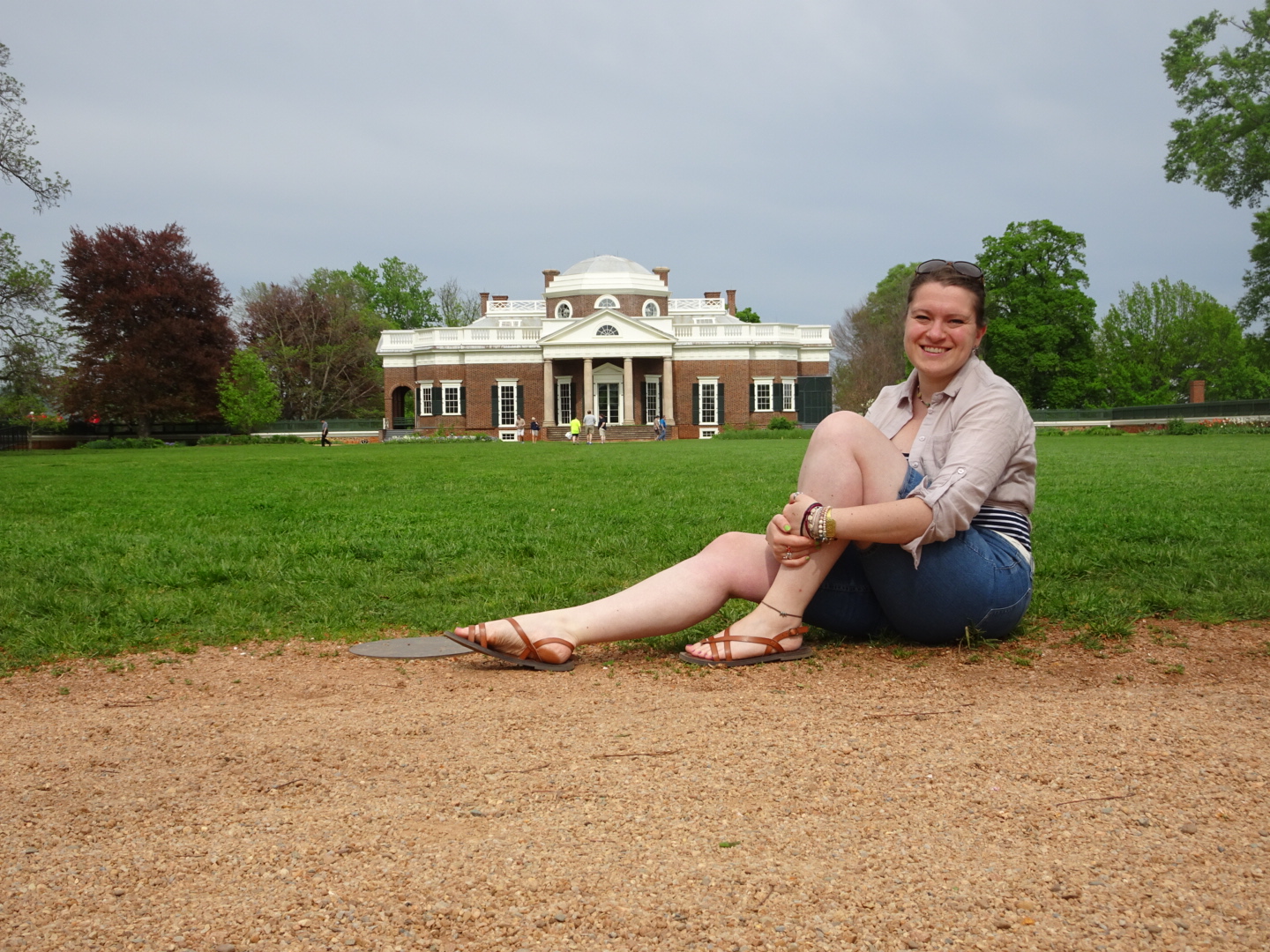
Monticello: There are a number of different tours you can do at Monticello, the historic home of Thomas Jefferson. The main tour takes you around the house and talks a bit about Jefferson’s life and achievements. This sounded interesting enough, but it wasn’t what I was there for. Instead, I took the Hemings Family Tour, which explores the life of Jefferson’s primary slave family – including Sally Hemings, with whom he had a number of children. The tour is part small-group tour, part seminar, and encourages discussion among participants – about the historical context of slavery in Virginia and across the US, and about its legacy today. For me and for my work, it opened up new ways of thinking about slavery, and about slave ownership. If you’re going to Monticello and are interested in a more in-depth and complex exploration of the site, then I highly recommend doing this tour.
Mammoth Caves National Park: A very different site, but no less intriguing, was Mammoth Caves National Park. I went because I was interested in exploring the idea of heritage as rooted in place, and caves are a physical manifestation of that idea. They’re literally history carved out through rock. What I didn’t quite expect was for the time I spent there to be this little natural oasis in the midst of all the history and driving. The scale of it, somehow, put everything in some kind of perspective. I did the Historic Tour (which involved walking about two miles underground, and A LOT of steps). I’m still working through all the ideas I bumped up against during that part of the trip (and during the trip as a whole), but even just as an experience it was definitely one of the highlights.
Genealogy research at New York Public Library: The genealogy division at New York Public Library are fantastic. Honestly, I can’t sing their praises enough for all the assistance they provided. Not to mention that the Milstein Division is just such a beautiful space to sit and work in. Again, I’m still wading through some of my findings, but the information I came across formed the backbone of some of the work I’ve been doing during my MacDowell residency.
How will all of this research filter into the poetry? Well, some of it has already, of course – I spent three weeks at MacDowell using a lot of the research I did at New York Public Library. And as for the Virginia / Kentucky research? I think I’m going to be working that into the poetry for a long time to come!
The month in books:
For once, it’s been a good month for reading. Like a lot of people, I suppose, I don’t seem to build enough reading time into my days. But this month has been different. I guess that’s what happens when you have three weeks dedicated to nothing but creativity. You make time for the things that help fuel that creative drive.
Vertigo & Ghost, by Fiona Benson
Deaf Republic, by Ilya Kaminsky
A Love Story for Bewildered Girls, by Emma Morgan
The Quick, by Jessica Traynor
We Should All Be Feminists, by Chimamanda Ngozi Adichie
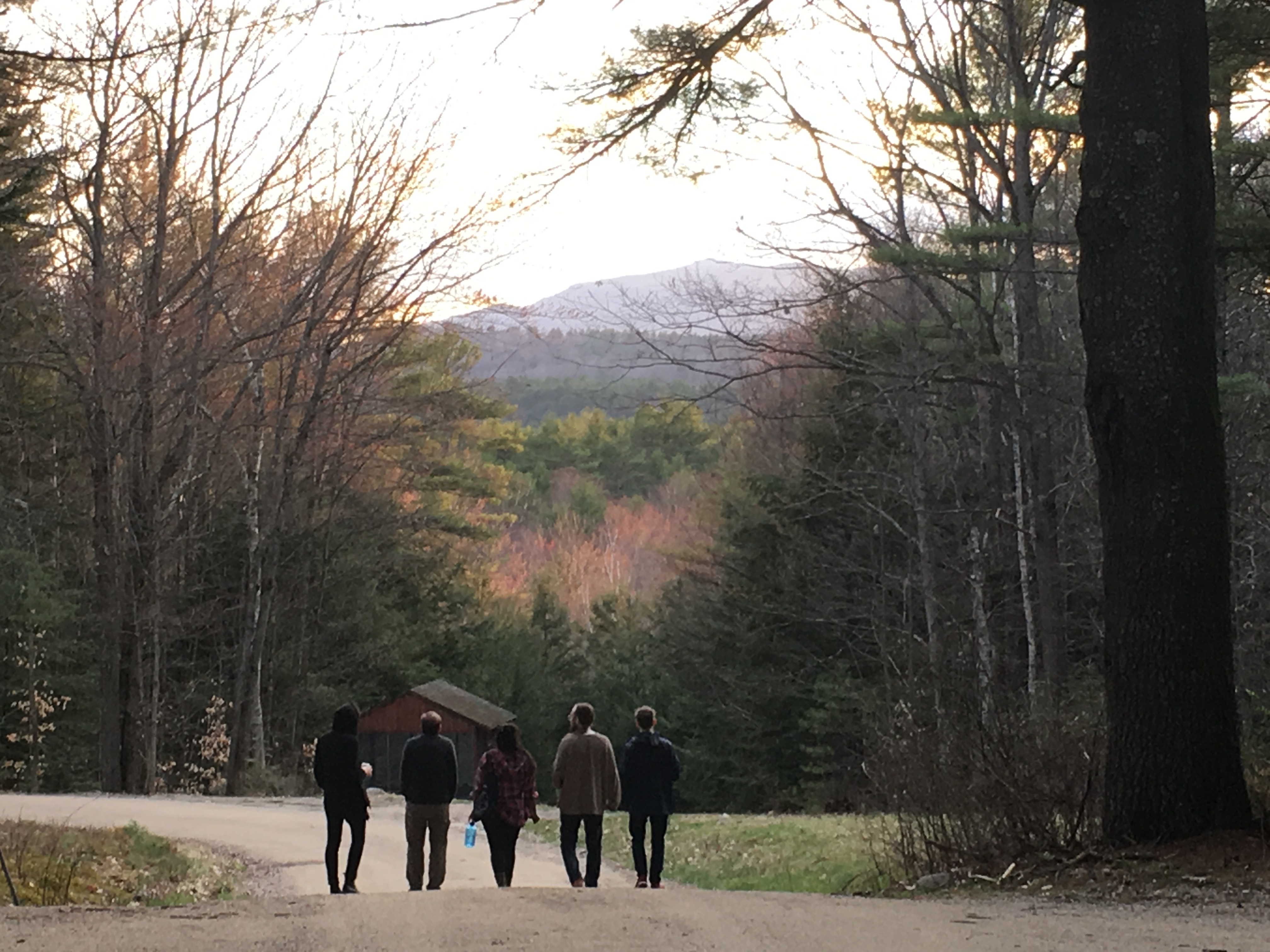
I’ve been spending a lot of time over the past few weeks working on poetry as part of my MacDowell Fellowship in New Hampshire. I’ve also been spending a lot of time sitting in the beautiful James Baldwin Library at MacDowell, looking out at the gorgeous views of meadows and forest beyond.
With both of those things in mind, I thought I’d share a poem.
‘In the yellow library where in 2004 I had my first kiss’ is a poem in my second chapbook, Assembly Instructions (Southword Press, 2019). It was written following a workshop I ran a year or so ago, at my old school: QEGS in Penrith, Cumbria. I was working with the school’s creative writing club, exploring poetry and its relationship to place. The workshop took place in the school library…
*
In the yellow library where in 2004 I had my first kiss
the students are writing poems. I say,
write in an animal. Include an insect –
make the poem crawl. End
with something that opens, give it space.
What colour is your poem? Blue, they say, or Green.
One says his poem contains a bird and birds
always make a poem purple.
What colour was that Friday afternoon
before the buses came? Some now-or-never
shade – when never was Monday and weekends
were an ocean –
and I remember his mouth was the pink
cavity of a conch, and the books were grey with dust
and undisturbed, though I swear behind their spines
they whispered. I swear they’re whispering now.
The boy’s tongue tasted of pennies and rich tea biscuits
and there was too much of it. Our kiss
was the colour of water.
‘I guess I should be writing but I can’t think what to write about…’
Sound familiar?
Sometimes, it’s true, our brains are overflowing with ideas, and the only problem is how to get them all down on paper fast enough. But as most people will know, that isn’t always the case.
A few weeks ago, I posted 5 poetry prompts designed to generate poetic material by making language work to produce itself. Which is all very well and good if the ideas are already there, but sometimes it can just be useful to have someone to give you a nudge. So in this post, instead of suggesting an idea for a poem, I’m going to do even better than that: I’m going to suggest five.
*
1 – Abstract Object
This one requires you to find an object – preferably one you find interesting in some way. It may be particularly tactile. It may be intricate and beautiful. It might be old and falling apart. It doesn’t really matter what it is, so long as it’s something you think you can use to write about. Go outside and rootle around your garden, or wander through the park till something catches your eye. If it’s raining / you don’t have a garden / it’s the weekend and the park is full of children, then find something inside your house. Pick a couple of objects, if you like, then you can decide which one to write about later.
Of course, you could just imagine the object. After all, I’m an entire internet away, and I’ll never know whether the object is actually there in front of you or not – but you’ll probably find this exercise easier if it is.
Once you have your object, spend a good few minutes exploring it. Look at the object from every angle. Think about what it feels like. Does it have a smell? Can you see the object’s history in its physical appearance at all? Does it tell a story? How do you hold it – if you hold it at all? Try to notice something about it that you wouldn’t notice at first glance. It might be useful to set yourself a timer (2 minutes? 3 minutes? 5? Whatever you feel comfortable with) and allow yourself to do nothing but focus on your object until the buzzer goes.
Now you’ve got to know your object, you can begin writing. The exercise is this:
Choose an abstract noun, and describe it as the object.
The easiest way to do this is to choose an emotion as your abstract noun. And the best way to think of the poem is in terms of metaphor. So, you might want to start your poem by saying your abstract noun is your object. E.g.
Love is a sheep skull.
Sorrow is a standard lamp.
Hatred is an acorn.
Loyalty is my grandmother’s wedding dress.
Desperation is a new biro.
Joy is a chipped plate.
Try to be as specific and physical as possible in your descriptions. Not everything will work with the abstract noun, but that’s ok – you can edit later. For now, you’re just writing. And the more physical description there is, the more rooted & grounded your poem will feel.
2 – Praise
Our second exercise is to write an ode: a poem in praise of something.
This might sound fairly ordinary – but there’s a twist. After all, it’s easy to write a poem praising sunshine, or payday, or a person you love. (And let’s face it, those poems can also get kind of sacharine.)
Instead, write a poem praising something that’s normally looked down on. Something normally seen as inferior, or best kept out of society’s gaze. Something most people might not even notice – or if they did notice, wouldn’t give much thought to.
If you’re stuck, try writing a poem in praise of one of these:
the shopping trolley in the canal
chewing gum on pavements
ugly babies
tumble dryer lint
the draught
empty beer bottles
stretch marks
peeling wallpaper
rising damp
We’re doing a number of things here. We’re treading new ground, speaking about an ordinary object in an unexpected way. We’re elevating the ordinary to the realm of the extraordinary. We’re forcing ourselves to think about something in a way that surprises us as well as the reader – a bit like the first exercise, we’re getting to know something well.
This could also be a good opportunity to practise writing in a different register, or tone. You may just want to write a descriptive poem about your subject, describing it in a positive way. But you may decide to write your poem addressing the subject, which may lead to you writing in a heightened register. Think: ‘O shopping trolley’.
*
3 – Excavating the Cliché
This is another prompt that involves looking at things unexpectedly. It’s an exercise I use in workshops quite a lot, because it can be done at any level or in a number of different styles. It’s easy to adapt to a way in which you feel comfortable writing, while also challenging you to think outside the box.
For the prompt to work, you need to start with a cliché. I know, I know. Normally we’re told to avoid them like the plague. They’re ‘dead language’ – which means that we’re so familiar with them, we’ve stopped truly seeing the images inherent within them.
Example: I cried a river.
We’re all familiar with this expression. It’s overused, to the extent that now we usually just see it as over-dramatic. What we no longer see is the inherent image of the tears flowing, so many it’s like a literal river. We know that’s what it means, but we don’t see the river in our mind’s eye. Instead we just see a person crying, potentially into a glass of wine.
So for this exercise, I would excavate that image. Mine it to its full depths, and write a poem about it. You cried a river? Ok. What kind of river? Was it a brook tinkling down the mountainside? Were there cataracts, and sheep drinking from its banks? Or was it the Ganges? Was it a slow brown ooze? Was it filled with people washing and praying? Were people cremated on the river of your tears? The richer you can be with this exercise, the better.
Looking for some clichés to get you started?
My love is deeper than the ocean.
I’m free as a bird.
My mind is a prison.
There are walls around my heart.
The wind whispered in the trees.
Her face lit up.
You are my sunshine.
We hammered out our differences.
Breaking the ice.
He threw a tantrum.
Her face fell.
Time flies.
Old as the hills.
Fit as a fiddle.
Remember, the more detailed you can make your image, the better – and the further it is from being a cliché.
4 – Use Your Senses
Ok. We know this one. If you want to write well, you have to describe things using your senses. We were probably taught this at school, when we learned to do ‘descriptive writing’. Using the senses helps to bring the reader into the world of the poem, or the story, or the memoir, or whatever it is you’re writing. It places them there. It gets their neurons firing and they imagine themselves in that place or situation. It starts to create empathy.
So if we already know all this, why am I saying it here?
Partly, I’m saying it because, even though it’s something we know we should be doing, it’s surprising how often people forget about at least two of the senses, possibly even three or four. We’re generally pretty good at describing how things look. We may also be good at describing feel, or sounds. But a lot of the time we forget about smell, and about taste.
Which is crazy, when you think about it, as there’s tonnes of research linking the olfactory senses to memory, and memory is a goldmine for poetry.
So I want you to write a poem in which you smell or taste something. It can be something pleasant, or something not so pleasant. But try to make it something specific. So not just ‘pie’, but ‘blackberry pie’ – and not just ‘blackberry pie’ but ‘the blackberry pie your sister made on the first time in her new kitchen’.
Try writing the poem in the present tense (so you’re in the moment of smelling or tasting whatever it is), but try to also link it to memory in some way. It can be a real memory or an invented one, as long as it’s something ‘past’. Something that gives the poem an expanded sense of time.
And, just as with the other exercises, try to be as detailed as possible.
*
5 – Things Behaving Badly…
…or at least unexpectedly.
For the last prompt, I want you to give yourself free reign. Embrace the childlike. Remember that this is a poem, not a piece of journalism, and things can behave however you want them to.
So if you want to write a poem where buildings get up and walk away, you can do. Or if you want to write a poem where planets are coins dropped by the gods, or where all the birds leave and are replaced by flapping books, then go for it.
Whatever it is that takes your fancy, try to pick just one thing. So for example, you wouldn’t write a poem in which the world was flat as an LP and every time it orbited the record player everyone had to jump the needle AND where people outsourced their souls to computers. You’d pick one of those ideas (or, more likely, your own much better idea) and focus on that. So you’re sticking within the rules of your own unexpected world.
And again, try to be detailed. Be specific, and ground your poem in physical description. Use those senses. That way, whatever bizarre thing is happening in your poem, it will still retain a sense of realness.
*
And that’s it! I hope you find these prompts useful for generating material. And if you get something from these prompts, but are struggling to take your initial ideas further, then feel free to mix and match these prompts with the 5 prompts on using words to generate more words. Good luck, and happy writing!
March has gone by in a whirlwind. A literal whirlwind at times, as a storm blew in at the start of the month and I had to force myself to leave the house. But also, obviously, a metaphorical whirlwind. And that’s just because there’s been so much going on.
(I’m going to keep this post deliberately personal and non-political, because I feel like crying every time I watch the news at the moment, either from anger, frustration or despair.)
In many ways, for me, it’s been a month of contrasts: from the start of the month, where I had days on end of not leaving the house, of burying myself in admin work at the kitchen table and drinking and endless supply of cups of tea; to the second half of the month, where my feet have barely touched the ground, and left me hopping from home to Manchester to Cork to London to NYC! So I guess it’s hardly surprising that I look up from my desk and suddenly it’s practically April. Not that April won’t be its own brand of exciting, to, of course…
A few good things:
The great big trip: I’ve been talking about this one for a while, but it’s finally here: the great big Poetry Trip to America! I’m currently in New York (actually, I’m currently in New Jersey because it’s much cheaper to stay just across the river rather than in Manhattan itself), where I’m researching my collection-in-progress any New York Public Library, thanks to a Developing Your Creative Practice Grant from the Arts Council. (If you haven’t applied for one yet, let this be your incentive to go for it!)
I’m nearly at the end of my week in NYC, but after that it’s up to New Hampshire (by means of an excruciatingly long Greyhound bus trip) for a three week residency at MacDowell Colony, where I’m planning to put all this research to good use by drafting plenty of poems – and keeping my fingers crossed there are a couple of OK ones among them.
And speaking of poems…
Assembly Instructions: This month, my new pamphlet, Assembly Instructions, was published by Southword Editions, as a result of its winning the Fool for Poetry Chapbook Competition. I headed over to Ireland for Cork International Poetry Festival, where the pamphlet was launched, where I read alongside Regina O’Melveny and Breda Spaight, whose Southwod pamphlets were also being launched.
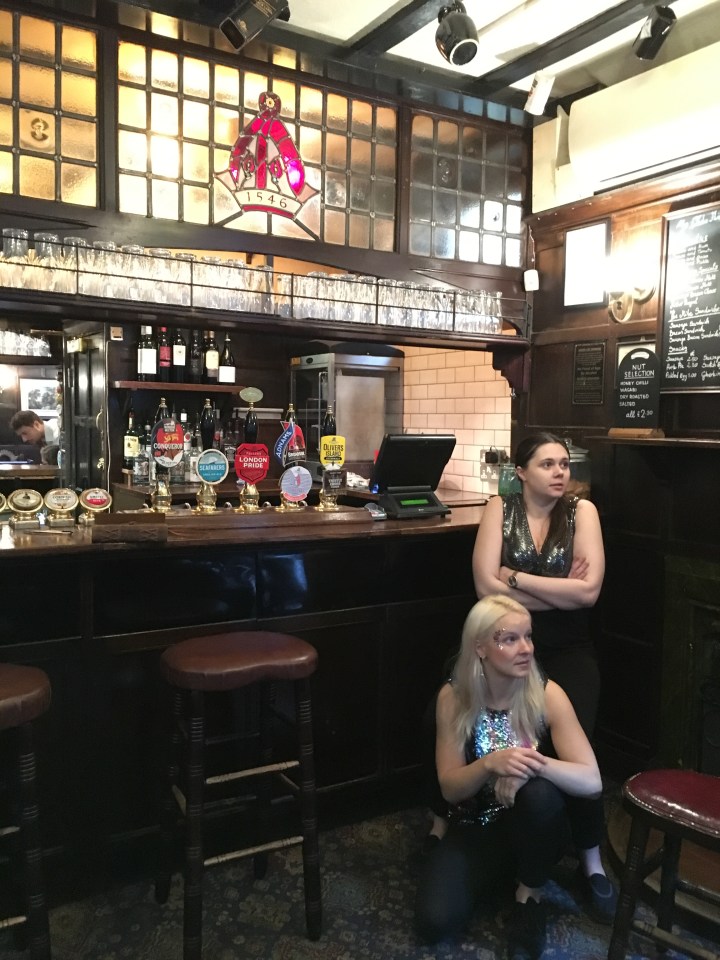
Gretna: From Ireland, I hot-footed it to London in time for the Marchland Arms season at Ye Olde Mitre: a sixteenth century pub in Holborn. There, I saw Northern: a series of three performance pieces concerned with the borderlands between England and Scotland. One of these was Gretna: a semi-dramatised version of a series of poems I’d written about Gretna Green, performed by two actors and including music from folk musician Lora Watson. It was fascinating seeing the poems being brought to life by other people, and experiencing them with the added level of such beautiful music.
School workshops: Although most of the early part of the month was taken up with pre-trip admin, I also managed to run a couple of school workshops – including one on World Book Day. I didn’t get to dress up as a book character, unfortunately (which is a shame, because I love a good excuse for fancy dress), but it was such a wonderful day, filled with some amazing poetry crated by the young people, and I came away with a bag of handmade cards and intricately folded letters which the Creative Writing Club had made to present me with on my visit.
The National Trust: I also spent a slightly soggy day being filmed reading a couple of poems for the National Trust. These were both commissions for the National Trust’s Tables Turned project, which also saw me writing a poem inspired by a workshop with a group of former miners in Whitehaven last year. Unlike the miners’ poem, however, these two new ones were both filmed outside: one in the Borrowdale valley, and the other in Carlisle overlooking the River Eden. Let’s just say I had a lot of drying out to do on the drive home.
The month in books:
It’s perhaps unsurprising that I haven’t read as much as planned this month (do I ever? Still testing myself at the new year’s resolution…), since I’ve been spending almost every spare moment trying to catch up on all the admin I didn’t do while I was Poet in Residence at the Wordsworth Trust in February, as well as trying to get ahead with all the admin that I won’t get done while I’m away in the US in March and April. So maybe it’s natural that the books have got pushed a little to one side?
But the good thing about being away, and about being here solely for the purpose of poetry, is that now I’m able to push them back into the centre a bit more. I’ve been rocking up to Bryant Park in NYC an hour or so before the library opens each morning, purely so I can spend some time reading before I start the day’s research. (Oh all right, it’s also an excuse to get coffee and pastry – but those things just go so well with books!)
The Science of Storytelling, by Will Storr
Salt on Your Tongue, by Charlotte Runcie
other gods, by Regina O’Melveny
The Untimely Death of My Mother’s Hens, by Breda Spaight
It’s a thing any writer will be familiar with: the too-thin envelope in the post, containing that single slip of photocopied paper; the email that starts ‘thank you for submitting/applying/sending’ and continues shortly after with ‘unfortunately’; or just the billowing silence until time runs out and you realise that acknowledgment is never going to come.
It happens all the time. Last week, I wrote a post about the number of rejections I received in 2018 (54, in case you’re wondering), and on how this related to other outcomes for my submissions. This week, I’m less interested in the mathematics, and more interested in the psychology of it all. After all, nobody likes to feel rejected, but if it’s going to happen a lot (which, if you’re a writer, it almost certainly is), then you need to find a way of dealing with it.
1 – Own it.
One way to cope with those pesky rejection letters is to own your own rejection. We’ve all heard stories of writers who paper their downstairs loo with rejection letters. I’ve heard that Lulu now even offers a service where they’ll print your rejection letters on toilet paper for you, so you can quite literally flush them away. Charming. Personally, I keep all of my responses from journals / magazines etc in two folders in my desk drawer: one for rejections, one for acceptances. My aim is for the acceptance folder to one day outgrow the rejection folder, but even if it doesn’t, that isn’t really the point. The main point is that the very act of filing the letter gives me (and that rejection) a sense of purpose.
NB: In a world where most rejections come in the form of emails rather than snail mail, you can either print each email out in order to file it, or create a colour-coded spreadsheet, where you can colour the squares on the table once a submission is returned to you, successful or otherwise.
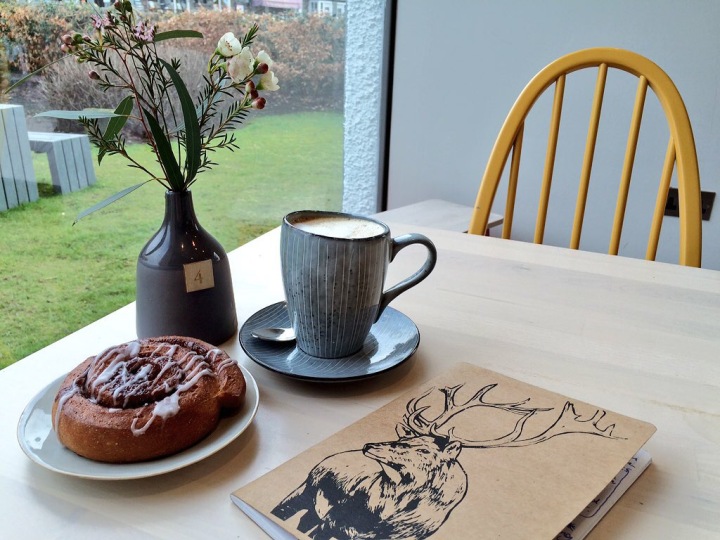
Poetry & a cuppa
2 – Reject ‘rejection’.
This thought is all about framing – along the lines of nobody beeing able to make you feel inferior without your consent (thanks, Eleanor Roosevelt). Basically, if you don’t think of it as ‘rejection’, then maybe it will hurt less. Think of it instead as fishing. You keep casting your line out, and you keep reeling it in. Sometimes there’s a wriggling fish hooked on the end, but most times it’s empty. That’s ok, though. This is just another opportunity for you to add fresh bait.
3 – Keep lots of irons in the fire.
And speaking of fresh bait… Always have multiple submissions that you’re waiting to hear back from. If you pin all your hopes on one submission, and it comes back as a no, then you’re going to be understandably devastated. If you’ve always got a number of things you’re waiting on, it’s not going to be such a big deal if one of them comes back as a no.
4 – And keep working.
If you’re going to sustain this level of sending out work, then it stands to reason that you need to keep creating work to send out. Which is a good thing, because really, the writing is the most important part. It’s why we do all this other stuff, like sending off poems to magazines and submitting funding applications. If you remember that the writing is key, and the rest is, essentially, all just guff, then whenever a rejection comes in, you can just pull back to the writing.
5 – Celebrate your successes.
It’s one thing owning your rejection, but the things you really want to own are your successes. So tell people. Be rightly proud of your achievements. This doesn’t mean you have to kick modesty to the curb, but don’t high your light under a bushel either. If you’ve achieved something, give yourself credit for it. And while you’re giving yourself credit, why not give yourself cake, or a bubble bath, or a new pen or something – some little treat to reward yourself. If you were a banker or a stock broker or something high-flying, you might get a bonus when you performed particularly well. Think of that coffee & walnut cake as your writerly equivalent of a 6-figure banker’s bonus.
*
Good luck! And whatever your coping method: keep writing, and keep putting your work out there.
It’s that time again – the time for looking back at the year gone by and wondering where the time went. Though for once, this year doesn’t feel like it’s rushed by me in a blink and a blur. For once, I can look back and think that 1st January 2018 actually feels like a full year ago. Maybe because so much has changed since then.
I’ve talked a bit about this before, how luck can suddenly change and how validation can come at the drop of a hat, but it’s such a big thing that I want to talk about it again. Because this time last year I wasn’t quite making it as a writer. Don’t get me wrong – I was pleased about how things were going. I’d had some poetry successes in 2017, had taken a show to the Edinburgh Fringe and was several drafts deep into a novel. But it wasn’t financially sustainable. The writing itself was going well, but I was struggling to pay the bills.
And then, along came June: the month that turned it all around. Within the space of a few weeks, I’d received a grant from the Arts Council and Canongate had acquired my novel. And just like that, I could afford to put the heating on. Just like that, my dream of being a completely freelance full-time writer looked financially viable.
Perhaps it shouldn’t be surprising how much of a difference money makes. After all, it’s what drives so many people to get out of bed in the morning, and what stops so many more people from getting to sleep at night. But I don’t think I’d realised quite how much that financial stability meant to me – not least because it means time when I can write, without worrying about how to buy groceries or fill the car with petrol or anything else so quotidien. Instead, I can worry about much more interesting things, like line breaks and plot and structure. Which is exactly the sort of thing I like to be worrying about.
Poetry:
In terms of poetry, 2018 has been a year for residentials, commissions and prizes.
I started the year with a poetry residential in St Ives, which was a week-long retreat at a hotel with four other lovely poets and lots and lots of scones. I then went on my first ever Arvon course in June, which was hugely inspirational, and where I wrote probably more poems than in either the 6 months before or since – before rounding off the year with 4 days at Kim Moore’s Poetry Carousel in Grange-over-Sands: 4 workshops with 4 different tutors, and once again buckets full of inspiration.
What was so lovely about each of these occasions was that they gave me time to focus on what the poetry I wanted to write, while also pushing me and my work in new directions. These opportunities were particularly helpful, because most of my other writing this year has been either fiction, or has been commission-driven.
Given that I completed my first ever commission in the second half of 2017, I’ve been pleasantly overwhelmed with the commissions I’ve had this year – which just goes to emphasise how quickly things turn around and take on a positive streak.
It started in January, with a poem for the Barbican Centre‘s Subject to Change project. The poem was called ‘Honey’, and was written in response to an incident that occured on Virgin Trains’ East Coast service at the start of the year. This commission was followed by one from Theatre by the Lake in Keswick, which is still ongoing, and another from the National Trust: as part of their three-year participation project, Tables Turned, I was asked to meet a group of former miners in Whitehaven, and to use their memories of working in the mines to write a creative response through poetry. The result was ‘We’re still here, with luck’, using comments made by the miners interspersed with my own words:
And, while we’re on the subject of history, my final commission of 2018 was from BBC Radio Cumbria to mark the centenary of the end of the First World War, in response to Carlisle’s Armistice Day celebrations 100 years ago. The lovely people at Carlisle Cathedral were then good enough to let me climb the (very very very steep) stairs to the roof of the bell tower with Radio Cumbria’s Belinda Artingstoll to film it.
I also had a commission this year to work with Kendal Poetry Festival to create a ‘guerrilla poetry‘ project – except that, being me, I sort of got a bit carried away with it, and instead of creating one guerrilla poetry project, ended up creating three. These were a River of Poems, which wound alongside the Kent from the weekend before the festival, a series of pop-up performances at the Brewery Arts Centre‘s community open day at the end of August, and a whole great sack of Festival Survival Kits, which were distributed during the festival itself. All three projects featured poems by member of Brewery Poets and members of Dove Cottage Young Poets.
And while we’re on the subject of festivals, this year I achieved a long-term goal and performed at StAnza Poetry Festival. For those who don’t know, StAnza is a lovely festival that takes place every March, and I’ve been desperate to read there ever since I was doing my MLitt at St Andrews in 2012/13. This year, I not only got to do a reading, but I also got to perform at the festival launch event (at the same event as Barbara Dickson!) and to appear on a panel at the festival finale. Huge shoutout to StAnza for the opportunities and their support!
And, completing the trilogy of festivals, this year I was also invited to run a poetry workshop at Borderlines Book Festival in Carlisle. Borderlines is another festival that I hold close to my heart, as I remember being in a meeting a few years ago when they were talking about plans for the first one, and it’s been hugely exciting to watch it grow, and to keep attending events and workshops there over the years. And even more exciting to be allowed to run one of my own!
Continuing the Cumbrian theme, 2018 also saw the publication of the much-lauded (and rightly so) anthology of contemporary Cumbrian poetry, This Place I Know, published by Handstand Press – which I am very pleased to be a part of.
As well as publication, it’s also been an amazing year for prizes! I’m putting this down to my 2018 resolution, which was to send off 100 submissions / applications during the year. I didn’t quite make the 100 (more on this in a later post), but it did mean an unusually high number of submissions, which happily meant an unusually high number of successes. These have included winning the Buzzwords Poetry Competition, coming second in the Oxford Brookes International Poetry Competition, and being shortlisted for the University of Canberra Vice Chancellor’s International Poetry Prize. As well as individual poems, I was also delighted (and very surprised) to win the Munster Literature Centre’s Fool for Poetry Chapbook Competition. As a result, my chapbook, Assembly Instructions, will be published by Southword in Spring 2019, and will be launched at Cork International Poetry Festival. I also found out just recently that I’ve been shortlisted for the Manchester Poetry Prize, which I find out the final results of at the start of February. Fingers crossed!
And rounding off an already-pretty-round year of poetry success, I want to mention the one that marked the start of it all turning around, that took me from being end-of-the-line defeatist to writer-actually-earning-a-living-from-it: the Developing Your Creative Practice grant from Arts Council England. Funding to research and write a collection of poetry, including a research trip to New York, Virginia & Kentucky, which will take place next year. Talk about exciting opportunities!
Fiction:
Last year, I drafted a novel – something that was as much of a surprise to me as it was to anyone else. As I’ve already talked about in a number of previous posts, this came about because I got a place on Penguin Random House’s WriteNow mentoring scheme. Earlier this year, my time as part of that mentoring scheme came to an end (though not before a lovely meet-up with some of my fellow WriteNow mentees at the Penguin Random House offices on The Strand in a sizzling hot day in April). There was a bit of back and forth for a few months, but over the summer I got the news: that Canongate wanted to publish my book.
As a result, My Name is Monster is coming out in June next year!
A novel about power and “the strength and the danger in a mother’s love”, My Name is Monster centres on a young woman called Monster who believes she is alone in an empty, post-apocalyptic version of Britain. Slowly, piece by piece, she begins to rebuild a life. Until, one day, she finds a girl: another survivor, feral, and ready to be taught all that Monster knows.
The proofs for the novel arrived while I was on holiday in November, and they look beautiful – there’s even some lovely shiny copper foil on the cover. But what got me most is the fact that it also smells like a book: that beautiful new-book smell that speaks of all the possibility hidden between unread pages. June is going to come around so quickly!
Other Things:
Fitting with the mix of things this year has brought, I also went back to working in an office for part of the year. For around nine months, I spent a day a week working at the Brewery Arts Centre in Kendal, doing admin in the Youth Arts department. It was so so lovely having colleagues again: people that I see and get to chat to and work with every week. That’s something I can really see myself missing next year.
I also led a series of workshops while I was there, as part of a pilot project working with young LGBTQ+ people in the Kendal area, which was really good fun. As was the young filmmakers’ class I ended up running! And no, I’m not suddenly a filmmaker. It was a self-led group of young people, and I was just there to keep them on track in a support role. The plus side is that I learned a lot about film along the way!
I’ve also run an awful lot of schools workshops this year, in both primary and secondary schools, which have been really fun – particularly the one I ran in QEGS library (which was the scene of my first kiss over a decade ago!) and the one I ran for a group of teachers from different secondary schools, where I got to push them out of their comfort zones and get them to see poetry as play. (That said, most of them didn’t actually take all that much pushing!) Alongside these, I’ve run a fair few Arts Award Discover days in schools, and was also invited to co-run a workshop at the Barbican Centre with friend & fellow-former-Barbican Young Poet Kareem Parkins-Brown.
A bit closer to home, I was a guest on Radio Cumbria’s new Arty Show a couple of months ago, which was a really fun few hours talking all things arty, listening to lots of music and interesting interviews, and eating chocolate biscuits!
What Next?
From the look of it so far, 2019 is shaping up to be an even busier year than 2018!
I have my poetry chapbook, Assembly Instructions, coming out in March, and then My Name is Monster coming out just few months later in June. So there’ll be plenty to do in preparation for both of those, and then of course readings and events around them after the launches themselves.
And speaking of events – I also have Gretna: a theatre piece created in collaboration wtih Théâtre Volière and musician Lori Watson, exploring the borderlands between England and Scotland from the perspective of the women so often written out of its history. Gretna is showing in London in March, for two performances only!
Luckily, there’ll also be plenty of time among all of this for writing, as I have three residencies and a research trip lined up for next year. The first of these is a month-long residency at the Wordsworth Trust in Grasmere. I’ll then be spending another month in Brussels at the other end of the year, with Passa Porta, in conjunction with the National Centre for Writing and the Flemish Literature Fund. And in between the two, I have three weeks at the MacDowell Colony in New Hampshire, which should provide a calm oasis of writing time in the middle of a hectic research trip to New York, Kentucky and Virginia.



















 Katie Hale