Over the past decade or so, there seems to have been a growing trend for writing in coffee shops. Whether this has been popularised by J K Rowling’s accounts of writing the first couple of Harry Potter books in The Elephant House in Edinburgh, or just a knock-on effect of the growing coffee shop culture, I’m not sure.

I like it though, this gradual graduation of the writing process into the public space. No more the weary novelist, cramped alone in his tiny attic room, shut away from the world as he squeezes words from his brain with only a few spiders for company. No more the lonely poet, tramping verse across the mountaintops, singing them mournfully back to the wind. (Well, maybe still here and there in Cumbria…)
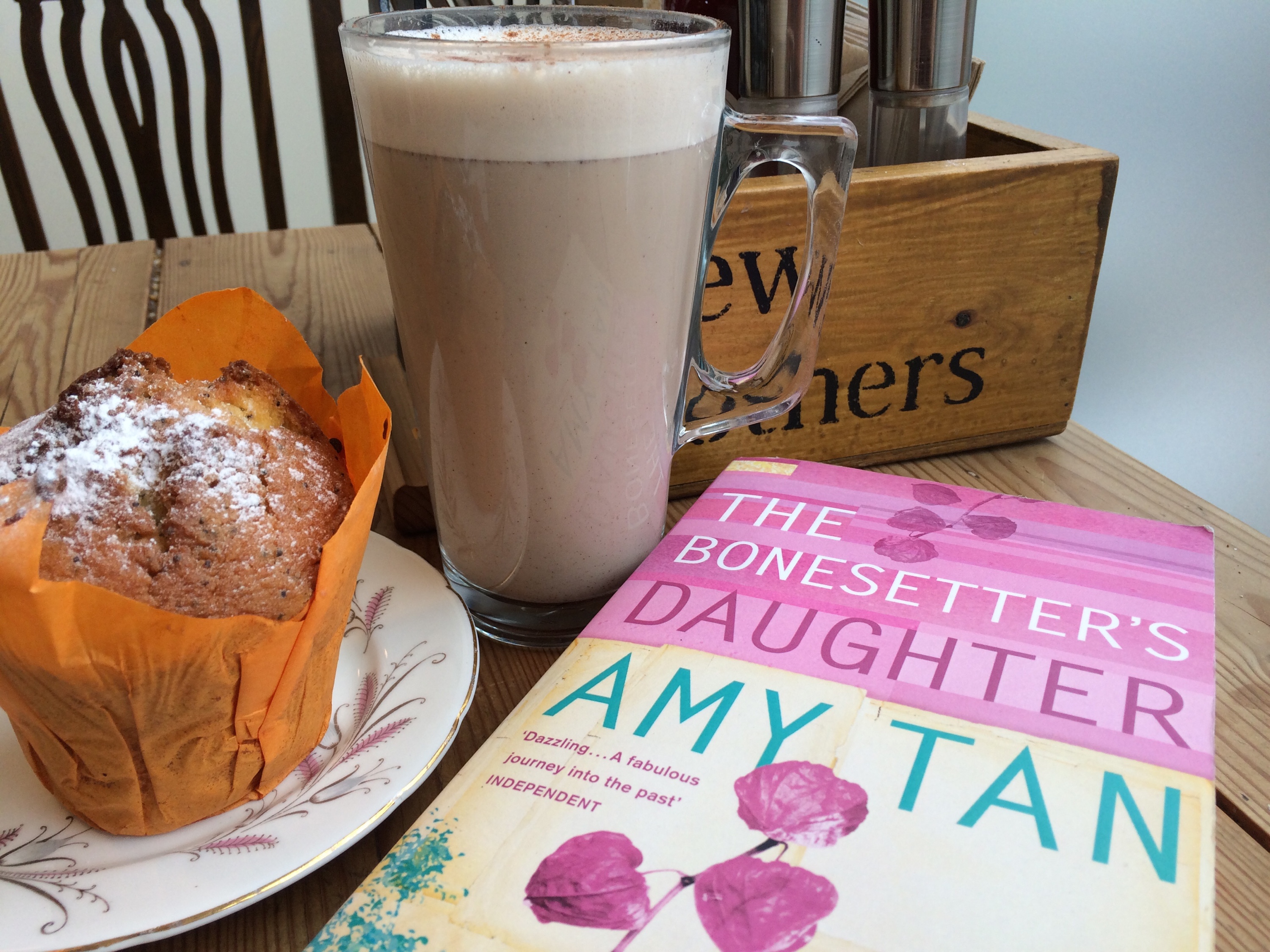
Writing in coffee shops in Cumbria - Brew Brothers, Kendal
Brew Brothers, Kendal

Writing in coffee shops brings writing out into the open. For me, it stops is being some secretive, mystery thing that unusual-looking people do in the privacy of their own homes, and turns it into something public. Oh, you see that woman over there with the flat white and a Mac? She’s an author. That man with the doodled notebook? He’s writing poems.

I think (or maybe I hope) that when people see writers writing like this, it reaffirms the fact that writing is real work. I think that sometimes, non-writers underestimate just how hard writing can be. After all, we just sit at a table and make stuff up, right? What’s so hard about that? It probably doesn’t even take very long. Writers probably spend most of their time sleeping or practising their autographs…right?

If you’re a writer, this attitude is probably pretty familiar. If you’ve shared a house with someone who isn’t themselves a writer / artist, you’ve probably had to fight tooth and nail to protect your writing time, and stop it morphing into washing up time, or putting-the-bins-out time. You’ve possibly also had to put up with comments like, ‘Are you busy? Or are you just writing?’ I actually had a friend who asked me: ‘Are you working or writing today?’ I think my response was, ‘Umm, both…?’

At least when it’s out in the open people can see you’re working. Well, sort of. I mean, I’m not saying that people can see you at the coal face, because for writers most of the work does and always will take place inside our heads – but at least people can see you’re putting in the hours.
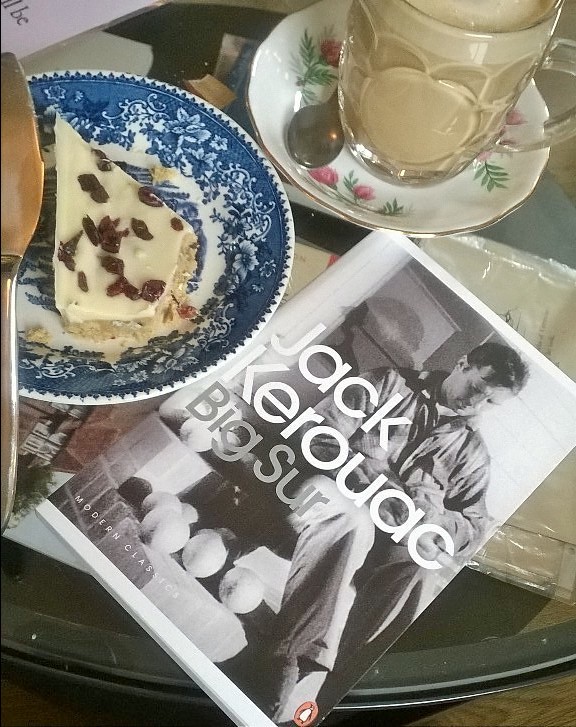
Cakes & Ale bookshop cafe, Carlisle, Cumbria
Cakes & Ale, Carlisle

Writing in coffee shops is also a good way for me to shake my ideas up a bit. There’s nothing like a change of setting to help with a change of mind, or a bit of people watching to bring in some added inspiration. If I’m stuck on what to write, I tend to do one of two things: read a book, or migrate to a cafe. Sometimes I do both.

Not that I never write at home. I do. I write at my kitchen table, at my desk, on my sofa, in bed… Sometimes while I’m cooking I’ll write standing up at the kitchen counter. But sometimes at home I can feel too conspicuous. Which is a weird thought, since I live on my own – who is there to be conspicuous to? But at home, everything clamours for my attention, because everything is my responsibility. There are a million other jobs that need doing, from hoovering to re-stacking the log basket to dusting the tops of the kitchen cupboards.

Whenever I’m even remotely considering dusting the tops of the kitchen cupboards, I know I must be procrastinating, and it’s definitely time for a change of scene.

For me, writing in a coffee shop can help me feel like a ‘real’ writer. Going to a specific place, like going to an office, can help remind me that, like any job, I have to put the hours in. It can spur me on mentally and give me a fresh creative canvas. When I want to get some serious writing done, they can give me a break from the thousand other things that try to hold me back.

Also, I just quite like coffee.
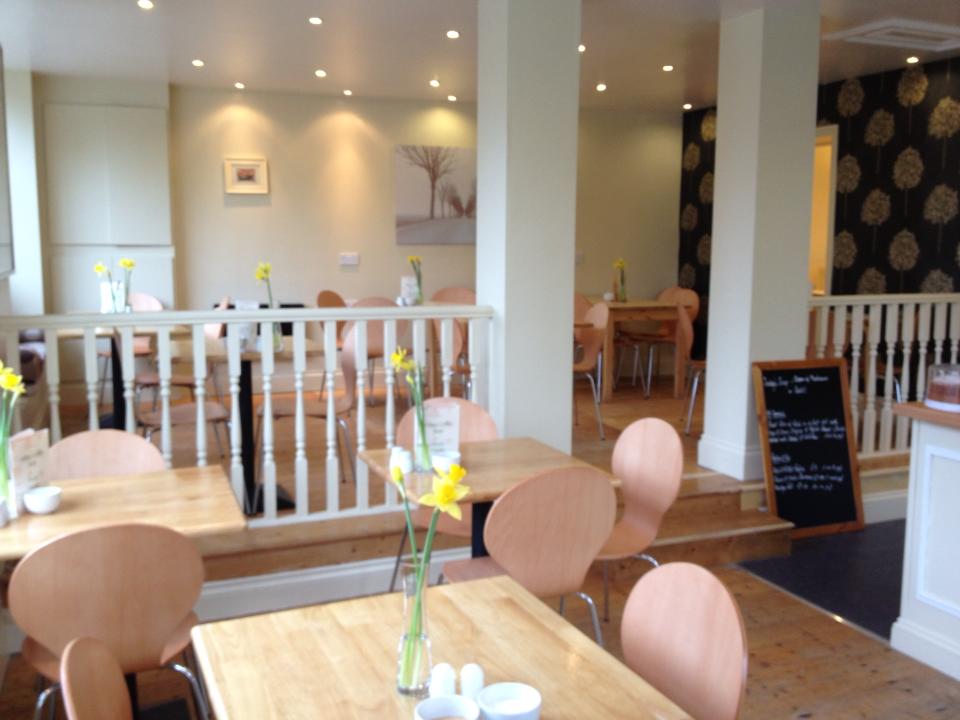
Abbey Coffee Shop, Shap, Cumbria - best cafes for writing in
Abbey Coffee Shop, Shap

These are my 5 favourite coffee shops for writing in in Cumbria:

1: Abbey Coffee Shop, Shap

The Abbey Coffee Shop in Shap is my local. If I’m stuck and it’s a nice day, it’s just a 15 minute walk across the fields. Perfect for instilling that freshness of thinking.

There’s no wifi at the Abbey Coffee Shop – it’s a ‘talk to people rather than phones’ kind of place, with a really friendly, local feel. I don’t think I’ve ever been in there without seeing someone I know – something that can be great for the lonely writer. (Stuck on my own in that attic with the spiders? No thanks…) The only issue with this (for writing, at least) is that it can get crazily busy around the middle of the day, which means that taking up a table by yourself with nothing but a latte and a notebook for 2 hours isn’t really acceptable. But get there early when they open, and it’s great – not to mention the fact that the freshly baked scones will still be warm.

It’s also run by locals, so it’s supporting local business: my friend Rowan, who I went to primary school with, and her dad, who makes the world’s best lamb & apricot casserole. No exaggeration.

2: Brew Brothers, Kendal

I once saw Brew Brothers described as ‘an urban cafe in a rural setting’, which is a description I took issue with, as I don’t see Brew Brothers as an ‘urban’ cafe at all. For one thing, it has a giant blown up photo of a sheep covering one whole wall. I think the person who wrote that description was confusing urban with hipster, because Brew Brothers is a very hipster place. Eclectic chairs, an old piano stool, pretty mismatched china, water served in jam jars… Basically it’s my favourite kind of style in a nutshell.

Like the Abbey Coffee Shop, it can get super busy during the middle of the day, but that’s because the meals and cakes are both delicious. Plus it’s about the only cafe I know which offers a big choice of different flavours of chai latte.

Brew Brothers cafe, Kendal, Cumbria - best cafes for writing in
Brew Brothers, Kendal

3: Cakes & Ale, Carlisle

Cakes & Ale is attached to Bookends, the independent book shop in Carlisle, which itself is attached to Bookcase: the biggest and best warren of a second-hand book shop I think I’ve ever been in. Mum & I once wandered apart in here, and she had to phone me to see where I was, because apparently she’d been calling my name and I hadn’t heard. Turns out we were still on the same floor, which shows how big the bookshop is.

The books seem to spill over into the cafe, too. If I’m stuck on what to write, there’ll always be something interesting to read in Cakes & Ale. Or I can just listen to whatever’s on the turntable of the record player, or order another yummy cake. (Cake seems to be a developing theme in these cafes. Just so you know, that isn’t a coincidence.)

4: The Yard Kitchen, Penrith

If you’re looking for an inspirational place and you can’t find a cafe attached to a bookshop, find one attached to a salvage yard. The Yard Kitchen oozes vintage salvage style, from the wood-burner in the back room, to the neon sign that slightly older Penrith folk will recognise from one of the now-closed nightclubs. There’s also an upstairs snug, which is a great space for writing when you want to get away from it all a bit. In the summer, there’s also an outside seating area, with views across town to the beacon.

Oh, and in case you haven’t guessed already, the cakes are amazing. Especially the scones.

5: The Wild Strawberry, Keswick

Of these coffee shops, the Wild Strawberry is the one I go to least. No reflection on the cafe itself, but just because I don’t often find myself in Keswick with a couple of hours looking for somewhere to do some work. But when I do, this is generally the place I gravitate towards. (Though I avoid going at all during school holidays, especially in August, when Keswick turns into a great big tourist trap.)

Downstairs, The Wild Strawberry is pretty bustling, but I like to secrete myself away somewhere upstairs, where there’s less pressure on you to leave as soon as your coffee cup is empty. Also, they have good cakes (of course) and nice milkshakes.

*

Oh, and if you have any other great cafe recommendations, do let me know – I’d love to expand my repertoire!
Series 1, Episode 1: Supal Desai

Ever notice how most of our interaction is now via phone, or messenger, or email, or skype? At least, it sometimes seems that way for me.

Face to Face is a new series of short conversations I’ll be having every month, talking to interesting people about the things that interest them. We’ll be chatting over cups of tea & pieces of cake, in my kitchen or wherever there’s a chance to stop and swap thoughts.

Phones down. Screens closed. Talking face to face.

S1 E1: In this first episode, I chat to Supal Desai about blogging and the creative process of writing a blog post.

Supal is the founder of a business risk consultancy based in London and the blogger behind the travel lifestyle blog, chevrons & éclairs. Her ideal Sunday would find her starting the morning in bed with a good book, newspaper or a cuddle, and then making brunch alongside music and endless cups of coffee. Her love for culture, art and history has taken her to the most exotic parts of the world, where she uses that opportunity to curate content that tells a story through fashion and food editorials.

So where do I come in?

I first met Supal in my friend’s kitchen, during our Masters year at St Andrews. She was cooking up something delicious-looking, and I was trying to convince her that haggis were little creatures that lived in the mountains.

Four and a half years later, we’re here:

Happy New Year!

When I was running Rabbit Rabbit (rabbit) young writers’ group, I used to send the young writers a writing prompt every week. I missed doing it, so I’m going to share a writing prompt as part of my weekly (weekend-ly) blog posts. I’m not Jo Bell, and this isn’t 52, so I’m going to share one a month rather than one a week: the first Sunday of every month.

And because this is January and it’s the first one, I thought I’d share a prompt about beginnings.

writing prompt - Katie Hale

If you think about famous novels, there are probably at least a few whose opening lines come to mind. Which makes sense – the beginning of a book is the part that’s supposed to grab us and make us want to read further.

For me, a good opening to a book is one that draws me in. It’s one that raises questions, or suggests a struggle that needs to be resolved. Sometimes it puts us right in the middle of the drama, straight away.

Take these examples – which, because we’re still within the festive season, I’ve done as a quiz (answers at the bottom of the post):

QUIZ:

  1. ‘It was a cold day in April and the clocks were striking thirteen.’
  2. ‘Marley was dead, to begin with.’
  3. ‘When he woke in the woods in the dark and the cold of the night he’d reach out to touch the child sleeping beside him.’
  4. ‘He was an old man who fished alone in a skiff in the Gulf Stream and he had gone eighty-four days now without taking a fish.’
  5. ‘People are afraid to merge on freeways in Los Angeles.’
  6. ‘Lyra and her daemon moved through the darkening Hall, taking care to keep to one side, out of sight of the kitchen.’
  7. ‘When the doorbell rings at three in the morning, it’s never good news.’
  8. ‘It was love at first sight. The first time Yossarian saw the chaplain he fell madly in love with him.’
  9. ‘He was afraid to go to sleep. For three weeks, he had been afraid of going to sleep.’
  10. ‘The boys, as they talked to the girls from Marcia Blaine School, stood on the far side of their bicycles holding the handlebars, which established a protective fence of bicycle between the sexes, and the impression that at any moment the boys were likely to be away.’
  11. ‘It was the best of times. It was the worst of times.’
  12. ‘The boy with fair hair lowered himself down the last few feet of rock and began to pick his way towards the lagoon.’
  13. ‘They say it came first from Africa, carried in the screams of the enslaved.’
  14. ‘In my younger and more vulnerable years my father gave me some advice that I’ve been turning over in my mind ever since.’
  15. ‘Like most people I lived a long time with my mother and father. My father liked to watch the wrestling, my mother liked to wrestle.’

How many did you get? Answers at the bottom of the post…

*

Writing a gripping first sentence is all very well for the opening of a novel, which sets up plot and conflict and character and story. But what about poetry?

I wonder how many of us think about setting up conflict and character and story in the opening of a poem? I wonder how many of us write opening lines to grip people with the drama of the poem, the way we might in a novel?

So that’s my prompt:

Write an opening line for a poem, which sets up drama and / or mystery, and whose sole purpose is to grip the reader.

Then, and only then, you can try writing the rest of the poem.

Here are a few poems that I think grip the reader really well:

‘Here, Bullet’, by Brian Turner

‘Bird’, by Liz Berry

‘Kiss’, by Ruth Padel

Happy writing!


ANSWERS:

  1. Nineteen Eighty-Four, George Orwell
  2. A Christmas Carol, Charles Dickens
  3. The Road, Cormac McCarthy
  4. The Old Man and the Sea, Ernest Hemmingway
  5. Less Than Zero, Bret Easton Ellis
  6. Northern Lights, Philip Pullman
  7. Stormbreaker, Anthony Horowitz
  8. Catch 22, Joseph Heller
  9. Strange Meeting, Susan Hill
  10. The Prime of Miss Jean Brodie, Muriel Spark
  11. A Tale of Two Cities, Charles Dickens
  12. Lord of the Flies, William Golding
  13. The Brief Wondrous Life of Oscar Wao, Junot Diaz
  14. The Great Gatsby, F Scott Fitzgerald
  15. Oranges are not the Only Fruit, Jeanette Winterson

I’ve never been very good at new year’s resolutions. Or rather, I think I’m good at them in the same way that everyone else is good at them: for about 3 weeks in January, and then letting them fall by the wayside for the rest of the year.

But this year, I’m making a number of them, and I’m determined to still remember what they were this time next year. Even more, I’m determined to achieve them, so that next year I have to come up with some new ones.

poetry definitions - Katie Hale
^ I guess I could aim not to be a ‘poetaster’…?

If 2016 has been the year of celebrity deaths & surprise election results, then I’m intending to make 2017 the year of writing-in-numbers (as distinct from writing-by-numbers, which is not to be encouraged).

And those numbers are: 100, 50 and 1

*

RESOLUTION NUMBER 1:

Inspired by Kim Liao’s article back in June, I’m aiming for 100 literary rejections.

This is the one resolution that I actually don’t mind whether I achieve it or not. The idea is that aiming for rejections is less daunting than aiming for acceptances, so you’re more likely to bite the bullet and submit in the first place.

And 100 is such a big number that it forces you to think outside the box and submit to opportunities that you wouldn’t normally consider inside your comfort zone. Given that this is exactly how I got my place on Penguin’s WriteNow insight day in Manchester for February 2017, it’s something I already believe in: apply for opportunities, as you never know where that opportunity may lead.

(Obviously, if I somehow miraculously achieve 100 acceptances instead of 100 rejections, I think I’ll get over the fact that I didn’t tick off the resolution itself.)

new year writing resolutions: Katie Hale

RESOLUTION NUMBER 2:

As always, I’m aiming to read 50 books in 2017.

This is always my resolution (at roughly one a week, I see no reason why I shouldn’t be able to achieve this). In 2016 I read 57 books, and I’d quite like to read more this coming year. After all, reading is the key to writing.

As for what I’ll be reading, I already have a few books lined up – thanks in part to a late December splurge at the New Hedgehog Bookshop in Penrith. And then I’d like to read some of the poetry & fiction that’s been waiting patiently on my shelves, as well as building a bigger library of contemporary plays. And with StAnza in March and Kendal Poetry Festival in June, I’m pretty sure there’ll be plenty of new poetry to tempt me.

*

RESOLUTION NUMBER 3:

To write 50 blog posts for this blog.

Really, I’m going for one a week, but 50 is a nicer number than 52, and it gives me a little bit of wiggle room.

Some of these will be writing updates, some will be actualy pieces of writing (from me and hopefully also from some of my schools workshops), and some will probably just be a bit of fun.

I’m also planning to post a monthly writing prompt, on the first Sunday of every month. When I was running my young writers’ group, I used to email the young writers a prompt every week – so I thought I’d continue the tradition, but on a slightly less frequent basis. After all, I’m not Jo Bell.

script writing for theatre - Katie Hale

RESOLUTION NUMBER 4:

To take 1 show to the Fringe.

But more on that in the new year, hopefully. Spoilers!

*

RESOLUTION NUMBER 5:

To finish at least 1 draft of the novella.

1 draft. 1 very very rough and probably unfit-for-human-consumption draft.

Actually, I’m hoping to have this completed by the end of February, so really there’s no reason not to complete several drafts of it in the months that follow. At least, that’s the plan. But other things always crop up – and yes, Stephen, if you’re reading this, don’t worry: I will also be working on the rewrite of Yesterday during this time. Just hoping that old stereotype about women being good at multi-tasking proves to be true!

typewriter - Katie Hale

So there are my 5 new year’s resolutions for 2017.

2016 has felt a lot like finding my feet as a full-time writer. I’m hoping that 2017 is when I’ll really start to run.

*

Happy New Year!  🙂

Save

The end of another year, and a whole 12 months since I gave up my main source of income in order to focus more on my writing. A whole 5 months since I went completely freelance. I don’t think it’s any less scary than it was back in January, but it’s a funny thing, looking back on a year. In some ways it seems like forever, and at the same time it feels like no time at all.

For instance, I feel a little bit like I’m still taking baby steps; I’m definitely still an ’emerging’ writer, though I’m not sure how I’ll know when I’ve actually ’emerged’. But then when I sit and list everything I’ve done this year, it feels like much more than a year’s worth of work.

Writing at the Wellcome Collection

Poetry

Most of my focus this year (as always) has been on poetry, and writing as much of it as I can. I’ve started going to Kim Moore’s Barrow poetry writing workshops, and Brewery Poets writing group, and a monthly poetry sharing evening in Shap, which have all been great for making me write more. So great, in fact, that I’ve started writing a new long poetry sequence (so a huge thanks to the Poetry Business workshop at Kendal Poetry Festival, for the spark which set that sequence off for me in June).

As if that wasn’t enough, I’ve also started a monthly wordy open mic night in Penrith. Word Mess takes place on the 3rd Tuesday of every month (except December & August) in the old mess hall at Penrith Old Fire Station (Eden Arts). Attendance has been building steadily, and we now have a lovely little group of regulars, and a slightly bigger group of occasional-ers – though whether they come because of the quality of writing or the quality of the bar is anyone’s guess! Maybe for both.

In terms of my own poetry, it hasn’t gone badly: a couple of poems in magazines, including one that’ll be in The North in January; a commended poem in York Poetry Competition; and being shortlisted for the Jane Martin Poetry Prize.

Not bad – but it isn’t all about poetry.

I don’t know how other people work, but I meet a lot of people who categorise themselves. ‘I’m a novelist’, or ‘I’m a poet’, or ‘I write for theatre’. Obviously there are people who pick a form and stick to it, which is fine if that works for them – but I used to think that was the only ‘correct’ way to do things. In fact, I spent a couple of years actively not writing anything but poetry, because I had this bizarre notion in my head that writing prose or script would somehow make me a lesser poet.

script writing for theatre - Katie Hale

Theatre

Writing Yesterday with Stephen Hyde last year, the theatre bug bit me again, and those play ideas that had been simmering under the surface kept nudging at me – so this year, when I suddenly had more time on my hands, I decided to let them out.

This year I’ve drafted two play scripts – both of which are currently both sitting in a drawer fermenting, until enough time has passed for me to look at them with fresh enough eyes to give them a proper redraft. It’s been so great to get back into playwriting, that I almost don’t mind whether anything happens to them or not. The feeling of exercising those script-writing / dialogue / plot muscles was satisfying enough in itself. Like when you go for a run after a long period of inactivity, and you feel a kind of glorious ache in all the muscles you haven’t used for ages.

Then, while I was stuck in Tulsa airport for 24 hours as a storm raged in Chicago and the UK voted to leave the EU, I wrote the lyrics for a new song (also by Stephen Hyde), for the Three Inch Fools’ touring production of Macbeth. I think there may be a recording of this surfacing at some point in the new year, but for now, if you’re not already a Fools fan, you should definitely check them out.

I’m also getting stuck back into the rewriting process of Yesterday, working with Stephen. After a few months working very solidly on my own, it’s good to get back to collaborating again, and to remember that excitement of bouncing ideas back and forth between two people until they become something much bigger than either of you could access alone, and neither of you can quite say who came up with what. Much more of this to follow in the new year…

New York - writing in a cafe, Katie Hale

Fiction

Ok, so I haven’t really been a fiction writer for about half a decade. Like most writers, I guess, I started out writing fiction, because stories are the first creative thing you’re taught to write in school. But my poetry, and even my theatre, has superceded my fiction for the last ten years, and the fiction has been basically absent for around half that time.

And yet… Like a lot of people, I had a novel lurking. You know the one, swimming in the depths of your brain – the one that floats to the surface when you feel particularly inspired by a good book you’ve read, or when you’re trying to get to sleep, or doing the dishes.

This year, I decided to give it a go. So far, I’m only about half way through the initial drafting stage, so there’s no knowing whether anything will come of it, or whether (perhaps like the play scripts) it will just sit in my desk drawer. But already it’s looking hopeful.

Over the summer, Penguin Random House put out a call for submissions from minority writers, to receive a place on one of their WriteNow insight days, which includes a 20-minute one-to-one with an editor. Having submitted an application & 1000-word extract with my ‘I’m not really a fiction writer but I’ll give this a go’ hat on, I couldn’t really believe it when I heard I’d got a place on the Manchester insight day in February 2017 – especially when I heard that there were over 2000 applications for just 150 places. Talk about a confidence boost!

Even if nothing else comes of this, that acceptance email has given me the confidence to write a novel (well, novella) that otherwise would have remained unwritten.

Arts Award Discover workshops

Projects

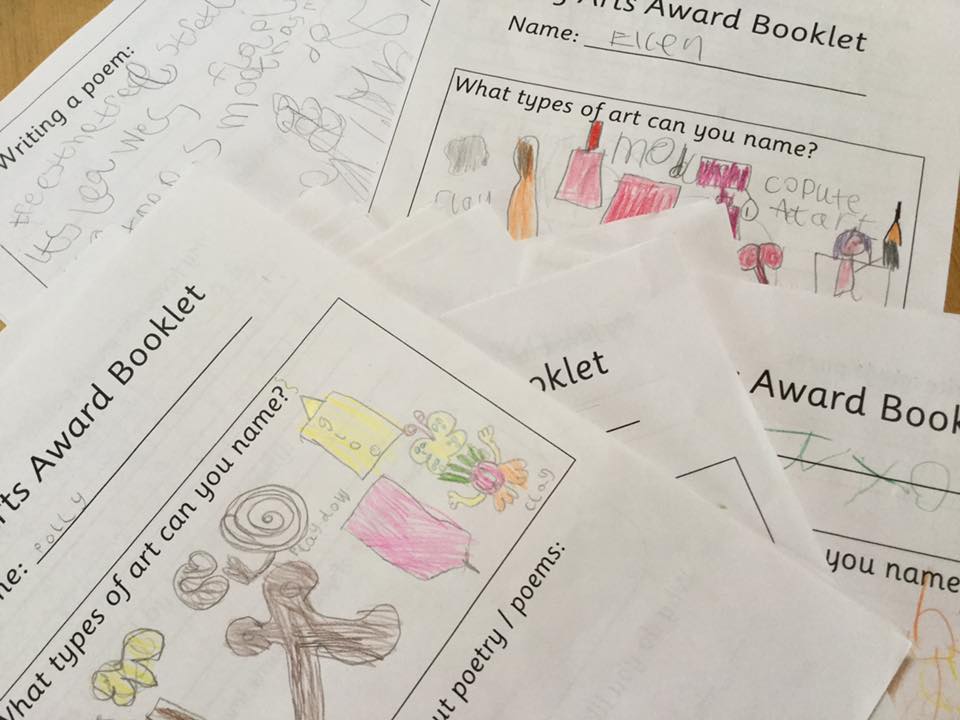
Work-wise, my main project this year has been running schools workshops and delivering Arts Award Discover. I delivered I-can’t-quite-remember-how-many workshops in schools for the Wordsworth Trust, to tie in with their Arts Award Discover project, where the children wrote poems about places that meant something to them. I also ran Arts Award in Shap and Clifton Primary Schools, which was great fun – especially in Shap School, which was my alma mater. (Can you call it an alma mater for a primary school, or is that just for universities?)

As always, the children blew me away with the quality of work they produced. One particular phrase that I wished I’d written myself came from an 8-year-old, who wrote, ‘I am as shy as a funeral.’ I think I was too gobsmacked to think clearly for about 5 whole minutes. So that night I shared the simile on facebook, and got a whole host of gobsmacked reactions from other people, too.

Oh, and speaking of sharing…

This year I created Poetry Plaster Packs. The idea was to share little packets around Penrith on Valentine’s Day. Each one contains: a plaster (for the literal cuts and scrapes), a cheerful little poem (for the figurative ones), and a little gift – because let’s face it, who doesn’t love a present? I shared about 40 on Valentine’s Day, and a few more since. I suspect I may be distributing a few more in the new year, too.

I’ve also had 3 online projects this year:

The Sam Thorpe Trust Fund: I put together the website for this earlier in the year, and it’s worth checking out, especially if you’re in the Penrith area. The Fund gives grants to young people who want to do something extraordinary, and to schools / organisations that work with young people.

#SomethingGood: On Wednesday 9th November, I was sitting on my sofa in a state of shock, having spent an almost-sleepless night watching America elect a future president with no history of government but a long history of racism, misogyny, and abuse of power. I wanted to do something, but I wasn’t sure what. Some of my American friends were posting on social media about how to contact your senator to raise protests, but I’m not American; I don’t have a senator. Instead, I decided to do something quieter, but hopefully also positive:

The Tea Break Project: And speaking of America, I’ve also started a new travel blog this year. Some of you might remember my first travel blog, Second-Hand Hedgehog. I’ve now moved to a new online home: www.teabreakproject.com – with (hopefully) better content, better design, and better stories from life on and off the road. This year, my travels have included Portugal, Marrakech, Kansas, a massive road trip up the west coast of America and into Canada, and a week in New York.

*

The Year in Books

Every year I make it my goal to read at least 50 books. This year I’ve read 57, which isn’t bad – although I haven’t read as much poetry as I’d have liked. Something to make sure I work on next year.

I have, however, read a lot of plays, thanks to my rekindled interest in theatre and writing for the stage.

I’ve also read a lot of contemporary literary fiction written in the first person, to try to get my head in the right place for drafting the novella. Among these, I’ve discovered Margaret Atwood. How it’s taken me till age 26 to read any Margaret Atwood, I have no idea, but I’m buzzing with that exciting feeling that comes when you fall in love with an author’s writing style. I have to physically prevent myself from running to the till every time I see one of her books in a bookshop.

As well as new discoveries, I’ve made a great rediscovery this year: The Little House on the Prairie. I re-read this in preparation for my trip to Kansas (and the real-life little house on the prairie just outside my great aunt’s home town of Independence). I thought I knew the story. What I hadn’t realised was that I’d only ever read that one book in the series, and that they were a fascinating insight into American history and culture, and why the middle of the country is the way it is.

My top 10 books this year (in alphabetical order):

  • Margaret Atwood, The Blind Assassin
  • Zinnie Harris, How to Hold Your Breath
  • Laura Ingalls Wilder, The Little House on the Prairie (series)
  • Helen Mort, No Map Could Show Them
  • Rory Mullarkey, The Wolf from the Door
  • Max Porter, Grief Is the Thing with Feathers
  • James Rebanks, The Shepherd’s Life
  • Warsan Shire, Teaching My Mother How To Give Birth
  • Em Strang, Stone
  • Elizabeth Strout, My Name is Lucy Barton

*

The Year in Pictures

Save

Save

Remember back in January, when I said I would write a blog post every week this year, about my life as a writer? Yeah…

Oops.

One of the hardest things to adjust to this year has been introducing myself as a writer. I think this is something that all writers struggle with at some point: we spend so long cramming our writing time in alongside other jobs, that when we’re asked the inevitable, ‘So what do you do…?’ our first answer is rarely, ‘I’m a writer.’ At what point do you become a writer? Is it when you start writing (or are you still a waitress / teacher / administrator / whatever your day job is)? Is it when you get something published? Maybe it’s when you first earn money from your writing, or when someone else first introduces you as a writer.

When I quit one of my jobs at the end of 2015, to free up more time for my writing, I was faced with this problem: do I put ‘writer’ on official forms, in the little box marked ‘occupation’?

Previously, I’d always put my official Prism Arts job title (‘Creative Programme Administrator’), as my other part-time job had a much less fixed title. But then when that was gone, what to call myself? I wasn’t making a living from my writing – could I still get away with calling myself a writer, or was that some kind of fraudulent optimism?

The first time I had to actually make this decision was in Marrakech airport in January, filling out a landing card. I put ‘writer’, mainly because I didn’t know what else to put – and let’s face it, partly because I just liked the idea of calling myself a writer.

So I got into the (constantly morphing, incredibly haphazard) queue for passport control, clutching my little landing card. After 45 minutes of navigating a queue that kept merging and changing direction and disappearing altogether, I finally made it to the desk. I handed over my passport and landing card.

The customs officer checked them against each other: ‘Writer?’

‘Yes.’

‘What kind of writer?’

I was struck by the suspicion and antagonism in his voice.

Looking back, I think he thought I might be a journalist or professional blogger, and that I might be in Morocco to work, which would be a problem on my tourist visa. But it made me think: writers have a lot of influence – just look at the new ‘post-truth’ world we apparently live in following the American elections. Being a writer is a powerful and dangerous thing – no wonder he questioned me.

‘Poetry,’ I told him.

At that his expression cleared, he stamped my passport, and he waved me on my merry way without a so much as a second glance. Apparently, Moroccan border control doesn’t consider poetry a particularly dangerous form of writing – rightly or wrongly.

So when do you get to call yourself a writer?

This year, I’ve decided that it’s all about approach. For me, it’s about how serious you are about your writing. Is it something you strive towards on a daily basis, or is it something you turn to every once in a while when the inspiration strikes? For instance, I take a lot of photos, but I would never call myself a photographer. I just don’t work at it enough, and photography will never be the number one priority in my life.

Writing, however, is. And I intend to keep calling myself a writer, regardless of how much money my writing is (or isn’t) making me.

Save

Save

Save

Save

WP_20160406_009

It all started when my phone had a water-based, toilet-shaped accident.

So I left it to dry in a bowl of rice and went to work without it. I didn’t need to use it – there were no family emergencies or missed appointments to contend with. There was no drama. If I’d had to pick a day to be phone-less, this probably would have been the best one.

And yet all day I felt its absence like a missing arm.

The next day was the same, as my injured phone continued with its rice therapy. I could literally feel my hand twitching to pick up and scroll through a phone that wasn’t there. It was like a phantom limb.

It wasn’t that I necessarily wanted to call or message anyone (I certainly didn’t need to), or even to post on facebook / twitter / instagram. It was just that I wanted to look.

I didn’t even have to think that I wanted to look at it – if I had, then I’d have blocked the thought by remembering that my phone was neither working nor with me. It was pure instinct. Every time I sat down, every time my hands were idle, every time the world stopped for a second, my hand twitched towards my pocket or my bag. It was just… normal.

It was so normal to me that it wasn’t until the afternoon of the second day that I realised what it meant: that I was addicted to social media.

And my next thought? I should write a blog post about that.

I suppose it’s hardly surprising that I think this way. I spend nearly all my ‘office hours’ on a laptop, often on social media, emails or Mailchimp. When I’m not in the office, I’m often writing (on a laptop) or blogging, or catching up with my own emails, social media, website and admin – all on a latop, phone or iPad. True, I’m not on a computer when I’m teaching my poetry workshops, but I do use my laptop for nearly all my planning. On top of all that, I live in a county with an ageing population and a defecit of 20-somethings, which mean that most of my friendships are long-distance ones, and an important ingredient of those is – yep, you guessed it – my phone.

I don’t think I’m unusual in this regard. Very few of my friends have off-screen jobs, and even those who do (like the teachers and theatre directors) are tied to computers, emails and / or social media for at least part of their work.

This isn’t anything new. At least, not very new. We can all see the way the world is and the dominance of the screen in our daily lives.

Before now, I’ve always thought of this as a good thing – or at least, never as a terrible harbinger of doom.

Technology offers a wealth of opportunity for people who can use it well – just look at some top bloggers, vlogggers and instagrammers, whose online presence and social following earn them thousands and thousands of pounds. And I know from personal experience that social media can be a great marketing tool.

But I hadn’t realised how much it had rewired my brain. My constant phone- and laptop-usage has literally altered my instincts. For me it’s actually changed how I live on this earth as a human being, and how I interact with the world around me.

More frighteningly, at least for me, is what it’s doing to my creative brain.

I hardly ever write with pen and paper any more. Apart from poetry, which I always draft in a notebook before typing up, I now type everything. I compose words through a keyboard. I paint in the rigid shapes of computer font, rather than my own individual (if untidy) handwriting. Where’s the personal aspect of that? Where’s the artist in the art? To me, it feels like trying to paint a Monet using children’s printing blocks.

When that thought first flashed through my mind, that I should write this post about my social media addiction, my initial reaction was, ‘how ridiculous’. My second reaction was: I can’t, I don’t have my iPad on me.

Writing had become so tied up with the keyboard that the notebook in my bag didn’t even figure in my thoughts.

So I fought against my instincts. I bought a coffee and a muffin (always a good start), sat down with  good old-fashioned notebook and pen, and wrote this.

And as I wrote, I thought: I should do this more often.

I felt more connected to what I was writing. More free to edit things and change them around. Less pressure for my writing to be ‘good’.

Yes, I always draft my poems in a notebook. But why not my prose? Why not drama? Why not blog posts?

Every cloud apparently has a silver liningg, and the silver lining to this little technology accident was the way it made me rethink my creative practice. It taught me not to fear the pen and the page. It taught me to separate the computer keyboard from the writing process, at least in the draftings stage. And it taught me not to keep my phone in the back pocket of my jeans.

Here we are again: teetering on the brink of the old year, about to dive headlong into the new one. 

We’ve spent the past 365 days scaling the ladder, and let’s be honest, by the end, we were probably all in need of a bit of a rest. But now here we are, wobbling at the end of the diving board, sort of wishing we could just inch away from it and come back the way we came, but also excited by what’s to come. The adrenaline’s pumping with anticipation of the unknown, with the possibilities of the future. 

Take a deep breath. Get ready. Jump. 

Normally, I see New Year as something of a let-down, especially after all the glitz and excitement of Christmas. Really, it’s just a passing from one day to the next, where nothing actually changes apart from the fact that we all feel a little more hungover the next morning – a bit like birthdays. 

This year is different. This year, for once, I am actually enacting a momentous change in my life. 2016 will have a very different flavour to 2015. 

Why. I’ve quit my job. 

Ok, I’ve quit one of my jobs. 

For the first time in my life, my time being ‘a writer’ outweighs my time spent on other employment. (Being a student doesn’t count.) And, to allow myself to spend even more time on my writing, I’ve also waved a fond farewell to my travel blog, Second-Hand Hedgehog. I may return to this in the future, but for now I’m planning to concentrate all my creative energies on my poetry and theatre. 

It’s more than a little bit daunting. Remember that diving board analogy? It’s not a coincidence that I don’t really like heights…

But it’s also incredibly exciting. It’s a new beginning, a new chapter, or (to get suitably poetical about it) a new stanza in my life. 

Like with all new beginnings, I’ve made myself a couple of resolutions. 

  1. I’m going to blog about it, every week. Since I’ve given up the travel blog, it’s only fair to give myself some kind of blogging outlet. And if I can be literary at the same time, well, so much the better. 
  2. I’m going to write a limerick a day. About a year ago, I started making up limericks when I was bored: in queues, in the car, in the shower. They’re very much not serious affairs, and are really just a bit of fun – though I suppose they do also practise essential skills like rhyming. I don’t actually expect to stick to this resolution and come out of the year with 366 limericks, but if I aim for one a day, I should at least manage a couple of hundred before next January. 
  3. I’m going to read more. Last year, I didn’t read anything like as much as I would have liked, so this year I’m aiming to remedy that. And as an extra incentive, I’m going to share my reading library on my weekly blog post. 

So there you have it: a new plan for a new year. 

Happy 2016!

x