The Lady of the Lake, by Benjamin Askew: Theatre by the Lake, Keswick

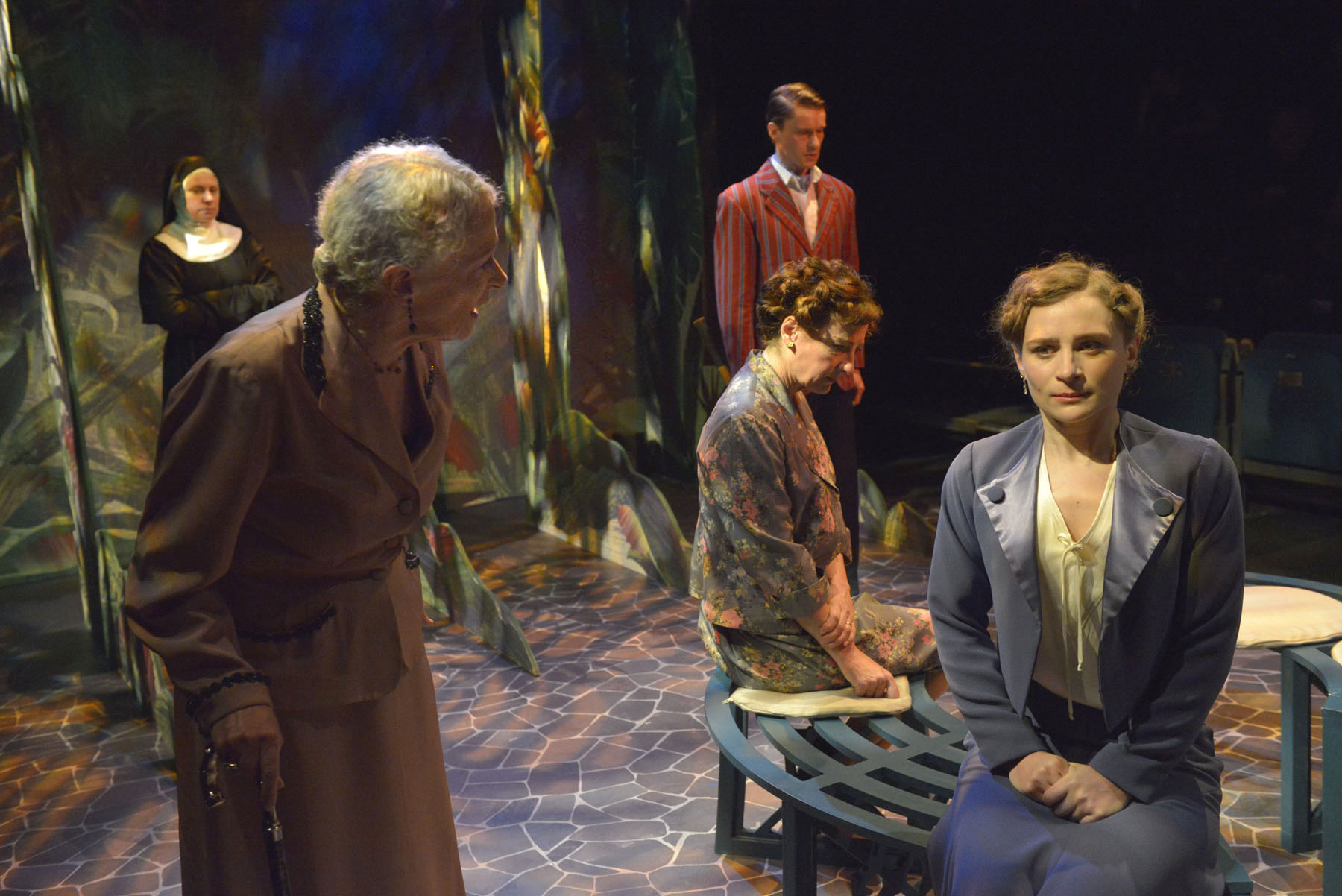
Theatre by the Lake production of THE LADY OF THE LAKE by Benjamin Askew directed by Mary Papadima. Review by Katie Hale.
~ Emily Tucker (Morgan), Charlotte Mulliner (Nimue): photo by Keith Pattison ~

When I heard ‘new play about King Arthur written in verse’, I had mixed expectations. Although I always want poetry and verse to succeed, dealing with an established subject matter such as the legend of King Arthur, while using a more traditional form of script-writing, risks the drama feeling staid.

However, despite the play’s mythological setting, it has a contemporary feel. Benjamin Askew’s adaptation of the legend is carefully crafted and controlled, with dialogue that seems both natural and poetic at once.

The Lady of the Lake is also a play which asks big questions about narrative, authorship and autonomy. Framed in the context of a troupe of players, it becomes a play less about the story itself (although it is, of course, a riveting plot), and more about how that story is told and, more importantly, how it is remembered.

Mary Papadima’s stylised direction perfectly complements Askew’s beautiful and subtle verse, while Elizabeth Wright’s deceptively simple set creates almost a blank canvas on which any story could be told.

The integration of music and movement creates a sensory whirlwind, which at times gives the play an almost impressionistic feel – as though reminding us that the story unfolding before us is as fluid as the lake itself.

The only let-down to The Lady of the Lake is its length, occasionally slave to the richness of its intricate plot and sumptuous beauty of its dialogue. However, there is enough talent in the writing and cast to minimise this issue, with Patrick Bridgman playing an uncertain, heartfelt and sympathetic Arthur, years after his prime. Richard Keightley is a disturbingly enigmatic Taliesin, while Charlotte Mulliner and Emily Tucker channelled much of the show’s vivacious energy as Nimue and Morgan.

Benjamin Askew’s The Lady of the Lake is an ambitious play that (for the most part) carries through. In style and technique it is unlike anything I have seen at Theatre by the Lake in recent years: an intriguing piece of theatre.
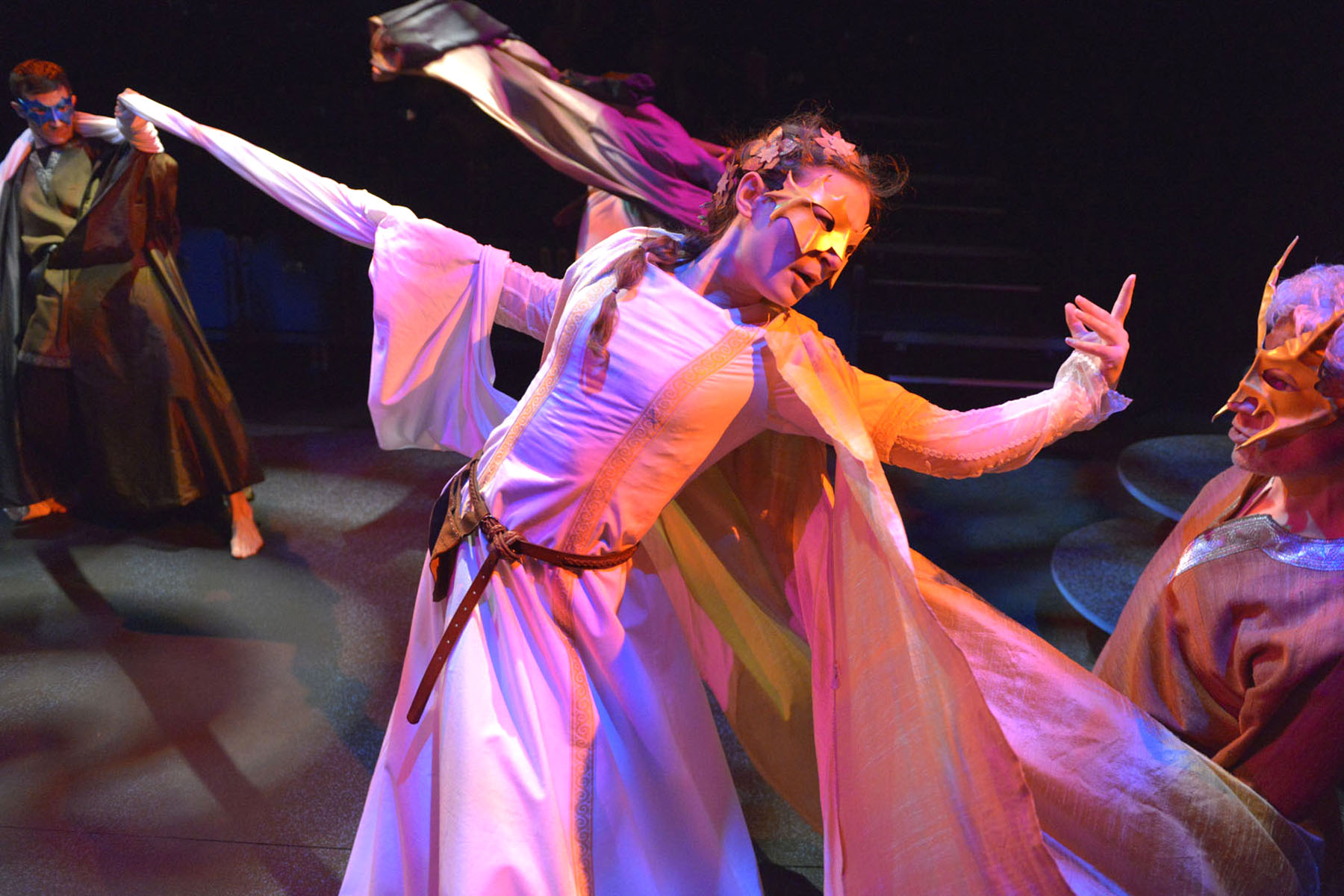
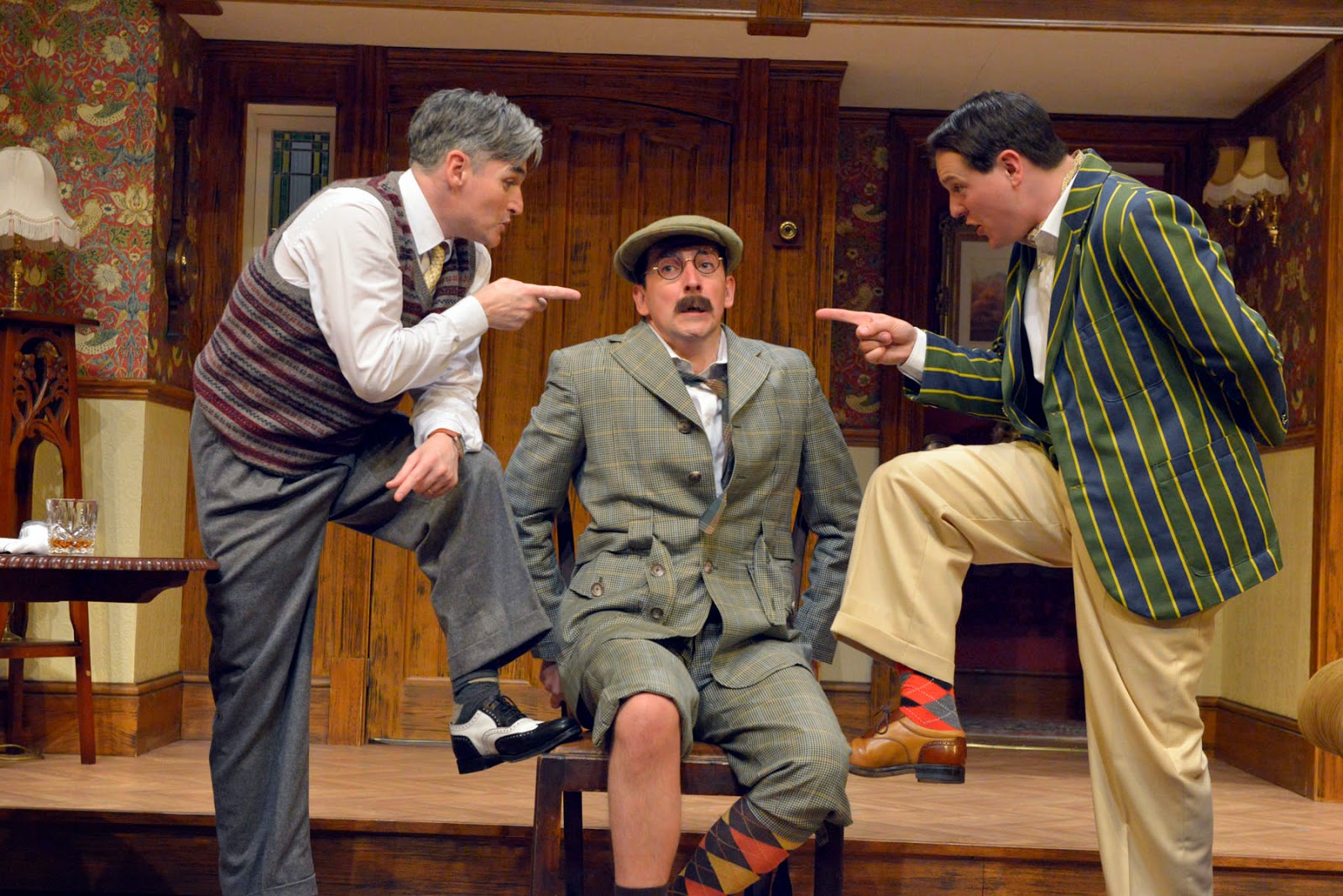
Theatre by the Lake production of THE LADY OF THE LAKE by Benjamin Askew directed by Mary Papadima
~ Ben Ingles (Owain), Emily Tucker (Morgan), Patrick Bridgman (Arthur/Old Taliesin): photo by Keith Pattison ~

~

The Lady of the Lake runs in the Studio at Theatre by the Lake until Friday 6th November
It’s always exciting as a project races towards its conclusion, seeing all the various strands coming together, slotting into place one after another, often surprising quickly. It’s like solving a rubix cube: one moment it’s a jumble of colours, then suddenly it’s organised and complete. (Or rather, it’s like watching someone else solve a rubix cube – I’ve never been very good at them…)

That’s how it’s been with Yesterday, the musical I’ve written with friend and composer Stephen Hyde. It feels like only yesterday (sorry!) that it was a vague idea we were discussing on afternoon walks in the countryside – and suddenly, it’s complete, cast and in rehearsal.

And to prove it, there’s a trailer:

Yesterday premieres in Oxford, at the Burton Taylor Studio, 16th – 20th June 2015. Tickets available here.

[Theatre by the Lake: Keswick]

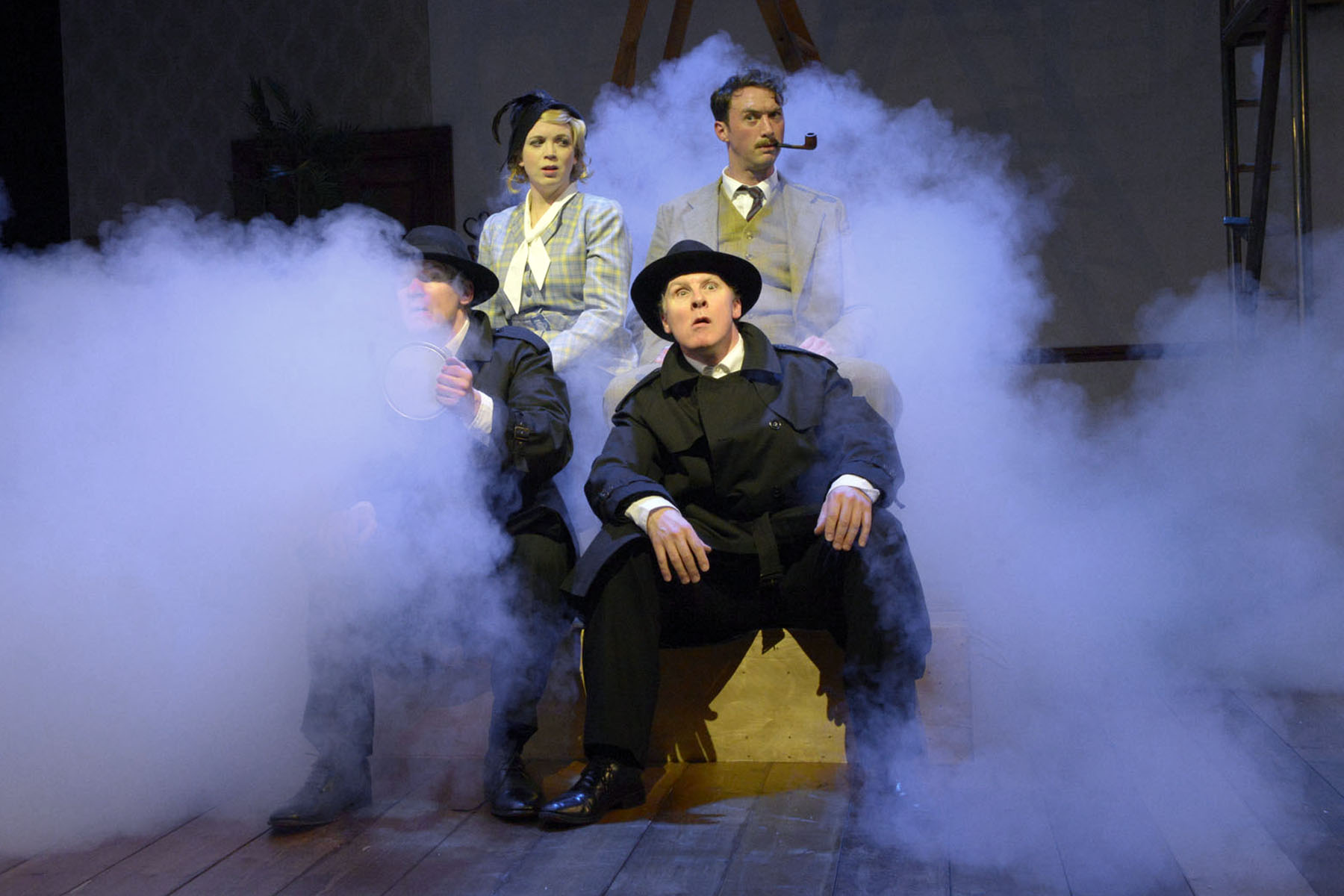
Theatre by the Lake production of John Buchan and Alfred Hitchcock's  The 39 STEPS adapted by Patrick Barlow directed by Abigail Anderson
~ Frances Marshall, Jonny McPherson, Patrick Bridgman & Richard Earl: photo by Keith Pattison ~

As a general rule, Theatre by the Lake does big melodramatic comedy well. With a string of successful farces under their belt, and the well-executed vibrant chaos of last season’s Comedy of Errors still in mind, it would have been easy for the theatre to get comfortable.

However, Abigail Anderson’s production of The 39 Steps takes Theatre by the Lake comedy to a new level. It was fast-paced, lively, and witty in its execution. The use Martin Johns’ set was imaginative and entertaining, and added to the quirky success of the play. (In fact, I think this may be the only occasion where I have witnessed a piece of set receive its own round of applause during a scene.)

All four cast members carried the play with seemingly endless amounts of energy. Jonny McPherson’s was a comical mix of inconvenienced English gentleman and dashing, devil-may-care spy, while Frances Marshall transformed with apparent ease from cunning secret agent to innocent and proper love interest , playing all three of her roles with a humour and energy that sparked off McPherson’s own.

Especially brilliant were the two clowns: Patrick Bridgman and Richard Earl. I quickly lost count of the number of characters they each played (often playing multiple characters within the same scene), but each one was unique and entertaining in its own right, and every change was done with superb comic timing.

Special mention, though, has to go to the unseen (but not unheard) star of the show: Sound Designer, Maura Guthrie. Every sound effect (and there were many) furthered the comedy of the play, and helped (along with ladders, a few boxes, some scaffolding and a lamp) to bring the world of The 39 Steps to vibrant and hilarious life.

Abigail Anderson’s The 39 Steps is the best thing I’ve seen in the Theatre by the Lake’s main house in years – and the funniest. We laughed out loud from beginning to end, and would happily go back to see it again. It just proves: you don’t need to go to London to see West End-quality theatre.

~ runs until Wednesday 4th November 2015 ~

Theatre by the Lake production of John Buchan and Alfred Hitchcock's  The 39 STEPS adapted by Patrick Barlow directed by Abigail Anderson
~ Patrick Bridgman & Richard Earl: photo by Keith Pattison ~

Mr Paradise and Suddenly Last Summer at Theatre by the Lake

Theatre by the Lake production of Mr Paradise and Suddenly Last Summer by Tennessee Williams directed by Mary Pappadima
~ Polly Lister, Kate Layden, Richard Keightley, Cate Hamer & Emily Tucker: photo by Keith Pattison ~

‘The work of a poet is the life of a poet, and vice versa, the life of a poet is the work of a poet. I mean, you can’t separate them. I mean, a poet’s life is his work, and his work is his life in a special sense.’

Suddenly Last Summer and Mister Paradise are plays about words: about their persistent endurance and the power it gives them.

Where there is power, there is usually fear, and Mary Papadima’s production of Tennessee Williams’ plays contains this fear perfectly, like a wild animal held in a cage barely strong enough. In Suddenly Last Summer, the focal point of this tenuous restraint is the conflict between Mrs Venable (Kate Layden) and Catharine (Emily Tucker). Layden beautifully conveys the desperately wielded control of a woman all too aware that control is slipping away from her, but it is Tucker who truly commands the audience’s attention. Her performance of a frantic and traumatised girl, clinging to the edge, is both powerful and moving; in the battle between dreadful truth and respectable reputation, it is undoubtedly her voice that cries the loudest and speaks the strongest.

Mister Paradise is also a conflict between two characters over the issue of truth versus reputation, although it is much quieter than that in Suddenly Last Summer. Both Peter MacQueen (as Mr Paradise) and Charlotte Mulliner (as the girl) address their sides of the question with honesty and sensitivity. Mulliner’s youthful optimism and MacQueen’s more experienced, world-weary reluctance act as two sides of the coin on which Mr Paradise’s legacy spins. The two work well together, sparking off one another so that at times, it is like watching a tennis rally, and other times, like watching a fusion of minds.

The two plays sit well together, too. By juxtaposing the two, Papadima brings out the common themes of truth and reputation, and the power of words in creating both. In doing so, she not only puts Tennessee Williams’ two plays up for comparison, but also gives added to power to the words of the plays themselves.

I’ve talked about my job project managing New Writing Cumbria here before.

One of the great things about it is getting to organise (and attend) events like this one, held on Valentines Day: n evening of music and spoken word, featuring Lady Layton, Les Malheureux, and a quiz. Plus, what Valentines night would be complete without a bar, a few love letters, and the chance to burn the name of your ex?

Just a few shots from the evening:

One day a week (plus a bit extra), I run New Writing Cumbria for Eden Arts. We do a number of things, btu one thing we’ve just started is putting on events at Penrith Old Fire Station. The first one went down a storm!

The evening featured poet Kareem Parkins-Brown, musicians Kev Kendal and Bill Lloyd, writer Stephen Redman, and filmmaker Richie Johnston. Oh, and a bar inside a horse box, naturally.

Here are a couple of shots from the night:

[Theatre by the Lake, Keswick]

It isn’t often that a play can make you laugh and cry simultaneously. Alan Bennett manages it. So does Brendan Murray.

Seeing The Lights

At first, Seeing The Lights is a seemingly light and casual play about family disputes. At its heart, however, it is emotional and highly charged.

As an ill (and possibly dying) old woman prepares for her birthday, the only present she wants is for the whole family to be together to visit the Blackpool Illuminations like they used to. But one of her children is half the world away in Australia, and the two closer to home are far from united. In the confined setting of a northern terraced house, frictions intensify and old rifts widen.

The Theatre by the Lake’s programme describes the play as a comedy, which is largely accurate. However, Murray’s quirky dialogue often catches you unawares, and a surprising turn of phrase can tip the balance between comedy and heart-wrenching sadness – all the more heart-wrenching because of the intimate domesticity of director Stefan Escreet’s production in the Studio Theatre.

The two rooms that make up Anna Pilcher Dunn’s set are recognisably unremarkable, while Laura Cox’s portrayal of the central character, known only as ‘Mum’, feels like the sort of person you would probably know. In fact, the whole family dynamic at times feels uncomfortably familiar.

Terry (James Duke), the son-turned-carer, is at once universal and surprising, witty and tender. Although Seeing The Lights is very much an ensemble production, for me it was Duke’s honest acting and complex emotion towards Mum that carried the play, and it was for him that I rooted in the warzone of family life.

However, some pity also has to be felt for the children’s partners, Ray (Chris Hannon) and Nasir (Alan Suri) – both in their own way caught between two warring camps. Characters who could so easily have become passive and helpless instead provided just enough resistance to the formidable yet vulnerable Muna (Rebecca Todd), to enable the complex and shifting family dynamic that drives the entire plot.

It is also what makes Brendan Murray’s play a mirror in which we can see the fraught complexities of any family. At least, I know I can see mine.

[Theatre by the Lake, Keswick]

A house in the country. A pretty but distressed girl running from her angry German stepfather. A rumour-mongering woman with a downtrodden husband. A vicious cat, and two slightly hapless cousins waiting for something interesting to happen.

Let chaos ensue…

Rookery Nook
~ Matthew Vaughan, Chris Hannon & Bryn Holding: photo by Keith Pattison ~


From the moment we saw the stage, Martin Johns’ set created the tone for the rest of the play: large, respectable, and plenty of doors for hiding places and near misses.

Despite a slightly slow start, Ian Forrest’s stylised production of Ben Travers’ Rookery Nook lived up to expectations. Much of the joy in a farce comes from dramatic irony (knowing something the characters are yet to discover), and this was dealt with superbly by all of the cast.

However, and the scenes of comical violence were less convincing. At times when no action or revelation were occurring, the pacing sometimes felt baggy, as though the play was treading water until the next moment of hilarity. During those hilarious moments, though, we frequently found ourselves laughing out loud, and losing ourselves in the conceit of the play.

The central pairing of conspiratorial cousins Clive and Gerald Popkiss (Bryn Holding and Matthew Vaughan) provided a strong backbone for the play, as they sought to help beautiful ingénue Rhoda (Cate Cammack). Cammack’s initial entrance provided a breath of fresh air for the drama, and it was at this point that the first act really took off.

Chris Hannon’s physical comedy as the downtrodden Harold Twine was well maintained, as his wife (Katie Hayes) sought to unravel the mischief, helped judgmental housekeeper Mrs Leverett (Laura Cox) with her slightly questionable accent.

A special mention needs to be made for Katie Norris’ portrayal of floozy Poppy Dickey; although only on stage for a short time, she provided fun and laughter, and ‘flags for the lifeboats’ became the quote of the night!

Overall, Rookery Nook was an enjoyable evening out, and we came away smiling. Some of the dialogue could have been tighter and the action slicker, but this is something that I’m sure will improve as the performance run continues, and the production becomes the crisp, funny farce that it has the potential to be.

Poetry Installation: Lowther Castle, Cumbria

Beneath The Boughs was an installation of contemporary poetry at Lowther Castle, Cumbria, which took place over two months in summer 2013.

The installation featured work by poets from Cumbria to Singapore, and included poems hung from trees, in Victorian summer houses, and even on underwear on a laundry line! The exhibition also included an interactive area, where visitors could create their own poems, as well as work by local students from Shap Primary School and Queen Elizabeth Grammar School.

Over seven thousand people saw the exhibition, which was funded by Arts Council England.

Photography by Katie Johnston.

Adapting a well-loved childhood classic is always a risk, but in the case of Theatre by the Lake’s Christmas production of Arthur Ransome’s Swallows and Amazons, the risk pays off. Helen Edmundson’s script, directed by Stefan Escreet, brings the novel to life for a new generation, while not losing the magical and nostalgic feel of the book.

~ Caroline Hallam, Nadia Morgan, Rosalind Steele and Joel Sams: photo by Keith Pattison ~

There was a wonderful moment at the start of the show, when there were audible intakes of breath from the audience as the lights went down. Excitement was running high – and it carried on running high for the rest of the evening, for both children and adults alike

For me, one of the most beautiful things about this production was that it reminded me what a play fundamentally is: play. And Theatre by the Lake’s Swallows and Amazons is all about playing.

Designer Martin Johns’ revolving set comprises a huge pile of wardrobes, suitcases and chests of drawers, all of which became the island. The props were similarly created from everyday objects: a parrot from a feather duster; a baby from hot water bottles; birds from garden shears; the Swallow from an upturned table. This creation of the extraordinary from the everyday exercised my imagination, inviting me to play along with the characters. While Theatre by the Lake steers clear of pantomimes, Swallows and Amazons drew me in with a childlike conspiracy of believing, making me feel far more involved in the story than I could have done from just shouting ‘He’s behind you’.

This sense of involvement is aided by the sense of space created by Andrew Lindsay’s superb lighting, and of course by the fabulously versatile actors, who not only play out the story’s various characters, but also sing and dance to Neil Hannon’s lively, catchy songs, and accompany on various musical instruments; I’m sure I wasn’t the only one surprised when only nine people took the curtain call at the end.

All in all, I found Swallows and Amazons a fun and joyous evening out: a performance not just for children, but for the child in all of us.